avatarDan Hill

Free AI web copilot to create summaries, insights and extended knowledge, download it at here

1605

Abstract

rently, but will do again one day.) These holes simply snake up through the walls to the studio, and down under the ground, out to the street. They are simply metal tubes, carrying the voice.</p><figure id="4656"><img src="https://cdn-images-1.readmedium.com/v2/resize:fit:800/1*s9sVOTuuvZUBCpgoHUR6Tw.jpeg"><figcaption></figcaption></figure><p id="1b23">It’s like the old idea of two tin cans joined by string, yet replacing the string with a tin can extruded to become the entire length of the system.</p><p id="e779">At the top of the house, the other end. A large metal tube rises up out of the floor in the corner of the studio, with a ‘speaker’ on it. On the mezzanine above, another hole to speak/listen into.</p><figure id="dfde"><img src="https://cdn-images-1.readmedium.com/v2/resize:fit:800/1*AIrislVl3KELtGkP7QCI6w.jpeg"><figcaption></figcaption></figure><figure id="2dfc"><img src="https://cdn-images-1.readmedium.com/v2/resize:fit:800/1*7OtBXN-6SwMWlxjdLRq7SA.jpeg"><figcaption></figcaption></figure><p id="ca78">It’s as simple as could be, and its affordances are entirely clear. Speak into the hole. Listen to the hole.</p><p id="eda5">It is very low power. In fact, no power. And certainly resilient, save a small rodent crawling into a pipe and staying there. It is <a href="http://citeseerx.ist.psu.edu/viewdoc/summary?doi=10.1.1.104.9538"><i>seamful</i></a> — perhaps not particularly <a href="http://speedbird.wordpress.com/2007/06/22/on-the-ground-running-lessons-from-experience-design/">beautiful seams</a>, but seamful nonetheless — and thus entirely in keeping with <a href="http

Options

://en.wikipedia.org/wiki/Constructivist_architecture#OSA">Constructivist</a>/<a href="http://en.wikipedia.org/wiki/Functionalism_(architecture)">Functionalist</a> principles.</p><p id="24b9">In an age of <a href="https://readmedium.com/contingent-641be4a9cebc">contingent</a> smart home systems, and <a href="http://en.wikipedia.org/wiki/Internet_of_Things">IoT</a>-enabled domestic infrastructures, I admire the way these snaking tubes simply reach for humble physics, the resilience of their dependence on sound waves and hard surfaces, subtle enhancements to living baked into the building. Learning from 1927.</p><div id="d183"><pre><span class="hljs-attribute">Elsewhere</span>, <span class="hljs-literal">on</span> Everyday Interaction Design Classics</pre></div><div id="582c"><pre><span class="hljs-comment">#1 The ‘progress bar’ on the Voice-O-Graph in ‘Badlands’</span> <span class="hljs-comment">#2 The big pink arrow from ‘Grand Theft Auto’</span> <span class="hljs-comment">#3 The ‘A Bit More’ button on the Breville Professional 800 Collection 4-slice Toaster</span> <span class="hljs-comment">#4: The Melnikov House intercom system</span> <span class="hljs-comment">#5: Alan Partridge’s Rover 200 fascia control system</span></pre></div><div id="6a3b"><pre>This <span class="hljs-built_in">post</span> was <span class="hljs-keyword">first</span> published <span class="hljs-keyword">at</span> cityofsound.com, <span class="hljs-keyword">on</span> <span class="hljs-title">December</span> <span class="hljs-title">16th</span> <span class="hljs-title">2014</span>.</pre></div></article></body>

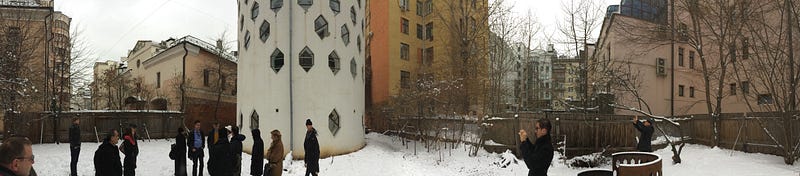
Melnikov House, Moscow 2014

The Melnikov House intercom system

Everyday Interaction Design Classics #4

Ed. For a bit of context, do read the previous entry on visiting the Melnikov House in Moscow.

Fourth in an occasional series on everyday interaction design classics, and this found in one of the true icons of 20th century architecture, designed and built between 1927 and 1929 by Konstantin Melnikov.

One of the many quirky delights of the Melnikov House in Moscow is this internal intercom system. Two holes on the ground floor corridor. The right speaks to a tube on the top floor, the left to the entry on the street, in a prototypical door-entry system. (The left isn’t working, apparently, but will do again one day.) These holes simply snake up through the walls to the studio, and down under the ground, out to the street. They are simply metal tubes, carrying the voice.
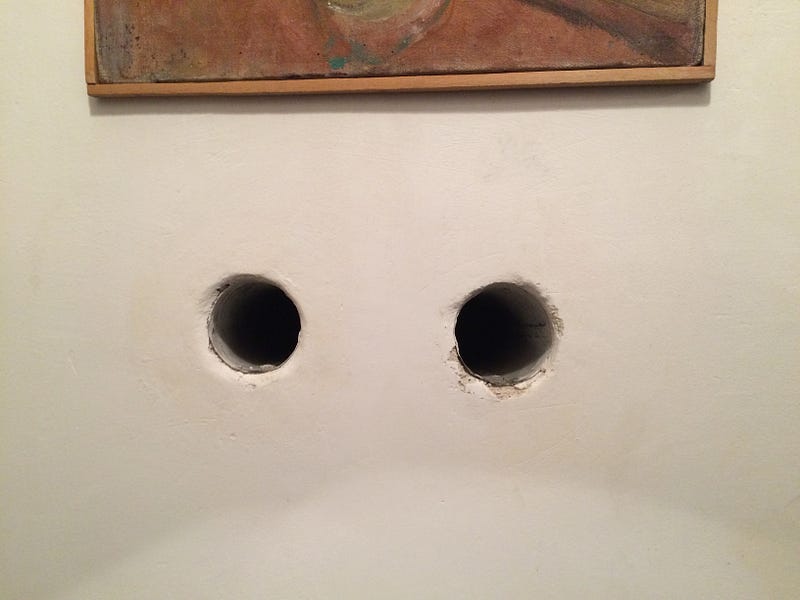
It’s like the old idea of two tin cans joined by string, yet replacing the string with a tin can extruded to become the entire length of the system.

At the top of the house, the other end. A large metal tube rises up out of the floor in the corner of the studio, with a ‘speaker’ on it. On the mezzanine above, another hole to speak/listen into.
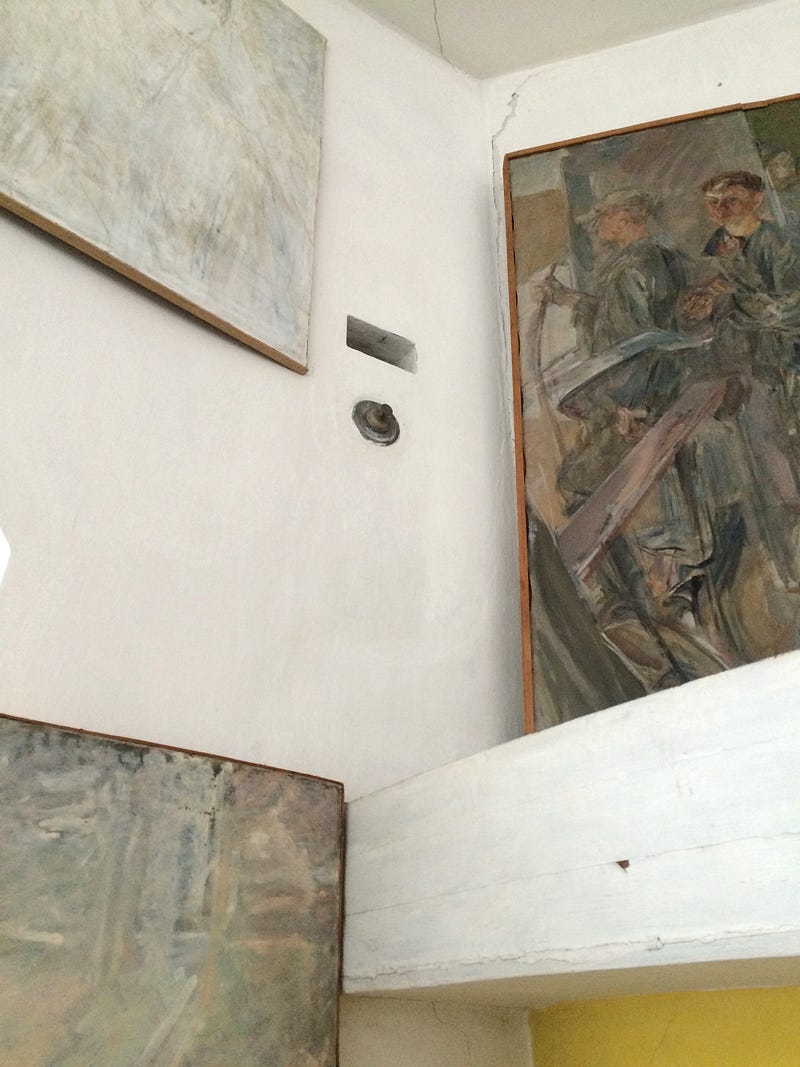
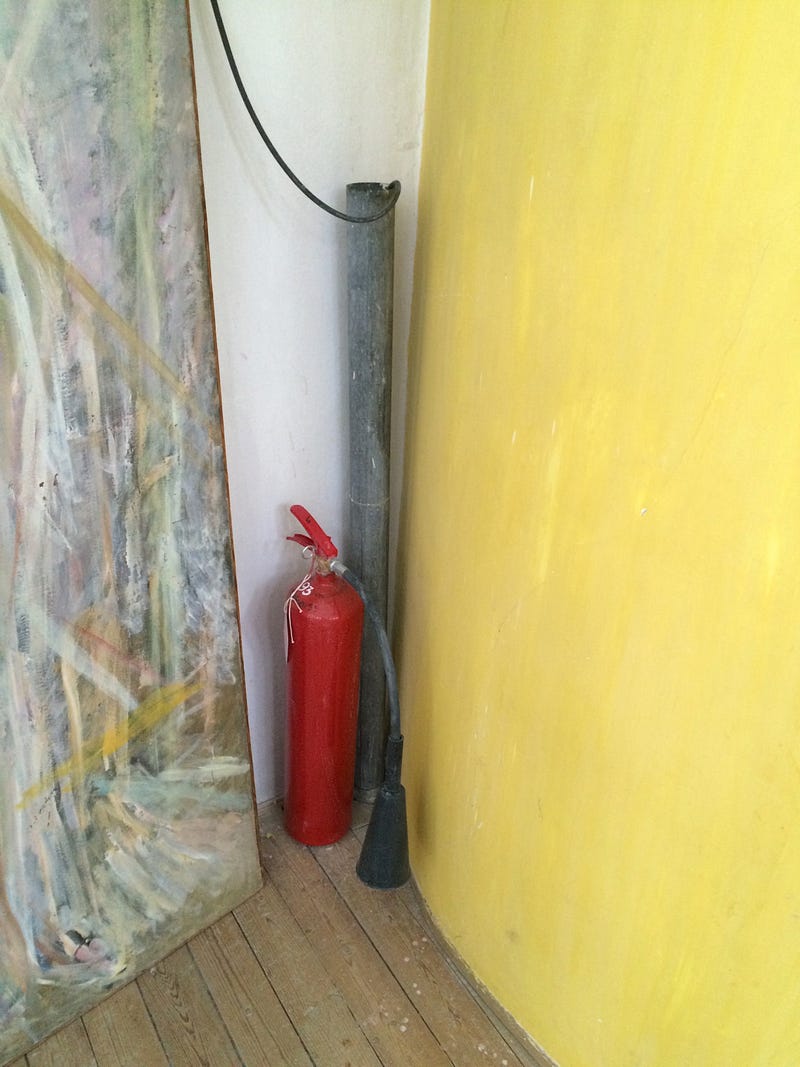
It’s as simple as could be, and its affordances are entirely clear. Speak into the hole. Listen to the hole.

It is very low power. In fact, no power. And certainly resilient, save a small rodent crawling into a pipe and staying there. It is seamful — perhaps not particularly beautiful seams, but seamful nonetheless — and thus entirely in keeping with Constructivist/Functionalist principles.

In an age of contingent smart home systems, and IoT-enabled domestic infrastructures, I admire the way these snaking tubes simply reach for humble physics, the resilience of their dependence on sound waves and hard surfaces, subtle enhancements to living baked into the building. Learning from 1927.

Elsewhere, on Everyday Interaction Design Classics
#1 The ‘progress bar’ on the Voice-O-Graph in ‘Badlands’
#2 The big pink arrow from ‘Grand Theft Auto’
#3 The ‘A Bit More’ button on the Breville Professional 800 Collection 4-slice Toaster
#4: The Melnikov House intercom system
#5: Alan Partridge’s Rover 200 fascia control system
This post was first published at cityofsound.com, on December 16th 2014.
Architecture
Interaction Design
Smart Home
Internet of Things
Communication
Recommended from ReadMedium