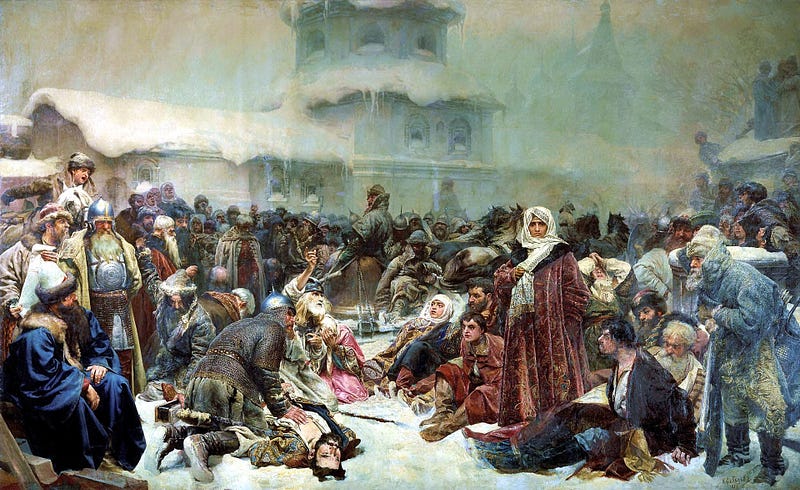

The Medieval Democracy in Russia
Novgorod the Great and the Fall of a Democracy
The History of Russia during the past few centuries can be described as a fight between autocracy and freedom in many aspects of politics and culture, but in the depth of Russian History spots Novgorod, a classical democratic republic in Medieval Russia. Elections for all citizens, democratic values and a seafaring capital. Not Classical Athens or Renaissance Venice, but Medieval Novgorod which was established in a messy power vacuum, flourished as a Renaissance-style city-state akin to the Italian Republics before falling under the traditional trappings of democracy. This fascinating state is hard to pinpoint, as their state was vividly different from what Russia would become, yet they were undoubtedly tied to Russian history and culture.
Origins:
The Kievan Rus, based in present-day Kyiv, dominated the regions of Russia and Ukraine during the 10th Century. On the outskirts of this vast confederation lay Novgorod, which eventually became one of the largest cities of the region. The sons of the Kievan princes began directly administrating the city. However, the Kievan Rus fell into decline by the 12th century, resulting in the de facto independence of Novgorod.
Trade and Commerce
Novgorod is located on the Volkhov River, which connects the Scandinavian Vikings to the Eastern Romans in their city of Constantinople. Along the long river were dotted with ports and cities, but Novgorod was the entry point of trade between the North and South. From Muslim silver from the Islamic East to European cloth imported from the West, and most prominently the precious silk and spices provided by the central Romans, the markets of Novgorod were filled with luxuries from across the world.
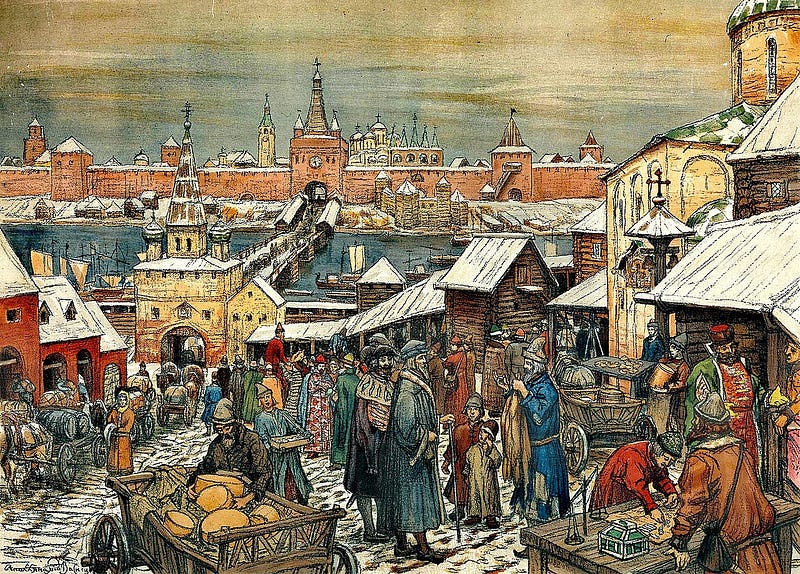

Through all the international trade and its position as a trading hub, Novgorod eventually merged with traditionally Russian architecture, as traders in Kyiv and Moscow brought building techniques and Christianity back to the Northern city. Subsequently, Novgorod is one of the few cities to preserve its early Russian architecture, with traditional monasteries and wooden houses dotting the city.
How Democracy Falls
Novgorod was a central location for wealthy landowners and a rich aristocracy, but the oligarchy was coupled with an early form of democracy. The Veche constituted all free citizens of the republic, and this large body gathered around the city centre to elect the archbishop, who acted as head of the Council of Lords, or the executive branch comprised of nobles. Furthermore, the Republic was topped by a Prince, but in practice, this role was more of a symbolic title as he could not even live in the city centre, but rather in a faraway suburb.
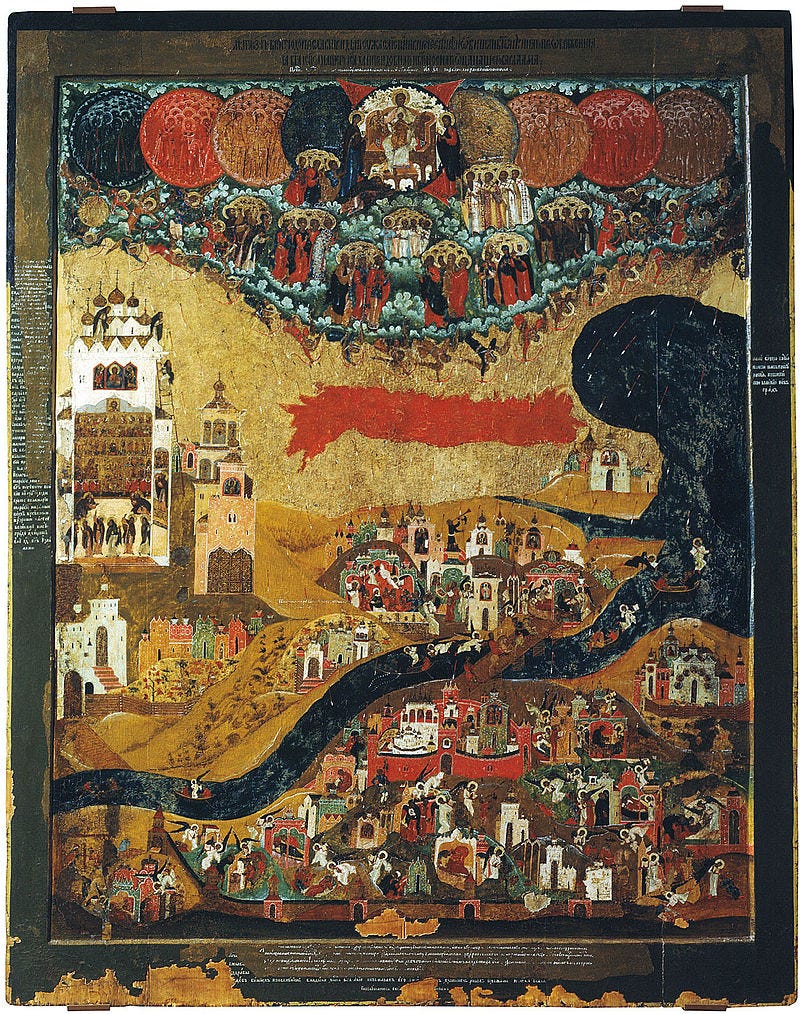

The free political structure of the republic was reflected in its literature, as the peasants to rich alike wrote extensive manuscripts on religion and business transactions, and the women of Novgorod had a hand in the writings as well. With its democratic institutions such as the Veche, Novgorod was crossroads between the direct democracies of Ancient Athens, aristocracy dominated republics of Renaissance Italy, resulting in a unique political environment to thrive in the remote and harsh lands of Northern Russia.
However, the traditional cracks of democracy began to creep in by the 14th century, as the next century saw the republic and its democratic institutions destroyed. The greatest issue was the increasing powers of the nobility, as they began swaying public opinions to further their agendas while the local farmers and business owners were swallowed up by the rich, thus forming the blueprints for serfdom.
Final Fall and Cultural Relevance
The nail in the coffin for Novgorod was the Battle of Sheldon in 1471, where the forces of Muscovy crushed those of Novgorod, which forced the republic to ceded control over its foreign policies. Although the republic attempted to draw support from its western neighbours, the rising power of Muscovy eventually conquered the city in 1478, where the Veche was crushed and Muscovite officials replaced the former republic’s government.
Although the republic was dead, its ideas lived on. Many late 19th century thinkers and poets in Moscow and St Petersburg turned to Novgorod for inspiration prior to the Russian Revolution. In addition, Novgorod today retains its independent values and culture while being tied to a larger Russian identity that formed during the age following the republic, the Imperial Era.
Help support our writers and become a member of our small publication!
Sources: