
The Media vs. Black Women
A tale of two cartoon characters
Growing up in the ’80s was an amazing experience. The time was fun, funky, and full of possibilities!
The world was colorful and limitless, and I was taught to always think outside the box. This was ironic, because these lectures came from a glowing black cube in my kitchen and living room.
Thanks to television, it was easy to ignore the harsh world around me, because the glowing box filled my young life with fantasy and hope.
But as I grew up and ventured into the outside world of adulthood. Little by little, I started to see things that weren’t as hopeful. There were some things I saw on television that I either ignored or didn’t understand at a young age, but now I understood them.
There were things on television that were antagonistic to me as a brown skinned woman.
Television, which was always brightly smiling in my face, had been secretly talking smack about me behind my back!
This understanding of the negative stereotypes about black girls/women on television was made apparent to me when I recall a time when I finally saw a black female character who was different, and it completely shocked me.
She was emotionally vulnerable, yet physically safe. I was so used to seeing the reverse from the “tough, street smart” black girl characters of the time.
I saw, for the first time, a black girl who was allowed to be feminine and was feminine to the Max. She wasn’t the “struggle queen” who lived in poverty, and was chased by drug dealers every day.
Just seeing a black girl on the screen like this, and the cute love story that played out with her on the screen, knocked me out so much here I am, well over 30 years later, and I can still remember it!
“Tara Belle”
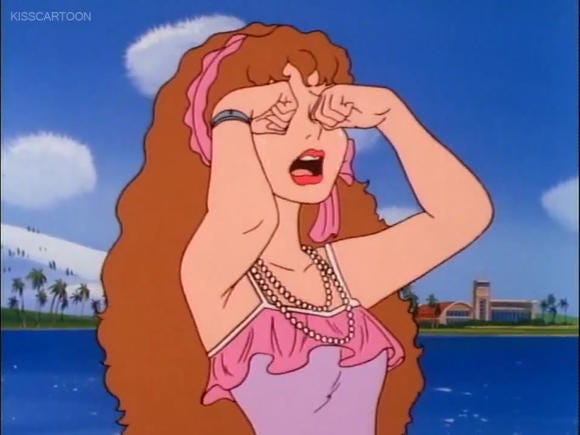
When I was about 7 years old, this one cartoon show pretty much blew my young mind away. It was called “Beverly Hills Teens” and it came on so early in the morning that it would still be dark outside as I crept into the kitchen to watch it on our little square television set.
I loved that show with all the cool teenagers, funny adventures, and glimpses into a life of glamor, action, and romance.
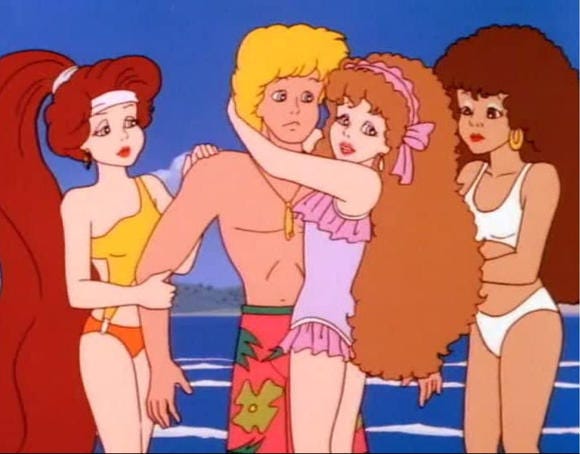
But there was one episode, in particular, I don’t think I’ll ever forget. It was called “Chester the Matchmaker.” On the show “Chester,” the school’s genius creates a machine that could find the perfect romantic match for all the teens at the school.
Tara, the original “awkward black girl,” was told she was the right match for the school’s gorgeous surfer “Radley.” Radley was white, rich, popular, handsome, and arguably the sweetest, most kind-hearted character on the show.
This honestly shocked me. WHAT? They never give the black girl a top-level main white character like that.
Let alone a talentless, clumsy, not terribly intelligent black girl. Impossible…
Now we can debate whether Tara is actually black. Her hair seemed kinky to me, and she was darker than most other characters on that show. But she wasn’t as dark as “Shanelle Spencer” the super athletic, best student in the school, president of all kinds of clubs, wise like the old black woman in “The Matrix”, always there to help her white girlfriends solve everything, self-assured, high-pressure, stereotype of a black girl character I was more used to…
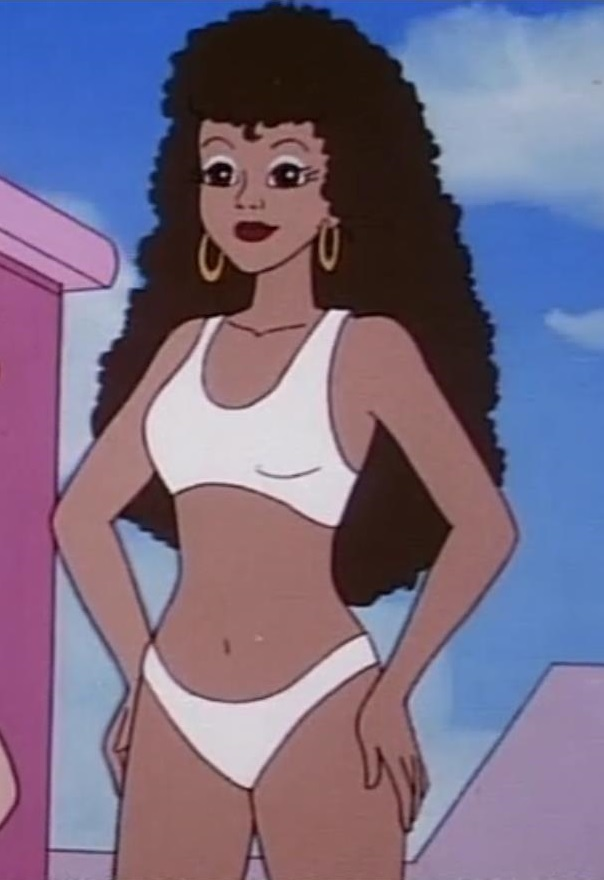
Suffice it to say Tara was black to me, and I could have hit the floor when she got paired up with a Radley. Those things just weren’t done in the ’80s at least not from my understanding. The token negro almost always got paired up with another token negro. Even on the slight chance they weren’t they certainly wouldn’t be paired up with the nicest, most handsome (IMO) character on the show.
Back to the episode though, Bianca (villainous female character) thought Chester’s device must be busted. She felt like she could get Radley long before Tara’s dopey behind could. She humiliated Tara over and over again, after challenging her to a competition for who can get a date with Radley first. Then for the last humiliation, Tara falls into some water and nearly drowns.
I thought it was over for this Tara girl, but none other than Radley saves her from drowning. I thought this was so romantic as a kid! Tara was clumsy, scared, awkward, flawed, but she still got love and protection from an awesome guy!
Seeing that episode of Beverly Hills Teens had given me so much hope. Maybe black girls didn’t have to be perfect to be loved. Maybe they could just “BE.”
This hope did not last. Betrayal was close at hand in TV Land…
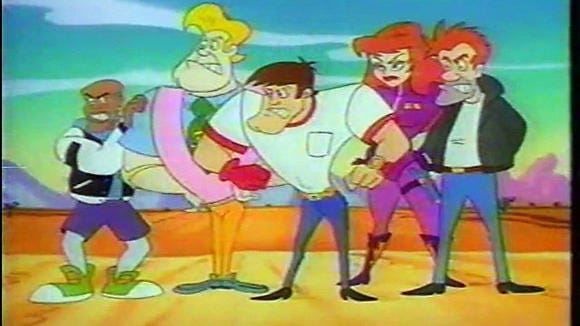
A few years later, there was another cartoon show I would have to wake up super early to watch. On a show called “Stunt Dawgs”, there was a black male character called “Crash.”
I loved Crash because he was funny. He wasn’t like a lot of other black cartoon characters at the time that seemed to have very little personality. Yet, despite his good qualities, Crash was one hell of an animated coon!
Crash was eternally running from and trying to escape a loudmouth black woman whose heart he broke called “Velda”. I remember loving the show, but feeling great embarrassment whenever Velda got on screen. I knew, even then, that this was a negative portrayal of black women. While Crash was always so appeasing to the sexy white woman on the show (Sizzle), the fact that he ran away screaming from a black woman hurt.
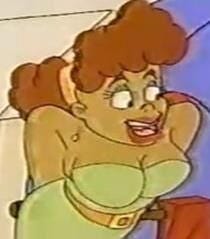
And in the years from that time, I began to see less and less, vulnerable and lovable black girls like Tara, and more and more “Black women chasing black men down like their lives depended on it” characters like Velda all over TV.
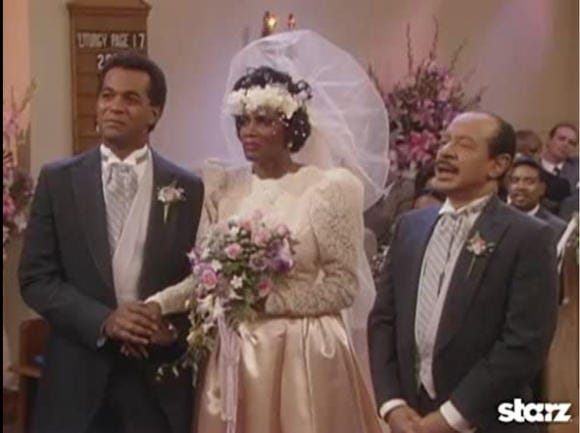
On the TV Show, “Amen,” Thelma always chased after the Reverand.
On the TV Show “The Parkers,” Ms. Parker was always criminally stalking professor Oglevee.
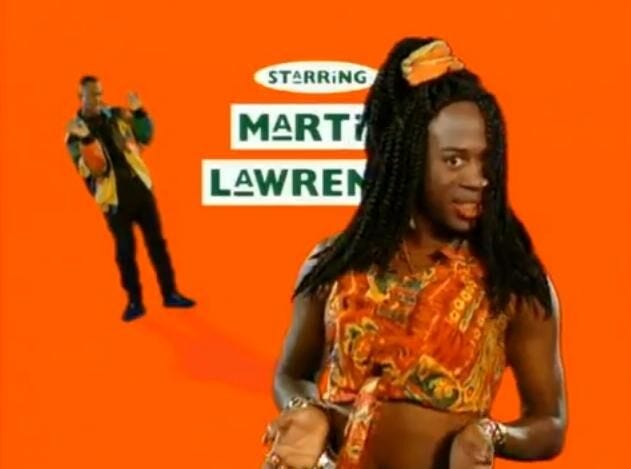
And on “Martin” wasn’t Shanehneh always trying to get with Martin (and Tommy?)
These and many others are the kinds of images of black womanhood that surrounded me as I got older. Black women were laughable, not to be taken seriously, anything but vulnerable, and we didn’t need protection. Black men needed protection from us, because if not, we would catch them and force them to marry us.
While there were a few more feminine black girl characters, even another black southern Belle (Whitley Gilbert from “A Different World”). This form of black femininity has now been replaced by the “Bad and Bougie” trap queen, whose always trying to “get the bag” and her route to luxury is to get knocked up by some rapper.
And while black womanhood is being maligned by depictions of mammies chasing down unremarkable black men, on other children’s television, super human/God like men of all races, fought evil space monsters, demonic creatures, wizards, and tons of unimaginable horrors to rescue white and Asian women.
So when you see the state of romantic affairs between black men and black women these days, remember Velda chasing around Crash, and now you understand where some of these ideas are coming from.
Conclusion
I’m a strong-minded black girl, so I never let the media perceptions of black women stop me, and I’m glad I didn’t. I would have missed many great experiences, hobbies, and relationships if I had let the media tell me who I am.
But the stigma was always present. Desirability politics is a real thing.
But maybe that’s something we’ll have to go into more another time… For now, I’m just putting a warning out there to not let TV tell you who you are. Especially for black women, the TV is not our friend…but there’s so much more we will discuss about that in part 2.
Part 2 is up! Please check it out.
Thanks for reading! Be sure to subscribe for alerts when I post new articles!


Coke Francis created the banners/animations from images purchased from Dreamstime.com. ←This is a referral link. Click on it and I get a percentage of every sale!


