
This Dry-Brine Changes Everything
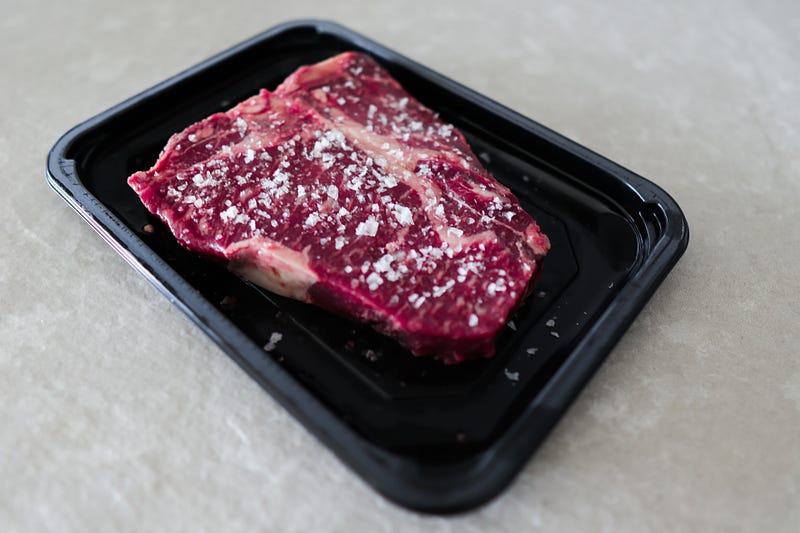
Isn’t it remarkable how steak can have an entirely different taste when it’s been salted with the right technique?
You know what I’m talking about — that tenderloin in your favorite steakhouse? There’s something about it that’s surprisingly hard to replicate at home. It isn’t *just* juicy and tender; it’s intensely flavorful, as if it’s been seasoned from the inside out.
In a way, it has. It’s most probably been dry brined.
When most home cooks hear the word “brine,” they really think of a wet brine. Memories of Thanksgiving prep come to mind, with children running around their grandparents’ kitchen as multiple generations of cooks argue over whose stuffing recipe is best. In the fridge, a pale turkey’s soaking up dark liquid in a prominent spot on the lowest shelf.
Most cooks are surprised to learn that there’s another way to brine birds — and roasts, and steaks, and pork chops, and salmon fillets — that requires no liquid, no overnight soaking, and involves considerably less fuss.
Enter the dry brine.
To dry-brine a cut of meat, you generously sprinkle salt on both sides and rub it in. (Kosher salt, because it’s pure and flaky, works best.) Then, you put the meat on a plate, cover it with plastic wrap, and refrigerate it before cooking.
The mechanics of the dry brine are least to say interesting, and not enough research has been done to determine exactly how it works. When it comes to dry brining, some things we know — and some we don’t.
Salt is hygroscopic, or thirsty by nature. It tends to draw out moisture from its surrounding environment. It’s also soluble. Once the salt crystals have taken in enough liquid, they dissolve in and meld with it. These two qualities of salt tell us a lot about what happens in the fridge during the dry brine.
The salt initially pulls out the juices from the meat. (Raw meat contains between 66 and 73% water.) As the meat’s juices come out to the surface, they dissolve the salt, producing a brine. The meat — now drier — reabsorbs the newly produced brine, which, in turn, seasons it on the inside.
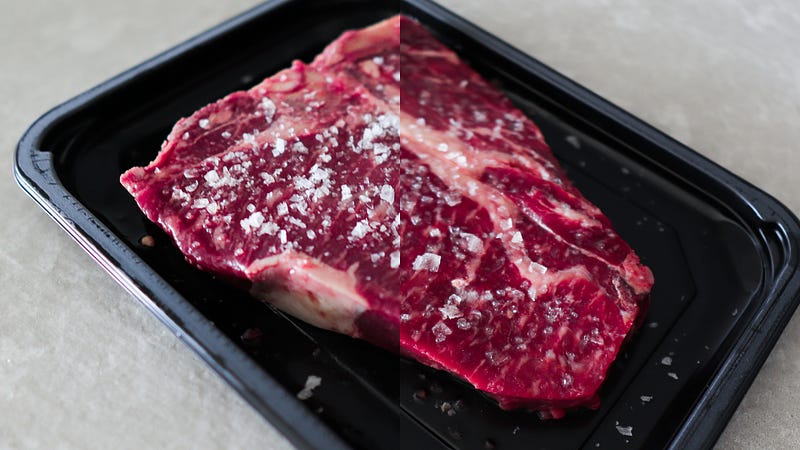
Cutlets brine the quickest, 45 minutes to an hour, because of their thinness. Thick-cut steaks and pork chops warrant 1 to 1½ hours for a rich flavor. Birds, roasts, and large cuts of meat for smoking should be left to rest for 8 to 12 hours, as the salty brine needs more time to get to the center of the meat.
According to some, dry brining is so good at flavoring meat thanks to osmosis, a physical phenomenon that allows the juices of the meat to permeate through the muscle fibers. Others are skeptical about this and attribute it to diffusion, or the tendency of salt and water to move from areas with a higher concentration to those without, instead. What’s important here is the result: crispy, flavorful, incredibly juicy meat, delicious enough to rival that of a high-end restaurant.
The keys to success, as with many things in cooking, are restraint and patience.
If you oversalt the meat, the brine will overseason it on the inside. (It’s easier to make this mistake with fine salt than coarse salt because fine salt crystals are more compact, and therefore pack more sodium per pinch.) And if you take the meat out of the fridge too soon, you’ll interrupt the brining, leading to meat that’s more drab than fab.
I’ve come across recipes that call for washing the meat before cooking it. Don’t do it. You’ll undo much of the flavor developed during the dry brine, negating the reason you opted for it in the first place.
If you’re like me and crave some heat on your food, try dry-brining meat with kosher salt and freshly cracked black pepper. The pepper’s kick will seep into the protein to yield the tastiest steak you’ve ever had. And even if you’re not, remember that it’s your food — you have a carte blanche to get creative! A bit of dehydrated garlic and powdered onion, for instance, can do wonders for deep-fried chicken.
When in doubt, keep it simple. A salt brine is more than enough to season any cut of meat to perfection, and spices should only be added to this technique once you’ve perfected it.
P.S. Thanks for reading! I post on Medium every week. Get an email whenever I do by going here →
You can also follow my Medium publication called Tastyble, where I — and other food writers — publish stories that get you cooking.


