
The Meat of the Matter
When fires erupted in the Amazons a couple of weeks ago,the diatribes started. Two groups quickly emerged: one advocated we wean ourselves off of meat; the other argued the fallacy of said plan. One sought to inform public choice, the other sat back and said ‘fuck off’.
Now that the chatter has ebbed, let’s actually talk.
The fires in the Amazons weren’t a natural phenomenon: they were started by corporations to make way for the grazing of cattle. Brazil remains one of the world’s foremost exporters of meat, humans remain the #1 consumer of the product. An argument that ties production to demand seems logical. Sadly, it’s painfully oversimplified.
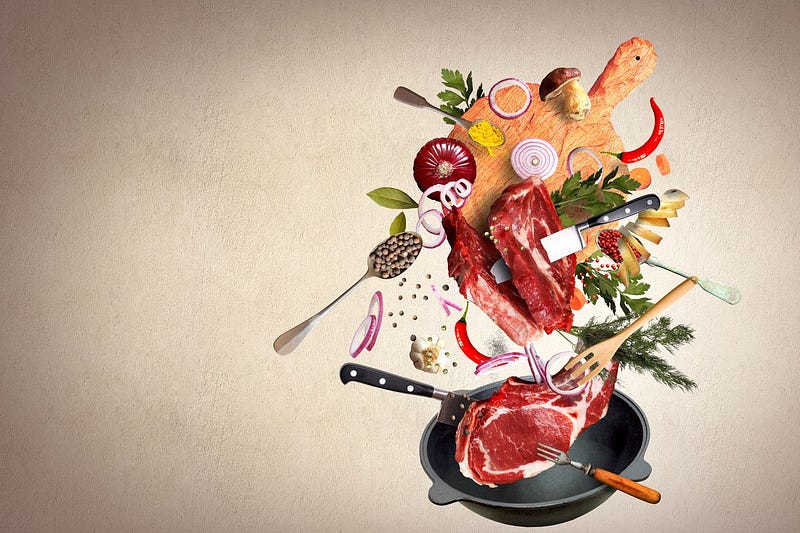
If tomorrow, the human race woke up and gave up meat, the cows would be okay. Cattle raised for the sole purpose of consumption would live full lives, then die out. A more sustainable balance would be struck. But would it stop the forests from burning? The Amazons is on mineral rich land: under towering trees is an almost endless supply of copper, nickel, iron and gold. If the forests are not cleared to make way for cattle, they will be cleared for mining. It’s already a thing. Also, the logging that has eviscerated the forest for decades? Hardly a social media whimper.
Why then, is meat the hill we’ve chosen to die on?
Is it because it is easy? Is it because it makes us feel good to identify a clear wrong, thus putting ourselves in the moral right? Does it help us sleep better at night?
But also, does it have any truth to it?
In short, yes. We consume meat at an alarming rate, we drive to superstores in our oil guzzling cars to pick out dinner from an endless array of choices. But that’s not just true for meat, is it? It’s true for the opulent way in which we live our lives — from the data driven information we consume (and that consumes us), to the clothes we discard, and the vacations we take to indigenous lands. It’s true for the education we were privileged enough to receive that gives us the audacity to suggest the world goes vegan. We take not a moment to consider the fact that indigenous communities have sustainably farmed, consumed, and lived alongside cattle for centuries. And we espouse morality: we herald animal rights as our own country seeks to deport 1 million humans. Really? Are we going to actually argue for equal rights for all beings when our existence is proof that we destroyed the planet to get here?
We’re opulent in our consumption, we’re miserly in our politik.
Is there then, a way out? Unsure, but maybe. Our over-consumption is related not to one specific industry, but to all industries. It is related to corporations and governments — entities hard for one individual to apprehend — but it’s also tied to our own greed. Our over consumption is borne of our need for more: of options, of choices, of luxuries. Eating meat 7 days a week is obscene. So is flying off to Thailand once every three months, or taking endless rows of food for granted.
Before demanding so much of people, we must demand as much of ourselves. We must question the luxuries we take for granted, and ask ourselves how we inadvertently feed a system that feeds the few and starves the many.
And we must listen. Even when it is hard to do so. We must argue and argue emotively, but never against emotions. Our fight is not with how people feel, but with the half truths that make us feel the way we do.
We must, collectively, get to the meat of the matter.