The Meaning of Knowledge
What is knowledge? What do we really know?
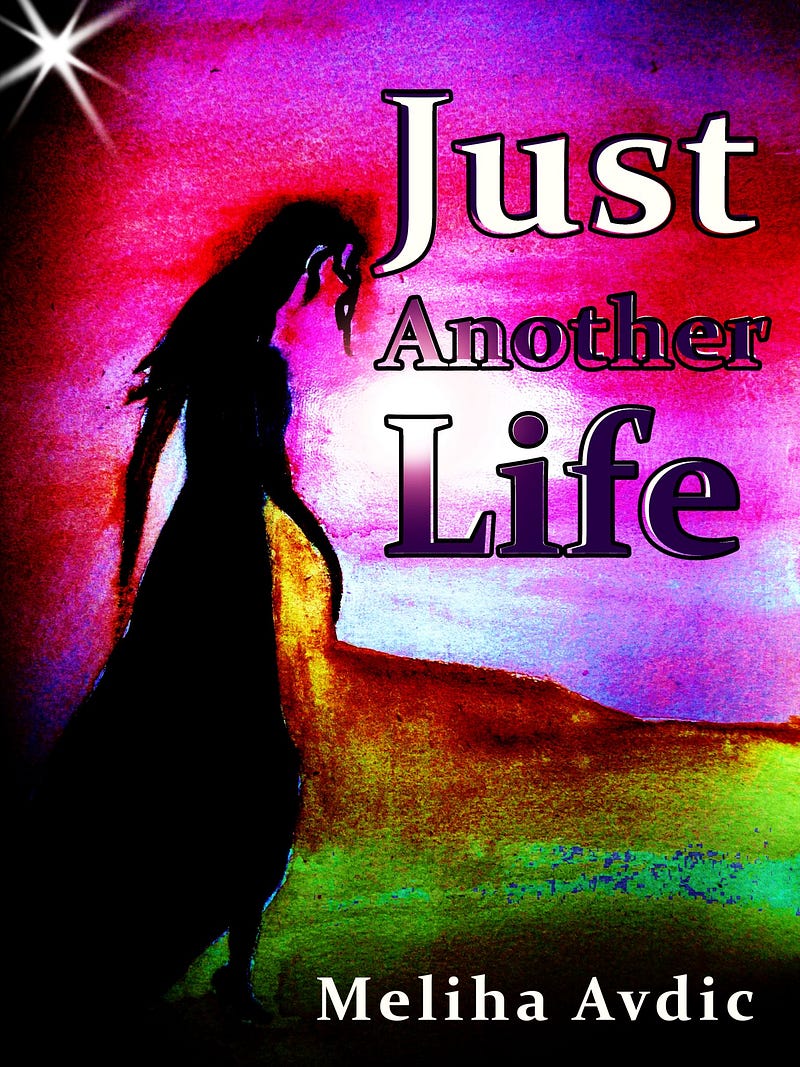
When I wrote the first draft (read: version) of Just Another Life, it didn’t start as it does now. It had a much more organic beginning that I didn’t think about too hard. I wasn’t really concerned about setting the mood or the tone of the story. I wasn’t concerned about the importance of the beginning at all. I just wrote. That must be why we call the first draft, the vomit draft, or in this case, a-book-that-looks-like-that-one-but-surely-it-cannot-be-the-same-book. It really has changed that much.
One sentence that I’ve thought about the most and it is on the first page of the book is ‘We knew so much, we knew nothing at all’. I have wondered if the sentence will put people off, and so early in the story. I even considered taking it out and replacing it with another sentence. And if I had an editor who advised that I take it out, I probably would have. However, I had no such editor, I had to make the decision myself, and I decided that I must keep the sentence.
Here, I would like to talk about what the sentence means to me, but I left it in the story because I’d love to know what the sentence means to the readers, especially after they’ve read the book.
1. For May, and May is writing the whole book, it’s about looking back at the past with somewhat more wisdom, not just knowledge, and seeing things very differently. I think this is very common. Think back to the time when you were a teenager; didn’t we all feel like we knew it all? How often do you laugh at yourself now for something you did back then, and you were convinced that you were being smart?
2. The idea of knowledge has always fascinated me. On the one hand, the more we know, the more we realise how much knowledge there is out there, and therefore, the more we feel like we know relatively a little. Which makes us less confident about what we do know. On the other hand, those who know very little, they have no idea how little they know, so they feel very confident about their knowledge. This confidence rules the world. There is a saying in Bosnian (boj se ljudi jedne knjige) — be afraid of the people of one book, meaning, fear those who have read only one book, more than those who’ve read none, and this confidence is the reason. They think they know, they will come across as if they know, but in reality, they’ve only read one book.
3. Knowing or having knowledge is only the beginning of the story. We have to be able to use our knowledge. If we don’t know how to use it, apply it, our knowledge is only in our heads, and it dies with us. We don’t know if we’ve used what we know until it’s too late. So exercising to use your knowledge is as important as having knowledge.
4. ‘We’ in this sentence can mean ‘we’ as in a small group of people, and ‘we’ as in society at large. How much does the ‘Global Village’ need to know compared to an ordinary village? I.e. sharing of knowledge is more important now than ever before. But how much do we practice that?
5. Fake knowledge, lies, imperfect information — all three of these exist on their own and with each other. Differentiating them requires a seriously high IQ. Like the scientists say: Science is not about the truth, it is about finding the truth, and if we change our minds, it is not that we lied, we’ve just discovered something new. But how many people will question it, and how many will not? Well, going back to point 2; those with less knowledge, those who read one book and feel very smart, will not question it, that much is practically certain.
Hence, for me, that sentence needed to be there, not only to set the mood, but to be left in the reader’s mind like a pin, whether they choose to think about it right away or not. Even if it caused slight confusion, I think by the time they got to the end of the book, that sentence would voice itself again, so that the reader is reminded of it again.
In any case, it’s not a huge sentence, it’s less than 10 words long, easy to just go over. Plus, the whole first chapter is setting the scene and a reference point for May’s current state of mind, which should be compared to the rest of the story where her mind is completely different; 1. As a sign of ageing, 2. To show the power of memories. 3. To illustrate the generational gap that is so very obvious in society, yet hardly ever mentioned in terms of one person. I feel this generational gap in me already between the girl I used to be, and then the young woman I used to be, compared to the woman that I am now. Of course, May is much smarter than me, so her mind works a little differently to mine. I love what we can do in books.
If you’re interested in the book, you can find out more details about it here.
As always, I am very interested in your thoughts, on this topic or any other. So don’t be shy. There are no wrong answers.
If you’ve decided to become a member of Medium and to have full access to ALL the articles, here is the link for you.