
The Matrix: a portal to inner transformation
(The Portal Story and its Representation in The Matrix)
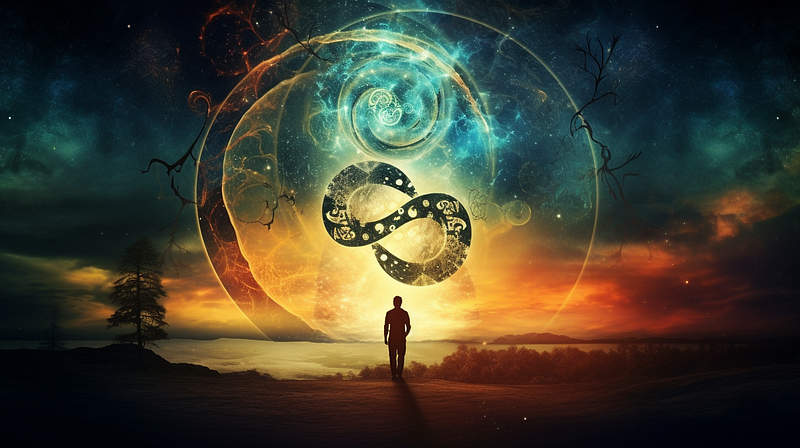
The tale of a portal leading to another realm is a classic narrative motif that has been retold in numerous ways across different cultures and mediums. It often begins with a protagonist who is ensnared in a humdrum, ordinary life, yearning for something more.
The portal story, in essence, is a metaphor for transformation and self-discovery, epitomized through a physical journey that mirrors the internal one. One contemporary embodiment of this age-old tale is seen in the story of Thomas Anderson, known by his hacker moniker Neo, in the movie “The Matrix”.
Thomas Anderson’s life is the epitome of mundanity as a software engineer by day, though by night he dives into the digital underbelly of the Matrix as a hacker, driven by a niggling sense that there’s something profoundly amiss with the world. His life takes a surreal turn when he’s contacted by the enigmatic Morpheus.
The subsequent meeting between them presents Neo with a binary choice, embodied in a red pill and a blue pill. The red pill promises to unveil the harsh reality of human existence, while the blue pill would ensure a return to his ignorant yet comfortable existence. With a mix of trepidation and resolve, Neo chooses the red pill, a decision that catapults him through the proverbial rabbit hole into a reality that is at once terrifying and liberating.
The portal in this narrative is not a physical gateway but a metaphorical one, unlocked by the red pill. The ensuing journey is a grueling test, pushing Neo to confront truths that challenge the very fabric of his understanding and existence. It’s a path of self-discovery, of shattering illusions and embracing a new, albeit harsh, reality.
The Matrix, a simulated reality constructed to control humanity, is the illusory world that Neo must break free from. This simulated veil is a metaphor for ignorance, complacency, and the fear of embracing the unknown, themes that are deeply entrenched in the human experience.
As Neo navigates through the adversities and revelations of post-apocalyptic reality, he transforms from a timid, unsure individual to a resolute, enlightened warrior, embodying hope for humanity’s freedom from the shackles of the Matrix. His journey resonates with the archetypal portal story, where the protagonist emerges on the other side of the portal with newfound knowledge and a transformed self, ready to challenge the status quo.
This journey from ignorance to enlightenment, from a state of confinement to liberation, encapsulates the essence of the portal story. The Matrix serves as a modern-day allegory of this timeless narrative, entwining futuristic sci-fi elements with age-old philosophical and existential quests. Through Neo’s eyes, the audience experiences the quintessential journey of self-discovery and the battle between illusion and reality, making “The Matrix” a compelling modern-day rendition of the classic portal story.
The Matrix and Gnosticism:
The Matrix is rich in Gnostic themes, intertwining a futuristic narrative with ancient philosophical ideas. The core Gnostic idea mirrored in The Matrix is the notion of the material world being an illusion, a veil of ignorance veiling the true reality.
This theme is encapsulated in the simulated reality of the Matrix, a digital veil woven around humanity to keep them enslaved in ignorance, serving the machines that have subjugated them.
The Gnostic narrative often portrays the material realm as a flawed or false creation, crafted by a lower deity known as the Demiurge, to keep humanity entrapped in ignorance. In The Matrix, the simulated reality is the Demiurge, constructed by the machines to keep humans docile while they are used as energy sources. The illusion is so pervasive that most are completely unaware of their enslavement, living out their lives in a fabricated reality.
Central to Gnostic thought is the quest for gnosis—a Greek word for knowledge—which denotes a profound, transformative understanding of reality, often seen as a divine knowledge that liberates individuals from material illusion.
In the narrative of The Matrix, this gnosis is represented by the truth about the Matrix and the real world that lies beyond it. Neo’s journey begins with a gnosis moment—the choice between the red and blue pills. The red pill, embodying the quest for truth, is the key to Neo’s gnosis, unlocking the reality of the Matrix and starting him on a path to liberating humanity.
Furthermore, the Gnostic themes extend to characters like Morpheus, who resembles a Gnostic savior enlightening the ignorant, and the Oracle, embodying Sophia or wisdom, guiding Neo on his quest. The agents, on the other hand, echo the Gnostic Archons, beings that maintain material illusion and oppose spiritual awakening.
The Matrix, much like Gnostic texts, posits that escape from this illusory world comes from a personal awakening, a shift in consciousness achieved through self-discovery, challenge, and the pursuit of truth. The idea that one has to choose to pursue the truth, no matter how harsh, reflects the Gnostic emphasis on personal responsibility in seeking gnosis.
Moreover, the overarching battle in The Matrix between the forces maintaining the illusion (the machines) and those seeking to shatter it (Neo and the rebels) parallels the Gnostic narrative of divine sparks trapped in the material realm seeking to return to a higher, truer reality.
Through its characters, narrative, and imagery, The Matrix explores Gnostic ideas in a modern setting, offering a compelling exploration of ancient philosophical themes and questions that have intrigued humanity for centuries. Neo’s journey of self-discovery, awakening, and ultimately liberation encapsulates the Gnostic journey from ignorance to gnosis, portraying the timeless quest for truth and liberation in a new, futuristic light.
Awakening from Illusion:
In Gnostic philosophy, the material world is often seen as a form of illusion or a veiled reality, hiding the true nature of existence from individuals. This illusion is enforced and maintained by entities or forces that benefit from keeping individuals ignorant and bound to material desires and fears.
The key to breaking free from this state of ignorance, according to Gnostic thought, is through ‘gnosis’ — a Greek term for knowledge. However, gnosis in this context is not merely intellectual understanding but a profound and direct experiential insight into the nature of reality.
The narrative of awakening from illusion is beautifully mirrored in The Matrix through the journey of its characters, particularly Neo. The Matrix is a simulated reality where humans are trapped, unbeknownst to them. They live out their lives in a controlled simulation while their real bodies are used as energy sources by machines.
The simulation is so convincing that the majority of people are completely unaware that they are living in a fabricated reality. This matrix serves as a modern metaphor for the Gnostic view of the material world.
The parallel journey of awakening in both the Gnostic tradition and The Matrix begins with a form of dissatisfaction or an intuitive sense that there’s something amiss with the perceived reality. This is exemplified by Neo’s initial sense of discontent and his urge to understand the truth behind the Matrix.
His quest for understanding leads him to Morpheus, who offers him a choice between a red pill, symbolizing the harsh truth and the path to awakening, and a blue pill, symbolizing ignorance and the continuation of his existing, illusory life. Neo’s choice of the red pill sets him on a path of gnosis—the journey to uncover the reality hidden by the Matrix and to free humanity from its control.
Similarly, in the Gnostic tradition, the journey towards gnosis often begins with an intuitive sense or a direct experience that challenges the perceived reality and prompts the individual to seek a deeper understanding. This gnosis is not just an intellectual endeavor but an experiential journey that transforms the individual, allowing them to see beyond the illusion and reconnect with a higher, truer reality.
The characters in The Matrix, like Morpheus and Trinity, who have already awakened to the reality of the Matrix, play the role of Gnostic saviors or guides, helping others on their journey towards awakening. They challenge the status quo, fight against the forces maintaining the illusion (represented by the agents), and seek to liberate others from the control of the matrix.
In both Gnostic philosophy and The Matrix, awakening from illusion is not depicted as an easy or comfortable journey. It requires courage, resilience, and a deep desire for truth. The path of gnosis, like Neo’s journey, is filled with challenges, confrontations, and the shattering of previously held beliefs and perceptions. Yet, it is through this journey that individuals are liberated from ignorance, achieving a state of awakened understanding and freedom.
In conclusion, The Matrix serves as a modern allegory of Gnostic ideas, illustrating the profound journey of awakening from illusion through the path of gnosis and reflecting the ancient quest for truth, freedom, and understanding in a contemporary narrative.
The Gnostic Creation Narrative and The Matrix:
The Gnostic creation narrative is steeped in allegory and metaphor, shedding light on the nature of existence through a tale of divine entities and cosmic missteps. Central to this narrative are the figures of the Demiurge, Sophia, and the Archons.
The Demiurge, often depicted as a lesser deity or a false creator, crafts the material world, which is seen as an imperfect or illusory reflection of a higher, true reality. Sophia, whose name means wisdom, is a divine figure whose actions lead to the creation of the demiurge and, subsequently, the material world. The Archons are lesser beings, agents of the Demiurge, working to keep humanity trapped in ignorance and material existence.
“The Matrix” mirrors this narrative in a modern, sci-fi setting. The Architect in “The Matrix” resembles the Demiurge, creating and controlling the simulated reality of the Matrix to keep humanity ignorant of their true nature and enslaved. Like the demiurge, the architect creates an imperfect world yet believes it to be under perfect control. This control, however, is constantly challenged by the humans who awaken to the reality of their situation.
Sophia’s counterpart in “The Matrix” is the Oracle, a wise and intuitive figure who assists the protagonists in navigating the challenges posed by the Matrix and its controllers. Like Sophia, the Oracle represents wisdom and offers insight that helps to expose the illusory nature of the matrix, aiding humans in their quest for freedom.
The Archons find their parallel in the agents within the matrix, especially Agent Smith. These agents work tirelessly to maintain control over the simulated reality, suppressing any threats to the established order. Like the Archons, they are devoid of the divine spark present in humanity and seek to keep humans ignorant and enslaved within the illusory world of the Matrix.
The Gnostic narrative underscores the idea of a fall from a higher state of awareness or existence into a lower state of ignorance and material bondage, orchestrated or maintained by the Demiurge and the Archons. Similarly, in “The Matrix”, humans have fallen from a state of freedom into a state of enslavement within the simulated reality created by the architect and enforced by the agents.
Both narratives explore the theme of awakening from ignorance, with individuals like Neo in “The Matrix” embodying the Gnostic seeker, striving for gnosis to transcend the illusory world and reconnect with a higher reality. The interplay between ignorance and enlightenment, bondage and freedom, false reality, and higher truth are key themes explored in both the Gnostic creation narrative and “The Matrix”, illustrating a timeless quest for understanding and liberation from the confines of illusory existence.
Carl Jung’s Gnostic View and The Matrix:
Carl Jung, a Swiss psychiatrist and psychoanalyst, explored Gnosticism from a psychological perspective, finding correlations between Gnostic teachings and the process of individuation—a journey toward self-realization and wholeness.
Jung believed that individuals have an innate potential that could be realized by integrating different aspects of the unconscious into conscious awareness. This lifelong process of self-discovery and self-realization is what Jung termed individuation. It involves shedding illusory self-concepts and societal conditioning to unveil a truer sense of self—a process mirrored in the narrative of “The Matrix”.
In “The Matrix”, Thomas Anderson, known by his hacker alias Neo, embarks on a journey of self-discovery that echoes Jung’s concept of individuation. Initially, Neo lives a mundane, conformist life as a software engineer by day and a hacker by night. He senses that something is amiss in his world but cannot quite pinpoint what it is.
His life takes a turn when he encounters Morpheus, who offers him a choice between the red pill, revealing the harsh reality, and the blue pill, allowing him to continue living in blissful ignorance. Neo’s choice of the red pill propels him into a reality-altering journey, akin to the quest for gnosis in Gnostic traditions and the journey of individuation in Jungian psychology.
As Neo awakens to the reality of the Matrix, he sheds his former identity of Mr. Anderson and evolves into his true self, embracing his role as “The One.” This transformation reflects Jung’s idea of individuation, where Neo integrates previously unconscious aspects of himself, transcends his former self-concept, and emerges as a more actualized individual.
His transformation from Mr. Anderson to Neo symbolizes the shedding of false identities and societal conditioning, mirroring the individuation process where one moves from a state of unconsciousness to a state of higher consciousness and self-realization.
Moreover, Jung’s study of Gnosticism and his emphasis on experiential knowledge or gnosis, which is about direct, transformative experience rather than mere intellectual understanding, is mirrored in Neo’s journey. Neo’s experiences within the Matrix and his interactions with figures like Morpheus and the Oracle lead him to a deeper understanding of himself and the reality around him, akin to the Gnostic journey towards gnosis and the Jungian process of individuation.
The parallel between Jung’s Gnostic view, his concept of individuation, and the narrative of “The Matrix” highlights a shared theme of awakening, self-discovery, and the pursuit of a higher truth beyond illusory realities and false self-identities. Through the lens of Jungian psychology, “The Matrix” encapsulates a modern tale of Gnostic awakening and individuation, illustrating a timeless human quest for self-realization and a deeper understanding of existence.