
The Mass Production of Fear
Alert! Theft reported less than 4.24 miles away!
Fear is jumping out of my email.
Alert: Assault reported less than 5.18 miles from your home
Whoever is behind Neighborhood Alerts, I beg you. Please. Your emails are frightening me. More accurately, they are making me feel that life is terribly dangerous in the neighborhoods around Mom’s last home.
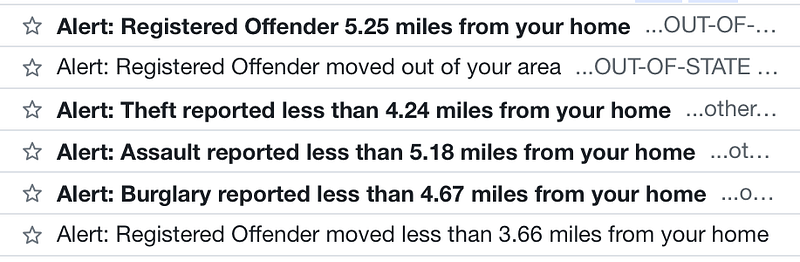
I’m going to turn your alerts off as soon as Mom’s estate is settled. Until then, can you please tone it down?
I know you are thinking, “It’s just data. We are simply reporting the facts to make you more informed.”
Alert: Burglary reported less than 4.67 miles from your home
Facts. Yes. But so-called “facts” can be based upon data that is not always true. And that data doesn’t always transform into quality information. Data spit up all over our news feeds is far more likely to inspire dread, fear, and misinformation than real understanding. Even deeply organized, summarized data can mean virtually nothing.
“Lies, damned lies, and statistics.” — Mark Twain, Chapters From My Autobiography, 1907, and many prominent folks before him
Mark Twain (Samuel Clemens) gave public lectures that might now be called stand up comedy. He was the David Sedaris of his day. He had a little Dave Chappelle in him, too. He wrote funny, iconoclastic books. Hilarious for the time and loosely moralizing. In 1895 he toured Europe making people laugh while he worked off his debts.
Mark Twain knew a lot about a few things and a little about a lot. He was a steamboat pilot, a Confederate soldier (briefly), a miner, a writer, an inventor, a believer in parapsychology, an acquaintance of Thomas Edison, and a lover of technology. His extensive investments in printing press innovations forced him into bankruptcy.
Alert: Theft reported less than 5.18 miles from your home
Mark Twain criticized much that he heard as “lies, damned lies, and statistics.” He would have found the kernels of truth in these alert emails but known that they conveyed little truth.
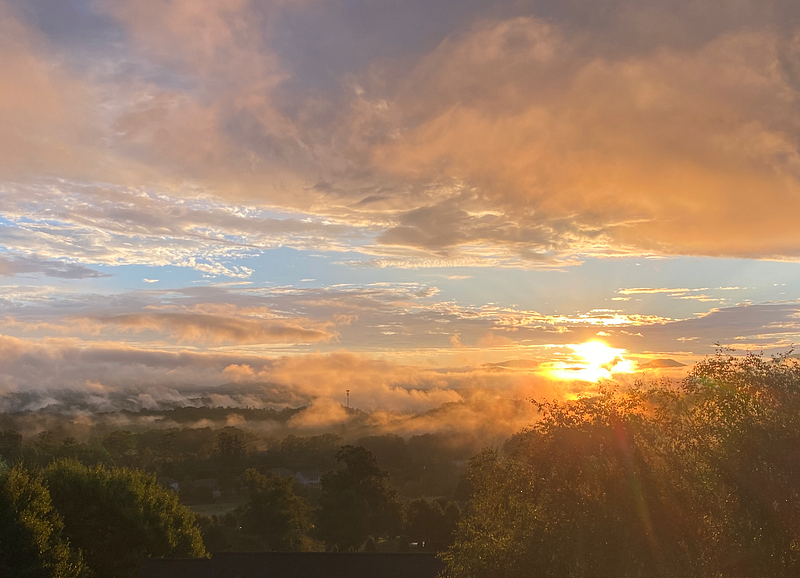
When Mom moved a decade ago, she made it seem like she had found Shangrila. She was leaving the cold and settling in a place with four gentle seasons kindly sharing the year with one another.
Based upon the drip of emails that started once her homeowners association learned my email address…
Alert: Assault reported less than 3.46 miles from your home
…I wondered how she could have possibly survived long enough to die of an aneurism at the age of 80 in a home filled with so much stuff…
Alert: Theft reported less than 4.14 miles away
…stuff that I wish had been stolen. Had it been taken, then there would be less family squabbling over who got that when they really wanted this.
At first, I thought these alarming alerts just a matter of chance because I did see a reassuring one.
Alert: Hot/New restaurant less than 10.59 miles from your home
The last two months of alerts have proven anything but rewarding. When I tabulate the statistics, I find the following:
- Assaults: 8
- Burglaries: 12
- New Restaurants: 1
- Registered Sex Offender Reports: 2
- Thefts: 20
- Vandalisms: 3
- Weather Updates: 2
- Total Reports of Bad Behavior: 45
- Total Reports of Bad Behavior per day: .72580645
Being a little bit of a stats wonk, I know full well that none of these numbers mean much of anything. Statistics must be examined with a lot of diligence before they become valuable:
- We need clarification of the definitions. How does “theft” differ from “burglary?”
- The source(s) of the data must be validated as reasonably correct or authoritative.
- The distance calculation needs to be understood. Is it as-the-crow-flies? Turn-by-turn? Or zip-code-centroid to zip-code-centroid?
- The data needs to be normalized. Does every county or city or state report the same data? Do they report in the same way with the same frequency? Do they use the same definitions? Do they use the same thresholds?
- The data must be compared to other zip codes. And evaluated as incidence/resident and/or incidence/home and/or incidence/visitor. And evaluated over time and by season. And so on.
I’m a person who doubts what I hear. It’s not that most people are consciously lying. They are simply repeating what they’ve heard, as much as they understand it.
I’m a person who disregards statistics without a deep dive. And even with the deep dive, I see statistics as only suggestive of truth. Despite understanding these truths about data, I had given in to the fear after four months of notices about Mom’s town. The drip, drip, drip of warning after warning had converted me.
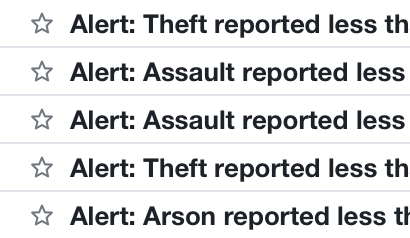
The almost-daily alerts about robberies, thefts, assaults, and vandalism had convinced me that Mom had moved to an unfortunate hell hole. The worst kind, perhaps, because everyone I met there seemed so friendly and the surroundings so beautiful.
Underneath the beauty must boil a frothy cauldron of danger.
Thank goodness I had never moved my family to be near Mom. I grew up just a state away from there, but my wife and I were fortunate to be raising our family in a wonderful neighborhood half a country away.
Yesterday, with the arrival of yet another disturbing alert about Mom’s neighborhood…
Alert: Registered Offender 5.94 miles from your home
…I wondered how bad Mom’s town must really be. I searched up national crime statistics and eventually found CrimeGrade.org. The website answered questions about its multiple data sources. The discussion felt honest about the strengths and weaknesses of its data sets and of its analysis. I could poke some holes, but it seemed reasonable.
Curious, I typed in Mom’s zip code.
After a couple seconds I saw a map centered on Mom’s home. The zip code blocks were almost all shaded green. A few miles away from Mom’s house I could find a yellow zip code, not as safe as the green obviously. Five miles away there was a red zip code. And in another direction there was a small red zip code, maybe seven miles away.
Scrolling down, I found that the site summed up my Mom’s awful, dangerous, I’m-so-glad-I-don’t-live-there neighborhood with a single Overall Crime Grade(TM).
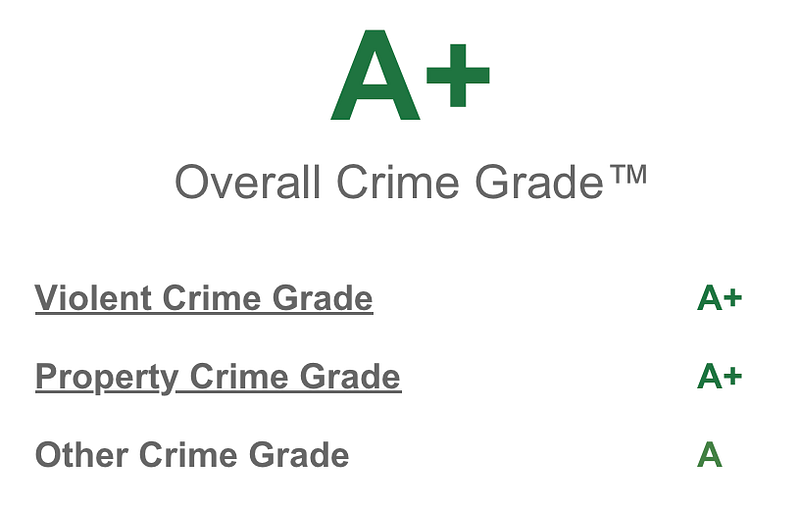
After all these months. After the pushing and nudging and twisting and contorting of my opinion through bad news email after bad news email, I learn that Mom lived in an A+ neighborhood.
Oh my goodness.
You know what I did next, of course. I typed in my family’s zip code. You are probably guessing what I found.
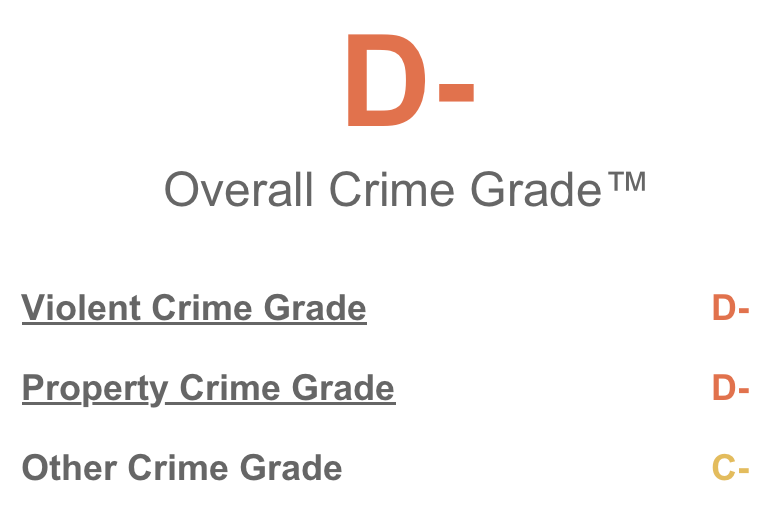
My fancy little neighborhood earned a barely passing grade. Only two of the nearest ten zip codes earned as high as a C.
You get the moral of this story.
Even you jokers out there know that the moral is not, “You gotta move to a safer town!”
Data is not information
The moral is that we are all susceptible to the drip, drip, drip of bad news. And bad news is what the world is peddling as “information” even when it would be more accurately labeled “misinformation.”
The moral is also that data is not information. Loads of data can be as harmful as no data at all. Sometimes even more so.
Comments are welcome. Claps are deeply appreciated.
Please subscribe to read J. Andrew Shelley’s stories and check out his book American Butterfly. It tells the story of America’s Culture War through the lens of a Southern family suffering great loss.