CHAPTER ONE
The George Hughes Trilogy: The Martian Inheritance
In the distant future, a teenage boy inherits the planet Mars.

Over the next few weeks, I’m showcasing the first nine chapters of my novel The Martian Inheritance, part one of The George Hughes Trilogy; three science fiction adventure novels aimed at the young and young at heart. For more background on the novels, please check out this article.
Chapter One: The Mars Landing
‘Today, the human race will land on Mars.’
As far back as he could remember, George Hughes wanted to be a space pilot. He knew everything about the history of interplanetary travel and had followed the Mars mission with avid interest.
The television newsreader continued. ‘United Spacelines vessel Holst will reach geostationary orbit within the next four hours. From there, preparations for landing will be made. As well as Captain David Gull, co-pilot Sophie Miller, and other crew, the passengers consist of businessmen, film stars, sports personalities, pop singers, and two former US Presidents. These celebrities will be surveying the terrain, choosing plots of land, ready for the architects who will build their luxury holiday homes.’
George munched his breakfast as the screen cut to a computer simulation displaying the Martian surface, indicating where the Holst would land and where the passengers could have their homes built. Decades previously, people had questioned the sanity of celebrities who wanted off-world accommodation, but following the huge success of moon colonisation, it was only a matter of time before attention turned to other planets. Martian holiday homes became the latest fad for the stupidly rich.
‘The Holst carried its passengers in luxurious accommodation across space over the last seven days.’
The television showed images inside the Holst. George pondered how much space travel had changed over the last hundred years. The vessel’s interior was a far cry from the cramped, weightless conditions of old NASA shuttles, and instead resembled the interior of a luxury ocean liner. There were expensively decorated living quarters, as well as a large restaurant, bar, casino, dance floor, and cinema.
A simulation outside the Holst revealed the craft resembled an enormous Y.
‘The Holst is the largest spacecraft ever built. Her fuselage is fifty feet tall and over five hundred feet long, by three hundred feet wide. She has been equipped with revolutionary new slingshot rockets, enabling her to travel faster than any vehicle in history. The journey from Earth to Mars was made in less than seven days, averaging between five hundred and seven hundred thousand miles per hour. Until now, a manned voyage to Mars seemed impossible, due to the energy requirements, but water-powered slingshot rockets have changed everything…’
The screen went black.
‘Another power cut,’ said George’s adoptive mother Gertrude, from the kitchen.
‘Typical,’ said, George’s adoptive father Albert, from the bathroom.
George sighed. The power cuts always seemed to occur when there was something interesting on television. But he had to leave soon anyway, or he’d be late for school.

Gulping down his last mouthful of dry toast, George crossed the sitting room to collect his schoolbag. Their tiny flat consisted of one bathroom, one kitchen, one bedroom, and a large communal living area with faded, peeling wallpaper that doubled as George’s bedroom. Against one wall, an ancient-looking brown and green sofa riddled with holes faced the even more ancient-looking television that had been broadcasting the Mars landing. George stared mournfully at the blank screen for a few more seconds, hoping the power would be restored once he returned.
Gertrude strode into the room, flustered and out of breath. Her clothes were ragged from years of wear and tear, and her hair always stood on end, no matter how much she brushed it. Craig Patrick and his gang of bullies at school often said his adoptive mother looked like a witch. This infuriated George, who thought Gertrude the kindest, sweetest person in the world.
‘You ‘ad enough breakfast, George?’
Even though he was still hungry, George knew better than to say he hadn’t eaten enough. Gertrude would offer another slice of toast then there would be none left for her.
‘Plenty, thanks,’ said George.
Gertrude wasn’t convinced. She crouched down and scrutinised George with worried eyes. ‘I ‘ope we’re feedin’ you proper. You’re a growing lad after all.’
‘I’m fine. I’d better go, or I’ll be late for school.’
Albert emerged from the bathroom in his shabby dressing gown, his grey hair sticking out at peculiar angles much like Gertrude’s. ‘George, m’lad! Could you let the power station know our electric’s gone again? I’d go myself, only I’m already late and the roads will be a nightmare when I get out.’
George nodded, thinking, with a stab of pity, just how much older his adoptive parents looked, even though they were only in their late forties. Despite this, their eyes had a sparkle of contentedness that George envied.
‘’Ave a good day dear,’ Gertrude said as George left.
‘Y’never know,’ Albert added. ‘Today could be the day that changes your life.’
Albert often said that to George.
George closed the rotting chipboard door behind him, and strode away from Flat 3, Road 7, DCT District 427; the tiny, run-down concrete bungalow that had been their home for most of George’s thirteen years. He ignored the familiar thick black clouds smothering everywhere affected by the atomic fallout of World War IV, but wished he lived in the nearby city of New Sunderland. At least there, the atmosphere processors ensured it was sometimes possible to see the sky.
George again wished he was a space pilot and could travel to Mars, even though he knew this could never be. Interplanetary travel was prohibitively expensive in the DCT scheme. He couldn’t get within a mile of a spaceport, let alone apply to be a pilot, unlike other children his age, born into rich families. But George refused to let go of his ambition. One day things would be different.
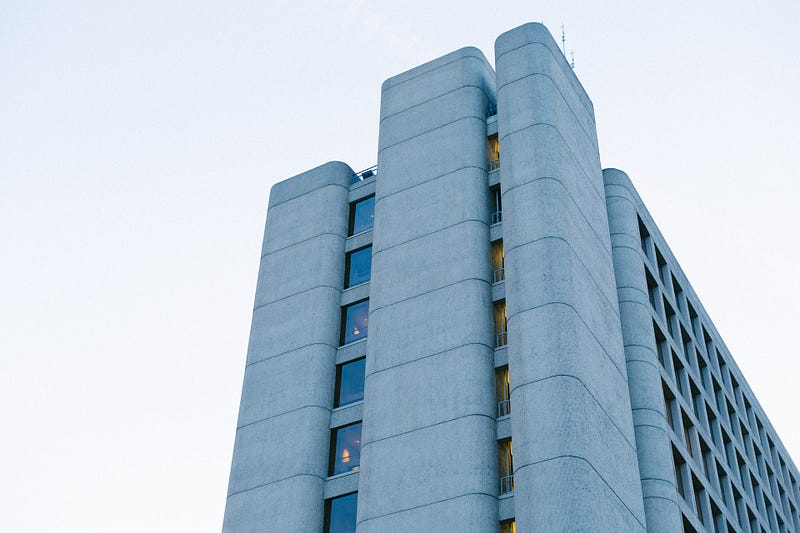
After ten minutes, George reached DCT School 832, which he had attended since the age of five. He stared up at the dreary steel and concrete columns of the school building, groaning inwardly. The mock examination papers had been marked, and the teachers would be angry at his results.
Sure enough, as he sat in the classroom at his internet terminal, moth-eaten Mrs Richards fixed him with a cold glare from beneath shaded spectacles.
‘George Hughes, I’m sorry to say your results are outstanding.’
George sighed, resigned to what was coming.
‘I’m disappointed in you, to say the least. I don’t understand why you continue to defy me. There was no need to get all the questions correct.’
Craig Patrick yelled from the back of the class. ‘Because he thinks he can be a space pilot!’
George glanced at Craig as the other pupils sniggered. Craig was a stupid bully and had a face like a pale spotty camel, yet somehow managed to be the most popular person in class. Mrs Richards let the laughter continue for a moment then motioned for silence.
‘No Craig. Someone as intelligent as George would realise there’s no chance of ever becoming a space pilot. Unless he’s magically forgotten who he is and where he lives. Have you forgotten George? You know what the DCT scheme is, right? Debt Control Tax. Instituted forty years ago to prevent financial collapse after the war. Intended as a temporary measure but became permanent. Every low-paid worker pays one hundred percent tax, to avoid slipping into debt. In return, the government feeds, clothes, and houses you, as well as providing a generous allowance…’
‘Hardly generous,’ George muttered.
‘I’m sorry. What was that?’
‘Nothing.’
‘Exactly what any space pilot application made by you will lead to, George. Therefore, there must be some other reason you insist on attaining marks that will never be of any use to you.’
George’s cheeks burned with embarrassment. He hated the way Mrs Richards made fun of him in front of the entire class.
‘Come now George, you could at least have answered this question incorrectly: Calculate the speed of light from a light source emanating from within a spacecraft travelling at one hundred thousand miles per hour. No thirteen-year-old DCT child should know that.’
‘299,792,458 metres per second,’ said George, without even thinking.
‘And what’s all this stuff underneath? Can’t you answer any question simply?’
‘It was a trick question. The speed of light is constant, regardless of whether the source of the light is in motion or not. However, that is assuming the light is travelling through a vacuum, in the absence of matter. In reality, the speed of light depends on the material the light moves through. For instance, light moves slower through glass than through air…’
‘Enough!’
George fell silent at Mrs Richards’s command. He had launched into a scientific lecture without meaning to, but the speed of light and theory of relativity were such fascinating subjects, he couldn’t contain his enthusiasm.
‘If you must answer everything correctly, then at least have the decency to keep your answers free of explanations that are nothing more than showing off.’
‘But the question said to explain…’
‘Be quiet.’
Mrs Richards began to foam slightly at the mouth. From experience, George knew this was a sign that now would be a good time to back down. But he also knew this was a humiliation he would have to endure again. Despite being a DCT child, despite what he knew about his future job prospects, and despite Mrs Richards, deep down he knew someday he would be a space pilot. Therefore, he had to study hard. If that meant endless ridicule for getting high test results, it was a price he would have to pay. Try as he might, he couldn’t deliberately get Maths and Science questions wrong. Why did everyone think it was showing off to use his talents to the best of his abilities?
After school, George didn’t want to face the jibes that would inevitably come his way as he left the building, so he tried to slip away unnoticed. Instead of making his way across the playground, he crept around to the rear of the school, hoping to leave through the back gate. Unfortunately, upon passing the dustbins he was confronted by Craig Patrick and two of his cronies, Dave McFarlane and Trevor Scott. Trevor was tall, pale, and thin. Dave was short and fat.
Upon seeing him, Craig, Scott, and Trevor cut off George’s escape. George’s heart sank at getting caught. At the back of the school there were no surveillance cameras, and no witnesses to the beating up that would inevitably ensue. George was no fighter, and Craig was considerably bigger than him.
‘It’s the space pilot!’ Dave hissed.
‘Think you’re better than us?’ taunted Trevor.
‘Of course, he is!’ Craig pressed his ugly face against George. ‘He’s going to be a great scientist like, like…’ Craig stuttered as his brain tried to catch up with his mouth, before he finally managed to think of a name. ‘Frankenstein!’
‘It’s Einstein you moron,’ said George.
‘Whatever,’ said Craig, punching George in the jaw. His teeth slammed into the side of his mouth, cutting his cheek. Tasting blood, he staggered back but remained on his feet. Knowing he was in for more of the same, George decided he wouldn’t just take it silently.
‘Do you really enjoy this? I mean, surely there’s only a very limited amount of fun in making my life miserable?’
Craig punched him again, this time on the nose. A jolt of pain shot through George’s head and his eyes filled with water. He decided to fall to the ground even though the punch hadn’t been hard enough to cause this. That way, Craig might give up earlier and leave him alone.
Craig, Dave, and Trevor all began to kick him as he lay sprawled on the tarmac. George curled up into a ball and closed his eyes, aware only of blinding pain as blows rained down on him.
‘Wait!’ said Craig. The kicking ceased.
‘Let’s get him a space helmet!’ said Dave.
‘I reckon he’s had enough,’ said Trevor.
‘I say when he’s had enough!’ hissed Craig.
George opened his eyes and saw Craig carrying a large dustbin filled with rubbish over to where he lay. Dave and Trevor pulled him to his feet and Craig placed the dustbin over his head. Cold rice pudding, eggshells, and other waste from the school kitchens spilled down his head, neck, and face. The dustbin covered most of his body.
George couldn’t see a thing. He tried to breathe in and accidentally tasted rotten, stinking cabbage. Coughing violently, he spat it out and waited for Craig and the others to leave him alone.
Eventually, the hysterical laughter from Craig and the others stopped and George heard them run away. After waiting a moment, he pushed himself out from under the dustbin. His back and ribs ached from where he had been kicked, and his mouth and nose were swollen. The taste of blood and rotten cabbage lingered in his mouth as he scraped away the worst of the mess from the dustbin.
When he finally left through the back gate, George thought he caught a glimpse of a shadowy figure emerging from behind the other dustbins, but when he turned back there was no one. Dismissing the image as a trick of the light, he hobbled into the road and staggered along the street away from the school.

The grey landscape seemed darker than usual. A rumble of thunder echoed in the skies. George remembered he had to visit the power station on his way home to report the loss of electricity, so hastened his step, despite pain from his bruises. People kept staring at him, and George realised he must look and smell disgusting. He continued to brush himself down, but the stench of the bin clung to him. He longed to be home where he could take a shower.
George noticed crowds congregating around one of the many giant video screens dotted outside around DCT District 427. People were watching with great interest, and George remembered the cause of their curiosity. He rushed into the crowd and stared at the screen. Several people moved away from him, making disgusted faces at the smell.
George’s heart thumped with excitement as the screen displayed the Holst spacecraft on the surface of Mars. Sophie Miller was about to become the first human to set foot on the surface. She had already put on her spacesuit and had emerged from the hatch, walking down the ladder to the ground. The Holst utilized the latest digital cameras to beam pristine pictures back to Earth; a far cry from the fuzzy images of the 1969 moon landing.
George expected Sophie Miller to come out with a snappy one-liner similar to Neil Armstrong’s legendary “one giant step for mankind” quote. However, she could only manage an uninspiring but understandable ‘Wow!’ as she set foot on Mars and stared across the bleak red landscape.
At this, people began to move away from the screen. George couldn’t understand why. He wanted to clap and cheer, but his enthusiasm for space travel wasn’t shared by these people whose only thoughts were of their own troubles. Yet although his dream of becoming a space pilot seemed further away than ever, George couldn’t help but feel a sense of pride that elevated him above his miserable day. Mankind had landed on Mars. Although, he didn’t know why, he knew it was the beginning of a new era that would change the world forever.
Click here for Chapter Two
The Martian Inheritance and the other novels in The George Hughes Trilogy (including this three novels for the price of two omnibus volume) are available from Amazon and Smashwords.
Copyright 2022 Simon Dillon. The moral rights of the author have been asserted.
If you enjoyed this story, please consider supporting my writing on Patreon or Ko-fi. You can also offer a tip via Paypal (see tip button below). Alternatively, if you want unlimited access to my writing on Medium (and that of many other talented writers), click here to upgrade to full Medium membership. This is an affiliate link. I receive financial incentives for new referrals, so that’s another hugely helpful support to me. Thank you.
For more about me and my writing on Medium, please click here. For information on my writing outside Medium, please click here. For a list of my published novels and other works, please click here.