
What Is The Marketing Mix?
Is it still the most important marketing model to understand?
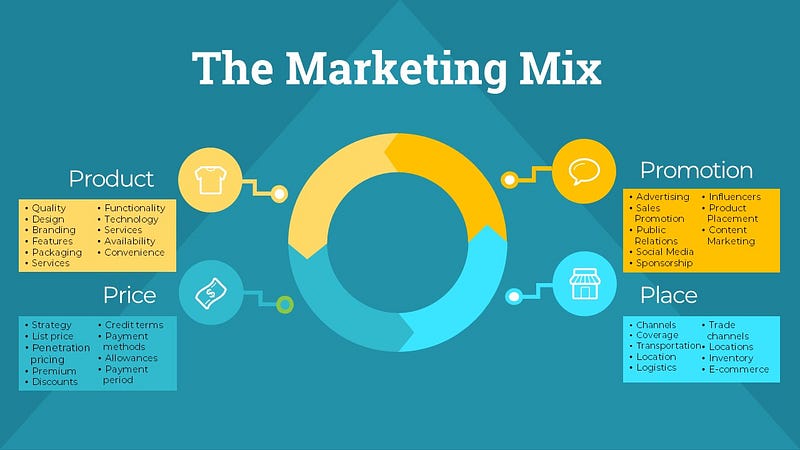
The marketing mix framework has been the preferred and dominant marketing model since its introduction around 60 years ago.
It was the first marketing model that all of us marketers learnt in marketing 101.
It became treated as the unchallenged basic model of marketing, overshadowing other theories and approaches. It has also played a vital role in the evolution of marketing management.
But what about now?
In the age of digital marketing, where mass-marketing theories from over 50 years ago a more or less obsolete, is the marketing mix still relevant in 2021?
What is the marketing mix?
The marketing mix is a list of the essential elements that make up the foundation of a company’s marketing strategy.
The mix helps marketers to evaluate often and re-evaluate brand activities.
As customer needs rapidly change, brands should often revisit their marketing mix to see if they target today’s marketplace.
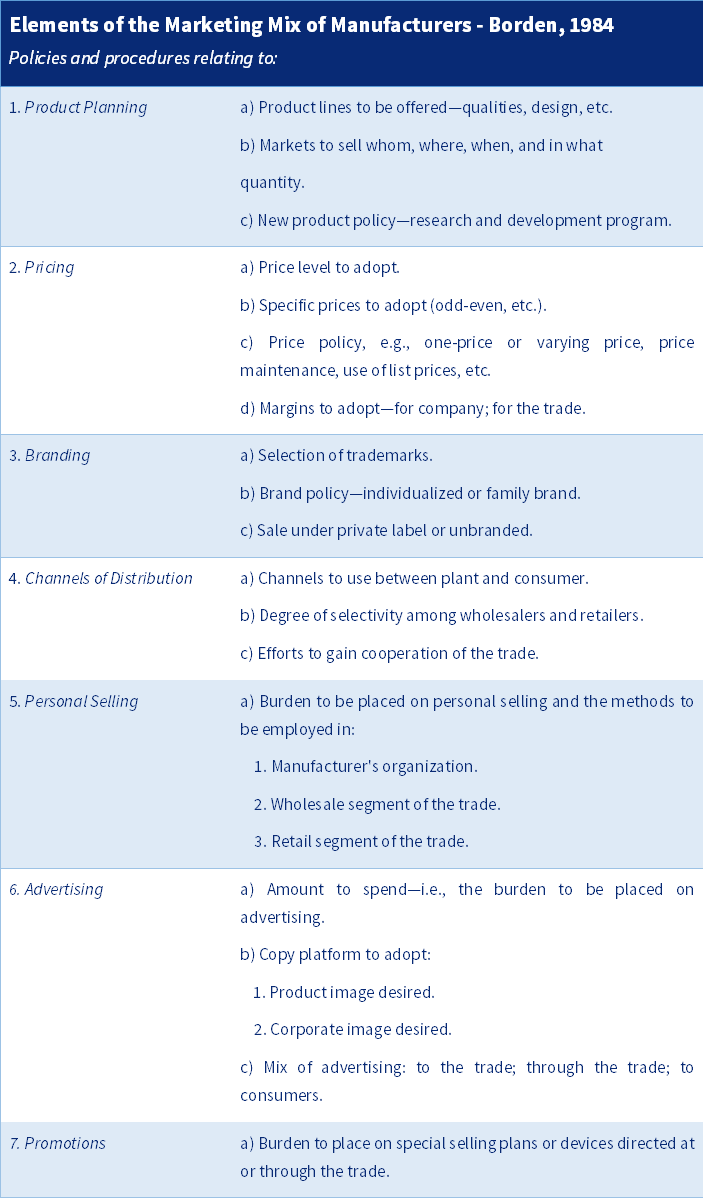
The marketing mix was a concept popularized by Neil Borden in the 1980s. Borden remarks that “The quest for a science of marketing is hard upon us”. He wanted to create a practical toolkit to help marketers to be objective and to bring an understanding of what marketing is.
Borden names twelve controllable marketing elements that he believed, if responsibly managed, would result in a “profitable business operation”.
A strength of the marketing mix model is its simplicity — categorising the fundamentals of marketing, as a reference point for applying marketing to a business.
The 4P’s
The 4Ps has become synonymous with the marketing mix. The 4Ps are product, price, place and promotion. The strength of the 4Ps approach is that it is a memorable and practical framework for marketing decision-making.
Along with academics' popularity as a teaching tool, the 4Ps Mix became the trusted framework for marketing managers dealing with tactical/operational marketing issues.
Each of the 4 “ingredients” complements each other. For example, you cannot develop a product without considering its price.
Product
The product or service that your company wants to sell to customers. The product covers everything from the product design, the technology your product uses, to the convenience of the product and warranties.
A business should be able to look at their products critically as though you were from the outside looking in and ask a couple of crucial questions:
- Are the products/services suitable for the market and customers of today?
- How does it rate next to competitors? Do you have a point of difference?
For a product or service to be successful, it is essential first to know what market exists. Research is a crucial step to getting your product right.
Price
Pricing strategies that allow you to be as profitable as possible. It needs to be relative to your competitors, the needs of your customers and the marketplace.
Sometimes you need to lower your prices. At other times, it may be right to raise your prices.
Often, the profitability of products/services does not justify the amount of effort and resources to produce them. By raising prices, you may lose a small proportion of your clients or customers, but you become profitable.
Consumers use price as an indicator of product quality or benefits. High-priced brands are often perceived to be of higher quality and become less exposed to price cuts of competitors
Promotion
Promotion is how you communicate with your target audience/customers about your products/services. It is essential to use different promotion and communication channels to find the best way to reach your customers and make sales.
Promotion includes advertising, content marketing, sponsorship, sales staff, product placement, direct mail, social media, and influencers.
The way we promoted our brands in 2020 has changed drastically in just ten to twenty years. What is working today will not necessarily work next week.
Businesses need to consistently update their marketing communication and stay updated with what is relevant and the most cost-effective way to reach and convert prospects into customers.
Businesses should often review their sales processes to try and maximise their conversion rate of leads into customers / clients.
Place
The place is where and how you sell your product or service. It could be a brick and mortar store (physical location) or online.
If you have a physical location, it needs to be well thought out to be as convenient as possible. If your business is based online, your website and sales process should be professional, well-structured and easy. You want to make the process as pleasant as possible to increase your chance of a sale.
There are so many alternatives online; you do not want frustrated customers going elsewhere.
The sales channels your company uses is another aspect of the place.
Are you using salespeople, intermediaries or selling directly to the customer?
Wholesale or retail?
Are you selling through Facebook ads, telemarketing or catalogues?
Your business should try different methods to work out what works best for customers.
The marketing mix: A vague set of guidelines?
Although the 4Ps is the marketing model, it is not without its criticism. The marketing mix is a list of categories of marketing variables.
The 4ps is essential in this sense, with only four variables. It is quite vague, and the model focuses on internal variables, therefore, an incomplete basis for marketing.
Marketing has evolved, and the 4Ps model is just not specific enough for many businesses. Tremendous as a general learning tool — simple to help learn the basics of marketing, but not enough specifics for most companies to apply and measure.
A shift from product-focused marketing to people-focused marketing
With the explosion of social media and digital marketing in the 2000s, the way brands communicate with customers has drastically changed. The number of services available to consumers has increased rapidly, and there has been a shift from mass marketing to niche marketing.
The 4Ps is a mass-marketing technique and a product-oriented approach.
Marketing has moved from a product focus to a market or a customer-orientated approach. Businesses must nurture relationships with niche markets and supply solutions to clients.
Another customer-focused marketing mix model is the 4C’s (Lauterbur, 1990) that uses the dimensions of communication, consumer needs, cost, and convenience.
Businesses make marketing decisions based on giving customers the service they need and want.
The purposes of communicating with customers and identifying their needs what they specifically want to buy (consumer needs), minimise the total buying cost to satisfy what a consumer wants (expense), and provide the consumers with the ease of getting the products/services (convenience).
4C’s: Marketing decisions are based on giving customers the service they need and want.
The Seven Ps of Services Marketing
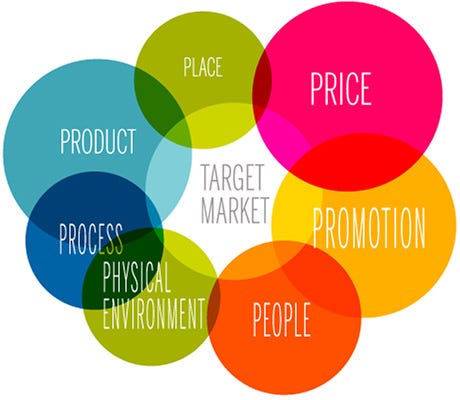
The Seven P’s is an extension of the 4P’s, adding packaging, positioning, and people.
Other variations of the Seven P’s include Processes and Physical evidence. I will discuss all five. These frameworks are for services, often called the 7Ps of digital marketing, services marketing, or target market.
Physical Evidence
Physical evidence is a valuable tool for a business to build credibility with potential customers.
Examples of this are consistency across branding, testimonials from former clients, and recommendations. People do not like to buy the unknown. Social proof is crucial for them to take the next step. Ask for feedback, and develop reference materials so new customers can buy with confidence.
If your facilities are not up to an acceptable standard, why would the customer think your service is?
Physical evidence also comes in the form of professionalism from staff, cleanliness of the brick and mortar store or office, or smart online interfaces. This physical evidence is reassuring to the customer as it helps associate professionalism with your brand, building your credibility.
Process
Often systems are designed to help the company instead of customers. Here lies the issue.
The process of a business is how they supply & sell a product or service. Every link of the chain from convenience and speed at the point of sale responds time online or on the phone from customer service—the helpfulness of staff, and how they deal with complaints.
Having processes in place and staff trained in those processes ensure consistency across the organisation.
A potential customer has a frustrating customer with a non-empathetic team can have a devastating effect on mass. Many customers will give up and use another company. Then tell their friends and family, and anybody on social media who listen to avoid your services.
In the age of Google Reviews, it is crucial to have your service processes right.
Packaging
The packaging is the way your product or service appears from the outside. Packaging also refers to your staff’s presentation and how they interact with customers. Your place of business. Your print marketing, your branding, your website.
Everything influences customers’ confidence (or lack of) in dealing with you. Like how real estate agents all dress a certain way and often drive a similar type of car. It is all about creating a specific belief.
You want to leave people with a great first impression.
Consider everything that the customer sees from the first moment of contact with your company through the purchasing process. Small improvements in your product or service's packaging or external appearance can often lead to your customers' entirely different reactions.
Positioning
Positioning is where a brand sits in the market relative to the competition. Where does the brand sit in the hearts and minds of customers? What would people say if we asked them to describe a brand?
How you are seen and thought about by your customers is crucial to success. How strongly people feel about a brand and how they perceive it compared to the alternatives determines how likely they are to become customers.
When determining your preferred market position, think of your ideal client or customer: what would attract them to your brand. How can you position yourself today to solve problems tomorrow?
People
People are the final P in the marketing mix. Not just dealing with customers, but the culture within a company.
People includes recruitment and training/professional development and staff benefits. Recruit, hire and keep people with the skills and abilities to do the job.
Your brand's reputation depends on the service customers are given, so staff must buy into the company vision and be well-motivated with the right attitude.
Many customers cannot separate the product or service from the staff member who provides it.
Thus, the importance of your people. Anyone who meets customers will make an impression, which can profoundly affect customer satisfaction. Negative or positive.
Summary
We have explored the marketing mix, its history and its relevance today.
The marketing mix is the essential element that makes up the foundation of a company’s marketing strategy.
What do you think? Is it still relevant?
Times have changed, but marketing’s essence of putting the right product in front of the right people is still fundamental to any business.
Thank you for reading.
If you enjoyed the content, check out this article on sales versus marketing.
Read as many Medium articles as you like!
Non-Medium members can only read 3 free articles a month.
If you liked the content and would like to read more articles like this, sign up to become a Medium member for just $5 a month. It also supports us writers!!


