
‘The Mark’: A Fight Song for My LGBTQ+ Tribe
Twenty-five years of progress — and regress — and more guns
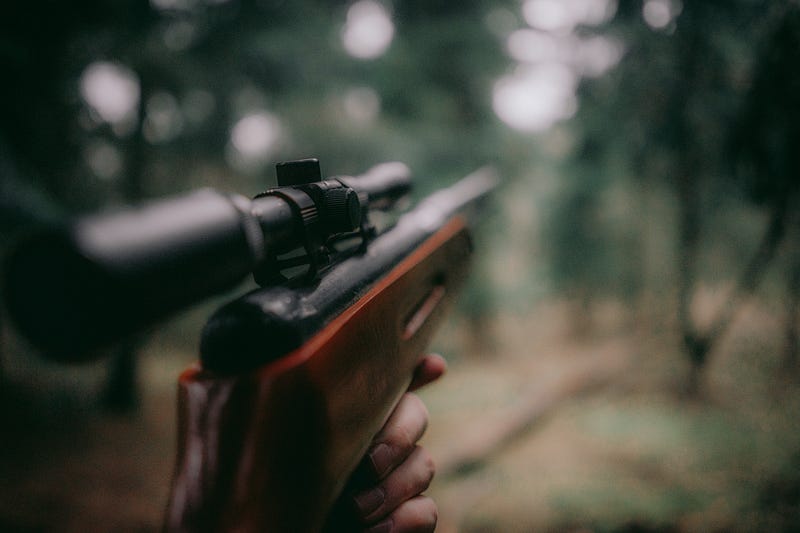
Back in the mid-nineties, Oregonians struggled to define community. A vocal minority sought to draw a circle and place queer folk outside it —equating queerness with bestiality and pedophilia.
It was a bad, hard time, those electoral fights with the so-called Oregon Citizens Alliance over basic human rights — really, over basic humanity.
And here we find ourselves once again.
In those days I lived with my partner in a lovely house overlooking a vast field surrounded by oak forests. During hunting season we could hear the guns — sometimes very close to the house. When I took my Doberman out to pee, I was scared that he would be hit. I kept him close to the house. Once, after a particularly loud report, I yelled at the unseen hunters, and they yelled back.
“We can see you.”
It was not a reassurance. It was a threat.
So this song came to me in those dark years. I imagined things that have pretty much come to pass, figuratively, and may quite literally if the Republicans elect a president in 2024.
I call the girl’s difference a “mark” — “unchosen, and unsought, and understood not at all,” even by her.
The lyrics:
Driven from the town by a fire in the night She had been preparing for the siege Ever since she let them see what she’d seen herself, long ago
A small three-cornered mark at the base of her throat Like a locket, or a shadow, or a call Unchosen and unsought, and understood not at all
Fleeing to the forest with her dog, and a gun from her sister, who stole it from a rack on the wall of their father’s clean white home, in the clean white town Now at war
Their enemy a girl who’d protected them well For many years she hid the mark in shame Knowing nothing of its meaning, she recognized its final claim.
And at last she recognized the ones gone before The runaways, the throwaways, the lost Orphaned by the town that drew the line And made them cross
Living in the forest with her dog, and the gun, and the children Who never would fit into the world they were born in with the mark that cast them out, and made them one.
As rumors filled the town of a force in the woods of savages who thrived outside their laws Some brave men seized their guns and marched off to hunt their leader down
The first shot hit the beast, and he sank to his breast Silently surrendered to the dark She turned to them in rage And the second shot found its mark
Dying in the forest by her dog, and the gun That the children would use to kill the men, one by one, Under cover of the night, as their army grew And grew strong.
— Mina Carson, 1990s
You remember that I warned you at the beginning of this songwriting series that mistakes would be made. Again, these are simple recordings done with my iPhone and a sweet little Shure MV88, plugged right into the lightning port at the bottom of the phone. So that accounts for the throat-clearing in the middle of an otherwise fairly clean track. Oh well….
It’s a simple A minor song, with a verse-chorus structure. No bridge. I just wanted to tell the story from beginning to end, to build the drama.
In the Oregon campaigns of the 1990s, we experienced intimidation, vilification, threatening letters, threatening newspaper ads, threatening graffiti. There were deaths. An animal was tortured, for god’s sake.
We survived, most of us. We won the campaigns — all of them, at least statewide. And we learned that alliances were critical to our dignity and our survival. By the end of 2000 we thought we had seen the worst of it.
But the trauma doesn’t go away that easily. We are an easy target. And now in 2023 we watch our trans siblings — our trans children — vilified, intimidated, threatened, and murdered. And those of us who are “simply” gay, lesbian, bi-, et cetera, find ourselves in the crosshairs as well.
So what do we do? Songs aren’t enough. But sometimes we can ease the trauma that way.
We have to vote. We have to vote. We have to come out, and we have to turn out. We have to win, again and again and again. We must not allow ourselves to die in the forest.
A couple more entries in this songwriting narratives series:
This one has a bit more about the OCA campaigns in the nineties:
Thanks for reading and listening!


