
The Many Ways We Pay When We Choose Chemistry Over Compatibility
And how to shift our priorities for healthier relationships.

I used to pay lip service to the idea that I was looking for certain values and characteristics in partners. All the while, I was letting attraction take the lead in my search for love. I would have said at the time that personality was as important as attraction, but what I didn’t realize and wouldn’t have been able to admit is that I was willing to overlook more flaws when I was attracted — and even more when there was strong chemistry.
To be fair, I married young and divorced in my thirties. I had some growing up to do. I didn’t have extensive dating experience. I’d had years of an unhealthy, neglectful marriage. I was figuring it out the way most of us do — by experience. I learned the hard way, but I did learn.
I didn’t realize and wouldn’t have been able to admit is that I was willing to overlook more flaws when I was attracted — and even more when there was strong chemistry.
How Choosing Chemistry Over All Else Will Cost Us
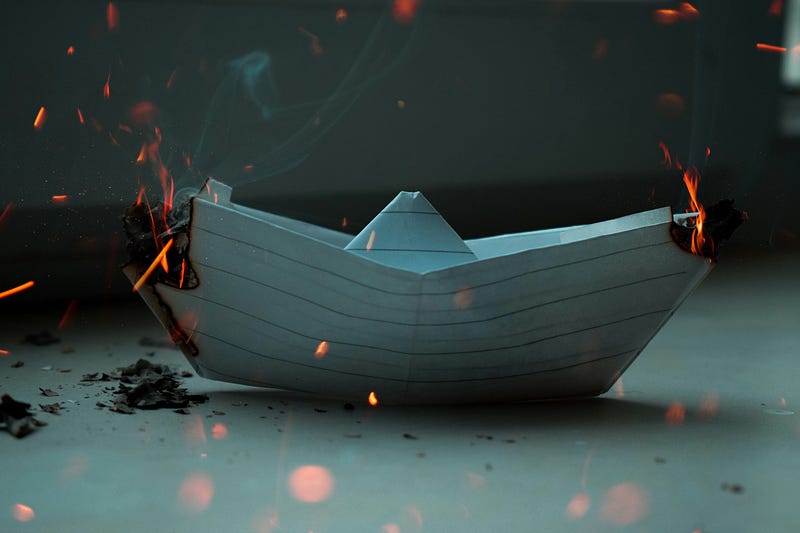
Now, it’s not just lip service when I say that values and compatibility are a priority. I mean it. I learned that choosing chemistry over the more important compatibility will cost us in ways we might not fully understand.
It Costs Our Time
I gave so much of my time to relationships where we didn’t share the same values or long-term goals. Instead of cutting my losses early, I allowed myself to grow attached, making it far harder to leave when the differences became even more apparent. We might enjoy the exhilaration of chemistry and passion, but we pay the price when our paths diverge. We’re left mourning something we should probably have avoided in the first place — and we can’t get back the time we spent on those relationships.
It Costs Our Self-Worth — At a Minimum
I can also guarantee that choosing chemistry over compatibility will sometimes cost us our self-worth. While this isn’t always the case, it certainly can be when the red flags we ignore signal that our partner has the potential to be emotionally or physically abusive. I still carry the emotional scars of an angry man that I should not have allowed into my life.
When we see those signs that portend abuse, we sometimes make excuses for them. We want to stay in the relationship longer, so we ignore all the warnings that we should leave. The price we might have to pay as a result could be far too high.
It Costs Our Availability for Healthier Relationships
I often fail to estimate the time it will take me to heal. I know I love hard and grieve hard, but I’m always so sure I’ll just bounce back from heartache. I spent a couple of years in a relationship that I was so sure would be forever, and when it ended, I spent a couple years more grieving all that I had lost — the relationship itself, an imagined future, and even the person I thought that I was … the person I thought he was. Death by a thousand cuts is severely underestimated when it comes to the pain of a broken heart.
When we insist on pursuing chemistry even when we know the person isn’t a good fit, we can cost ourselves more time than the relationship alone. We can also cost ourselves availability for healthier relationships. We make ourselves unavailable in the relationship and then in the grief that follows instead of just accepting reality from the start and making a hard choice.
It Costs Our Ability to Trust Ourselves
It makes it hard to trust our judgment when we keep choosing the wrong people, which is exactly what happens when we allow chemistry to overrule shared values, interests, and goals. It creates a fissure of self-doubt that we’ll have to work hard to rebuild in the aftermath. When we date this way, we create a pattern that will continue until we learn from it.
It takes time to recover from damage to self-trust. We have to rebuild it, and it’s not an easy process. Our instincts were never bad. We just didn’t pay attention to them. We ignored them because we wanted to — because it felt easier at the time to make excuses than to walk away. We justified our choices even though our intuition told us we were choosing unwisely.
It Costs Our Relational Health
If we’re growing as individuals, we should get healthier with each new relationship, but I think we all know that doesn’t happen. Oftentimes, people keep repeating the same relationship mistakes. Their relational health doesn’t improve because they remain unaccountable for their actions, which includes how they choose partners.
We need to become healthier people to become healthier partners. We can’t do that if we’re not (a) self-aware and (b) willing to work on the issues and patterns we discover. This is how I transitioned away from prioritizing chemistry. It cost me — too many times. I made too many excuses and gave too much credit when I was getting none at all. But I wanted different outcomes in my relationships, so I changed how I was choosing. I changed how I communicated and engaged. I got healthier.
Let me assure you: I am not perfect. My anxiety still trips me up when dating. I can easily walk away from red flags now. But green ones? They’ll have me stuttering, stumbling, and trying to figure out how to deal because I’m not accustomed to easy or healthy. But I’m learning. This is growth.
How to Prioritize Compatibility

I will never say that attraction and chemistry don’t matter. They do. They just don’t matter more than compatibility. Compatibility is the key to strong, lasting relationships. Attraction can fade. Chemistry might need work to maintain. But compatibility makes the whole process so much easier.
We Need to Know Ourselves Well
To understand compatibility, we need to know ourselves well — what we want and what we don’t. We need to have clear goals for the future, but we also need to have clear goals for the present.
- How do we prefer to live?
- What kind of lifestyle do we want?
- Where and how do we want to live?
We need to have ideas about what we’re willing to compromise and what is non-negotiable to us. This will help us sense when a relationship is in alignment and when it’s outside of that alignment. Self-knowledge can help us make wise choices even if those choices aren’t easy ones.
We Need to Slow Down
Let me explain what I mean here: We need to slow down and get to know people before we meet. We need to take the time to ask the necessary questions about their values and life goals. I know some people prefer to meet immediately and figure it out in person, but my philosophy is to never allow chemistry to develop before ascertaining that there is at least some basic compatibility. This has saved me so much heartache. We need to stop those relationships at the first red flag, not after we’ve already been in the relationship for months ignoring it.
We Need to Build Stronger Boundaries
It’s incredibly important to build strong boundaries and to be able to hold them. It can be tempting to wiggle a boundary for a pretty face that’s almost right for us, but it’s not wise. Healthy relationships will allow us to maintain an individual identity while building a coupled one. They won’t make us sacrifice ourselves. Strong boundaries will help us navigate all relationships — not just romantic ones.
We Need to Communicate Clearly and Honestly
While I could have just mentioned good communication, we must speak clearly and honestly. We need to correct wrong assumptions and make sure we’re not making them. We need to be willing to say what we want even if it costs us the potential for that particular relationship. We need to say what we don’t want for the same reason. It’s important to trust that the right people will want what we do — and the wrong people never will.
I spent so much of my life afraid to speak up and say what I wanted in relationships. I was so afraid of the consequences. But that fear came from a knowing. I knew at a deeper level that the relationship’s foundation was flimsy, and the slightest upset would topple it. So, I stayed silent and agreed even when I didn’t. And those relationships fell apart anyway.
The Price of Love
Sometimes, we learn valuable lessons from the wrong relationships. I don’t regret most of mine, but I do have one that did such unbelievable damage that I would take it back in a heartbeat. I learned lessons, but they were brutal. I wouldn’t wish them on my worst enemy if I had one.
Love has a price. It hurts to be vulnerable enough to love another human being. Even with the healthiest relationships, we fear loss. But we know that the love is worth every moment of the fear.
The same is not true for unhealthy relationships. Sometimes, the price is far higher than any perceived reward. If we keep having the same wrong relationships, we need to investigate our role in perpetuating the cycle.
Love is beautiful. I am so grateful for the times I’ve experienced pure love for another person. But these days, I know that I’m not willing to risk my heart when compatibility is absent. I’m paying attention. I enjoy chemistry. I value it. But if it’s missing compatibility, I know I can’t afford it any longer.