
The Many Lessons Being a Springsteen Fan Taught Me About Death
“Is there anybody alive out there?”
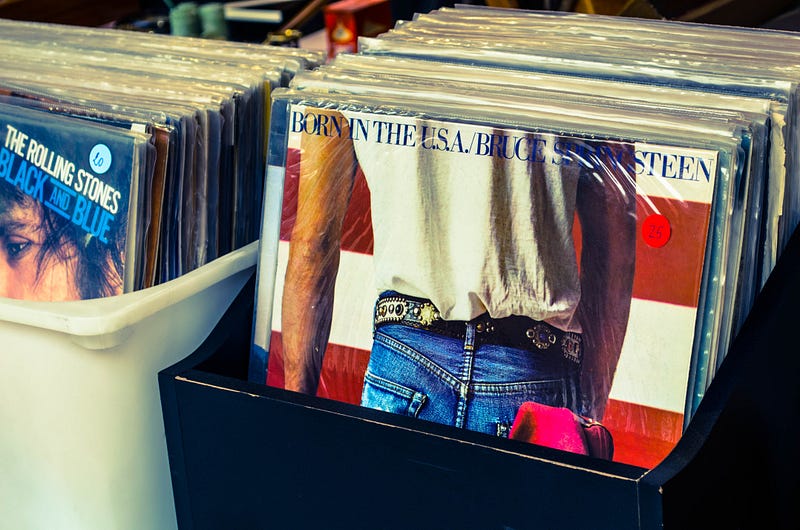
Rock and roll can teach us a lot of things, regardless of what our parents thought as we blasted heavy metal through the house in high school. Sometimes it’s as profound as expressing the angst we all feel as we navigate our teen years (The Smiths) and sometimes as simple as how to just say “fuck it” and have some fun (The Ramones). Sometimes it can, over the course of a lifetime, even teach about the one thing every one of us will someday face: death.
Yeah, it seems like I’m wading into major buzzkill territory here but stay with me. Better to talk about it now under sunny skies with a beer in hand than wait until the dude in black robes knocks on your door with a scythe. There is no better guide, musically at least, than Bruce Springsteen, who’s been tackling the subject in song for almost 50 years.
Maybe you’ve never thought about it, sticking mainly to “Born to Run,” “Hungry Heart,” and “Dancing in the Dark.” You think he’s all about cars and factories and the open road. Well, he is and he isn’t. Buckle up and let’s take a ride with the shaman from the Garden State.
Starting with his very first album, Greetings from Asbury Park, N.J., Bruce was dealing with the issue of death. On two songs in particular, “Lost in the Flood” and “For You,” he touches on death as the result of gang violence and suicide, respectively. And as you would expect from a 24-year-old (which he was at the time), there’s not a lot of reflection. Guys die in gangs, people commit suicide; these are simply facts. Death lays in wait. By the time the Magic Rat dies in “Jungleland” at the end of the Born to Run album, he’s become more poetic about it, but death is still just a matter-of-fact thing.
That’s where I was at that age as well. Maybe it’s because every knuckle-headed boy who ever lived thinks he won’t live past 30, for me death was not something to be pondered. It was out there certainly, but I couldn’t do anything about that; when it was my time, it was my time. That was why I could join the Army at the start of Desert Shield in 1990 with no real worries; either I’d come back or I wouldn’t.
Eventually facing that mortality in its many forms, physical being only one, is a passage from reckless youth into real adulthood, and can come surprisingly late. I was nearly 30 the first time the words of “Racing in the Street” from the Darkness on the Edge of Town album meant anything to me:
Some guys they just give up living And start dying little by little, piece by piece
Giving up as life beat you down was a death too, a living nightmare without even the peace of the grave. Get caught there and it’s over for you, buddy.
By the Nebraska album, one of his finest and one in which death shows up more often than you would expect on a folk-rock record, Bruce has become philosophical about it. Consider this from “Atlantic City:”
Everything dies baby that’s a fact But maybe everything that dies someday comes back
He’s clearly talking about more than just physical death here. The death of love, of hope, of dreams are all wrapped up in those lines, yet with a hopeful ending. It’s a verse that has carried me through many hard times. That’s because he knows at our core we are, however crazy it may seem, hopeful. In “Reason to Believe” he says this:
Struck me kinda funny Seemed kinda funny sir to me Still at the end of every hard earned day People find some reason to believe
As he has gotten older (though 71 seems a lot younger to me now than it used to) Bruce has dealt with the death of friends and loved ones, just like we all do. He lost his father in 1998, and in a three-year span between 2008 and 2011 lost lifelong friends and bandmates Danny Federici and Clarence Clemons as well as longtime assistant Terry Macgovern in 2007. In “Terry’s Song,” a hidden track on the Magic album, he sings what is essentially a eulogy:
When they built you brother they turned this dust to gold When they built you brother they broke the mold
This was the song that ran through my head at my sister’s funeral three years ago; they broke the mold with her too, and Bruce had put it into words for me a decade before. The congregation may have been singing hymns, but I heard Bruce. She would have expected no less.
It is his music that has sustained me though other deaths of all kinds, from a divorce to the loss of a business to actual, physical death as well. When Clarence Clemons died unexpectedly in 2011, I cried more than I had since my grandmother passed 20 years earlier (it’s funny the impact someone you never met can have on you). It was Bruce’s music, and Clarence’s sax parts on those songs, that carried me through.
There is a reason that on the 2007 song “Radio Nowhere,” and in concert for years before that, that Springsteen screams “Is there anybody alive out there?” Too often we just aren’t. We exist, we move through the world in a daze, and not until the end do we realize we didn’t actually live nearly enough.
We give ourselves to things that don’t matter; when was the last time someone said on their deathbed that they wish they’d worked more overtime or watched just one more sitcom? I haven’t always followed Bruce’s lyrical teachings (on death or anything else) the way I should or heeded the advice he’s given me for 46 years. But a lot of the time I have, and my life has been better for it.
To steal his words (as I often do, and in a slightly different context than originally intended): someday, I don’t know when, I’ll get to that place I really want to go, and I’ll walk in the sun. But till then, tramps like us…
All lyrics by Bruce Springsteen and found on www.brucespringsteen.net.