
Absurd History: The Manufactured Famine of 1943
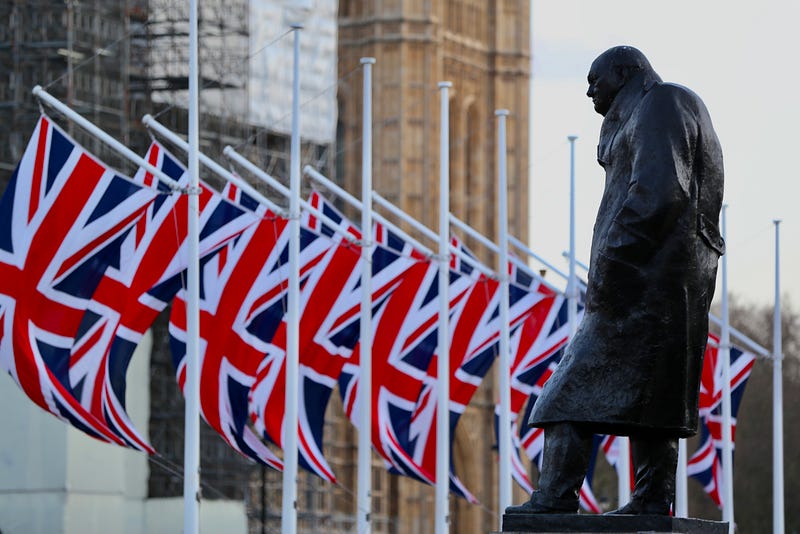
The value of human life has been reduced to a statistic many times. In a pandemic or war — people become numbers. They lose their significance as fellow human beings but become a statistic. The colonial legacy is marred with blood, the blood of innocents. Leadership lies in inaction as much as it lies in action. And when the inaction can cost lives, there is more to leadership than just responsibility. When we speak of the Greatest Leaders, we should not speak of murders and sacrifices in the same breath. We should not uphold legacies that are spineless.
“Sir” Winston Churchill has been long accredited as a war hero. His disgraceful legacy is upheld and celebrated. However, it is time we see him for what he really was — and put him up with the likes of Hitler, Stalin, and Pol Pot. He was a mass murderer and should be remembered as one.
The man is responsible for the worst act of negligence, costing people their livelihoods, dignity, and lives. We uphold Churchill and his exploits of war but we should remember his calculated act of mass murder as well i.e. The Great Bengal Famine of 1943. A famine manufactured with human hands that costed human lives.
“Famine or no famine, Indians will continue to breed like rabbits.” — Winston Churchill.
Let’s first examine the magnitude of the famine of 1943 Bengal. Three million people died unnatural deaths in this induced famine, in a brief time span of two years. The shortage of rainfall or failure of crops did not cause the famine, unlike all others in the era. The strategic war policy of the British helmed by Winston Churchill caused the famine. While Indians starved to death, the British exported Indian stocks of grain to Greece. The irony lies in the fact that the exported grains were not for consumption rather be stored as surplus.
Rice stocks continued to leave India even as London was denying urgent requests from India’s Viceroy for over 1 million tonnes of emergency wheat supplies in 1942–43.
I would have termed the policy as “heartless denial” if only we were not aware of the responses the PM of the United Kingdom furnished to the repeated requests of help. When officers of conscience pointed out in a telegram to the prime minister the scale of the tragedy caused by his decisions, Churchill’s only reaction was to ask peevishly: ‘Why hasn’t Gandhi died yet?’
Journalist Madhushree Mukerjee pointed out this neglect in her article. She mentions:
“Huge supplies of rice and thousands of boats were confiscated from coastal areas of Bengal to deny resources to the Japanese army in case of a future invasion.”
This shows a method to neglect involved in the whole famine in Bengal. Also, this was not always the attitude of Britishers towards Indians. During a famine in Bihar in 1873–74, the local government led by Sir Richard Temple responded swiftly by importing food and enacting welfare programs to assist the poor to purchase food. Almost nobody died, but British authorities castigated Temple for spending so much money on the response. In response, he reduced the scale of subsequent famine responses in the south and western India and mortality rates soared.
The Population Argument is Flawed: the factors don’t add up to 3 million deaths.
Many scholars and historians have come forward to point out that overpopulation in India was the reason for the famine of 1943. While it is a verified fact that famines were regular phenomenons in the colonial era, they resulted from colonial policies. Indian population has grown apace. Still, it has eliminated food shortages. Also, the sheer number of deaths amounts to genocide.
And the reason was not neglect or ignorance, but the malice and prejudice born out of a sense of racial superiority. When we mention the deaths of the purges or the ethnic cleansing of Jews by Hitler, we condemn the hands behind them. It is high time we understand that the Manufactured Famine of 1943 had a culprit and hold him and his legacy accountable for the same.
We owe it to our history, never to repeat it.
We owe it to our bygone countrymen. We owe them this remembrance. We owe them this not out of pity or remorse, but we owe it to them as a responsibility. We owe them: to remember that our nation has survived scars; it has seen depths and still scaled heights; we owe it to them to continue in this brightness and never let a similar fate befall on mankind anywhere.