
Character Sketch
The Man Who Showed Up
A verbal photograph of a man in my town
He was always just there. At the few weddings I went to in that small town over the river, he seemed to show up. I don’t think I ever really noticed he was there at first: it was such a sea of unfamiliar faces that I didn’t really know because I wasn’t from there. I started to see him more regularly when I moved there myself. Which surprised me when I came to think about it. I was never the kind to frequent to bars or restaurants much, partly owing to work, partly due to a solitary disposition. But once in every while, I would of necessity or responsibility attend the occasional event. Homecoming parades, the Spring Arts Festival, the local chamber quartet giving a concert in the local Lodge’s event room for one local charity or another.
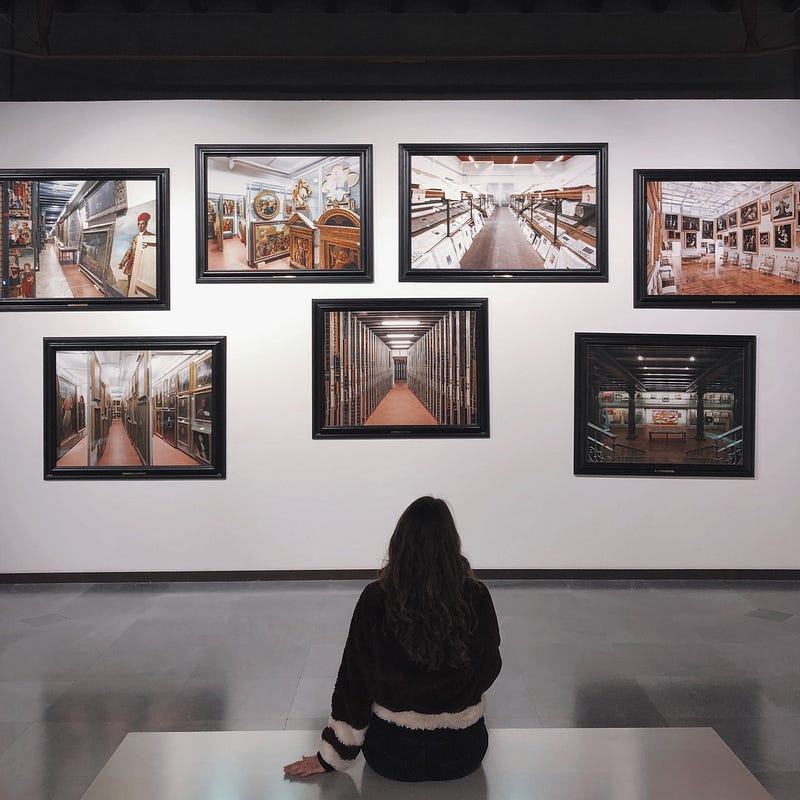
Where I first got a sense of him was around the arts. As a matter of personal interest, I generally made a point to get to any opening at the local gallery. Their temporary exhibitions seldom had long runs, so most people with any interest in the arts locally tended to be there. They would often present locally made work, some of which was of a high standard. If you’re in the region, it’s probably the main reason you might know the town. He was at them all without fail, ambling around with the rest of us. You could always find him among the first to arrive, and you couldn’t miss him in his smart and outdated black coat, a burgundy scarf, and typically the most seasonally appropriate hat — always black and contrasting a few renegade tufts of his wispy white hair. Dressed like this, his round framed glasses looked like goggles, rest on his scruffy looking white moustache — his lack of height added to the sense of an ancient aviator. Despite his stark arrivals, he could somehow still appear unexpectedly in the main body of the event, outerwear removed, tufts of hair marshalled. I once caught him slipping into his personal cloakroom — a janitorial space carefully hidden behind one of the art deco pillars in the entrance. About three minutes later, I noticed him wandering about the gallery again, now in his customary outfit of cardigan, plaid shirt, and bowtie, atop unremarkable black trousers. It wasn’t so much that he had taken off his coat as it felt like he had just dressed freshly for the event. I never saw anyone else do the same.
He was always at the gallery for all the openings. He’d be there too for the more scholarly talks or the lectures they sometimes hosted. You could expect to see him at the Masonic Lodge for the classical music concerts in their event room. Other times you might see him by the big stage in the high school for the ballet school recitals, or the smaller one at the local branch of the Community College for any of the more highbrow productions from the college drama group. If the local NPR station was doing something he would be there too.
He had a routine at these arts events. If there was seating, he’d be among the first in the seating area and the first to sit — invariably in the middle of the front row. He avoided the center of attention, keeping away from the larger groups of people, staying clear of guest tables. He allowed himself an exception for the few occasions when some free promotional materials were made available, and he swooped in on those early on, before the good stuff was taken. Consequently, when he was wandering venues with no apparent plan, he could be found sucking from one of the many water bottles he had picked up over the years from the local paper, the local radio station, the local café, and anyone else who had tried to build local arts loyalty through portable drinkware.
Regular patrons of the arts in any small town know a significant percentage of every audience attends these events with a sense of being there to be seen, to maintain social standing. Based on my observations, the contrary appears to have been true for our hero: he was there for the event, not the social experience, though he didn’t reject it. Frequently, he would be approached by someone — sometimes a local arts dignitary, other times a student, occasionally another lone visitor — and become engaged in a conversation. As I observed it, he never seemed put upon to have these conversations. Occasionally, others found their way into the conversation, but as soon as the group exceeded five or six, he would find a way to bow out and return to his wanderings.
While I typically saw him at the arts events, they weren’t the only things I saw him at. He was a great man for any kind of special occasion — weddings, funerals, graduation ceremonies, he could be seen at anything that you could reasonably turn up and be nodded in to. And at all of them, he was in his typical outfit. To his credit, wherever he appeared, he was known by a few present, and was normally in conversation with someone before anyone turned up to turn him out. I do recall one wedding between friends of mine, where neither of the brides knew him any better than I did. But perhaps that was the thing — even though it felt like nobody knew who he was, he was known by all of us living in Rorschach.
At a concert, about two and a half years ago that I should try to get to meet him properly. I didn’t have a real plan, just start talking to him some time, maybe interview him for the local arts website if he agreed. It wasn’t an urgent thing, but I resolved to go talk to him if I saw him on his own at the opening at the gallery the following month. I had an odd feeling that it might be intrusive to talk to him at something else. The idea of figuring him out was extremely attractive. Perhaps he had a steel trap of a memory for the things he had seen over the years. Perhaps he had a broad strokes appreciation of culture in our town. Perhaps he just had a few stale old jokes that he didn’t tell well. Perhaps we would become friends.
Perhaps I shouldn’t have waited. He wasn’t at the opening. Nor at the Christmas Concert the quartet gave a few days later. I was worried when I didn’t see him at Light Up Rorschach either. I enquired of him from the mayor that night: I had regularly seen talking with him at community events like this. He knew who I was talking of but hadn’t seen him either. Oddly, he didn’t have a name for him, just referred to him as “Sir”. As I asked about him, I met the same response. None of the other regular arts patrons in town seemed to know his name, but all referred to him as “Sir”. The area is pretty formal in this way, but it appears that at some point someone referred to him as that, and the name — the title? — stuck.
I gathered some peculiar details over the next few weeks piecing together what different people told me. It seems he felt the cold personally, had a slight stammer (over the letter P in particular), and sometimes smelled of raw onions. He had a very strong accent according to one, which was contradicted by two others who said he had none at all, some others being uncertain. It sounds like he seldom spoke of much beyond the event they were attending either, though one person said he mentioned once liking Schubert a great deal. When I checked, the orchestra in nearby Louisville was performing Schubert’s 8th symphony the night of the gallery opening. But that still didn’t account for the other nights.
These peculiarities, this vacuum where stood a man, sucked me right in. I became increasingly fascinated in the man. From all I could discern, he didn’t live in Rorschach itself, but perhaps in a nearby village or perhaps as far away as Louisville. The only time people ever seemed to see him was at these events.
I would have to wait. There is never anything much scheduled for January or February — the microclimate in the valley seems to welcome snow and ice with open arms. By March, I was optimistic that I would soon have a chance to see him when the arts landscape opened up again. Before anything really had a chance to, the dawn of Coronavirus (as we called it back then) closed everything in town. The gallery stayed closed, the ballet school shut for the foreseeable future, the community college went online, the Masonic Lodge stopped taking rentals. The Spring Arts Festival was first postponed, then cancelled, and then cancelled again for last year, as Covid left its mark on the town.
Without events, there is no place for me to see him. It wasn’t for want of trying though. I must have been twice as present in local life these past two years as I had been in the pre-pandemic times. Not that there was much to attend, but I started talking to people when I had the chance. We all did, I suppose. I was surprised how many people seemed to have no idea of who he was. At times I began to wonder if I had been hallucinating, or that I had subconsciously retrofitted the idea of him into all the events I used to attend. But every once in a while someone would confirm a memory of him.
So it is for now. There is talk that the Spring Arts Festival might be back this year — people are still very cautious about any optimism though. I find myself having to be so too. He wasn’t young, and he wouldn’t be younger since. But I find myself hoping that I see him standing outside some kiosk viewing the latest work of a local sculptor, or attempting to get another water bottle from the NPR station. I should remember that we haven’t actually met yet, or perhaps I will hug him and welcome him back.
If you liked this, you might find some interest in this other verbal photograph
If you liked this, and my other writings, and would like to support me, and thousands of other writers like me, why not take a join Medium for $5 per month, or $50 per year. And, if you sign up at this link, you will be directly supporting me too!


