
The Making of the Holocaust in Slovakia, with Prof. Hana Kubatova
On the latest episode of “Loosely Eastern Europe,” I talk to Professor Hana Kubatova, who teaches at the Faculty of Social Sciences at Charles University. Her main research interests are the Holocaust and its aftermath, topographies of violence, how ideas and ideologies travel, political religions, and more.
In this episode, we talk about the role Slovakia played in the Holocaust. An important history — one we should never forget.
I know you will all benefit from Prof. Kubatova’s insights. She truly is an expert and we are lucky to be able to learn from her.
Here is a link to the interview on Spotify; and here is a link on Substack. Please let me know in the comment section if you are having difficulties accessing it.
Brief Bio
Prof. Kubatova is the author of The Jew in Czech and Slovak Imagination, 1938–89: Antisemitism, the Holocaust, and Zionism and Nepokrades!: Nalady a Postoje Slovenske Spolecnosti k Zidovske Otazce, 1938–1945.
Her upcoming book’s previous title was Where the Foxes Say Goodnight: Christian Nationalism and the Making of the Holocaust in Slovakia. The present working title is Christian Nationalism Nation-building and the Making of the Holocaust in Slovakia. It is set to be published in 2025 by Oxford University Press.
Small note: we do not touch on this change in the title until toward the end of the episode, so bear that in mind when listening.
The overall theme of this episode is on Slovakia’s role in the Holocaust and how that history has been revised since 1945. I hope you enjoy.
The Interview Questions
First, let’s address some background.
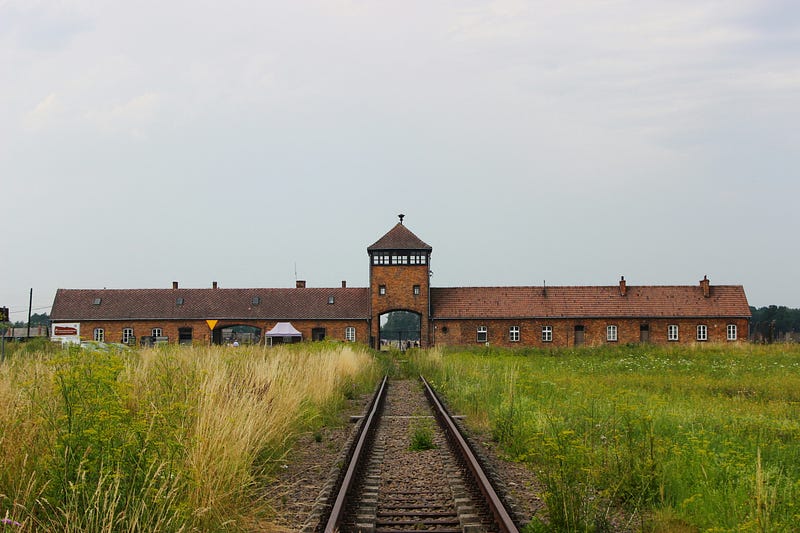
Under Jozef Tiso, who led the Slovak Republic as a Nazi puppet state from 1939 to 1944, fifty-seven thousand Slovak Jews were held in Slovakian camps and deported to extermination and concentration camps primarily in Poland.
After the Nazi occupation of Slovakia in 1944, twelve thousand more Jews were deported to Auschwitz. The vast majority of Slovakia’s Jewish population was killed from 1939 to 1945.
That history and Slovakia’s place in it has been revised extensively. For example, in 1960 when Czechoslovakia opened its first Auschwitz-Birkenau Memorial Museum exhibition, they failed to include the names of Czechoslovak Jews deported to Auschwitz because “such groups passively and without any resistance went into gas chambers.”
This fabrication relies on the antisemitic trope that Jews did not join resistance groups which, once again, is a fabrication, from Yugoslavia to the Baltic states, there were armed resistance groups (think: Warsaw Ghetto Uprising in 1943 or Jews joining resistance groups in Yugoslavia, etc.).
So, first, can we talk about how Slovakia frames the “Nazi occupation”?
- Do you find a problem with the term ‘Nazi occupation’ when it comes to Slovakia — what is your understanding of Slovakia’s willingness and complicity in the Holocaust? There is a difference here between the state’s actions and that of the people across the First Slovak Republic, which the book you are working on explicitly demarcates. Can you establish that difference as well? How was the public engaged with exporting the Jewish population?
How many Slovakians were aware of what was happening to their Jewish neighbors?
How do you respond to a trop that many Slovakians say that yes 6 million Jews were killed in the Holocaust, but 5 million Poles, Slavs, Romani and Sinti people, prisoners of wars, gay individuals, etc. were killed in the Holocaust?
- Most who study the Holocaust see that there is a uniqueness to Jewish suffering in the Holocaust, in the ghettos and the concentration and extermination camps themselves, so what do you point to when you meet this claim?
How far has Holocaust education come since 1989? What can Slovakia and its neighboring nations do better?
This was one of my favorite interviews thus far, so I know you will enjoy it. Thank you again Prof. Kubatova for hopping on the podcast.
Small note to my readers: Currently, I’m traveling in Prague and I have indeed left Montreal for the time being. We will see what’s next but this is why I’m less active on here now.
Hopefully that will change soon when I get settled down again.
Thank you for your patience and in the meantime, I hope you’ll be able to get something from the podcast.
Before you go…
🗣 Thank you very much for reading!
- Listen to my podcast, where I cover Eastern European politics with experts from the region, titled “Loosely Eastern Europe.”
- Or check out my books and audiobook, read by me.
- I love connecting with fellow thinkers. Find me on Twitter or Instagram to stay in touch about future projects and travel ventures.