
The Major Culprit of Miscommunication
One word: Assumptions.

We all know what lies inside our minds when we communicate our ideas (well, maybe not always). But when we lose perspective, we end up becoming the world’s belly button. Suddenly, everything is about us.
We visualize our minds’ content with so much detail, that we tend to forget others don’t have access to it. We don’t have access to other people’s thoughts either, so why do we presume to know what they’re thinking?
We base our daily communications on the presupposition that we’re all superpower-bearers. A universal mind-reading ability whereby we understand each other.
But no, not really. What happens is that we make assumptions all the time, and we believe them to be 100% true. It’s a disaster waiting to happen.
An assumption is “a thing we accept as true or as certain to happen, WITHOUT PROOF.” Yes, without proof.
We often take someone else’s words or actions and assume we know the intentions that underlie them. We interpret things according to our beliefs. But there’s something we don’t know about others’ attitudes or words. Yet, we think we know all there is to know, and we act in response to our own perception. Our delusion tells us that our response is elicited by somebody else’s actions, but actually, we’re acting in response to our interpretation of these actions.
But that’s not the only way assumptions work. When we communicate, our words materialize our ideas. When we fail to put some of our thoughts into words, we know something that the recipients of our message ignore. Some of our ideas are not available to them. Yet, we rarely keep that in mind, so we assume they know that which we haven’t told them. There’s a communication gap in the form of omission.
Assumptions might cause diverse issues in our everyday relationships:
- Misunderstandings
- Unnecessary suffering and drama
- Bad temper and weak relationships
- Loss of productivity & efficiency at work
- Mistrust
There might be many more…
Misunderstandings
Misunderstandings are commonplace. We’re all used to hearing things like “I thought I had made myself clear”, or “That’s not what I meant”. There’re countless examples.
Misunderstandings are the foundations of miscommunication and the major culprit of most interpersonal conflicts. They’re capable of deeply affecting organizational or family relationships, causing permanent damage, such as mistrust, underperformance, unpleasant work environment, and gossiping, just to name a few.
Unnecessary suffering and drama
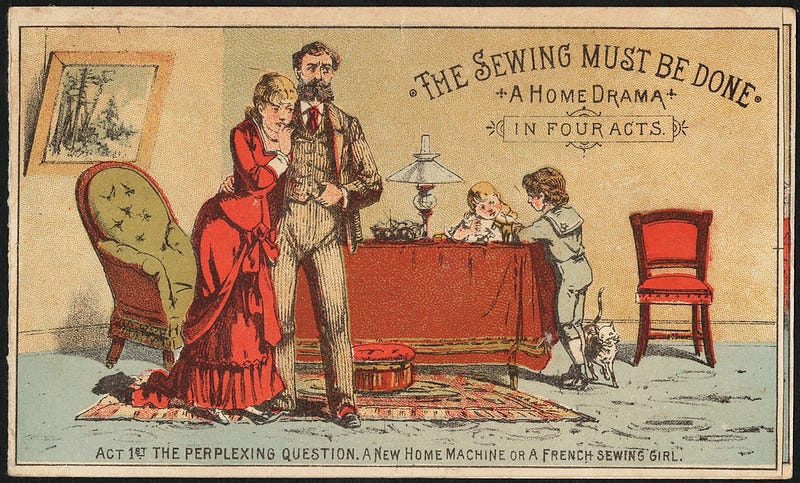
This happens when we create imaginary plots inside our heads. We craft stories to fill in the blanks because we can’t tolerate the feeling of not knowing (aka controlling) everything. Our ego has an infinite aversion to uncertainty. It needs to have the answers, so it fabricates them. And it believes them, too.
When others’ actions raise our suspicions, and we convince ourselves that there might be ill-intentions behind them, we create suffering because we feel hurt or betrayed.
I had a colleague who was having a hard time with his family. This caused him deep pain. He used to tell me about a member of his family who had a dreadful behavior towards him. But even if most of the events he told me about had really taken place, I realized many existed only in his head. He used to say things like “I tried to call her, and she didn’t pick up the phone. I’m sure she was there, right next to it, only she chose not to pick it up on purpose.” Well, this deserves a profound reflection. Maybe she had done it on purpose. If her goal was to make him mad, it had worked wonderfully well. How can you tell? How would you know her intentions? It might be the case, or it might not. As obvious as something seems to be, you never know for sure. Never… unless the other person lets you know her intentions. There’s always a probability of being wrong. The worst thing is, you can’t imagine the suffering and frustration this thought caused him. It was a hell of a self-flagellation.
I’ve done this too. More than I would like to admit. I’ve seen romantic affairs in what might have been only a good relationship. I’ve imagined ill-intentions where there might have been only forgetfulness or procrastination. I’ve assumed that someone was lying to me. It helps no one. Assumptions can drive you mad. They’re a powerful and slow-acting poison.
And I’m not talking about not exercising prudence when dealing with strangers. I’m talking about the problem with assuming wrongdoing, leaving no room for doubt. This will inevitably lead to resentment and frustration. There’s no way around this. Why are we so addicted to drama? (That’s a subject for another story).
Most of the time, our conjectures only live inside our heads. Should our assumptions prove true, there’s not much we can do, other than try to move on or ask. But to confront someone, you’ll probably need some kind of evidence of their misconduct. I’ve found out it’s only worth the hassle to confront a person if it’s someone you appreciate and trust, or if her actions have a profound and negative impact on you.
Bad temper and weak relationships
This one is aligned to the previous point. We said we’re prone to assuming ill-intentions in people’s actions. Then we act in response to our belief. Revenge is not sweet, it’s bitter, but even more so when we later find out there was no reason for it.
I repeat myself: we’re acting in response to our own interpretation of others’ actions, not to the actions themselves.
There’s a popular joke that illustrates this point perfectly well. That of a man traveling one night in his car who gets a flat tire in the middle of nowhere. He learns that while he has a spare tire, he has no jack. As he walks along the dark country road in search of someone who might lend him a jack, it occurs to him that under the circumstances, a local farmer might actually charge him for it. After all, here he is, alone, completely at the mercy of strangers. The man continues to walk, and it occurs to him that being so late at night, nobody might come to the door. They might hear him knocking outside and decide to leave him at his own mercy. Then, he pictures a farmer opening the door and telling him to get lost, furious because he had woken him up. The man’s indignation mounts as he anticipates what might happen. Finally, a farmer opens his door to a stranger’s knock, and the now furious stranded man tells him (in language too dirty for this story) where he can shove his jack.

I always found this joke funny but quite illustrative of our communication shortcomings. This happens, I’ve seen it. And what I’ve seen wasn’t much less drastic than this depiction.
Once you behave in such an offensive way, you’ve crossed a line you can’t uncross.
Loss of productivity & efficiency at work
How many times did you omit to say something important, assuming that everyone knew?
This causes mistakes that could’ve been avoided, loss of efficiency, and lots of wasted time.
Mistrust
Oh, that feeling you’re being lied to…
This happens when you feel the other person is purposefully hiding information from you. You might not even consider the possibility of a person forgetting to tell you about something.
This generates underperformance, a lack of teamwork, and a heavy atmosphere.
There are other culprits of miscommunication, but making assumptions has really wreaked havoc.
According to Don Miguel Ruiz, the primary actions to correct communication problems are:
“The Four Agreements: 1. Be impeccable with your word. 2. Don’t take anything personally. 3. Don’t make assumptions. 4. Always do your best. ” ― Don Miguel Ruiz, The Four Agreements: A Practical Guide to Personal Freedom
Except for the fourth agreement, the other two could be somehow related to assumptions. When you take something personally, you might be making assumptions (at the very least you might be presuming someone intends to hurt you). And, when you make assumptions and act in response, you might forget to be impeccable with your words. But it doesn’t always have to be the case. It’s just that they might all be much more related than we initially believe them to be.
How do I try to minimize the effects of assumptions? I’ve thought of some strategies I’m working to apply every day. I hope you find them useful too:
- Bear in mind other people do not live inside your head, nor are they mentalists (though there might be some exceptions!). So always do your best to make sure you’re being crystal clear with your expectations and messages. Point out everything you believe to be important. Reading between the lines is better left to Patrick Jane.
- Bear in mind that you don’t live inside other people’s brain. Try not to play the “guesstimating” game in communications. If you’re unsure about someone’s message or actions, simply ask. If, for some reason, it wasn’t possible to ask, just move on. Most of the time, our worries are ephemeral.
- Try not to confront anyone when you feel your anger comes from your inner beliefs or suspicions and not from facts.
- Double-check. When receiving instructions from someone else, or during a conversation, try to make sure you understand what you’re being told. Go through the focal points of the conversation to corroborate the accuracy of your comprehension. Something like “So, If I understood you right…”, or “So, one caffe latte with Nonfat Milk and Syrup” will do.
- When under the impression that someone is acting with ill-intentions (and they could really trouble you), it’s better to confront the person, to ask her about the motivations that drive her actions. Or just distance yourself from her, if possible.
- When feeling down because you believe someone might have done something to upset you, think twice, and try to ask yourself, “How do I know this for sure?”, “Why does it matter so much to me?”, and “Is there anything I can do?”
- Each time you’re being invaded by rage, and you’re about to explode, try to stop for a moment and reflect on the origin of such an outburst. It’s awfully difficult, but also possible.
- Try not to take anything for granted, especially in a professional environment. Explain a point you believe to be essential, even if it seems obvious to you. Ask about something you believe might be obvious to others, but you don’t understand.
- Don’t play hard to get with your feelings. When someone asks about how their actions made you feel, be honest. I used to hide my feelings a lot. When I felt hurt, I used to withdraw, and when the “offender” asked me how I felt, I would say “Everything’s fine”. That’s something emotionally distant people tend to do a lot. It’s not a healthy habit. Try to be aware of it so you can correct it. It hurts others, and it hurts you.
And remember, to imply is not to say!
It’s not OK to justify yourself by saying you didn’t explicitly point something out because “it was already implied”. Here, less is not necessarily more. Be crystal clear. Your everyday relationships and communications will thank you.


