
The Main Differences Between Portugal and Spain
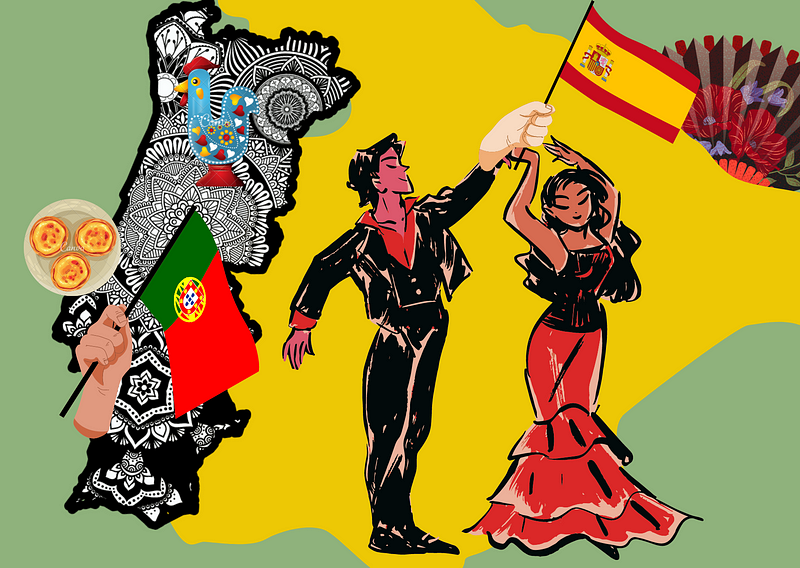
The Iberian peninsula is seen as a gateway to Europe. However, for many years we claimed to be the tail of it. And this was so often the mentality that, angry at this European rejection, we wanted to turn to the other side, to the Atlantic Ocean, and sail across it.
But it should be noted that in this still large piece of land, there are two countries that are as similar as they are different. And I, like any Portuguese, have often had to hear a “gracias” instead of an “obrigado”— our word for thanks— as well as hearing a lot of ignorance coming from the mouths of people who mistakenly either ignore Portugal’s existence or think that Portugal was part of Spain and that by some chance it later split up. ( If only I could earn a cent every time I hear that… )
I’ve already said here that Portugal is older than Spain and the country with the oldest borders on the European continent. A fact that sometimes shocks many.
Our history does not fit in a short essay, neither ours nor that of our “hermanos,” nor the whole culture. However, I’ll try to inform my readers of the differences that separate us.
Here are those that stand out the most:
The Portuguese personality/way of life
We, the Portuguese —and forgive me the generalization that, as wrong as it may seem, is necessary here—are quieter than our neighbors. If you are Spanish, please do not be offended; maybe you can even agree with me.
But what do I mean by that? Well, the Spanish always seem to be talking much louder, whereas at the opposite extreme are the British, who, for us, seem to have left their speakers at home and make us feel deaf by always asking “pardon, what?”.
The Portuguese are more reserved when it comes to this and also in their culture. We clearly like parties, but we are not as eccentric or flamboyant as our neighbors. We are more reserved, shy, and cautious with life, as well as cautious with people. We have a problem with trust, and we don’t open our arms right away to anyone — but once you have gained our trust, it’s for life.
Clearly, there is good in this characteristic as well as bad. Often this general feeling of pessimism leads us to give up on certain things many times before we start them. But if such a feeling exists, it is because we live in a land that both gives and takes away, and the lessons have been well learned.
Within this different way of seeing the world, on my last trip to Spain, one of the things that caught my attention was the gaming machines everywhere, full of colors and irritating sounds that made me a bit nervous. I’ve never seen such a thing in Portugal, a conspicuous machine that hurts good taste— sorry, brothers. You love to gamble. Admit it!
In the same vein, the Spanish are more daring; they like colors, parties until later, and having dinner at times unthinkable for us. While the Spanish have dinner at 11 o’clock at night, we eat at 8 o’clock at night, and once again, by this time, the British are already on their second sleep, which is something we can’t understand. ( How can anyone have dinner at 5 pm?)
More fish in Portugal
Food in both countries is of great importance. Lunchtime is sacred, and we give it our due time and value. We don’t understand how the British eat a sandwich at their desk and continue working, only to come home and live an existence like this, always putting off life’s moments.
No, we are not like that here in Portugal or there in Spain, across the border. We clearly know that we all have to work, but that doesn’t stop us from enjoying the day’s work.
And how do we enjoy it?
Well, with the main meal of the day, lunch. Once again, the Spanish do everything later. They have lunch around two in the afternoon, while we have it at midday. We may have an hour for lunch or an hour and a half, then we go to work.
The Spaniards set aside the afternoon for the famous siesta— nap— so it’s no wonder they work later and stay up late. It’s all a question of balance. But then, when it comes to food, the gastronomic preferences of the two countries are quite different.
After Japan, Portugal is the second largest fish-eating country in the world. Among the fish, we like sardines, horse mackerel, sea bass, cuttlefish, octopus, and then the king of them all, and whom we call our faithful friend, is the famous codfish, “bacalhau!”
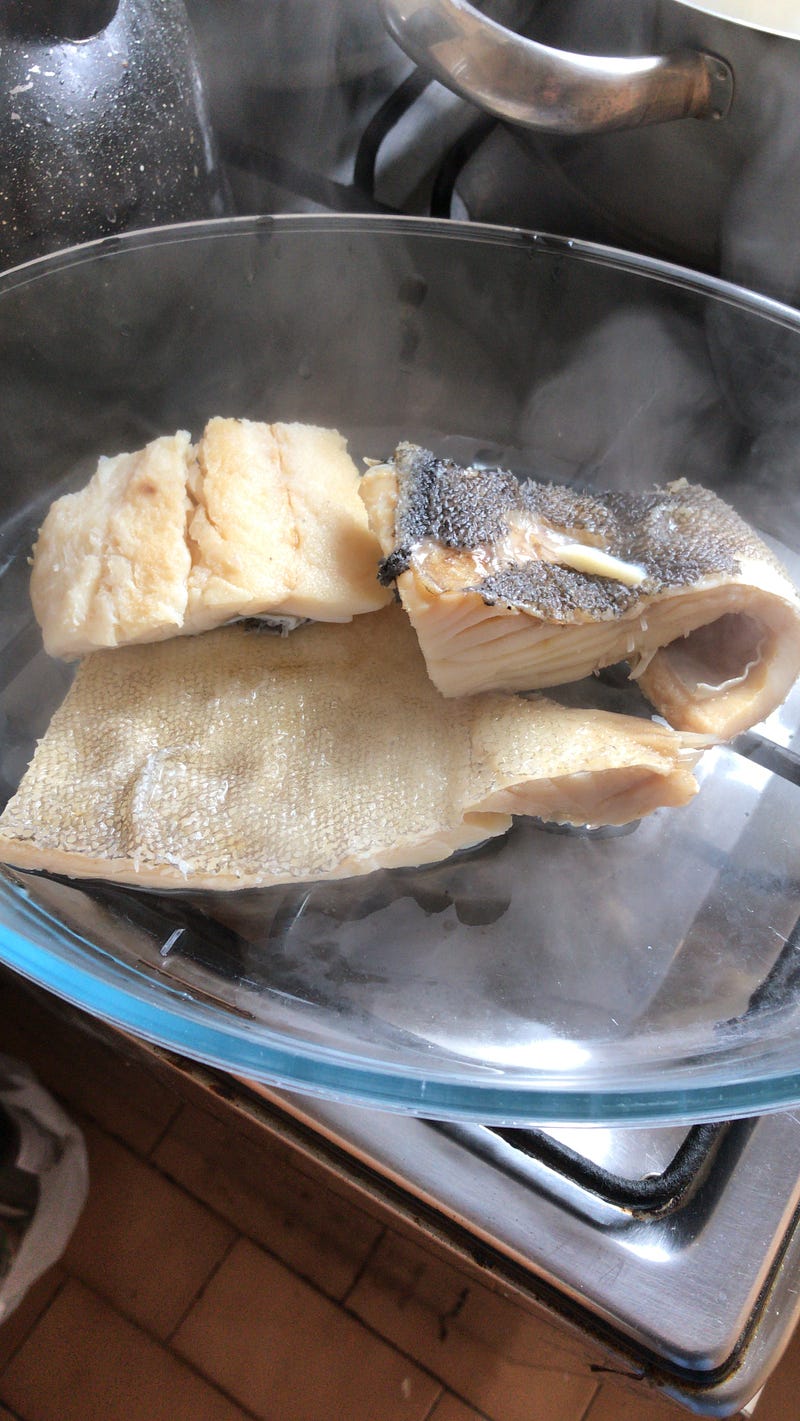
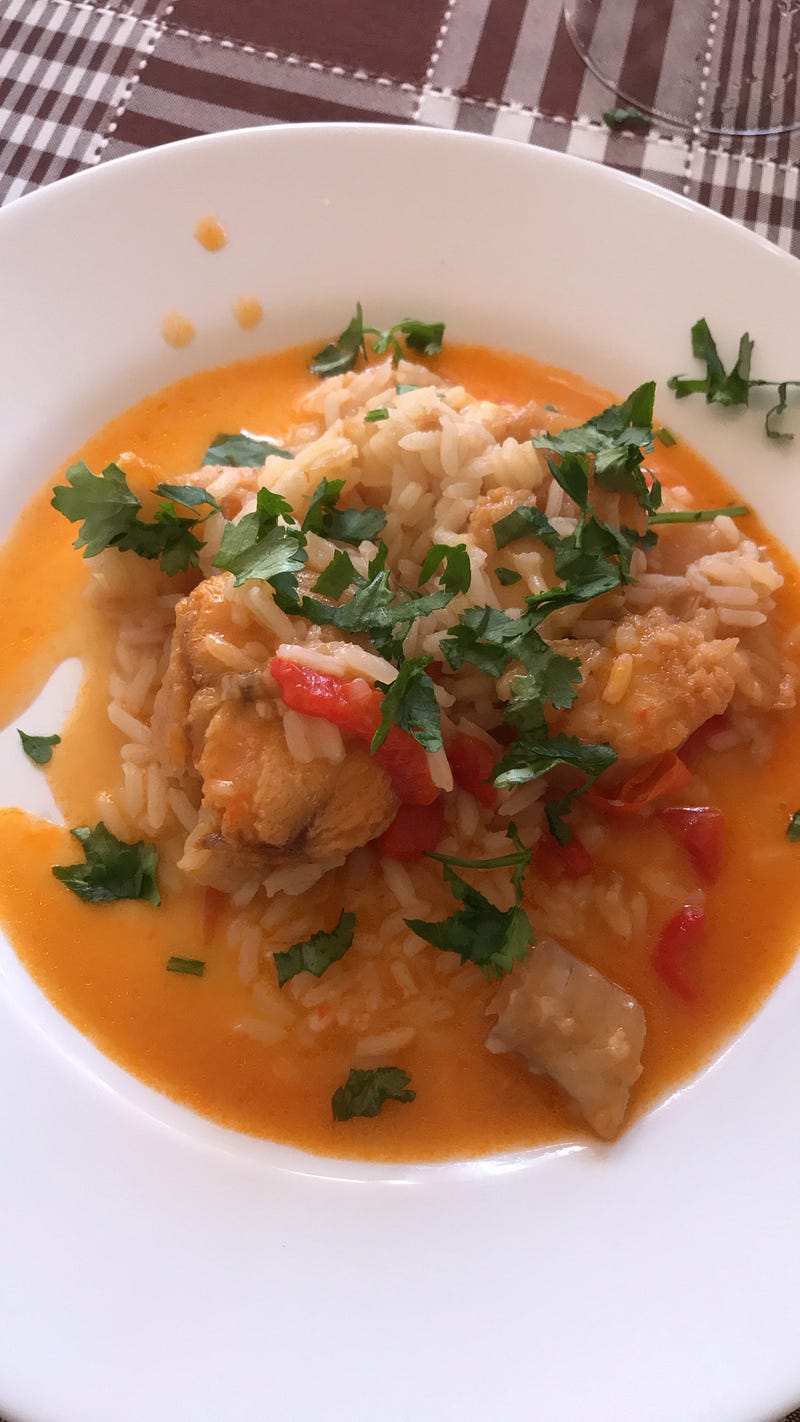
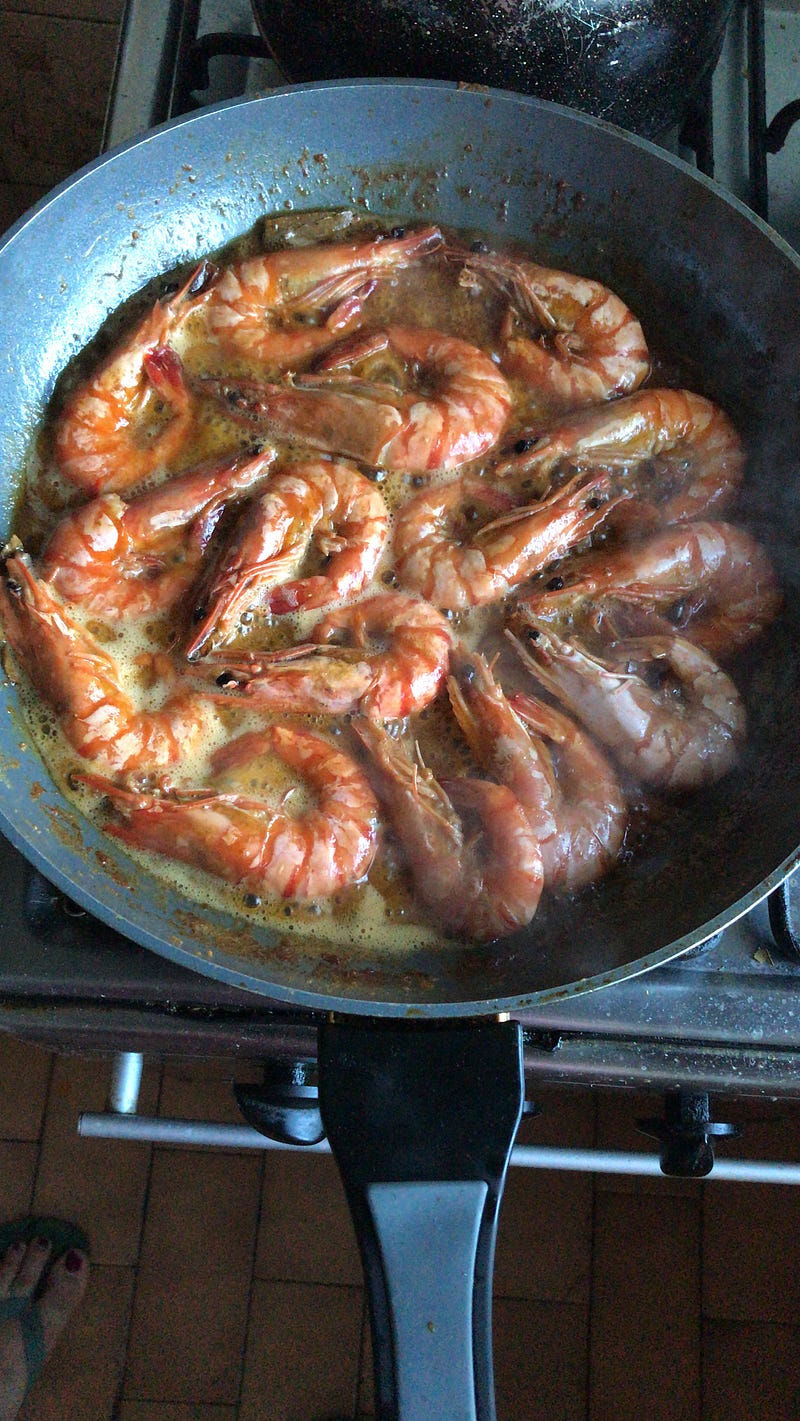
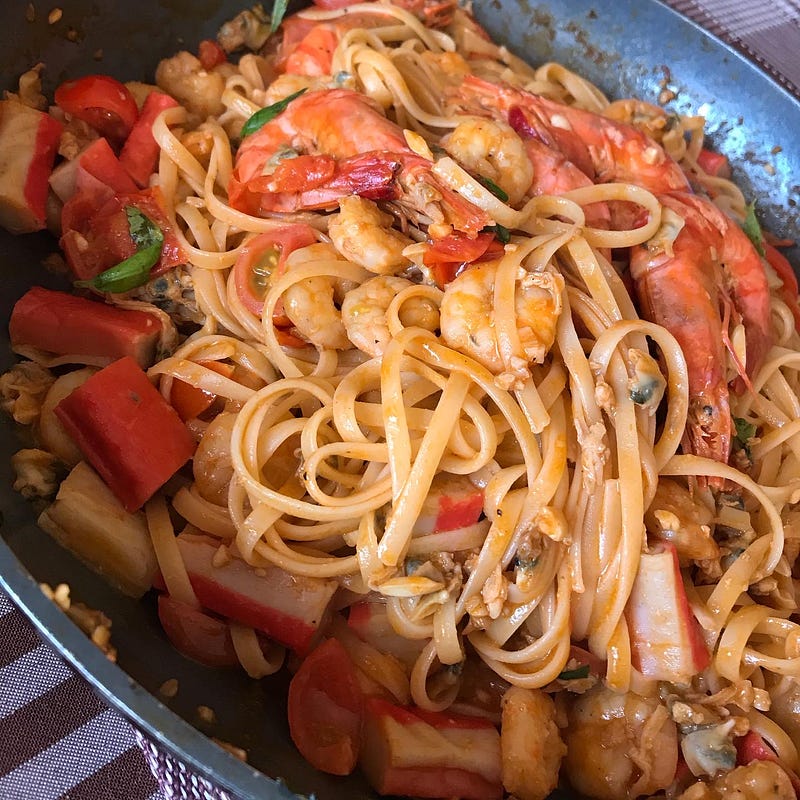
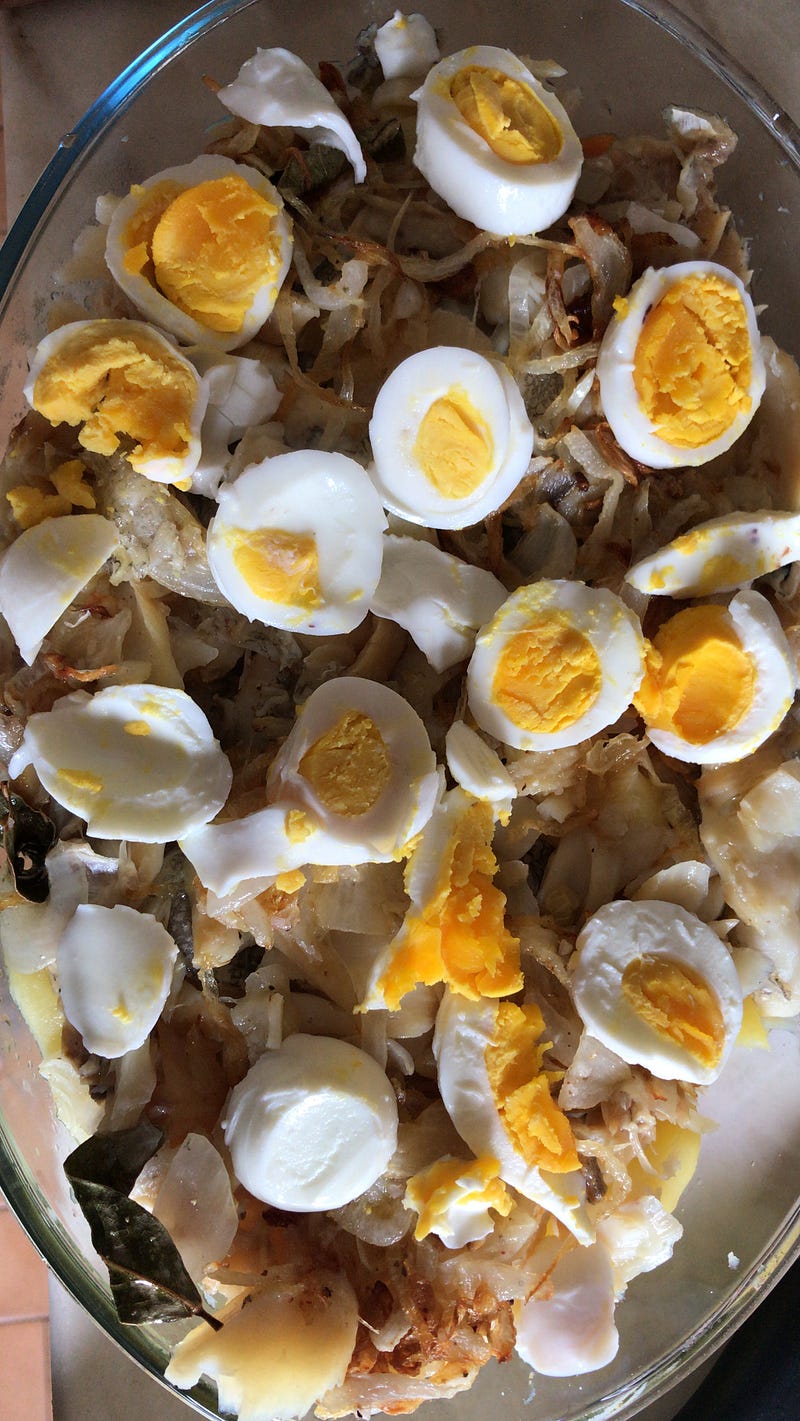
Note that we don’t eat it fresh, but dried and salted. I don’t know any other people in the world who do this, which makes it very particular to us. The Spanish, on the other hand, and although it pains me, I have to give in, are better at sausages, smoked ham, and tapas.
In Spain, you eat a lot of varied food in small portions. You eat a big portion in Portugal, but only one main dish.
But while our brothers and sisters may be very good at producing caramels— sorry, this is the Portuguese cliché about them — they can’t beat us at confectionery.
We win them by twenty to zero when it comes to cakes. I would dare say we are better than any other European country, but I am a suspect since I’m Portuguese. But I warn you that we do not know how to make cakes or other sweets without eggs. Everything takes eggs, and forgive me, but as the good Portuguese that I am, I dare not imagine sweets or cakes that do not take there a little egg.
It is inconceivable!
National identity
Portugal was born several centuries ago, more precisely on 5 October 1143, with the Treaty of Zamora signed in the territory we now call Spain. Our first king, Alfonso Henriques, the son of Teresa of Castile and Henry of Burgundy, a French knight, was granted independent country status.
From then on, Portuguese territory was conquered from the Arabs, who had been here since 771. In 1297 the borders were defined. Since then, nothing has changed, making Portugal one of the oldest countries in the world.
On the other hand, Spain would continue to be divided into the counties that made up the rest of Iberian territory. If there really was one, its union took place almost two hundred years after Portugal’s, in 1492 with the conquest of Granada, which ended the Arab kingdom of almost 800 years!
This notion of a country strengthened the Portuguese identity in Portugal, which still has no internal divisions. In Spain, however, the divisions are well felt, which can be seen by the existence of different regions where other dialects are spoken — which is not the case in Portugal — and by political divisions, for example, Catalonia, which has long been asking for independence from the Kingdom of Spain.
The Portuguese speak better English.
Excuse me for putting it so bluntly, but it’s a fact. The Spanish, Italians and French seem to be much more nationalistic than us, and this is immediately felt in the lack of openness to foreign languages.
The Portuguese benefit from listening to films in the original language — although the real reason for having subtitles in Portugal is linked to fascism — which helps them from an early age to train their ear for other languages.
The fact that European Portuguese also has a greater diversity of vowel sounds, interspersed with open, nasal, and closed sounds, opens up possibilities for the Portuguese to more easily understand and imitate other sounds. Spanish, on the other hand, with its abundance of open vowels, is more limiting when it comes to speaking another language without a Spanish sound coming out of the mouth.
Republic in Portugal, Monarchy in Spain.
Portugal had one of the longest monarchies in Europe. Starting in the 12th century and ending in the early 20th century when the republic was ironically implanted on the 5th of October — the anniversary of the beginning of the monarchy — 1910.
It is true that I always wonder what might have happened had we continued with the monarchy.
“Would we have gone to the First World War? Would we even have had fascism?”
We will never know the answers. But good or bad, the republic was installed in Portugal, thus ending the monarchy with the assassination of King Carlos and the escape of Queen Amélia and her son Manuel II to Britain.
As for Spain, they continue with the monarchy, something that we see as odd.
Portugal is more traditionalist, and Spain is more conservative.
It may sound like the same thing, but I assure you it is not. Portugal and the Portuguese are more traditionalists, which is related to the first point, our way of life. We are more attached to the land, traditions, family, and soft customs without much ostentation. Our peculiar dictatorship with so many restrictions has also shaped us.
But even in those brutal times, even if the prohibitions existed and even if the Church had a great influence in the country, people always found a way not to take the fanaticism outside the Church.
My grandfather tells me about how my grandmother would get the pill prescribed by the doctor or how he would sneak in and buy condoms. I remember reading Irish literature from the 20th century, in a supposedly democratic country but with a tyrannical governor and the Irish constitution of 1933 that put women in the home and the country in a state of raging Catholicism.
You could say Spain is more similar in that sense. The Spanish may be looser, less traditionalist, and more unapologetic, but this does not mean they are not conservative. The existence of a monarchy is evident in that.
Social titles
On this question of traditionalism, I admit that much bothers me in my country, and one is the fact that academic qualifications are still so highly prized in my country. Well, not exactly that they are not important. They are. But more to do with the fact of how people see themselves after having that title.
It’s a double-edged sword, to be honest. If, on the one hand, there’s an incentive to study at a higher education level, there’s still a culture of flattery of people who have studied as being superior to others.
There is in the language itself the continued use of “Mr. Engineer” ( Senhor Engenheiro) or “Mr. Doctor” ( Senhor Doutor) for people in higher positions — and often, these people don’t even really have that title.
The language creates greater social distance between people of different social and work hierarchies. Sometimes even the formal use of the pronoun confuses many Portuguese who fear that they disrespect someone by using the wrong pronoun.
It’s very confusing, and when I teach Portuguese, I start first with an introduction to the culture. I congratulate Spain for the informality of the language, the greater use of the “tu”- an informal way of saying you- and the greater proximity between people for this reason.
Bullfights also exist in Portugal
This usually surprises my students when I tell them about the fact that I am against bullfighting and so openly express my hatred for it.
“Are there bullfights in Portugal too?” they always ask me incredulously.
Unfortunately, this is one of the cultural traditions we share with the Spanish. The ridiculous fact that we are already in the 21st century with laws protecting animals but creating a big exception for bullfights shows how much more we need to evolve.
Many Portuguese defend themselves by saying that everything in Spain is done with more violence, that they kill the animal in the arena, and that they are more butchers than us. But violence is violence.
In Portugal, bullfights are similar, with supposedly very macho riders in tights — if this is not a laughing matter, I don’t know what is — full of bright colors, on a horse, running after the bull to stick irons in its back, while the animal, in pain and agony, is finally taken out of the disgusting spectacle to be slaughtered.
This is one of the many things that exist in my country that embarrasses me the most. I was part of a petition to end the bullfights and the retrograde mentality that persists with it all. But I understand that culture cannot be changed overnight and that things, like money and human stupidity, are more infinite than any reason.
Portugal and Spain had wars and rivalry throughout our co-existence. Today we make jokes about each other. That’s only it. We have an amicable relationship. Otherwise, we would not even call them “hermanos” / brothers.
Hello, I’m Araci, a female writer from Portugal. I like to write about my country, Portugal. But I also enjoy pop culture, American culture, and cultural differences. I hope you’ve enjoyed this article and that it helped you out!
You can also find more about me here:
If you have enjoyed this article, maybe you would like to buy me a coffee here https://ko-fi.com/joanaaraci. I don’t drink coffee that much, but food is getting ridiculously expensive, and I need to put it on the table.
There are other ways to help me out:
Are you considering joining Medium for only 5$ a month? Your membership fee directly supports me. This way, you are helping me out while you’ll also get full access to every story on Medium.
If so, consider doing it through my referral link.
Thank you for reading me.


