
The Magic of Raising Trilingual Kids
Tips for Making Language Learning Fun and Easy

We are a family living and breathing different cultures.
My wife is from Taiwan, our kids made their first childhood memories and experiences in Singapore and are currently going to school in Switzerland.
Our kids’ mother tongue is Mandarin Chinese. They used English with their friends and amongst themselves and are now growing into a German- and French-speaking environment.
We are not the crazy “go-getter parents” who push their kids as “the battle hymn of the tiger mum” would suggest and are happy the trilingual family kind of just naturally emerged.
We are even more happy to see how it makes exploring the world easier for our kids nowadays.
Would you want your child to be able to converse fluently in multiple languages as well?
Perhaps you’re a bilingual parent yourself or simply want to raise a multilingual kid?
Whatever your reasons may be, raising multilingual kids comes with numerous benefits that extend beyond just language skills.
From better cognitive development to cultural understanding, it’s a sure way to broaden your child’s horizons.
In this article, we’ll discuss tips for making language learning fun, seamless, and easy for kids!
Are you ready for take-off?
Let’s explore!
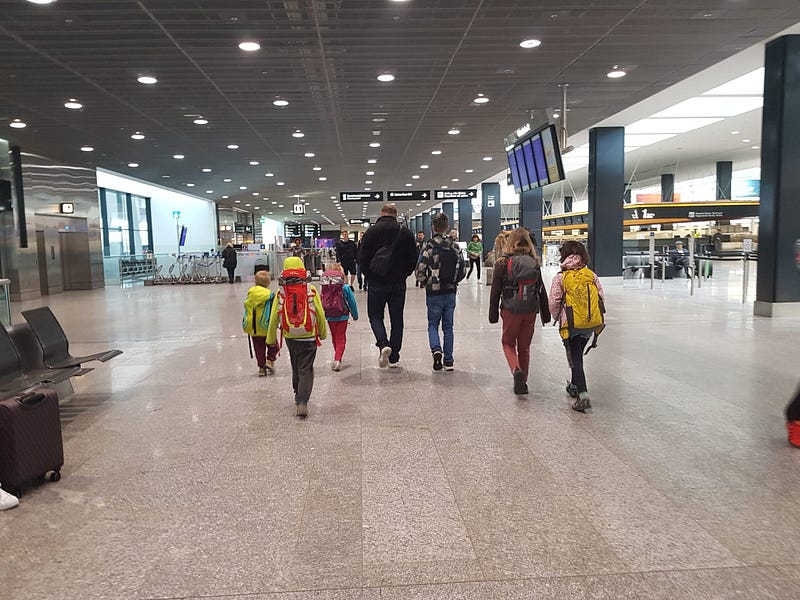
Exposure and Immersion
One of the keys to learning languages is exposure and immersion.
Kids are masters at adapting to different environments, hence it’s your job as parents to start by creating an immersive environment at home.
You can do so by speaking different languages, e.g. mum speaks in A while dad speaks in B.
Or you split the languages over different days and exclusively speak A on Monday, Wednesday, and Friday, B on Tuesday and Sunday, and C on Thursday and Saturday.
Encourage your child to watch movies, TV shows, and listen to music in the respective original languages. This way, they’ll get to hear different accents and pick up on phrases and intonations.
My wife speaks Mandarin Chinese with my kids, I speak Swiss German and English is our family language at home.
Our kids are used to watching movies and TV shows in their original languages [on Netflix], and playing Nintendo exclusively in English — my son learned to write and read English from playing “The Legend of Zelda: Breath of the Wild”.
If possible, consider finding a language tutor for them and or enroll them in classes, but remember to keep it fun!
Whatever you do, never ever kill the fun!!!
Travel
Traveling can be a fun and educational way to expose kids to different cultures and languages.
When you take a trip to another country, try to let your kids experience daily life activities such as ordering food, shopping, or just taking a walk and talking to people.
This helps them see language not just as an academic exercise, but as a medium of communication.
They’ll get to understand the context, culture, and nonverbal cues that go beyond the nuances of language.
We could teach them valuable lessons while traveling in France, Spain, and Italy on several occasions on how to make communication work even though we might not be super fluent in these languages either.
I never forget our wonderful dining experience in a B&B near Italy’s Cinque Terre with a Nonna who cooked dinner for us and had a nice conversation with us while she can’t speak anything but Italian while we all don’t talk the language.
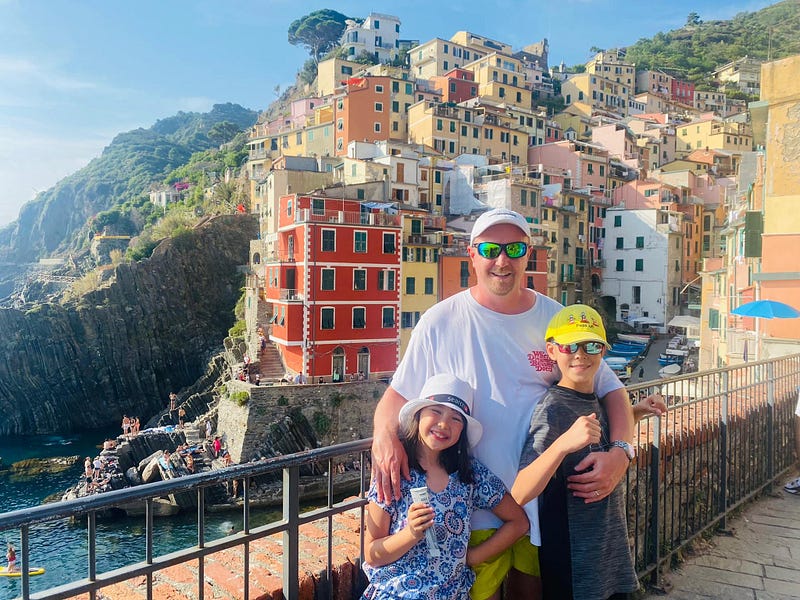
We clicked and communicated nevertheless.
That’s what learning languages is all about!
Walk the talk — show them how you navigate and adapt.
Let them observe you communicating in different languages!
Usage
Using different languages in real-life situations is crucial for learning.
Encourage your kids to use the languages they’re learning in their daily life set-up.
It could be by practicing with siblings, friends, or family members. Our kids never unlearned to speak English with each other despite living in a Swiss-German-speaking environment.
We’re going to spend this summer in Taiwan where they’ll get tons of 1:1 time with their Hakka, Hokkien, and Mandarin-Chinese speaking grandparents. English and German won’t be understood there.

Let your child know that they don’t have to be perfect and mistakes are a natural part of language learning.
Make different languages part of their life!
Correct Mistakes
Correcting mistakes is just as important as practicing.
However, when doing so, always do it in a positive, fun, and constructive way.
Never ever discourage your child from using a language they feel less confident about.
Instead, offer support and encouragement to help them improve. This way, they’ll build their confidence and be willing to use the language more often.
Whenever I hear a mistake such as the wrong gender in German, a slight off-pronunciation in Chinese, or some Denglish (German-influenced English) I immediately speak up and inform them how to say it correctly. My kids then have to first say: “Thank you Papa!” and then say the correct version of what they wanted to say.
If they have to say “Thank you Papa” more than 5 times during a conversation, they’ll slow down their speaking speed and start focusing on “quality”.
It works.
Enjoy the Process
Making language learning fun is key to keeping kids engaged.
The moment you start making this a mandatory or set-upon-them exercise, you run the risk of losing them. Keep them engaged by allowing them to play Nintendo [in English], watch Asian movies [in Mandarin Chinese], and use certain computer programs [in German].
It’s your job as a parent to find ways to incorporate the languages you like them to learn into their daily lives and routines.

Praising your child when they speak a word or sentence well can also boost their motivation and create a positive attitude towards language learning.
Conclusion
In conclusion, raising trilingual children has numerous benefits that will ultimately facilitate their development.
Knowing several languages could boost their employability, enable them to communicate with a more extensive population, and facilitate intercultural understanding.
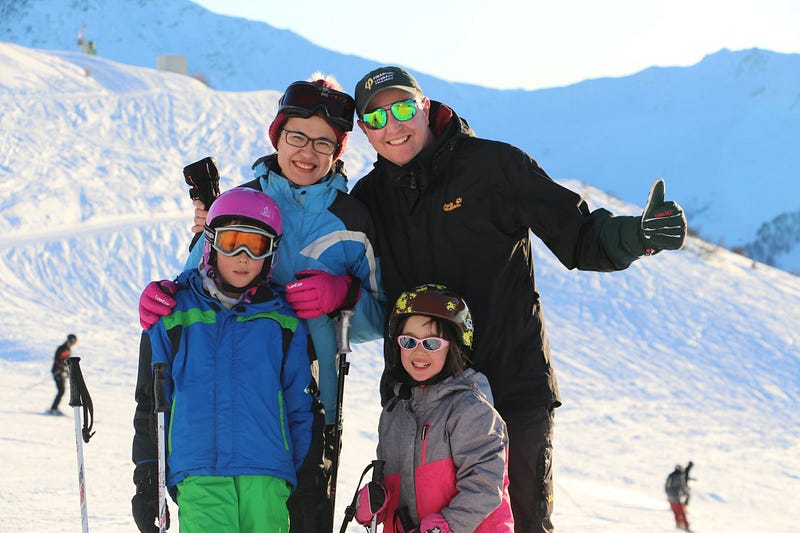
Main takeaway: To make language learning fun and easy for your child, you should aim to create an immersive environment, expose them to different cultures/languages, encourage usage, correct mistakes in an upbeat way, and always make it fun.
Encourage your child to enjoy the process too.
Eventually, the end goal shouldn’t just be mastering the language, but aiding your child in his/her overall development and spending more quality time with them.
Keep learning and exploring!
Matt
Wait a second!
If you found this article helpful, make sure to give me a follow and get my daily dose of finspiration to your inbox. Please stay in touch!
Would you like to explore more content on Medium and support us writers? Click the box below and unlock the “Netflix” for readers:
Don’t forget to follow Financial Imagineer on Twitter and/ or on Facebook
Or simply check out my blog here!
If you’re looking to get your money skills “up to speed”, check out my online course.


