
The Magic Of Community-Based Healing With Psychedelic Plants
We can do hard things, but we don’t need to do them alone
It takes a special kind of crazy to put it upon yourself to sleep on a mattress next to strangers for a whole weekend only to drink a psychedelic brew that will make you purge. Or some may say desperate, rather than crazy. When I first signed up, I was certainly desperate.
I flew to Costa Rica in an attempt to get to the root cause of my mental health struggles — and heal them for good. That trip started my medicine journey, which led me to explore Ayahuasca circles in different settings.
Over the last few months, I’ve had the opportunity to participate in a few very special plant medicine retreats. The experience is so uniquely magical that it would be a disservice to keep them secret. I wish more people knew about profound healing that can take place when we connect deeply with each other, aided by these incredibly intelligent plant teachers.
On my journey with psychedelic medicines for healing and personal growth, I cease to be amazed at the magnitude of the experience these plants and compounds prompt. I’ve been working primarily with Ayahuasca and Psilocybin to heal from a decade-long battle with an eating disorder, which was accompanied by depression and PMDD. Of course, these are only symptoms, and what I actually needed to heal were the underlying wounds driving those behaviors, thought patterns, and biological imbalances — many of them of traumatic nature.
It was in my quest for “root cause medicine” that I discovered psychedelic plants. Over the course of two years, they helped me turn myself from a disconnected, bulimic, depressed, emotionally bankrupt, and unfulfilled overachiever into a nature-loving, community-seeking, compassionate and joyful human with healthy self-esteem and an open heart. All of this I have to thank the plants for. Or more accurately, the nature that created the plants. Of course, there’s an immense amount of healing work responsible for the progress I’ve made, but I can say without a doubt that without psychedelics I would not be where I am today.
In recent studies with psilocybin, 85% of patients state that their experiences with psychedelic mushrooms were one of their top five spiritually significant experiences in their life. The resort that I traveled to for my first Ayahuasca retreat reports that 96% of the people visiting them receive a life-changing miracle.
A Mighty Combination: Four Ceremonies In A Row, Alternating Between Ayahuasca and San Pedro
I was initiated into Ayahuasca at the aforementioned retreat called Rythmia in Costa Rica, a luxury-type resort and the only legal medical facility in the world that serves Ayahuasca. A year after my first ceremonies I wrote an article about my experience and how it changed my life (which went viral), and it made me realize how much more this topic needed to be talked about.
Over time, I’ve come out of the “psychedelic closet” — to family, friends, and strangers — simply because the benefits and impact on my health are so undeniable, it feels selfish not to share.
Since that first experience, I’ve returned to the plants in a somewhat different setting, sitting in eight ceremonies over the last few months, spread over two retreats. These retreats have a unique setup that our guide established after years of experimentation on a quest to find the most effective way to make use of these plants — and I think he’s found it.
The schedule looks something like this:
- On Friday night, we gather for Ayahuasca ceremony #1
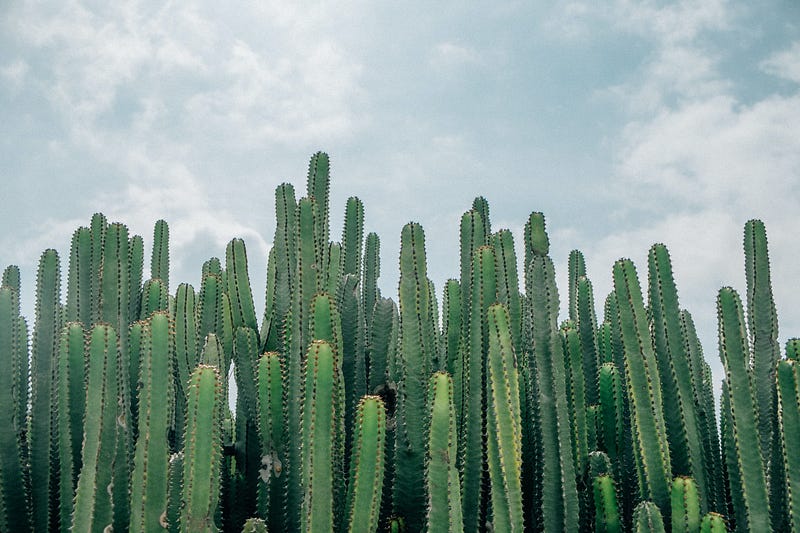
- Saturday morning, we drink the mescaline-containing cactus San Pedro (natively called “Wachuma”) as soon as we wake up, a journey that will last the majority of the day
- Saturday night, after a brief break, we sit for Ayahausca ceremony #2
- Sunday morning, we close out with another round of Wachuma
Sprinkled in are meditations, a daily plant-based meal, sound baths, and, most importantly: sharing circles.
If you think this programming sounds intense, you’re right. It most certainly is. But once you experience it, you’ll find that “it just makes sense”.
Let me explain.
Ayahuasca is one of the most potent psychedelics, and for most people, it can be quite emotionally and physically challenging. After the actual journey, integrating the Ayahuasca experience is its own feat, it can take a lot of time and energy to process.
That’s precisely why in these retreats, we drink “Wachuma” (the San Pedro cactus) the next day to help us process the experience of the previous night.
Wachuma is a heart opener, which means you won’t have the stereotypical psychedelic experience with altered visions and the likes, but rather it’s a purely emotional journey. It’s also a much more “outgoing” medicine. While most psychedelics like Ayahuasca and Psilocybin (magic mushrooms) are very much “inward journeys”, Wachuma will make you want to connect deeply with those around you. There will many tears of joy and/or sadness, an abundance of vulnerability, and plenty of hugs. The Wachuma experience lasts anywhere from 8–12 hours and (for most people) there’s much less purging involved, although some people do get nauseous.
So, imagine you just had a challenging albeit healing experience with Ayahuasca that you can’t possibly put into words. Then the next day, you’re heart is suddenly wide open, and you’re surrounded by strangers who are in the same head and heart space. Smiles meet and deep conversations are started. People are holding and supporting each other to process emotions. Some are just ripping jokes about getting their butt kicked by Ayahuasca the previous night and, in the process, are spreading some lightness and laughter.
After the mescaline journey peaked and we’ve had some food, we gather around in a circle where every single person will share a few words about their experience. Some say two sentences, others speak for two minutes, and then there are those that end up with ten minutes monologues. We don’t interrupt each other or even ask questions, we just share and when we’re done, we pass it on to the next person.
The sharing circle is the most magical part of the entire weekend, and I will explain in a bit why.
A Weekend With People From All Walks of Life, Showing Up To Heal And Reconnect
It’s impossible to generalize who attends these retreats. It’s such a wide range of humans, and that’s what makes the experience so powerful. After multiple retreats, I’ve observed that there are always some “stereotypes” present. Namely, individuals (of all age groups) who:
- Struggle with addiction — often alcohol or other hard drugs
- Have a history of depression and/or anxiety
- Are processing grief, e.g., through the loss of a person or a marriage
- Are battling eating disorders and food-related issues (c’est moi)
- Have a history of sexual abuse (always, always, always present in each ceremony — also me)
- Have suffered childhood traumas, e.g., abusive parents
- Suffer from mental rigidity, e.g., in the form of OCD or phobias
- Are curious and simply want the mystical experience in order to explore their spirituality (yogis, hippies, meditators, etc.)
This is a shortlist and of course doesn’t fully cover the diversity of participants, but I’d say at each retreat about 60-70% of the people fall in one of the buckets above.
And it’s exactly that diversity and commonality of our struggles that make the healing in community so effective.
During the sharing circles, we openly talk about our struggles with a rare and raw vulnerability because we are encouraged a) by the mescaline and b) by the vulnerability of those around us, not lastly those guiding the experience (helpers and facilitators setting an example).
We learn about each other's stories, but we also learn that often times our struggles are not so different. Themes of feeling unworthy and unloved are frequently echoed around the room.
When a woman shares her battles around overcoming the trauma of sexual abuse, there are always at least two or three other women in the room who cannot hold their tears back, and silently communicate “Me Too”.
These sharing circles inspire vulnerability, make you feel less alone, and are often the conversation starter for connections, as they facilitate that people with similar stories find each other over the course of the weekend.
Community As The Antidote To The Loneliness Of Mental Struggles?
Most mental detriments have in common that they can feel incredibly lonely, and often there’s a huge mountain of shame attached to them. Through sharing our deepest worries in community, we dismantle shame and take the first step to restore our self-esteem.
In “The Language Of Emotions”, author Karla McLaren talks about the concept of tribal initiation which very much reminded me of the magic that happens during these weekends. McLaren recites the three common stages during tribal initiation as defined by mythologist Michael Maede:
- Being isolated or separated from the known world
- Having an ordeal or brush with death
- Being recognized and welcomed back as an initiated person
Traditionally, these initiations were held to guide tribal members through life transitions such as birth, childhood to adolescence, adolescence to adulthood, marriage, mating, and so on. These passages mark important milestones in individual and tribal life and provide a container to promote deep connectedness which is at the core of tribal identity.
So in tribes, Stage 1 is an organized, expected removal from everyday tribal life. Stage 2 may be an organized ordeal or ritual, or any other type of solitary journey. Stage 3 then is the celebration where the entire tribe welcomes and recognizes the new person as a valued member. After initiation, responsibilities shift and the individual enters a new chapter in their life.
So, how does this relate to psychedelic plant medicine retreats?
Well, of course, most of us no longer live in tribes. But sadly many of us do experience “separation from the known world” when we face a traumatic experience that isolates us. We enter Stage 1 involuntarily, suddenly, and without preparation. As we experience scarring, whether it’s assault, beating, yelling, or unwelcome touch, “the spirit separates from the body”, as McLaren explains. We experience the traumatic “brush with death” without the safe container. There’s no ancestral guidance, safety, or clear endpoint that were all givens in traditional tribal initiations.
We survive Stage 2 but we live with the lasting impact, which oftentimes are mental health issues resulting from the trauma, such as depression, anxiety, or addiction. This is where most of us stay stuck, and a large majority sadly will never make it out of Stage 2.
To me, these plant medicine retreats are a (symbolic) way to return to the world through initiation: we face our traumas through the help of the plants, we share our deepest fears and insecurities, we find our strengths again, and we do all of this alongside a community that welcomes us back with open arms (and hearts).
I believe the reason these weekends have been so impactful for me (and many, many others) is that they tap exactly into these feelings of tribal initiation, something that is likely ingrained in our genetic makeup.
It simply feels like returning home.
These Ceremony Sprints Were Beautiful, And Hard, And Helped Me Reconcile My Story
On my first retreat with this group and the powerful Ayahuasca-Wachuma combo, I spent the majority of the weekend healing sexual trauma that I had completely repressed for years.
In the first opening circle when each one of us shared their intention, I revealed to the group that my intention was “to see whatever I needed to see in order to overcome my eating disorder”. Just a year earlier, I would have never even shared this openly, but as my shame around my struggles continued to slowly dissipate, my wish to connect with those who face similar struggles prevailed. There were many other women in the group and I thought that this was a great way to out myself, in the hopes that it would connect me with someone who could relate.
And it did exactly that. On the second day, I formed a bond with a beautiful woman who had overcome bulimia through healing her history of sexual abuse. We laid outside on a mattress and talked for hours, shared hugs, tears, and mentored each other. It was beautiful and comforting and just as impactful as the experience on Ayahuasca itself. Looking someone deeply in the eyes and knowing that they can relate to your pain is simply priceless.
When I returned to participate for a second time, I was already in a much better space mentally, and the gifts of the previous retreat had just begun revealing themselves. As our guide says, with Ayahuasca the hangover is always reverse: first, it’s bad, then it gets better. When we drink the medicine and have challenging experiences, we might not immediately resolve everything within the same night, over even within the following few days. But over the coming weeks or months, we will feel better.
I came to this retreat and I was able to show up not only as someone who needed help but also someone who could offer others help. The fact that we don’t have to process these experiences alone is an absolute gamechanger. On the last day, I was able to connect with a woman that had a difficult experience, similar to the one I had just had a few weeks prior, and I was so happy to be able to sit with her for a bit. Share my experience, be present, hold space.
It felt like I was coming full-circle.
I believe that the final step in healing is always service. And while I’m still figuring out what that means for me specifically, it was deeply healing to get a taste of what it may feel like.
I’ve gone through 12 plant medicine ceremonies over the course of the last 16 months, and I love how I am becoming. And I’m in absolute awe of this plant technology that is changing so many lives around the world.
Want to stay in touch? Join my e-mail list here.