
The lying eye and its accomplice
How would our design practice change if we suddenly learned that the eye and the brain are in cahoots with one another to trick us?
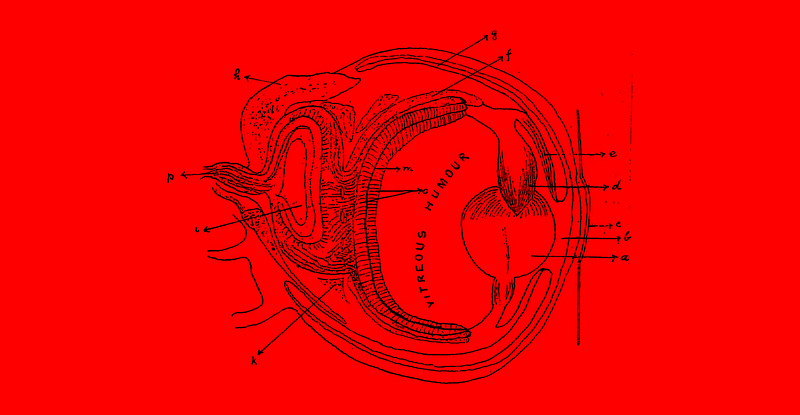
The eye is a complex and temperamental organ. By the end of this article, designers will have a better understanding of how the eye works with the brain, how it deconstructs images that the brain stitches back up again, and how the two organs work hard to pick and choose what to very quickly ignore, “see”, guess, and attend.
With any luck, you’ll walk away from this article feeling much like Neo felt after Morpheus said, “You think that’s air you’re breathing now?”
The eye is for sensing vision and the brain is for perceiving it.
There is a gigantic difference between sensing and perceiving. So much so that they are different areas of study in both neuro and cognitive psychology.
We have 7 senses. Yep, 7! We are very familiar with the first five: smell, touch, taste, sight, and hearing. The other two are less known but just as important: vestibular (balance) and proprioception (close your eyes, touch your nose. There, that’s it. A sense of your body in space).
Our senses are responsible for noticing changes in light, sound, pressure, etc., and then converting that energy to a form that the brain can process. At this point, the brain is ready to perceive or interpret the signal.
What we perceive is not always what we sense.
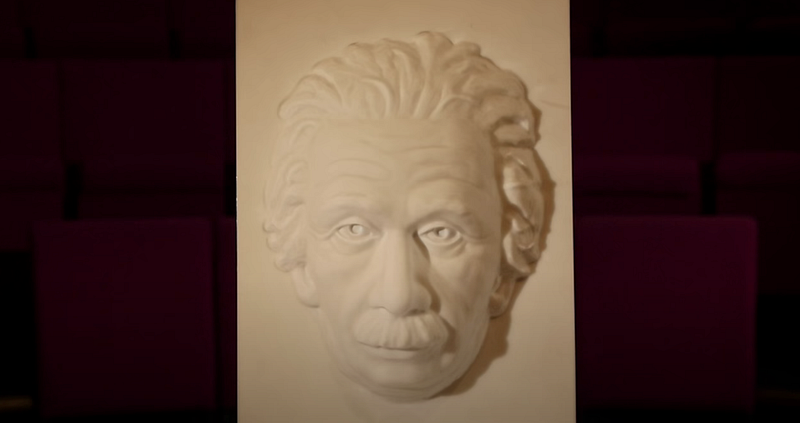
Take a look at this image of Einstein. It’s a mask. It’s hollow (concave), not convex. It’s a mold for casting a statue or coin. When a material is poured into the mold, a convex shape is formed. As we look at this image, however, we know that from our vantage point, the nose is the farthest part away from us. And yet, our brain will not let us “see” what’s really there.
Look at it again. Does your brain let you see the “real” image? Probably not. It’s because the eye and the brain are in cahoots with one another to trick us.
The reason for this is because the brain knows faces are not naturally hollow. The brain rejects the notion of a concave face and perceives what makes the most sense to it. This is a powerful, fast, and uncontrollable force. Try to see what’s really there and tell me with all honesty that you can see a concave image.
Play the video below; it’s astonishing. And even after you “get it” your brain might still not let you “see” the real image.
Similarly, read these items out loud from left to right.
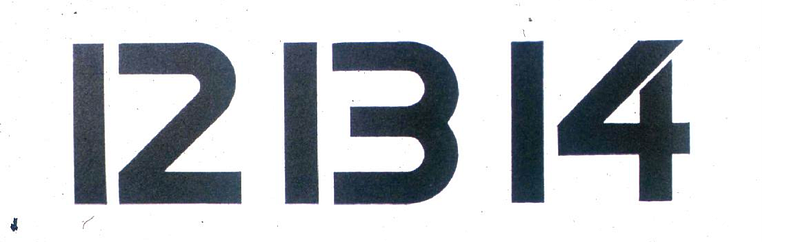
Now, read these from top to bottom.
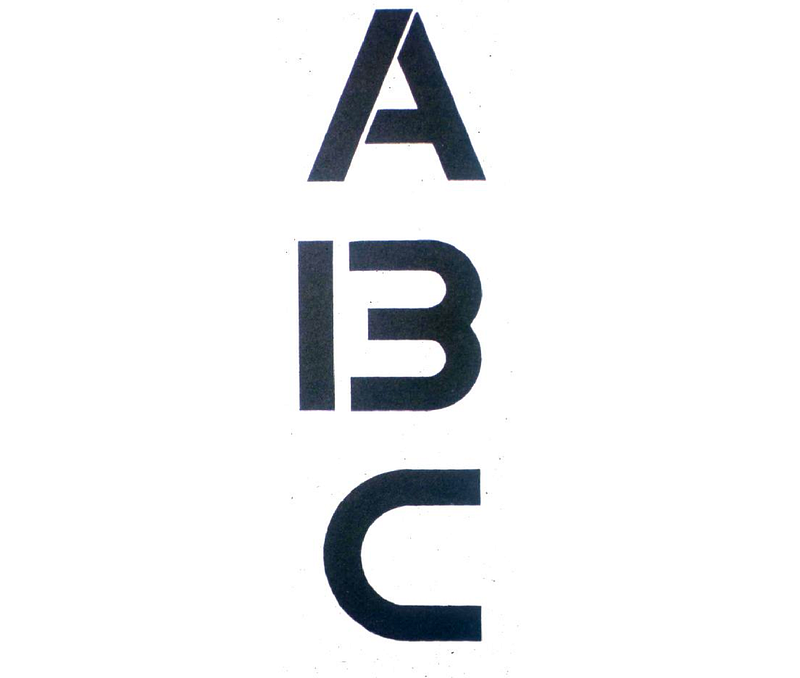
What you read in the middle changes from one example to the next, right? Now, look at them together.
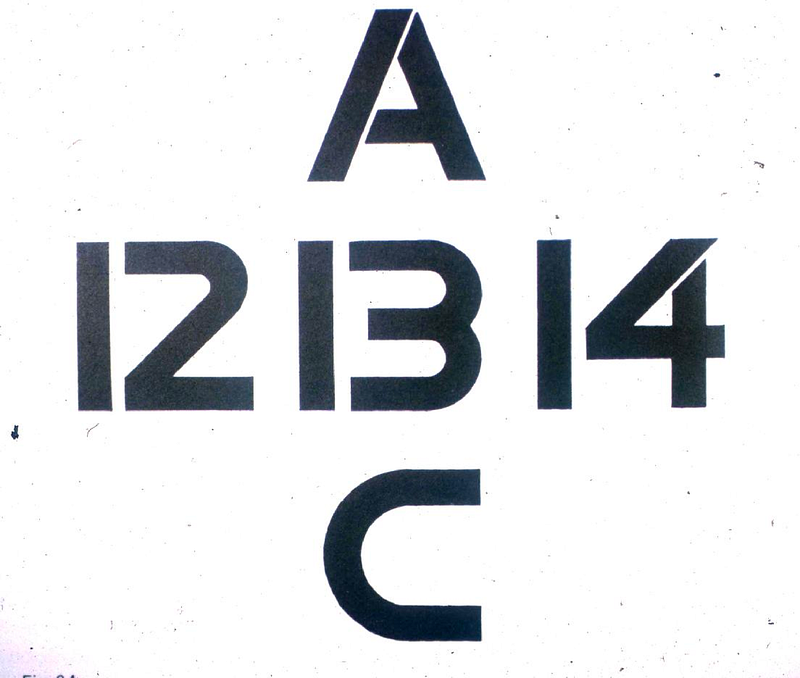
The middle item is either a “13” or a “B” depending on what comes before and what comes after. How in the world do we see something different in the two examples when the form is 100% exactly the same? The eye and the brain are tricking us, that’s how.
The context in which the item appears gives what we see meaning (perception). Nuts, right? Ok, two more just for fun.

What do you see? A person wearing glasses? Or can you read the word, “Liar”?

The photon’s journey: part 1 — sensing vision
When a photon darts into your eye, it goes on a magical journey.
The ability to see started over 100 million years ago. Human eyes have evolved over time, from seeing only black and white (as many other animals still do) to the ability to see red, green, and blue light.
Color wavelengths entering the eye are received by millions of light-sensitive cells, cones, and rods. Once photons collide with the photoreceptors in the retina (cones and rods), the light energy is converted to chemical energy through a process called transduction.
In a gross generalization, the sensory information is filtered by ganglion cells to boost contrast and definition before it makes it to the optic nerve and is finally delivered to the visual cortex found in the brain’s occipital lobe.
The photon’s journey: Part 2 — perceiving vision
The visual cortex (V1) processes the horizontal and vertical information, and then adds depth back in (V2) since the eye can only see in 2D.
Some of you might have already known this, but I am blown away every single time I am reminded that the eye can only sense two dimensions. And the brain stitches vertical and horizontal information collected by both eyes to recreate the third dimension; depth — on the fly. Our ability to perceive 3D is constructed.
Processing speed is critical. It could be the difference between becoming lion snack or not — or more likely, roadkill or not. In order to process information very quickly, the brain “fills in” what it thinks it should be seeing by drawing from past experiences and expectations. Does this sound familiar? Gestalt principles? Closure?
In fact, the Gestal Principles of grouping (similarity, proximity, continuity, and closure) are central to our understanding of how perception works because they all help us make better and faster guesses about what we think we see.
“This characteristic extends to color and form perception in V3 and V4, to face and object recognition in the inferior temporal lobe, and to motion and spatial awareness in the parietal lobe.”
While the sensory receptors are continuously gathering information from the world, in the end, it is how we interpret the perceived information that dictates how we interact with the world.
Sensory information is organized, interpreted, and experienced. There is both bottom-up and top-down processing. Bottom-up processing means that perception is stitched together from sensory input, while top-down processing is how we interpret sensation — which is guided by our knowledge, experience, and thoughts.
That’s right, our history — what we know and don’t know — has a major role to play in how we interpret the signals delivered by our senses — how we perceive sensation. This explains why two people looking at the same thing can perceive completely different things.

Perceptions are built from sensation but not all sensations result in perception. For example, the mind doesn’t perceive sustained stimuli. Think of ticking clocks or pressure. This is known as sensory adaptation.
Sensory adaptation can explain why some users can’t “see” the link, headline, or button needed to complete a task.
If we see the same thing differently, how should that change our design practice?
By now, you know that if you put two people in front of something, they’re likely to perceive what they see differently.
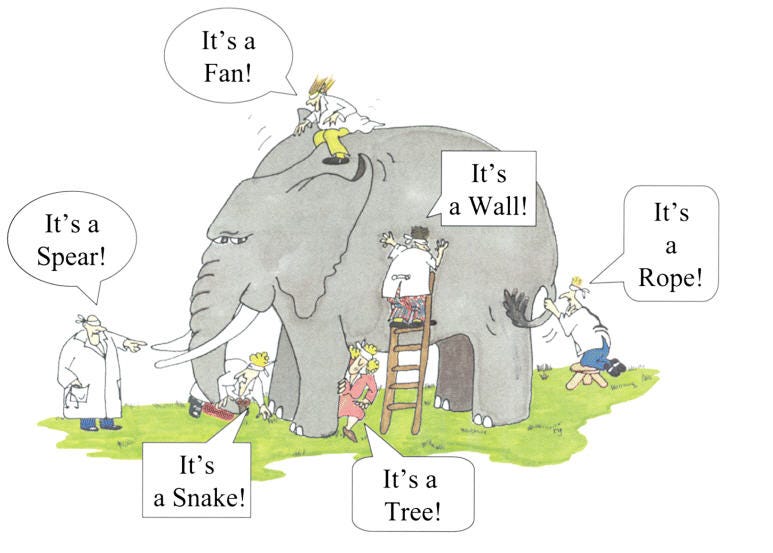
We’ve covered the cognitive and some of the physiological reasons why this happens. But there’s more. There’s always more.
At the back of the eye, at the retina, there are rods (for color vision) and cones (for black and white vision). There, we can find another physiological reason why we see differently. Folks that are color deficient (some people call this color blindness but it is not) see plenty of colors, just not all of ’em.
Even people who have typical photoreceptors can see the same thing differently. About 60% of men have a type of red cones. This means that more than half of men perceive the color red differently than the other half. Meanwhile, most women have both types of red receptor cones and are able to sense a richer image — not just for red but also for all the colors that red interacts with.
After reading this article, seasoned and responsible designers won’t likely have much to change about their practice. After all, they are already designing high contrast, properly sized interfaces that are GWAC 2.1 AA compliant, right?
But perhaps we pay more attention to our end-users and their backstory. If we know our users don’t have much of a backstory, such as kids, then perhaps we design with more intention. This can help them be more successful with our interfaces and help them begin to form the conceptual models that add to their backstory, to their context, to their body of knowledge.
Similarly, if we know our users are savvy and have richer backstories, then we can take some creative freedoms and rely more heavily on Gestalt Principles.
More than anything, I think, we can stop sweating exactly what colors we use. Men and women see color differently and even among men, what they sense (red and the millions of other colors that interact with red) is all over the place.
I am not saying to abandon making gorgeous designs. What I am saying is that since people sense and perceive things differently, maybe our designs should have an equal emphasis on function — as it does on form.
The bigger picture: neurodesign
All of this rolls up to Neurodesign. There is a lot more to this emerging field than what you’ll find here. Many Neurology and neurophysiology research is actively conducted while designers (like me) find ways to translate those insights to create designs that emote joy, project simplicity, and drive action.