
The Lowest Vibration in the Spectrum: Shame

It’s 7 in the morning. You are on your way to work, waiting for the bus. There’s something awkward that you can’t describe about the bus station this morning, but you don’t care.
A few minutes, lives or seconds later you suddenly realize that…
You are stark naked.
This is one of the most common dreams everyone has dreamed at least once in their lifetime. Locations and surroundings might be different, but the main theme is the same.
Shame.
When was the last time you wanted to sink into the ground and disappear? We all sometimes tend to see ourselves in a humiliating light of self-criticism which causes an uncomfortable sensation called shame.
The word shame has its origin in Indo-European languages with the meaning of “being uncovered”.
German equivalent of the word shame, “scham” or “schamgefuehl” is defined as an emotion that occurs as result of the disclosure of naked body, particularly the genitals. As for in French, there are two peculiar words for this emotion. “Pudeur” and “Honte”. Pudeur is the shame Adam and Eve experienced when they found themselves naked in heaven. “Honte” is a scandal which occurs in the state of “lowering oneself”
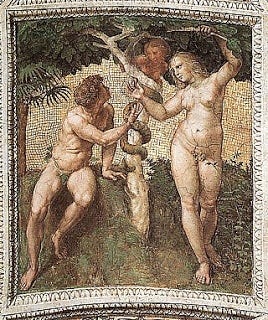
“…and that the tree was to be desired to make one wise, she took of its fruit and ate, and she also gave some to her husband who was with her, and he ate. Then the eyes of both were opened, and they knew that they were naked. And they sewed fig leaves together and made themselves loincloths.” Genesis 2:25
Can we say guilt and shame are related?
After violating God’s rule by eating from the forbidden tree, Adam and Eve experienced the immediate emotion that caused by guilt. Their first reaction was to cover themselves.
Brene Brown, who describes herself as a shame researcher, spent the last ten years studying vulnerability, courage, authenticity and shame. Brown separates guilt from shame by believing that guilt is someone feeling that they’ve done something bad, while shame is an emotion where people believe they are bad. Guilt may cause a positive change in behavior while Shame may cause inaction.
Vibration of Shame
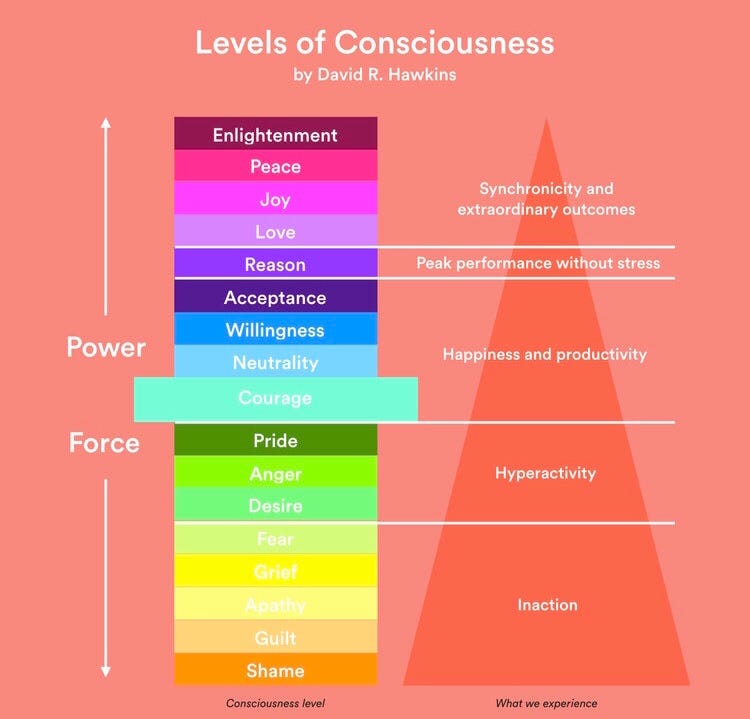
According to energy science, emotions vibrate in your chakra and aura. American psychiatrist David R. Hawkins used kinesiology to measure the responses of body’s to emotional fields of consciousness. In his book Power vs Force, David R. Hawkins says that there’s a hierarchy of levels of human consciousness, and shame is the lowest level of consciousness that vibrates through your chakras. Following by guilt, apathy, grief and fear, the lowest vibration causes inaction. In other words, it silences us.
We, social creatures that crave for healthy connections, feel a disconnection because of this sensation we experience. It becomes a secret, and secrets become shame.
When do we start holding ourselves in shame?
First of all, as all our emotions have their roots in ancient evolutionary history, it is not hard to believe that shame was built in our genes by our tribal ancestors. Our tribe people needed strong connections inside of their tribes. Our tribe people needed rules to regulate peace which later turned into social norms and beliefs. Anything less than the norm went into the shadow, but anything better also went into the shadow. Passing from generation to generation, these ordinary, mundane characteristics we created as norms became our reality that we must not pass over…
that cannot pass over.
that is unacceptable and emotionally painful to pass over.
How can shame help us in our self-discovery?
How can I be substantial if I do not cast a shadow? I must have a dark side also, If I am to be whole. Carl Gustav Jung
Our shadows are the best place for shame to hide.
The Shadow is an archetype that describes the darker side of psyche, which was first spoken out by founder of analytical psychology, Carl Jung.
It represents repressed, denied pieces of self that we can only reach out by asking the right questions.
What part of yourself were you ashamed of first? Who made you want to cover yourself up?
What memory were you ashamed of as a kid?
What are you ashamed of as an adult?
The properly shaped question always emanates from an essential curiosity about what stands behind. Questions are the keys that cause the secret doors of the psyche to swing open. Clarissa Pinkola Estes, Woman Who Run With the Wolves
Good luck in your audacious self healing. I am shedding light upon one of my shadows by posting this.
Resources:
- “Shame (n.).” Index, www.etymonline.com/word/shame.
- Hanson, Rick. “From Shame to Self-Worth.” Dr. Rick Hanson, 29 Nov. 2018, www.rickhanson.net/from-shame-to-self-worth-introduction
- Brown, Brené. I Thought It Was Just Me (but It Isnt): Making the Journey from “What Will People Think?” to “I Am Enough”. Avery, an Imprint of Penguin Random House, 2008.


