
The Lost Magic of the Olympic Trials
Part of Four Days in London
Important note: The events I am going to describe took place between 2004 and 2008. Some of them I am only familiar with based on hearsay, and what I was told after the fact. Thus there may be some inaccuracies so consider me a very well-intentioned unreliable narrator. If you have any corrections, please reach out.
Also for the love of god I wrote this in almost a single sitting. There will be typos.
Today if you want to make the Olympic team for judo, the path is incredibly difficult. It was always hard, but now the only way to get that golden ticket involves being among the top 20 individuals in the world or pick up a wild card through the continental quota system. The system today is built around individuals qualifying, but it wasn’t always this way. The previous system, the system that was in place for the 04 and 08 Olympics, was focused on qualifying a weight class. A country would need to be ranked at a certain level within their continental union (European Union, Pan American Union, etc), range in order to qualify to send an athlete. There are drawbacks and advantages to both systems. I think the system in place now is overall fairer, but I think for the United States it came at a cost. The cost being the Olympic Trials and some of the magic it brought to the sport in the United States. To illustrate this drama, I’d like to talk about 66kgs.
66kgs and the Beijing Olympics
Athens
As I’ve talked about before, it’s impossible to understand the storylines of an Olympic quad without picking up on the results of the last one. One of the biggest rivalries going into the 2004 Olympic Trials was between Justin Flores and Alex Ottiano. Alex and Justin stood in contrast to each other. Alex was a straight-laced ivy league graduate from New England with a degree in economics. Justin was a surfer and talented artist from California and who dropped out of college, to pursue his Olympic aspirations in judo. Both had a tremendous talent for grappling, having wrestled in college.
I met Alex at my first judo practice. He and my friend Mike Procopio gave me my first judo lesson. Alex was friendly and a patient instructor. He was one of Jimmy Pedro’s main training partners. Many of my early memories of judo until my mid-teens included being on a mat with him. If you had pulled up my Myspace circa 2005, you would have seen him listed as one of my heroes alongside Jimmy.
Alex was the Olympian in 2000 and had beaten out Justin’s older brother Jake for the spot. While Alex had been selected over Justin for appearances at the 2001 and 2003 World Championships, it was none the less not clear who was going to go to Athens. By the time they got to the trials, they had fought each other nearly ten times. Justin had a winning streak against Alex that had only snapped a few months before, at the 2004 New York Open.
I wouldn’t meet Justin until 2006. I was at a tournament in California when I ran into him in the stands. Being a gigantic judo nerd and not having much fear about talking to people, I started a conversation. I had only known him for his judo accolades and his rivalry with Alex. I had heard things about him through the grapevine. Ronda Rousey and I were good friends back then and she would relay stories to me. Justin to his credit put up with my nerdy judo questions for a good chunk of time. He was easy going and it was fun to hear him talk about his time competing internationally. He would move out to upstate New York a few months later to train Jason Morris’s club, and we would run into each other at tournaments and camps regularly.
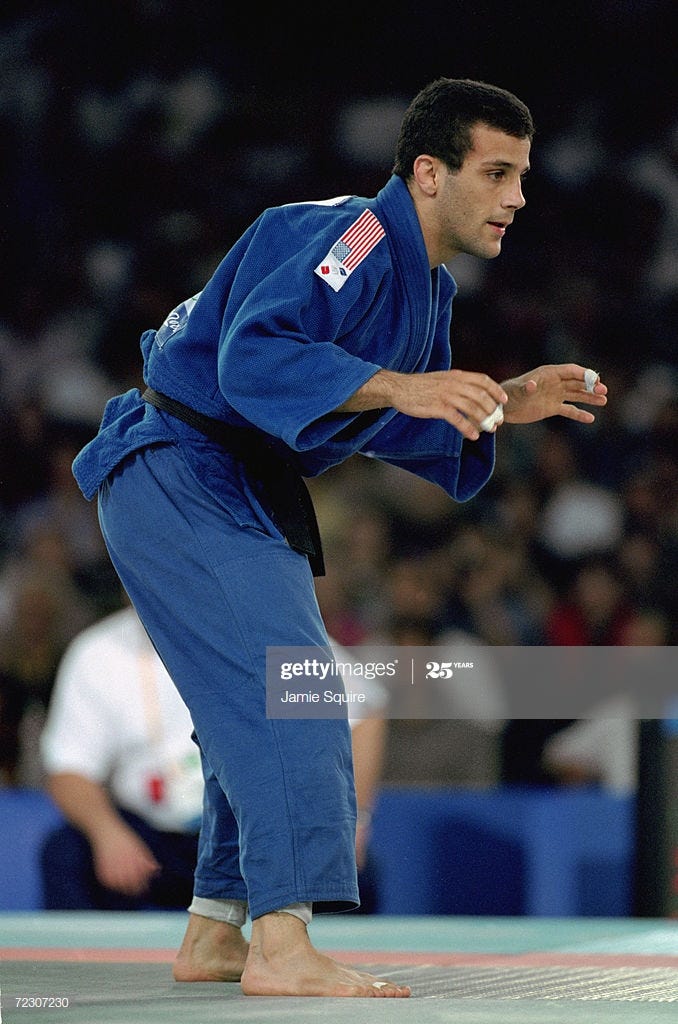
They were however not the only ones fighting. The top 5 players in the United States were provided slots in the Olympic trials. Taylor Takata and Nate Torra were both former national champions at the 60kg weight class.
Nate had moved up several years before and held the number three seed. Nate Torra was one of the big names at Jason Morris’s judo club when I first went to train there. He would eventually leave Jasons. The year he did, I went to spend a summer there training. There was a list of numbers that I was told to add to my phone when I got there. I hadn’t realized yet that he had legitimately left, and I added his. One day I accidentally dialed it, and he and I chatted. I was sixteen, and for the next few years, he became one of my sounding boards. Especially my first year in college.
Due to a possibility that the United States would not qualify for the Olympics at 60kgs, Taylor had moved up to 66kgs at the last moment to qualify for the trials. John Matsuoka, the Olympic alternate at 60kgs from 1996, had launched a surprise campaign that led to him qualifying for the trials as well. The ranking going into the trials was
- Alex Ottiano
- Justin Flores
- Nate Torra
- John Matsuoka
- Taylor Takata
Matsuoka and Takata would fight first, with the winner facing Alex. On the other side of the bracket, it would be Justin versus Nate. Alex was provided with some protection as the number one seed. Should Alex lose to any of the competitors, he would have an opportunity to fight for the spot in a best two out of three match up.
Alex defeated Taylor Takata. My understanding was that it was a tight match. Taylor himself was known for having excellent grip fighting and an extremely cagey style.
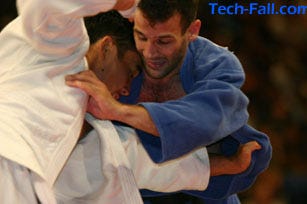
Justin and Nate were an interesting style match up. Both had trained extensively with 92 Silver Medalist Jason Morris and it showed. Jasons players were known for an upright classical style of judo. Justin was a left-sided player and Nate was right-sided. A big kosoto gari bear hug attack followed up by a pin would give Justin the match. Justin's win set up the big showdown with Alex.
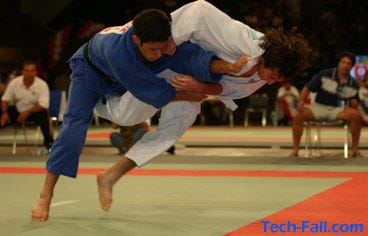
Since Alex held the number one seed, Justin would need to beat him in order to force a best two out of three play off. Justin took that first win, triggering the play off. Justin then won the first match. This put Alex’s back to the wall, where he would need to break Justin’s momentum and win the next two matches. Alex would do just that in their third of match of the day. In their final fight however tragedy struck for Justin. Justin had hurt his neck, and after a particularly difficult exchange, had hurt it even further. The injury was significant enough that he was forced to withdraw. This gave Alex the slot and his second appearance the Athens Olympics. Alex would go onto retire after the Athens games, go to Boston University to get a graduate degree and have a successful career in finance. Justin would be back for another four years.
Beijing
Every Olympic year includes a slew of retirements. In some ways, it could be thought of as graduation. You are moving onto the next phase of your life. For many its a period of serious reconsideration about what the next four years of their lives will look like. A lot of people take that first year off with the intention to come back for the remaining three years but never do.
There were a couple of big changes made during the 2008 quad. To start, the selection process to make the world championship team was changed during the Beijing quad. In order to ensure that the top player was chosen, a fight off system similar to what was used in the Olympic trials. Now, if the number one player won the national championships, they would be guaranteed a spot. If they lost, there would be a fight off between them and the reigning national champion. This made the national championships the premier event of the year on the national circuit. If you wanted to take your shot at a world championship, you had to go through the toughest people the United States had to offer.
At the 2005 National Championships, three of the previous years' Olympic trials participants returned to action. Justin Flores was the reigning number one after the retirement of Alex. Nate and Taylor both returned as well. Taylor had opted not to return to 60kgs and Nate Torra was coming off a successful competition run the previous fall. These three were not alone among the elite tier. Kenny Hashimoto, a former phenom at the junior level and the Olympic alternate at 60kgs had just made the move to 66kgs. The younger crowd included Junior World team member Josh O’Neil and the top-ranked junior Francisco Alejando.
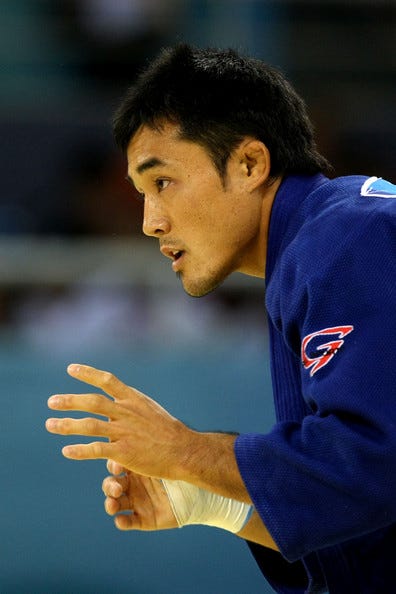
Justin would make the finals, but the drama was on the other side of the draw. Kenny Hashimoto would upset Taylor Takata to make the semi-finals. Nate would beat Kenny in their first matchup. Justin would then beat Nate in the finals, and secure a slot at the 2005 World Championships. The two bronzes would go to Kenny and Taylor. Justin would have a strong season in Europe, placing in the top 5 several times.
A year later the weight class would grow even more crowded. This year Justin lost to Josh O’Neil, which made left the field wide open. 2004 Olympian Taraje Williams-Murray would move up to 66kgs and make the semi-finals against Nate Torra. On the other side of the draw, this time Taylor Takata would make the finals.
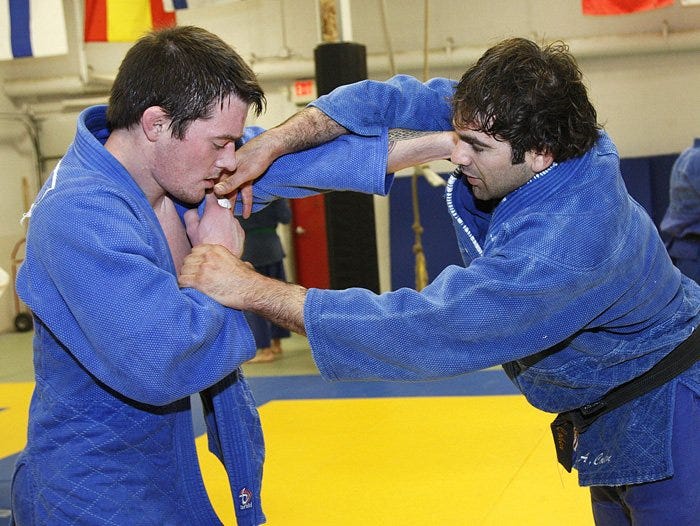
Of the matches I would love to go back in time to see, Nate versus Taraje was one of them. Taraje was an absolute expert at a style of judo referred to as the pick up game. Popularized by European players, it was the foil to the more classical Japanese style that Nate played. Ultimately Nate took the win.
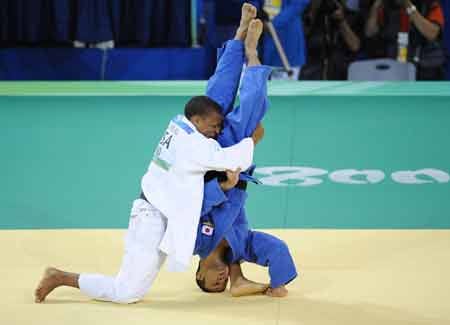
The match between Taylor and Nate was another contrast in styles. Taylor won the finals in overtime, winning another national championship. With Justin having not placed, it felt like the spot for Beijing could go to anyone. Justin would return in the fall, making the finals of both the Canadian Open (called the Rendous Vous) and the US Open. He would split a pair of matches against Kenny.
The year before the trials always the most informative for what the final run up would actually look like. Your actual qualification period, absent a top 7 placement at the World Championships, effectively started the day after the national championships. Thus the 2007 National championships were interesting by default because you’d see what weight classes individuals would commit to, and who might be on form for the next year.
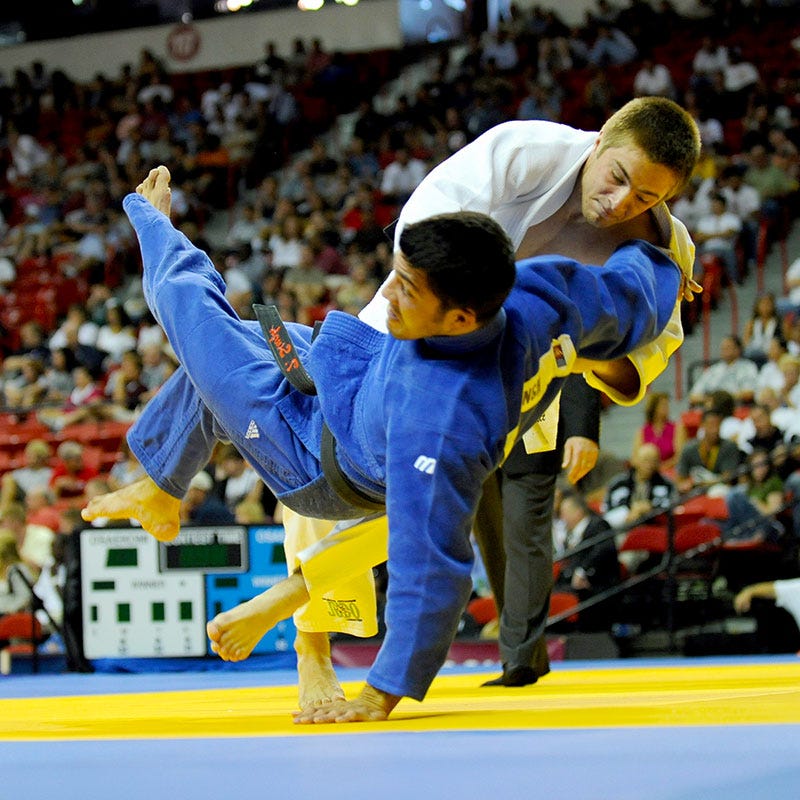
The most important new entrant in 2007 was Jeremy Ligget. Jeremy had taken silver at the Pan American championships at 60kgs, but had struggled to make weight. Being in his late teens, the decision was made to him up to 66kgs. His run at the weight class started at the New York Open, at the time the toughest tournament in North America. There he upset Nate Torra, his former teammate, in what turned into rivalry where each person alternates wins and losses for the remainder of the quad. Both being examples of hyper-technical right-sided Japanese style judo players, matches between them could be decided by the tiniest mistake. As Jeremy moved up, Taraje moved back down, committing to the weight class where he felt like he had the best chance of bringing home a medal from Beijing.
Thus the 2007 nationals had a full cast of characters: Justin Flores, Taylor Takata, Nate Torra, Kenny Hashimoto, and Jeremy Ligget. They were joined by 2006 junior world team member and Jeremy’s teammate AJ Silverman. 2007 was the first year where they began live streaming matches, and it did not disappoint.
Justin Flores had returned to form and was on fire the whole day. He beat Nate in the semi-finals on points and then controlled the match against Taylor Takata in the final. In the bronze medal matches, Nate Torra beat Josh O'Neil for bonze. While Kenny Hashimoto won a tough match with Jeremy Ligget for bronze.
Besides qualifying through ranking within the Pan Am region, there was another way for a country to qualify for the games. If a country placed in the top 8 at the world championships, they would directly qualify for the games. Not only that but they would be removed from the qualification list within the Pan Am region. Justin, having dominated the national championships, would make one of the best runs of any Americans that year.
Justin started out the day beating Badrick from GBR, and then Figueroa from El Salvador. This would set up a match with Cuban judo legend Yordanis Arencibia in the quarter-finals. Arencibia had medalled at almost every world championship and Olympics he had entered up to that point. He came into the world championships that year as the number one seed. Being close in age, the two had fought each other several times and were familiar with each other. If Justin won this match, he would compete for a medal at the world championships, being the first American male to do so since Jimmy Pedro in 1999.
The match was fast-paced, with both in top form. Matches back then were five minutes long and for almost four minutes he was beating Arencibia. With thirty seconds left Arencibia got a cut on his forehead. The process of bandaging him disrupted the momentum of the match. In the next exchange, Justin made a gripping error, which Arencibia was able to take advantage of. Arencibia would win the match and go on to take silver that day. Justin would lose his next match to Greece.
The fall season included some big moments like Jeremy Ligget beating Justin Flores for bronze at the Rendous Vous and Kenny Hashimoto beating Taylor Takata for gold at the same tournament. Taylor would beat Ligget at the Fall Classic. Josh O’Niel made the last big weight class move, transitioning to 60kgs to challenge Taraje.
The final major tournament of the qualifying period was the 2008 national championships. This tournament I actually got to attend, as I was making my own run at trying to make the trials. The national championships in an Olympic year back then was consistently a mixed bag. Some divisions would be incredibly tense since the number one seed was still up for grabs. In others, athletes who had solidified their seeds would skip the tournament, or in some cases withdraw once their seed was solidified to avoid injury. In 2004, the entire 100kg weight class turned down the opportunity to compete for medals, as the division at the trials had been solidified.
For 66kgs, Justin Flores and Taylor Takata would both opt out of competing at 66kgs. Justin would fight up at 73kgs, setting some interesting fights that were fun to watch. Taylor had solidified his spot as the number one seed already and attended the tournament for scouting purposes. With both of the previous national champions gone, the division was even more open than normal.
Nate Torra met Jeremy Ligget in the semi-finals on one side of the draw. On the other side of the draw was a showdown between Josh O’Neil and Kenny Hashimoto. Most of the matches between Nate and Jeremy were decided after long technical exchanges, but this match was the exception. Nate caught Jeremy with a footsweep (kouchi gari if I remember correctly). This would put Nate in his fifth national final. Kenny would best Josh. Both Josh and Jeremy would go onto win bronze medals. This left a tense showdown between Kenny and Nate, a rematch of their semi-final from 2005. The match would come down to the wire, as Nate managed to beat Kenny by a small margin. With that, the seeding for the trials was established.
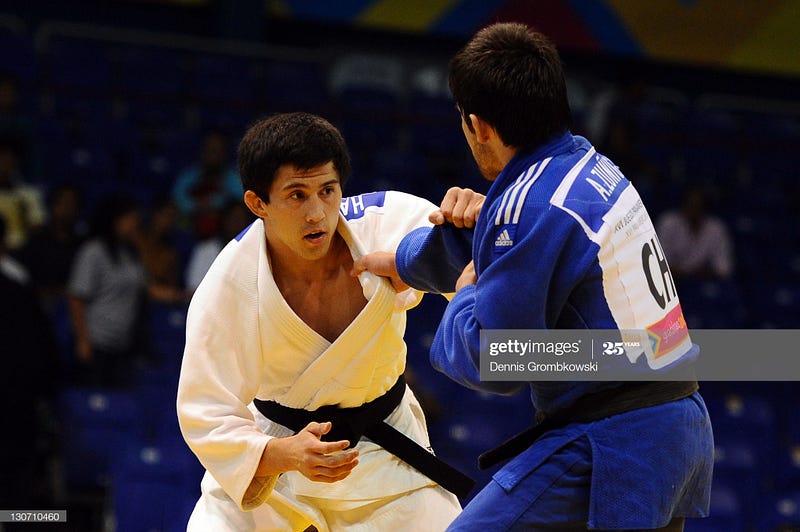
The official seeding was announced after the 2008 National championships. It would, however, be changed as Josh O’Neil was still qualified at 66kgs despite having moved down to 60kgs. That and tragedy struck a few weeks before the trials. Kenny Hashimoto badly hurt his neck in practice. I don’t remember the details but the damage was significant. He wouldn’t return to major judo competition for two years.
The final seeding was:
- Taylor Takata
- Jeremy Ligget
- Nate Torra
- Justin Flores
- Jeff Fong
- Daniel Chow
- Tanner Singh
While the top 8 qualified for the weight class, I truthfully cannot find records of who the number 8 seed was.
The top four seeds all advanced to the semi-finals. Nate would fight Ligget and Justin would fight Taylor.
The battle between Nate and Ligget was. It was on track to be yet another match to be decided by a referee decision when Nate made an error. Ligget countered, ending Nates Olympic journey. Ligget would now face the winner between Taylor and Justin. Later I spoke to Nate on the phone, and he told me that he felt like he had to take a chance because he didn’t know if he was going to get the referees' decision.
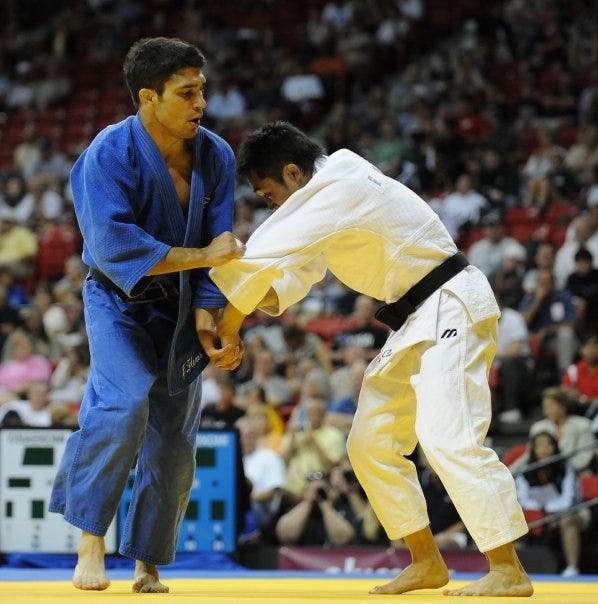
Justin and Taylor battled. Taylor would later say to the press that this was the match he was the most focused on going into the trials. That Justin was the man to beat. In the end, Taylor beat him on points. Setting up a match in the finals against Ligget. If Taylor beat him, then Justin would have the opportunity to compete against Ligget for the Olympic alternate spot.
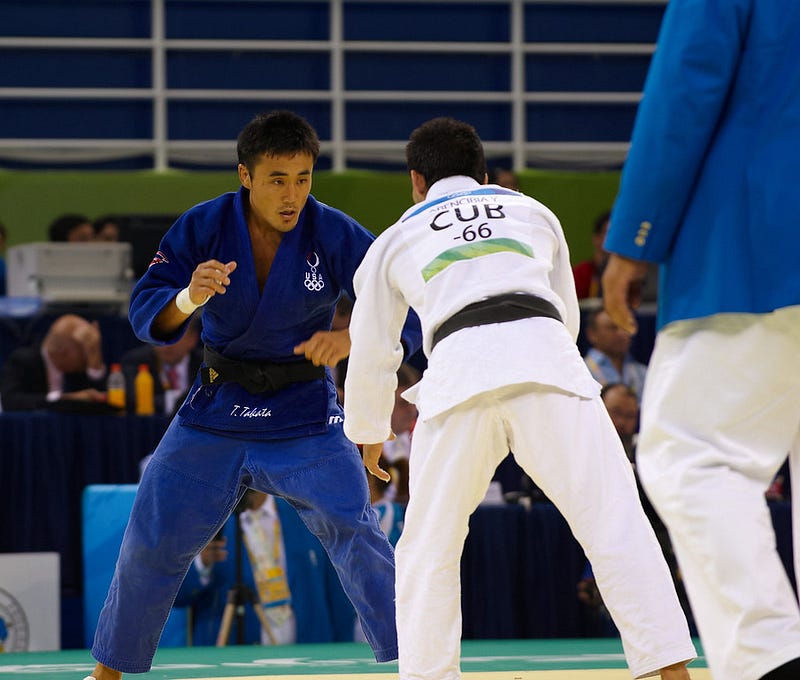
Ultimately Taylor beat Ligget and then Ligget beat Justin. Taylor would represent the United States in Beijing that summer, and Ligget would attend as a training partner for the team. The difficult thing about the trials was that on that day, in each weight class, one person's dream is realized and seven others are dashed.
As I write this, I am talking primarily as a fan. I wasn’t able to begin competing at a major continental and national level tournaments at the senior level until 2006, and not consistently until 2008. Every time one of these tournaments came up, I would spend the day calling and checking in on friends. Any details I had of a match would be filled in by different people's observations or what was written in the magazine Real Judo a few months later.
I’m also not just writing from the perspective of a fan. Some of these people were my friends and heroes.
Justin Flores, who is now the US coach, is actually married to my first training partner Shirley. After the trials, he went back to school and finished his college degree. He started a successful business and helped coach Ronda Rousey to the first women's UFC title. I’ve written elsewhere about my time in Japan, and a lot of my best experiences there were in a small way influenced by Justin. He and I used to talk a lot during that period of my life and he gave me a lot of advice for navigating Japan. He has been the head coach of the United States for the last four years and has become one of the most knowledgeable grappling instructors on the planet.
Nate Torra was someone who I used to talk to a lot as a teenager. We talked every few months between 2005 and 2009, and when I won a junior national championship, he was the first person to call me. He is now married to the 2008 Olympian Sayaka Matsumoto and they have a young family. After my own run had finished, I gave him a call and while I didn’t end up trying for 2016, one of my favorite memories is him and Sayaka encouraging me to try one more time.
While I was close with the seniors on my team, there weren’t many people who were my age and also competing at the junior national tournaments. Until some unfortunate drama between the two clubs, I had felt like some of the younger members of Jason's club were unofficial teammates for me. Jeremy Ligget was one of those people. He was someone who I counted among my favorite people as a teenager. He and I are the same age, but he was tremendously more talented, and thus was competing at the senior level early on. In 2012, when he decided to fight a tournament in upstate New York for fun, I got up early in the morning and drove four hours just to hang out and share a mat with him again. He is now a cop in upstate New York.
Taraje Williams-Murray is someone I looked up to from the day I first saw him at practice in 2004. My father was familiar with him, this teenage phenom who had graduated with a degree in computer science while still in his teens and about to make his Olympic debut. He now runs a financial services company. He is probably the smartest person I ever met.
Josh O’Neil and I haven’t spoken some time, but he was someone who I always had the vibe I could call if I had a flat tire. He was a good dude. I’ve meant to catch up with him for years.
I do not know Taylor Takata on a personal level. He was usually competing against my friends. That said when he fought in Bejing, he really showed up. He beat the player from Greece who had beat Justin the year before, took out one of the top seeds in the weight class, and lost a close match to Arencibia in the quarter-finals. He finished 9th. He now runs a judo club in Hawaii.
I didn’t know Kenny particularly well, but he was a cool dude to see. Watching him come back two years later and compete was a lot of fun.
The great tragedy of the Olympic trials was not that everybody wins. All of the people I talked about had compelling parts of their story. For me as a teenager, these men, who were in the second smallest weight class in the sport, felt like giants. Some of these people I looked up to. Who I would look to them for advice or model parts of myself after. As I grew older I befriended many of them and learned their faults and came to see them as human. Part of becoming an adult is learning and understanding that the people you looked up to are also just trying to figure out their place in the world.
American judo being a small sport, it doesn’t get a lot of attention. It is home to some really compelling stories that don’t get told outside of anecdotes by veteran judoka reminiscing on the side of the mat. 66kgs wasn’t the only place to find these stories. There are fourteen weight classes in judo. You had Ronda Rousey, who was the chosen one of American judo and bearing the incredible pressure of the question of whether she was going to be the next American superstar. Valerie Gotay, the veteran at the end of her career who might just have enough fight left in her to bring home an Olympic medal. You had the Olympic alternate from 2004 Mike Barnes show up out of nowhere and qualify for the Olympic trials at literally the last possible tournament to do so.
This intimacy though, was why the Olympic trials were exciting. How these personas would clash when it finally came down to it. You had a chance to see how all of these stories would end. Judo is a small sport and the barrier between you and sharing a mat your hero, especially back then, was a fifty dollar a dojo month club membership or three-hour car drive and a mat fee.