
The ‘Lost Cause’ Is a Psychological Response to the Trauma of Defeat.
A psychologist examines Documents of Secession and discusses the mythologized Confederacy of the Lost Cause and its present-day application to white nationalism.
We are born into a world where our identities are framed by Western historical constructs that define and determine human value from skin color. Western civilization invented a social construct called “the white race” to distinguish that group from Black-Africans for whom the concept of “race” did not exist. European settlers in Colonial America held no reservations about complying with the new legislated designation that converted their natural rights into a state of privilege, and this created the Racial Hierarchy social construct.
The creation of the Racial Hierarchy social construct came out of a need to separate and categorize humans in order to secure and protect aristocratic wealth in Colonial America.
White nationalism is rooted in the invention of this racial construct; a construct created from utility, not from empirical science. As a consequence, a sustained pattern of belief and reliance upon this false ideology of the racial construct is nothing short of delusional.
Delusions are fixed beliefs that are not amenable to change in light of conflicting evidence.
Upon examination of Documents of Secession, this psychologist observes that The Lost Cause derived from the reality of tangible annihilation intersecting with Confederate racial mythology. The Lost Cause represents the psychological need to erect a vanguard of protection around the mythical identity of white supremacy. For the Confederates and now white nationalists, the indoctrination of a Racial Hierarchy was, and remains, too great to overcome. Rather, a state of psychological comfort is contrived through sustained inter-generational delusion.
The reality of tangible annihilation.
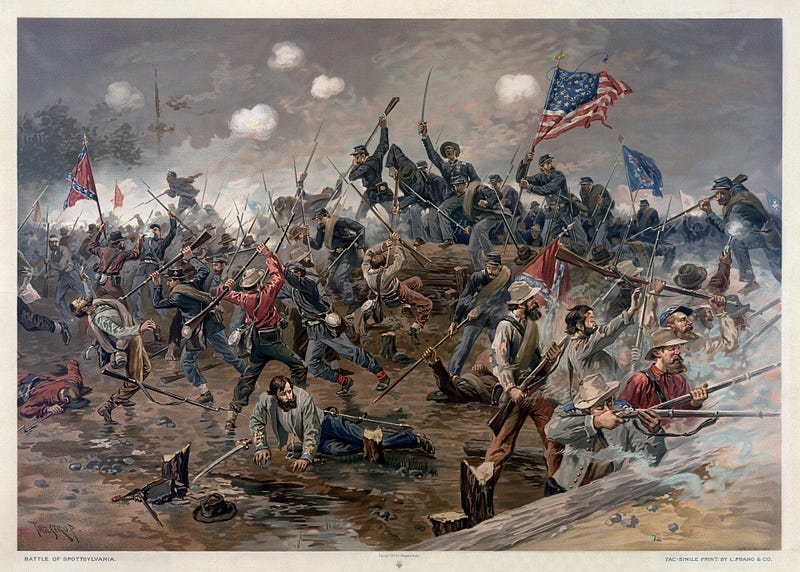
At the end of the American Civil War, the South was in a state of ruins. David Blight, Sterling Professor of History, of African American Studies, and of American Studies writes:
The Confederacy had truly been defeated. Slavery, its system of labour and social organization, had been destroyed. The social infrastructure — railroads, harbours, schools, and in some cases whole cities themselves — had been devastated. Hundreds of thousands of white Southern men and even teenage boys were dead or crippled with wounds. Plantations had been laid to waste in certain regions of the South. The former Confederacy was a land of ruins. The very idea of race relations was about to undergo a revolution. An enormous war and bloodletting, unprecedented in modern U.S. history, had to somehow be put aside and a new order imagined and executed. Was it even possible for defeated white Southerners to accept their defeat and find a way to move on into the postwar world?
Hence, the emergence of something called The Lost Cause:
The Lost Cause, an interpretation of the American Civil War viewed by most historians as a myth that attempts to preserve the honour of the South by casting the Confederate defeat in the best possible light. It attributes the loss to the overwhelming Union advantage in manpower and resources, nostalgically celebrates an antebellum South of supposedly benevolent slave owners and contented enslaved people, and downplays or altogether ignores slavery as the cause of war. It became the philosophical foundation for the racial violence and terrorism employed to reverse Reconstruction and for the reimposition of white supremacy in the Jim Crow era. Its acceptance in the North as well as in the South facilitated national reunion following the war but at the cost of the civil rights of African Americans.
The Lost Cause is a portrayal that revisions the primary reason for the American Civil War. It is a movement born from the psychological trauma of not only economic and physical devastation, but the most overlooked and understudied mental decimation of humans who both believed in, and relied on, the invented lie of a superior racial identity. The Lost Cause is the delusional product of this much-understudied mental decimation:
In the 21st century there has been much controversy regarding Confederate memorials. Those who view them as offensive monuments to a white supremacist past have demanded their removal, and many have been taken down, especially in the wake of the nationwide demonstrations in 2020 orchestrated by the Black Lives Matter movement in response to the killing of an African American man, George Floyd, while in the custody of the Minneapolis police. Those who have opposed the statues’ removal argue that they are representations of Southern historical heritage. Behind these politically charged arguments lurks the Lost Cause. No matter how discredited, no matter how much mainstream historical scholarship and teaching curricula expose and explain the Lost Cause traditions, they endure — especially for those in search of a past that they believe will relieve them of the present. Some Americans are forever in search of safe havens for racial ideologies that reject the dynamism of the multiethnic America the nation has become.
Deconstructing the psychological framework of support for the delusion of a “Lost Cause,” we find:
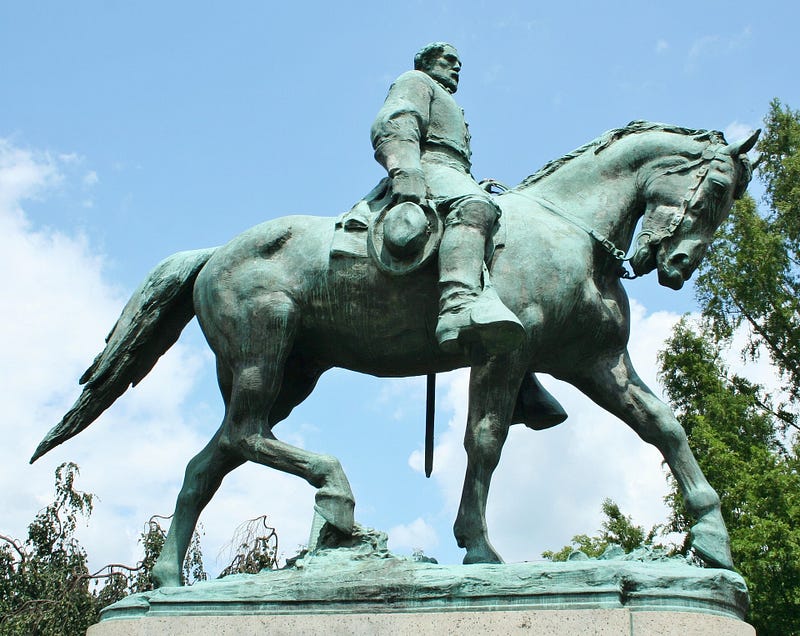
Lost Cause advocates — from high-ranking officers to common soldiers writing reminiscences and women leading memorial associations — argued that the Confederates had lost only to superior Yankee numbers and resources, minimized the role that slavery had played in catalyzing secession and the war or claimed that the war had never been about slavery, and called for the nation to reconcile by equally honouring both Confederate and Union sacrifices. In the rapidly modernizing and changing environment of industrial, urban, multiethnic immigrant America of the late 19th and early 20th centuries, the Old South of alleged benevolent masters and faithful slaves, of Robert E. Lee portrayed as the country’s truest Christian soldier and increasingly on equestrian statues, provided a sentimentalized road to reunion between North and South. The Lost Cause thus became a narrative of order and revival of old values and a tonic against fear of social and racial change.
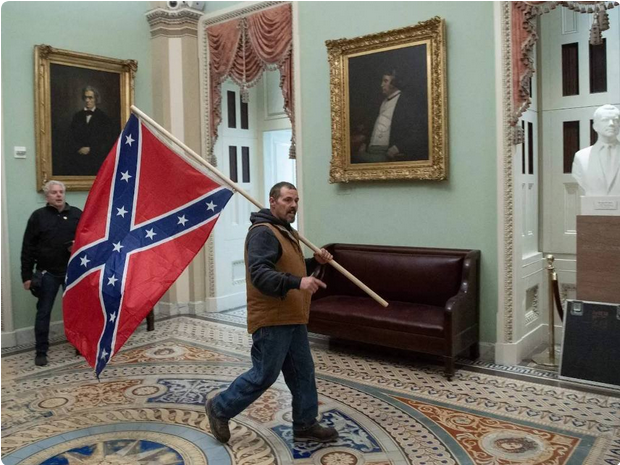
The Lost Cause has never died in American culture and politics. It has endured in modern tastes for Civil War memorabilia and art, such as the epic films Gone with the Wind (1939) and Gods and Generals (2003), as well as in ubiquitous uses of the Confederate Battle Flag to oppose civil rights and represent Southern identity. Many civil rights advocates have argued that states’ rights traditions rooted in the Confederacy have been used by advocacy groups, including members of the modern Republican Party, to suppress the voting rights of African Americans and other constituencies. Confederate mythology also inspired a horrific mass murder by a young white supremacist at Emanuel AME Church in Charleston, South Carolina, in June 2015, the mass murder of Black shoppers in a Buffalo, New York supermarket in 2022, worshipers at a Jewish Synagogue in Pittsburgh, Pennsylvania in 2018, a Walmart frequented by Latino shoppers in El Paso, Texas in 2019 and it was a component of the hate-fueled worldviews represented in a large white supremacy march that ended in one death and dozens of injuries in Charlottesville, Virginia, in August 2017.
Documents of Secession.
This author and psychologist observed something peculiar while examining Documents of Secession; websites that favor a “Lost Cause” interpretation can be readily identified as they remove all references to slavery and race and market themselves as material appropriate for “classroom instruction.” This, mind you, is in stark contrast to websites that present the Documents in their unabridged state.
Examining the unaltered original Documents of Secession betrays the delusional comfort found in The Lost Cause and incriminates any notion of well-adjusted psychological stability in the current crop of so-called white nationalists who continue to rely on “fixed beliefs that are not amenable to change in light of conflicting evidence.” The Documents of Secession articulate clearly, that slavery of Black people was the primary cause for Secession and War.
Examples of both altered and unabridged websites can be found at the end of this article in references. For sake of brevity, the following conspicuous passages are highlighted:
Mississippi
A Declaration of the Immediate Causes which Induce and Justify the Secession of the State of Mississippi from the Federal Union.
In the momentous step which our State has taken of dissolving its connection with the government of which we so long formed a part, it is but just that we should declare the prominent reasons which have induced our course.
Our position is thoroughly identified with the institution of slavery — the greatest material interest of the world. Its labor supplies the product which constitutes by far the largest and most important portions of commerce of the earth. These products are peculiar to the climate verging on the tropical regions, and by an imperious law of nature, none but the black race can bear exposure to the tropical sun. These products have become necessities of the world, and a blow at slavery is a blow at commerce and civilization. That blow has been long aimed at the institution, and was at the point of reaching its consummation. There was no choice left us but submission to the mandates of abolition, or a dissolution of the Union, whose principles had been subverted to work out our ruin.
The same hostility dismembered Texas and seized upon all the territory acquired from Mexico.
It has grown until it denies the right of property in slaves, and refuses protection to that right on the high seas, in the Territories, and wherever the government of the United States had jurisdiction.
It refuses the admission of new slave States into the Union, and seeks to extinguish it by confining it within its present limits, denying the power of expansion.
It tramples the original equality of the South under foot.
It has nullified the Fugitive Slave Law in almost every free State in the Union, and has utterly broken the compact which our fathers pledged their faith to maintain.
It advocates negro equality, socially and politically, and promotes insurrection and incendiarism in our midst.
It has enlisted its press, its pulpit and its schools against us, until the whole popular mind of the North is excited and inflamed with prejudice.
It has made combinations and formed associations to carry out its schemes of emancipation in the States and wherever else slavery exists.
It seeks not to elevate or to support the slave, but to destroy his present condition without providing a better.
Our decision is made. We follow their footsteps. We embrace the alternative of separation; and for the reasons here stated, we resolve to maintain our rights with the full consciousness of the justice of our course, and the undoubting belief of our ability to maintain it.
South Carolina
Declaration of the Immediate Causes Which Induce and Justify the Secession of South Carolina from the Federal Union
We affirm that these ends for which this Government was instituted have been defeated, and the Government itself has been made destructive of them by the action of the non-slaveholding States.
Those States have assume the right of deciding upon the propriety of our domestic institutions; and have denied the rights of property established in fifteen of the States and recognized by the Constitution; they have denounced as sinful the institution of slavery; they have permitted open establishment among them of societies, whose avowed object is to disturb the peace and to eloign the property of the citizens of other States. They have encouraged and assisted thousands of our slaves to leave their homes; and those who remain, have been incited by emissaries, books and pictures to servile insurrection.
A geographical line has been drawn across the Union, and all the States north of that line have united in the election of a man to the high office of President of the United States, whose opinions and purposes are hostile to slavery. He is to be entrusted with the administration of the common Government, because he has declared that “Government cannot endure permanently half slave, half free,” and that the public mind must rest in the belief that slavery is in the course of ultimate extinction.
This sectional combination for the submersion of the Constitution, has been aided in some of the States by elevating to citizenship, persons who, by the supreme law of the land, are incapable of becoming citizens; and their votes have been used to inaugurate a new policy, hostile to the South, and destructive of its beliefs and safety.
On the 4th day of March next, this party will take possession of the Government. It has announced that the South shall be excluded from the common territory, that the judicial tribunals shall be made sectional, and that a war must be waged against slavery until it shall cease throughout the United States.
The guaranties of the Constitution will then no longer exist; the equal rights of the States will be lost. The slaveholding States will no longer have the power of self-government, or self-protection, and the Federal Government will have become their enemy.
We, therefore, the People of South Carolina, by our delegates in Convention assembled, appealing to the Supreme Judge of the world for the rectitude of our intentions, have solemnly declared that the Union heretofore existing between this State and the other States of North America, is dissolved, and that the State of South Carolina has resumed her position among the nations of the world, as a separate and independent State; with full power to levy war, conclude peace, contract alliances, establish commerce, and to do all other acts and things which independent States may of right do.
Adopted December 20, 1860
Texas
A Declaration of the Causes which Impel the State of Texas to Secede from the Federal Union.
Texas abandoned her separate national existence and consented to become one of the Confederated Union to promote her welfare, insure domestic tranquility and secure more substantially the blessings of peace and liberty to her people. She was received into the confederacy with her own constitution, under the guarantee of the federal constitution and the compact of annexation, that she should enjoy these blessings. She was received as a commonwealth holding, maintaining and protecting the institution known as negro slavery — the servitude of the African to the white race within her limits — a relation that had existed from the first settlement of her wilderness by the white race, and which her people intended should exist in all future time. Her institutions and geographical position established the strongest ties between her and other slave-holding States of the confederacy. Those ties have been strengthened by association. But what has been the course of the government of the United States, and of the people and authorities of the non-slave-holding States, since our connection with them?
The controlling majority of the Federal Government, under various pretences and disguises, has so administered the same as to exclude the citizens of the Southern States, unless under odious and unconstitutional restrictions, from all the immense territory owned in common by all the States on the Pacific Ocean, for the avowed purpose of acquiring sufficient power in the common government to use it as a means of destroying the institutions of Texas and her sister slaveholding States.
The Federal Government, while but partially under the control of these our unnatural and sectional enemies, has for years almost entirely failed to protect the lives and property of the people of Texas against the Indian savages on our border, and more recently against the murderous forays of banditti from the neighboring territory of Mexico; and when our State government has expended large amounts for such purpose, the Federal Government has refuse reimbursement therefor, thus rendering our condition more insecure and harassing than it was during the existence of the Republic of Texas.
These and other wrongs we have patiently borne in the vain hope that a returning sense of justice and humanity would induce a different course of administration.
When we advert to the course of individual non-slave-holding States, and that a majority of their citizens, our grievances assume far greater magnitude.
In all the non-slave-holding States, in violation of that good faith and comity which should exist between entirely distinct nations, the people have formed themselves into a great sectional party, now strong enough in numbers to control the affairs of each of those States, based upon an unnatural feeling of hostility to these Southern States and their beneficent and patriarchal system of African slavery, proclaiming the debasing doctrine of equality of all men, irrespective of race or color — a doctrine at war with nature, in opposition to the experience of mankind, and in violation of the plainest revelations of Divine Law. They demand the abolition of negro slavery throughout the confederacy, the recognition of political equality between the white and negro races, and avow their determination to press on their crusade against us, so long as a negro slave remains in these States.
We hold as undeniable truths that the governments of the various States, and of the confederacy itself, were established exclusively by the white race, for themselves and their posterity; that the African race had no agency in their establishment; that they were rightfully held and regarded as an inferior and dependent race, and in that condition only could their existence in this country be rendered beneficial or tolerable.
That in this free government *all white men are and of right ought to be entitled to equal civil and political rights* [emphasis in the original]; that the servitude of the African race, as existing in these States, is mutually beneficial to both bond and free, and is abundantly authorized and justified by the experience of mankind, and the revealed will of the Almighty Creator, as recognized by all Christian nations; while the destruction of the existing relations between the two races, as advocated by our sectional enemies, would bring inevitable calamities upon both and desolation upon the fifteen slave-holding states.
By the secession of six of the slave-holding States, and the certainty that others will speedily do likewise, Texas has no alternative but to remain in an isolated connection with the North, or unite her destinies with the South.
For these and other reasons, solemnly asserting that the federal constitution has been violated and virtually abrogated by the several States named, seeing that the federal government is now passing under the control of our enemies to be diverted from the exalted objects of its creation to those of oppression and wrong, and realizing that our own State can no longer look for protection, but to God and her own sons — We the delegates of the people of Texas, in Convention assembled, have passed an ordinance dissolving all political connection with the government of the United States of America and the people thereof and confidently appeal to the intelligence and patriotism of the freemen of Texas to ratify the same at the ballot box, on the 23rd day of the present month.
Adopted in Convention on the 2nd day of February, in the year of our Lord one thousand eight hundred and sixty-one and of the independence of Texas the twenty-fifth.
Georgia
The people of Georgia having dissolved their political connection with the Government of the United States of America, present to their confederates and the world the causes which have led to the separation. For the last ten years we have had numerous and serious causes of complaint against our non-slave-holding confederate States with reference to the subject of African slavery.
They have endeavored to weaken our security, to disturb our domestic peace and tranquility, and persistently refused to comply with their express constitutional obligations to us in reference to that property, and by the use of their power in the Federal Government have striven to deprive us of an equal enjoyment of the common Territories of the Republic. This hostile policy of our confederates has been pursued with every circumstance of aggravation which could arouse the passions and excite the hatred of our people, and has placed the two sections of the Union for many years past in the condition of virtual civil war.
A brief history of the rise, progress, and policy of anti-slavery and the political organization into whose hands the administration of the Federal Government has been committed will fully justify the pronounced verdict of the people of Georgia. The party of Lincoln, called the Republican party, under its present name and organization, is of recent origin. It is admitted to be an anti-slavery party. While it attracts to itself by its creed the scattered advocates of exploded political heresies, of condemned theories in political economy, the advocates of commercial restrictions, of protection, of special privileges, of waste and corruption in the administration of Government, anti-slavery is its mission and its purpose. By anti-slavery it is made a power in the state. The question of slavery was the great difficulty in the way of the formation of the Constitution.
While the subordination and the political and social inequality of the African race was fully conceded by all, it was plainly apparent that slavery would soon disappear from what are now the non-slave-holding States of the original thirteen. The opposition to slavery was then, as now, general in those States and the Constitution was made with direct reference to that fact. But a distinct abolition party was not formed in the United States for more than half a century after the Government went into operation.
The feeling of anti-slavery, which it was well known was very general among the people of the North, had been long dormant or passive; it needed only a question to arouse it into aggressive activity. This question was before us. We had acquired a large territory by successful war with Mexico; Congress had to govern it; how, in relation to slavery, was the question then demanding solution. This state of facts gave form and shape to the anti-slavery sentiment throughout the North and the conflict began. Northern anti-slavery men of all parties asserted the right to exclude slavery from the territory by Congressional legislation and demanded the prompt and efficient exercise of this power to that end. This insulting and unconstitutional demand was met with great moderation and firmness by the South. We had shed our blood and paid our money for its acquisition; we demanded a division of it on the line of the Missouri restriction or an equal participation in the whole of it. These propositions were refused, the agitation became general, and the public danger was great. The case of the South was impregnable. The price of the acquisition was the blood and treasure of both sections — of all, and, therefore, it belonged to all upon the principles of equity and justice.
Slavery was forbidden in the country northwest of the Ohio River by what is called the ordinance of 1787.
In 1820 the North endeavored to overturn this wise and successful policy and demanded that the State of Missouri should not be admitted into the Union unless she first prohibited slavery within her limits by her constitution.
The North demanded the application of the principle of prohibition of slavery to all of the territory acquired from Mexico and all other parts of the public domain then and in all future time. It was the announcement of her purpose to appropriate to herself all the public domain then owned and thereafter to be acquired by the United States. The claim itself was less arrogant and insulting than the reason with which she supported it. That reason was her fixed purpose to limit, restrain, and finally abolish slavery in the States where it exists. The South with great unanimity declared her purpose to resist the principle of prohibition to the last extremity.
The prohibition of slavery in the Territories, hostility to it everywhere, the equality of the black and white races, disregard of all constitutional guarantees in its favor, were boldly proclaimed by its leaders and applauded by its followers.
With these principles on their banners and these utterances on their lips the majority of the people of the North demand that we shall receive them as our rulers.
The prohibition of slavery in the Territories is the cardinal principle of this organization.
The faithless conduct of our adversaries is not confined to such acts as might aggrandize themselves or their section of the Union. They are content if they can only injure us. The Constitution declares that persons charged with crimes in one State and fleeing to another shall be delivered up on the demand of the executive authority of the State from which they may flee, to be tried in the jurisdiction where the crime was committed. It would appear difficult to employ language freer from ambiguity, yet for above twenty years the non-slave-holding States generally have wholly refused to deliver up to us persons charged with crimes affecting slave property. Our confederates, with punic faith, shield and give sanctuary to all criminals who seek to deprive us of this property or who use it to destroy us. This clause of the Constitution has no other sanction than their good faith; that is withheld from us; we are remediless in the Union; out of it we are remitted to the laws of nations.
A similar provision of the Constitution requires them to surrender fugitives from labor.
because their avowed purpose is to subvert our society and subject us not only to the loss of our property but the destruction of ourselves, our wives, and our children, and the desolation of our homes, our altars, and our firesides. To avoid these evils we resume the powers which our fathers delegated to the Government of the United States, and henceforth will seek new safeguards for our liberty, equality, security, and tranquillity.
Approved, Tuesday, January 29, 1861
Virginia
THE SECESSION ORDINANCE.
AN ORDINANCE TO REPEAL THE RATIFICATION OF THE CONSTITUTION OF THE UNITED STATES OF AMERICA BY THE STATE OF VIRGINIA, AND TO RESUME ALL THE RIGHTS AND POWERS GRANTED UNDER SAID CONSTITUTION.
The people of Virginia, in their ratification of the Constitution of the United States of America, adopted by them in Convention on the twenty-fifth day of June, in the year of our Lord one thousand seven hundred and eighty-eight, having declared that the powers granted under the said Constitution were derived from the people of the United States, and might be resumed whensoever the same should be perverted to their injury and oppression; and the Federal Government, having perverted said powers, not only to the injury of the people of Virginia, but to the oppression of the Southern Slaveholding States.
Now, therefore, we, the people of Virginia, do declare and ordain that the ordinance adopted by the people of this State in Convention, on the twenty-fifth day of June, eighty-eight, whereby the Constitution of the United States of America was ratified, and all acts of the General Assembly of this State, ratifying or adopting amendments to said Constitution, are hereby repealed and abrogated; that the Union between the State of Virginia and the other States under the Constitution aforesaid, is hereby dissolved, and that the State of Virginia is in the full possession and exercise of all the rights of sovereignty which belong and appertain to a free and independent State. And they do further declare that the said Constitution of the United States of America is no longer binding on any of the citizens of this State.
This ordinance shall take effect and be an act of this day when ratified by a majority of the votes of the people of this State, cast at a poll to be taken thereon on the fourth Thursday in May next, in pursuance of a schedule to be hereafter enacted.
Done in Convention, in the city of Richmond, on the 17th day of April, in the year of our Lord one thousand eight hundred and sixty-one, and in the eighty-fifth year of the Commonwealth of Virginia.
JNO. L. EUBANK, Secretary of Convention
REFERENCES