The Lord of the Rings: Book Versus Film
Peter Jackson’s films are not a substitute for Tolkien’s original text.
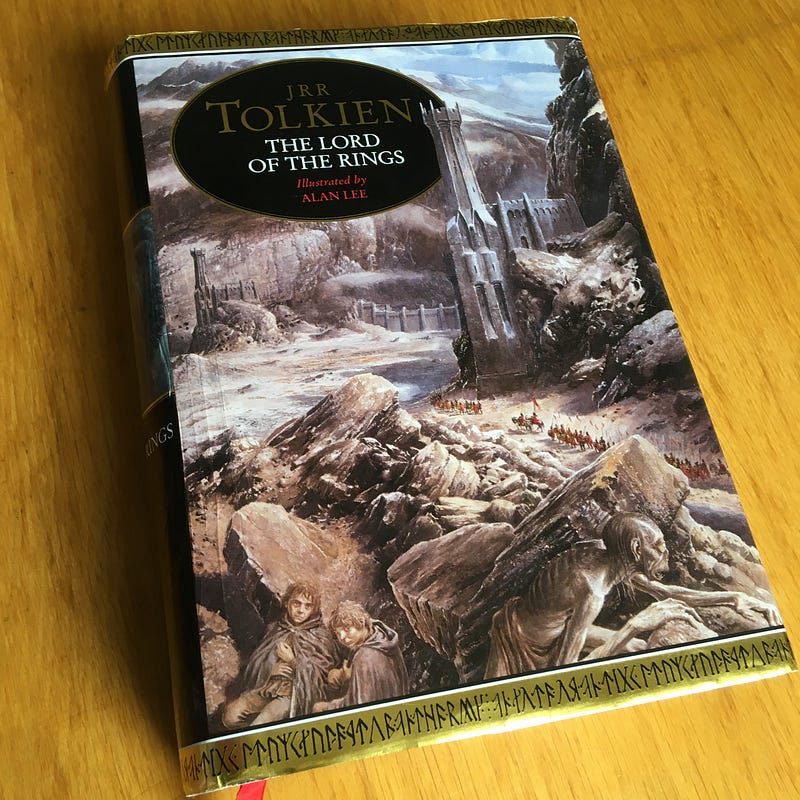
As a preface to this article, let me first make clear that I love Peter Jackson’s films of The Lord of the Rings. They are every bit as thrilling as the original Star Wars trilogy and are rightly considered cinema classics.
However, I confess I get frustrated by those who have seen the films but refuse to read Tolkien’s novel. There is so much more depth to be appreciated in the book; depth that could only be hinted at in the films, and a depth that enables one to appreciate the films more. Many omissions and differences exist between book and film, almost all of them made with good reason. Here then are just ten differences that illustrate why reading The Lord of the Rings is a unique and wonderful experience in it’s own right, preferably to be undertaken before seeing the films.
Fatty Bulger, Tom Bombadil, Goldberry, the Old Forest, and the Barrow Wights
The hobbit Fredegar “Fatty” Bulger is omitted from Jackson’s films, for reasons of narrative redundancy. However, losing him and Frodo’s fake move to Buckland also leads to the loss of a more significant section of the book, namely the Old Forest, Tom Bombadil, Goldberry and the Barrow Wights — an interval of several chapters between pursuits by Black Riders. Although the surreal nature of this section makes it an understandable cut for Jackson to make for film purposes, it is wonderful to read.
The enigmatic Bombadil is the only character in the story entirely unaffected by the power of the Ring, and his mastery over the trees of the Old Forest (think bad Ents) and the evil spirits known as the Barrow Wights suggest an almost godlike origin. His wife Goldberry is equally mysterious. By the way, one of the daggers that Pippin and Merry get from the Barrow Wights are eventually partly responsible for the slaying of the Captain of the Ringwraiths, because of the spells cast on those blades when they were used in the fight against the Witch King of Angmar hundreds of years previously. Again, the film changes where Merry and Pippin get these daggers (from Galadriel) but it is great reading this background detail in the book.
Glorfindel
In the films, the Elves of Rivendell send Arwen to help bring Frodo safely across the Ford to evade the Black Riders. In the books, the character of Arwen is absent, although the mysterious and powerful Glorfindel appears instead at the last minute. Again, this is an understandable change, as it introduces Arwen in a more meaningful way appropriate to the film, considering Jackson opted to reintegrate her love story with Aragorn into the main narrative (in the novels said love story is relegated to the appendixes). However, the version of the story in the book works better for that medium, since Frodo’s collapse into the shadow world (due to Morgul blade poison) is isolating and genuinely frightening, especially the way the Black Riders communicate with him, urging him to give in.
The Hall of Fire
In Elrond’s house in Rivendell, the Hall of Fire is a magical place where stories are told in music and verse that seem to magically transport the listeners into the time and place of the narrative. It could have made for an extraordinary, hallucinatory sequence in the films, but the director would need to be someone like Terrence Malick rather than Peter Jackson.
Faramir
Boromir’s brother Faramir is handled very differently in the book. He doesn’t at first try and take Frodo and the Ring back to Gondor, but instead lets Frodo go on his way without a diversion to Osgiliath, once he is satisfied it is in his interests to do so. The version of Faramir in the films works equally well, but only in the extended cut which includes a key flashback that explains why his actions are different to those found in the novel.
Beregond, Bergil, Prince Imrahil, Ghan-Buri-Ghan, and other allies omitted from the Battle of Minis-Tirith
Jackson rightly removed certain peripheral groups and characters from this sequence purely to streamline and avoid confusion. However, the book gives a much broader explanation of the provinces and dominions in and around Gondor that are affected by the invasions of Sauron. On a related note, whilst Jackson creates thrilling, eye-popping battle scenes, reading Tolkien’s prose is a more profound experience, as it is abundantly clear that the book has been written by someone who has seen the horrors of war first hand (Tolkien served in the British Army in the First World War).
The Palantir in Minis-Tirith
This is a major omission, and quite honestly one that Peter Jackson should have included. Denethor goes mad, but the reason he goes mad is because he has a Palantir. He unwisely uses it to try and see into Mordor, but the Dark Lord Sauron, being aware of him, manipulates Denethor by only allowing him to see things that will make him despair (such as his vast armies). This sends Denethor insane. The film only hints at this (“Do you think the eyes of the White Tower are blind?”) when really Jackson should have properly shown it.
The Structure
In the books, the novels are structured in an audacious way that allows the reader to really feel the despair before the battle at the Black Gate, because at that stage the last the reader heard of Frodo was his capture by the orcs following the horrifying encounter with Shelob. The Mouth of Sauron character (only present in the extended cut of the film) reveals to Gandalf, Aragorn, et al that he has Frodo’s Mithril shirt, thus leading them to assume (falsely) that Frodo has been captured and killed, that Sauron has the Ring, and all is lost. However, in the film, we know this isn’t the case because the story cuts back and forth between the Frodo/Sam plot and the rest of the characters, making the scene dramatically redundant, hence why Jackson removed it from the version seen in cinemas.
Many Partings
Following the destruction of the Ring, the novel takes its time to wind down, saying goodbye to many characters that we have come to know and love, all of whom we will sorely miss. Jackson can’t do this properly, as film is the wrong medium for such indulgence (even what he did was considered overlong by some critics) but the page is the perfect place to do this. There are many melancholy sections of prose filled with vivid images, such as Aragon watching the hobbits depart, holding up the green gem, and the light of the sunset shining through it like a green fire. Or this moment, when Gimli laments their departure, which always brings a tear to my eye:
“We will send word when we may, and some of us may yet meet at times; but I fear that we shall not all be gathered together ever again.” — Gimli, The Lord of the Rings, by JRR Tolkien.
The Scouring of the Shire
One of the main themes in the novel is growing up. When the hobbits return to the Shire, they are warned by Gandalf that they might not find things as they left them, but that they won’t need his help as they are now more than up to the task of dealing with the trouble they will find. Sure enough, Saruman has escaped from Isengard and wreaked havoc, and they end up having to confront his mischief, ending with the death of Saruman himself, right at the front door of Bag End.
This is a significant difference from the films, as they placed Saruman’s demise (by the same hand) at the beginning of the third film, only in the extended cut. This change makes sense in the film, as having an additional confrontation and mini battle in the Shire following the destruction of the Ring and the crowning of Aragorn would have been episodic and anti-climactic. Nonetheless, in the novel, this is one of my favourite moments; one that underlines the bitter cost of war and the pain of coming home to a world that has changed forever.
The Broken Power of the Three Rings
One thing the films fail to adequately convey is the tragic plight of the Elves. Either outcome of the War of the Ring is a loss for them. If Sauron wins, everyone is enslaved, and the world is covered in darkness. However, if the Ring is destroyed, the power of the three Elven rings is broken, thus undoing their magic, ending their power, and leading to the departure of the Elves from Middle-Earth, paving the way for the dominion of men.
It is equally clear in the books, but not in the films, that all Ring-bearers are doomed to this fate, which is why Frodo has to leave. Indeed, there are vivid moments in the final stages of the novel where Frodo is feverish, clinging to the white gem Arwen gave him as a kind of methadone to the Ring’s heroin. It is clear long before his departure at the Grey Havens that like the Elves, Frodo will not be able to stay in Middle-Earth, making his final departure all the more tear-jerking (much more so on the page than in the film, in my view).
“I will not say: do not weep; for not all tears are an evil.” — Gandalf, The Lord of the Rings, by JRR Tolkien.
In conclusion, if you’ve only seen The Lord of the Rings but not read the books, I can only urge you in the strongest possible terms to do so.
This is a revised version of an article originally published at Simon Dillon Books. For more information about Simon Dillon on Medium, click here.