
The Long Shadow of Plagiarism:
The Sins of Zora Neale Hurston
History is not always accurate. It can be a little sketchy on details. Memory, experience, affiliations, religion, and race are just a few things that add skepticism to narratives. Only a week ago, Attorney General William Barr, when asked how history would be written, in reference to his dismissal charges against Mike Flynn, his reply was, “History is written by the winners, so it largely depends on who’s writing the history.” That may not be exactly true now. The 1619 Project was not written by the “winners,” and the project was awarded the Pulitzer Prize.
However, there is some truth in what he said, at least as far as the recent past is concerned. All of the histories taught to me were written by the European point of view. After going over several textbooks during my public-school years, a relatively rosy outlook on American values was fed regularly. Even though I was poor, and even knowing some of the atrocities carried out by the government in the name of progress, I thought that living in America and being American was the best that anyone could hope for. Undoubtedly, if an American Indian wrote the history of America from their perspective, we’ll have a view of this country that was not covered in our traditional books.
However, facts are facts. Accuracy is the key to making history valuable Whether we leave out specific facts or embellish the circumstances, that does not change the facts. Sometimes writers get lazy or bend the truth towards their own beliefs. Zora Neale Hurston took a few shortcuts in her attempt to tell the story of the last surviving person that was carried on the last illegal slave ship, the Clotilda, that crossed the Atlantic and landed on the shores of North America.
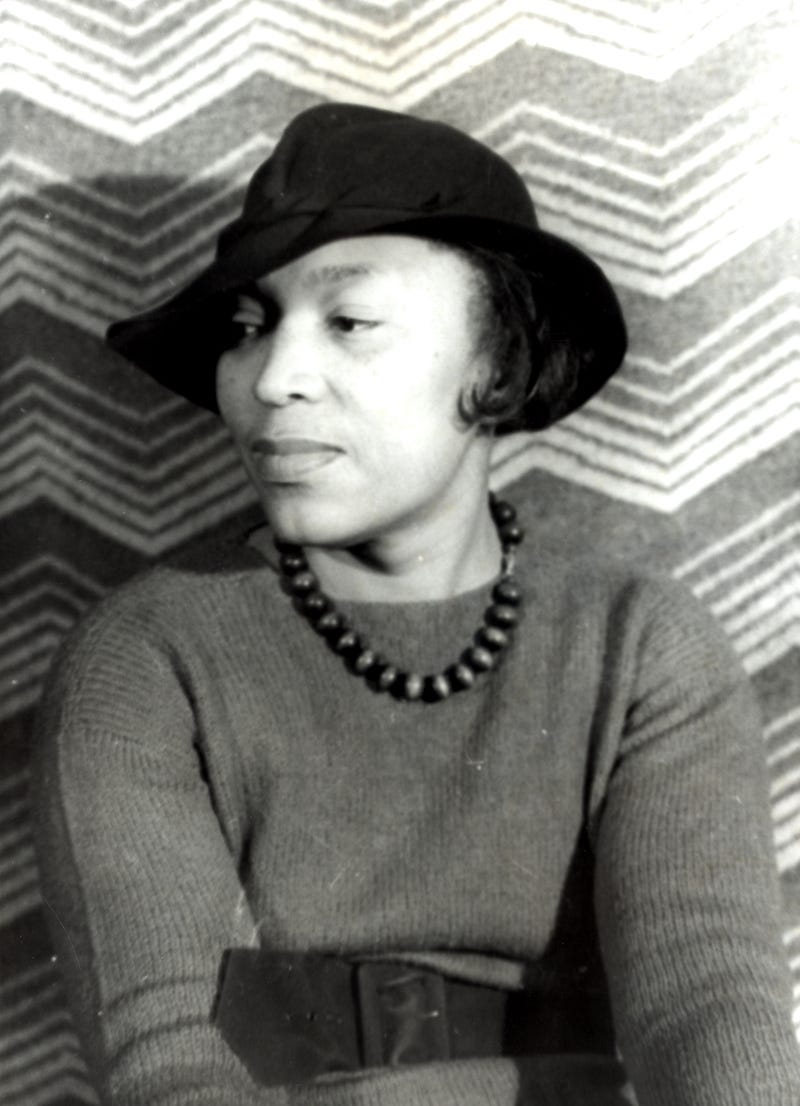
Zora Neal Hurston was a towering figure during the Harlem Renaissance and arguably the most influential African American female writer of the first half of the century. One of her books, Their Eyes Were Watching God, is listed on the BBC’s list of the 100 most inspiring novels, and a must-read for any African American studies class. To put that into perspective, that list includes Tolkien’s Lord of the Rings, Lee’s, To Kill a Mockingbird, Achebe’s, Things Fall Apart, and Hemingway’s for Whom the Bell Tolls. This an “A” list of books!
In 1927, Hurston, a student from Barnard College, held several interviews with Cudjo Lewis, an 87-year-old ex-American slave and last survivor of the last slave ship, the Clotilda, which crossed the Atlantic from Africa in 1860. One of the unique things about Cudjo was not that he was a surviving ex-slave, but that he was old enough to remember in detail, the raid of his village and his capture in Africa, he was steeped in his native language and customs, and he remembered the harrowing Middle Passage voyage from Africa to America. Cudjo was 19 years old at the time of his capture. She returned to Cudjo’s home in Plateau, Alabama, in 1931 and remained embedded in the community for three months, where she interviewed other former slaves from the Clotilda as well as Cudjo, as he ate peaches and watermelon that grew in his backyard.
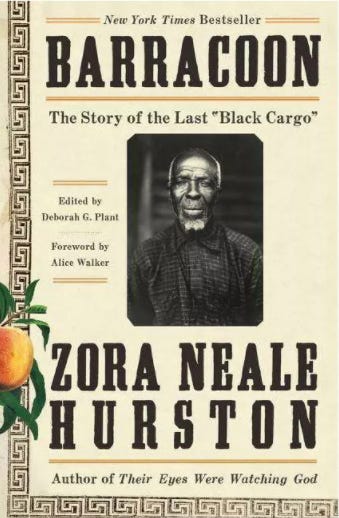
The result of Hurston’s interaction with Cudjo Lewis was a book, Barracoon: The Story of the Last Black Cargo”. The word, barracoon is the word for the holding pens that held the slaves during the transatlantic journey from Africa to America. The book was published eight decades after it was written. Initially, she did not get enough information from Cudjo ( who liked to be called by his African name, Kossola). She was under pressure by her boss, pioneering anthropologist Franz Boaz, to return to Alabama to collect more information on Cudjo Lewis.
Her first stop was the Mobile Historical Society, where she got the records to help her fill out the content of her story about Cudjo. When she returned to New York, she completed her work on Cudjo. However, most of the work was from previous people who had interviewed Cudjo. A biographer had counted that forty-nine of the work’s sixty-seven paragraphs had been plagiarized.
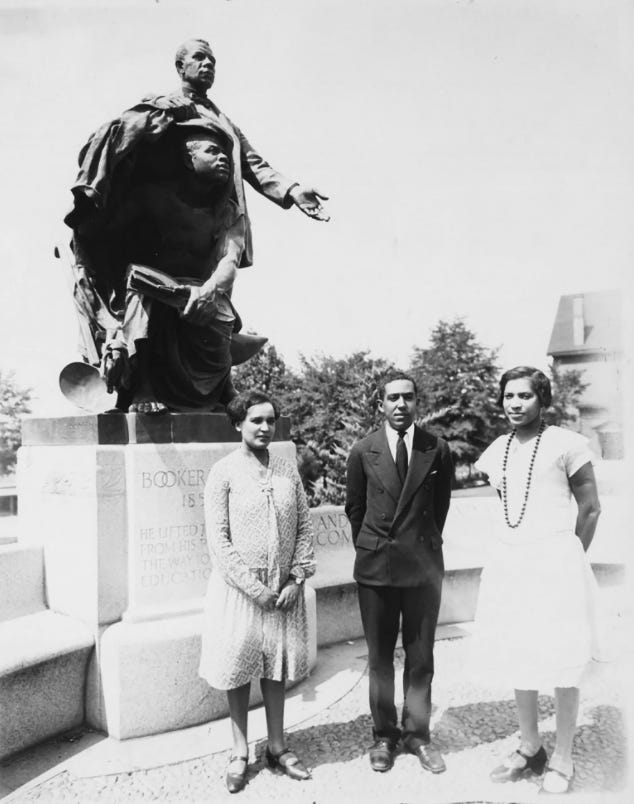
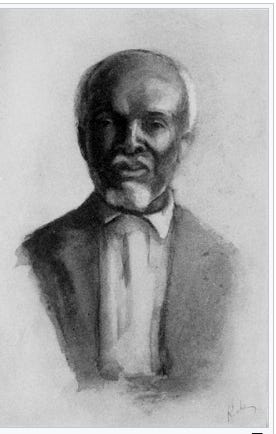
In 1914 Emma Langdon Roche interviewed residents of Africatown, Cudjo Lewis, being the most prominent among them. The information she collected was published in a book, Historic Sketches of the South. The book included original drawings by Roche, as well as photographs. Cudjo told his whole story, from his life in Africa, his capture, the voyage from Africa to America, his time in slavery, all the way to his current position in life. Much of the work in Hurston’s book was taken directly from Roche’s work. Also, Cudjo was not the last living survivor of the Clotilda. There was another survivor that lived on the Tombigbee River, two hundred miles from Africatown. And even according to Hurston, she was older than Cudjo and a much better storyteller. There could not be two different “lasts,” so she decided to not report the other survivor. In a letter she wrote to her close friend Langston Hughes, she stated, “No one will ever know about her but us.”
Hurston decided not to report an essential part of history. This was against the moral and ethical code of writers and anthropologists, of which Hurston belonged to both groups. There is only one reason to do something like this; she put popularity and fame above recording and reporting something that is true but would have extinguished the hot novelty of her story being unique. By using words such as “first,” “last,” and “only,” a writer can boost sales and give their career a jolt of fame and, most importantly, provide credibility. So with this in mind, Zora Neal Hurston went to New York and worked on her book, using the work of others as the primary content.
No editor wanted to publish the book. One printing house wanted to publish the book, but only if she changed the dialect to something most people would want to read and understand. The local dialect she employed when the locals were speaking was annoying at best for most readers. Hurston refused to make the change to a regular English dialect. The upshot: The book was not published. It could possibly be because of the black vernacular speech than for the content and general interest. It seems this was not a big deal to her. Even though she often revisited her work for other projects, she never tried to get the work published again, and she never tried to use the work in some of her other projects. A hint of how she felt about the book can be found in a statement she made in her autobiography in a chapter about the work; “My own people (Africans) had butchered and killed, exterminated whole nations and torn families apart, for a profit before the strangers got their chance at a cut.”
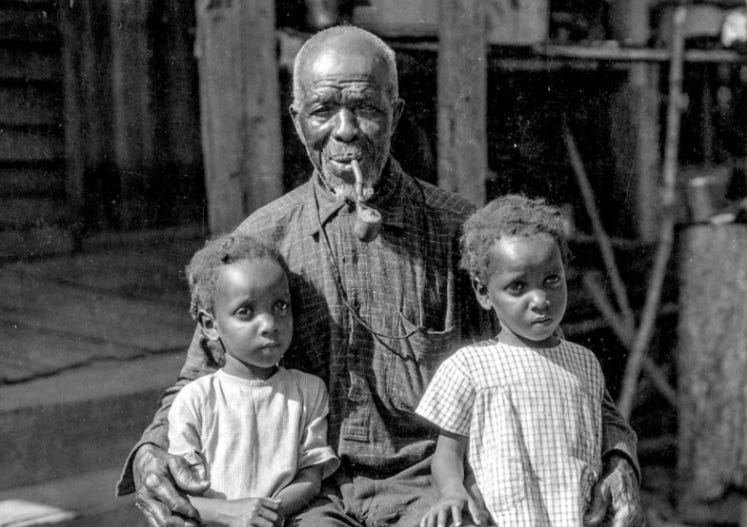
Cudjo had talked about how a rival tribe invaded his village and the female soldiers that cut the heads off of the villagers. This may have been a fact that Hurston did not want to share with the rest of the world.
You can read the history of Africatown and not come across Hurston’s name. You could go to a reading of her work, but you will not find someone reading Hurston’s work she did with Cudjo. But why should a reading not include her interviews with the former African slave? One reason I can give is that it is not her work. I am not speaking about the plagiarism; I am talking about the content. This book is a simple report. It is nothing but a transcribed oral story. Her voice is not in this book. There is no art or imagination at all in the pages of Barracoon. Plagiarism is the original sin of writers, and ironically, it may have been her own integrity that has kept Hurston from trying to promote it or fight for it to be published.
Before Alice Walker inspired a resurgence in interest for Zora Neale Hurston back in the 70s, Hurston had long been forgotten. There were things about Hurston that did not sit well with African Americans, such as her being a republican and speaking against the Brown Vs. Board of Education. Hurston stated that Black kids did not need to sit side-by-side with white kids to be successful in school. I can understand why she said that, but in the 1950s, Blacks did not seem to grasp the nuances of her reasoning. Hurston’s last years were spent as a maid in her home state of Florida. She died in 1960 in a county home for the poor and was buried in an unmarked grave.
The life of African Americans is complex. It was no less complex during Hurston’s time. There are many aspects of Hurston’s life that may raise some eyebrows; her statement that she was more white than black, her blatant plagiarism, and I would extend that to lies and embellishments in some of her work on African American folklore. I do not like her actual writing and find her use of local vernacular irritating and a total turn off if I am trying to become engaged in her work. Ok, she is not one of my favorite writers.
However, I am not going to roast her like Richard Wright did in his review of Their Eyes Were Watching God. I get it. I look at things from a historical view. All of us are the product of our times. Some really do think out of the box of their timescale, but at the end of the day, they are also reacting to their environment. Some of the things that existed in her times still exist in our present; racism, self-hatred, police brutality, poverty, marginalism — and we are all reacting to it, just as our ancestors did. She was responding to her environment like any other person. That does not make her a bad person.
As for her plagiarism in the case of Cudjo Lewis, many writers have done that. Jane Goodall, J.K. Rolling, Kaavya Viswanathan, T.S.Elliot, Stephenie Meyer, Herman Melville, Dan Brown, Stephen Ambrose, Alex Haley, and even Dr. Martin Luther King for his doctoral thesis, entitled “A Comparison of the Conception of God in the Thinking of Paul Tillich and Henry Nelson Wieman.” They did not withdraw King’s doctorate for that indiscretion.
We all borrow. Whether it is consciously or subconsciously. If Ms. Hurston had cited her sources correctly, no harm is done as far as I am concerned. Rap artists borrow extensively, and that borrowing is considered a part of the creative process — taking something from disparate sources and combining them into something totally new. That is the innovation part of the process. In the end, Hurston has nothing hide. She did a service to the original work by eliminating much of the racist slant that was contained in Roche’s work. Roche had a different audience in mind, but Hurston’s work is for the rest of us.
I don’t like reading non-fiction tinged with racist rhetoric. Even fiction has its challenges. Any African American that has ever tried to read and enjoy an H.P. Lovecraft story knows exactly what I mean. Barracoon is still one of the most essential documents in the history of the world. It is a glimpse into history from the point of history from a real person who represents a view that we have not heard much from. I would rather drag myself through the annoying vernacular than have not had it available to read at all. So, I thank you, Ms. Zora Neale Hurston.