
The Long and Twisted Journey of How I Became a Published Writer
From Jackson, Miss., into the United States Navy and beyond
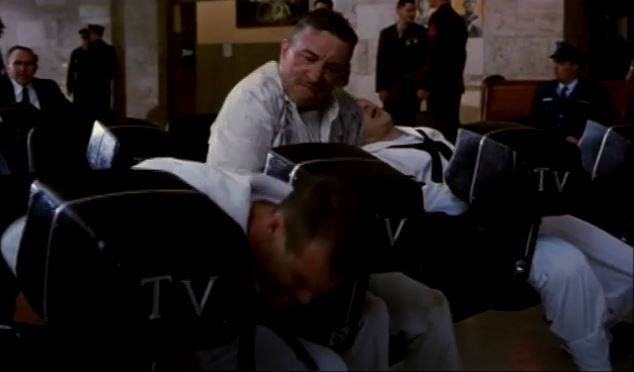
This story starts in Jackson, Miss., just before I graduated from high school in 1980. I had a troubled past as a teen and found myself in front of a judge, arraigned eight days before I was supposed to report for Navy boot camp. Because of that, my travel arrangements had to be altered. Instead of going to sunny Orlando, Fla., to start my military training, I had to get on a bus to Memphis, Tenn., to get a commanding officer’s waiver for enlistment. The judge gave me a break, but now, it was the Navy’s turn. The head recruiter told me to write a detailed and comprehensive synopsis of what led to my arrest. I knew that what I wrote would be a crucial and deciding piece of evidence in whether or not I would be able to join the United States Navy.
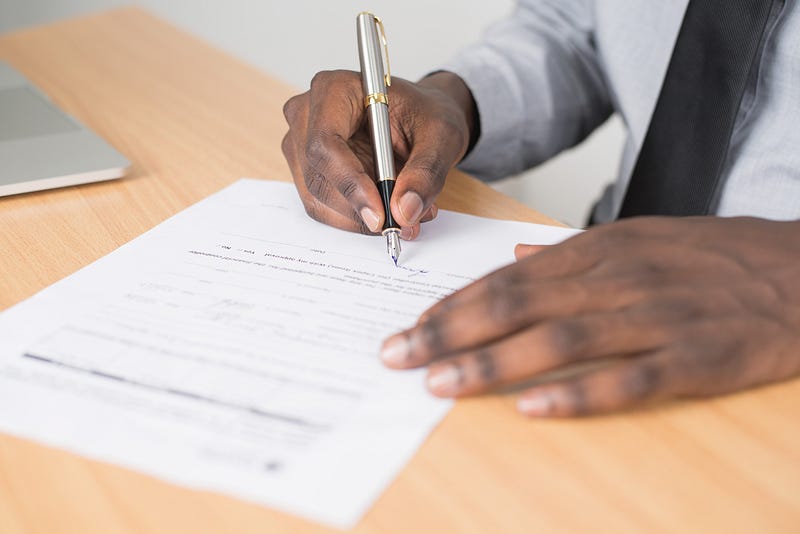
The recruiter gave me an ink pen and a long, pad of paper, similar to the type lawyers use. I wrote my story from beginning to end and handed the pad over to the Master Chief. He sat there with a pipe clenched tightly between his teeth. A steady stream of thick, aromatic smoke filled the air. On one hand, the smoke-choked me, but on the other hand, it smelled fairly decent. As he leaned forward in his chair, I watched multiple expressions change on his face. He withdrew his pipe, set it in the large ashtray that decorated his desk, and said, “This is pretty good. Most seniors coming out of high school can’t write as well as you do.” Never mind the fact, that I practically altered the course of my entire life. He felt I had just written a pretty good story.
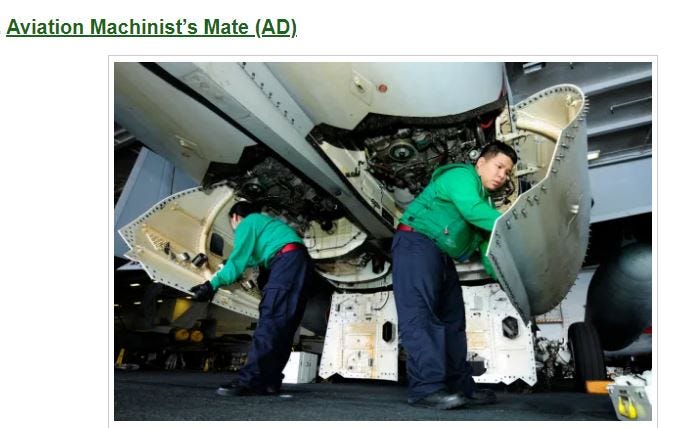
Needless to say, I was allowed to join the Navy but I had to change jobs. Initially, I signed up to become a Dental Technician. However, the additional travel stop altered the time I would have graduated from boot camp and therefore, I lost my seat in that school. At the Military Entrance Processing Station (MEPS), the petty officer told me I could go to the fleet and ‘strike’ for dental tech or they could give me something guaranteed. I went the guaranteed route. She then tossed a book in my direction and said, “You’re qualified for just about anything so just pick a job.” Since I was no longer going to be a dental tech, I thumbed through the position descriptions in the book. Jet engine mechanic. That sounded pretty interesting. That’s what I’ll be. In the book, it was described as an Aviation Machinist’s Mate. I stopped at the “As.”
Headed to the Great Northwest of Whidbey Island, Washington
I had never heard of Whidbey Island, Wash., and had never been to the West Coast. My new home would be on a Naval Station and home of the loudest aircraft in the Navy’s arsenals. The A-6E Intruder aircraft was an all-weather, medium-range attack bomber. Known as the sky pig, it could carry the same payload as a B-52 bomber. Working on those airplanes was an incredible job, but my real passion came from writing about them.
I didn’t know that writing was a thing, and don’t even know how I got started. But I enjoyed working on the aircraft so much that I wanted to share the experience with other people. I started writing about the type of work I did, the peacetime missions, and the functions of the aircraft and when I received clearance, I actually wrote about the payloads.
I was still having a few behavioral issues during my first four years in the Navy, but I also wrote incredible articles that were published in the base newspaper. When it was time to reenlist, the career counselor told me the Navy was at a crossroads. It had too many mechanics and only a certain few were being allowed to remain in the career field. Fortunately for me, I was one of them. But he advised that this would be a great time to change. “You’re an outstanding writer,” he said. “Have you ever considered becoming a Navy Journalist?” I didn’t even know the Navy had journalists. I guess I should have gone past the ‘As’ back at the MEPS.
Off to Navy Journalism ‘A’ Class School
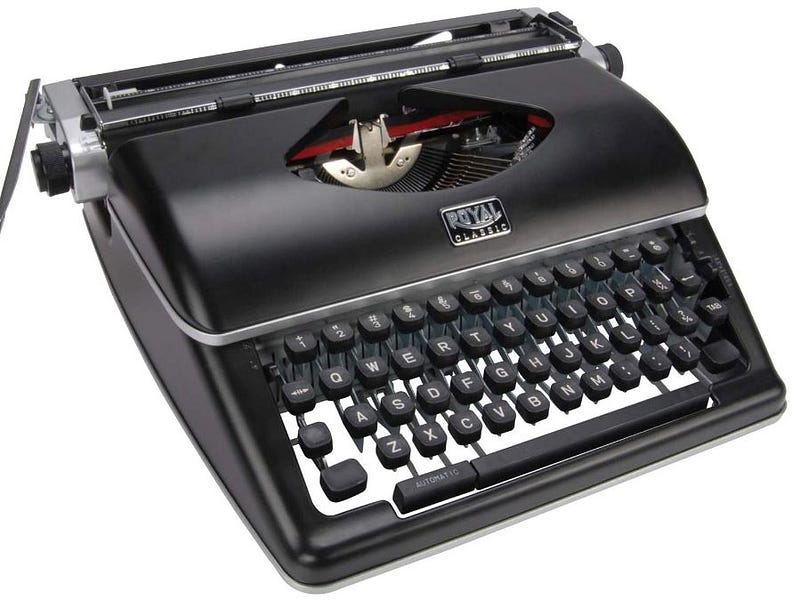
I left Whidbey Island headed for Indianapolis, Ind., to journalism school, but I didn’t know how to type. (I would be remiss if I didn’t mention the name of the Defense Information School — DINFOS at the now-closed Fort Benjamin Harrison). One of the requirements for passing the class was to be able to successfully type, error-free, 20 words per minute. I had to find a typewriter quickly. In 1985, the best place a young, broke Sailor could score that type of hardware would be at a pawn shop or a thrift store.
In thinking of my journey to learn to type on my own, I can still hear me banging away at those keys; I can hear the gears of the roller from pulling pages from the typewriter and getting the ink off my fingers from the red and black ribbons I had to constantly tweak in trying to make my letters look right on the pages I typed.
Once I arrived at the Joint Services school which taught military journalist candidates from all branches, I was ultimately placed in remedial typing class. On the typewriters, all the keys were blacked out and students’ only resource to learn to type was a typing book that showed which keys corresponded to the keys. In order to pass remedial typing, we had to successfully type 20 words per minute on a blacked-out typewriter.
But typing was taught after school. During class, we learned what it meant to be a journalist and how to become one. The writing assignments were gruesome. But the grading evolution of those assignments was absolute bloody murder. My corrected page bled red ink for days. I failed so many writing assignments, that I came narrowly close be being dropped from the course. In fact, I was recycled, reassigned to a later graduating class, to provide me with more time to learn the trade. It was there that I found my stride. I graduated with honors and headed off to my first assignment as a journalist.
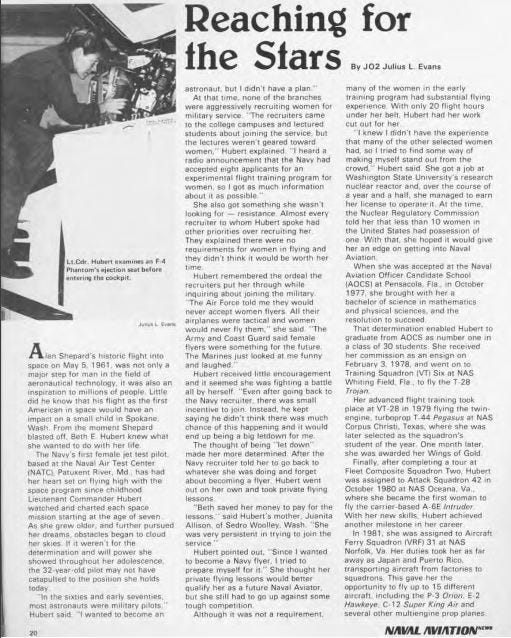
At the Annapolis Naval Academy from 1985–1987, I met Midshipman David Robinson, (who would go on to become an NBA star and a Hall of Fame Inductee https://en.wikipedia.org/wiki/David_Robinson), while I was headed to my broadcast radio show in Bancroft Hall. But my next assignment was probably the most defining of my writing career. In 1987, I received orders to Naval Aviation News Magazine as an associate editor. (https://www.history.navy.mil/research/histories/naval-aviation-history/naval-aviation-news/back-issues/1980/1987.html). My job was to find article ideas, write the articles, take the pictures, develop the film, process the images and I even had to develop the text galleys for the magazine in the Varitype machines. It was the full process. From 1987 to 1989, I wrote about the airplanes I used to work on when I was stationed in Whidbey Island from 1981–1985, and many, many other weapon systems.
This story is thoroughly incomplete and skips over many wonderful and incredible aspects of my 20+ year career in the Navy that define who I am at my core. I skipped over two of the best assignments I ever had; as a member of the crew aboard USS Abraham Lincoln (CVN 72) (https://www.navysite.de/cruisebooks/cvn72-91/418.htm), both before and after commissioning, and as the Public Affairs Officer at the Navy Recruiting District in Atlanta, Ga., but I wanted to keep this short.
After it’s all said and done
The story doesn’t have to end here. You can read some of my other stories by following me at https://medium.com/@juliusevans. Until we meet again, as we used to say when I was in the Navy, I bid you ‘fair winds and following seas.’
About the author
Julius Evans has a Master of Arts degree in National Security and Strategic Studies from the U.S. Naval War College, Newport, RI; a Master of Arts degree in Strategic Communication and Leadership from Seton Hall University, South Orange, NJ; a Bachelor of Science degree in Mass Communication and Journalism from City University, Bellevue, WA and an Associate of Arts degree in Liberal Studies from Central Texas College, Killeen, Texas.
Read every story from Julius Evans (and thousands of other writers on Medium). Your membership fee directly supports Julius Evans and other writers you read. You’ll also get full access to every story on Medium.