
The London Blues
A Short Story
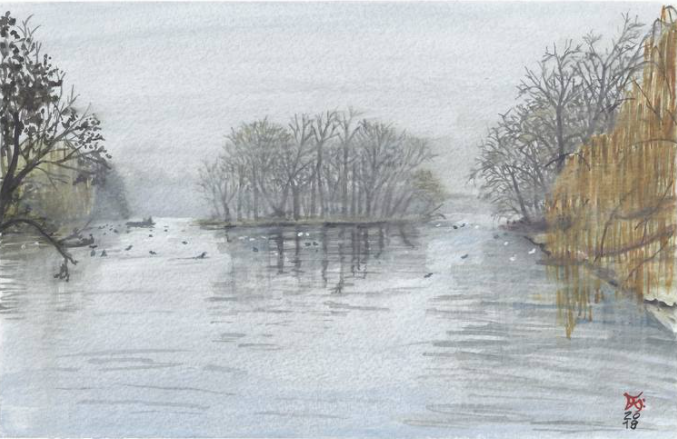
It rained hard the day Oliver decided to take a walk through the Mews streets of London. But it was a cheerful rain, the kind so jovial it couldn’t send the swans for cover. In its wake came a dew that coated the cobblestone streets and a mist that pervaded the atmosphere, drawing Oliver outside into the fresh London air.
It was hard to pinpoint when Oliver became so melancholic, but his friends would all agree it began the day he received mail from the University of Oxford, when he expected one answer and got another. He lingered in his room in a saddened state that everyone prayed was temporary, but felt ponderous enough to take permanent residence in the creases of his mind.
Plates piled up in the sink until the smell of stale food became too pungent to bear, and clothes piled up in his closet until there were no clean pieces left. The television hummed while Oliver drifted away into a light sleep in the afternoons, and remained on while his foggy mind sauntered into a deeper sleep in the evenings. He spent his days watching soap operas and drinking soup as if he had caught an unpleasant cold that forced him to stay inside for months and wither.
Wither like the plants he failed to take care of; even his succulents had died. The tomato plant he had tended to for years that once lived happily on his balcony shrivelled like a grape left out in the sun. Nobody bothered to water him as he wouldn’t drink it, except his cat, Wink, who would crawl up to his side on the couch to sniff his hand, only to turn his head away, repulsed.
But one April day, to even the mailman’s surprise, Oliver left his apartment complex and walked the streets of London.
When he opened his door and stepped outside, the smell of rain rushed into his apartment, desperately seeking residence in all its corners to replace the stale air. The gentle hum of lively society rang familiar to his ears. How big he seemed alone in his room, and how small he felt now in comparison.
Only now did he realize how he missed the taste of cafe coffee and people watching on the patio. Listening in on the flirtatious remarks of couples on their first dates, and observing the tentative focus of workers that occupied the remaining tables. But he quickly dismissed the idea of visiting his favourite cafe, for the loquacious atmosphere would be too big a shock to his now silent mind.
And so he embarked on a stroll down the cobblestone street, meandering through the neighbourhood gridlock in search of a place that would match his apartment in its reticence and secrecy.
As he passed by the toy store he used to buy wooden trains from as a child, he noticed a bookstore had occupied the space above it. After giving it some thought he decided to see what promise it held, as he was getting quite tired of watching the same loop of soap operas every day. And so he opened the door, climbed up the creaky stairs, and walked inside.
It exuded the musky smell old pages emanate when their covers are opened after years of neglect. Bookshelves lined the walls of the small store, and loveseats made of red velvet sat in queer positions beside a gas fireplace. A record playing a piano solo skipped for a few minutes until a man rushed from the back of the store in an attempt to fix it.
Oliver browsed the shelves filled with books of all genres until he settled on one that intrigued him by its mysterious synopsis. He carried it over to the red couches and sat down politely on one side to make room for another if they wanted to embark on a similar endeavour. As he removed the book’s jacket, he noticed a painting that hung above the fireplace which he must have overlooked when he arrived.
He recognized it as van Gogh’s sunflowers, but couldn’t discern if it was an adaptation or a print. How delightfully they sat in their vase, looking up towards the sun. The yellow was so rich a colour, and he immediately recalled a rumour he once heard: that van Gogh nibbled on yellow paint in an attempt to consume happiness. Finally, Oliver understood his melancholy in a way his friends failed to diagnose.
For he wanted to be great, and anything inferior to greatness would be settling. He had never settled for anything in his life and now the world’s strange workings were forcing him to accept a foreign path that bridled him from the only greatness he knew. Then he wondered, even if he was great to others, would he acknowledge himself to be great with them; or would he perpetually chase greatness without ever realizing he had actualized it long ago?
He bought the book from the store owner and continued his stroll down to Regent’s Park, as the air there was a tonic and he had finally desiderated its comfort. He found a bench that overlooked a small pond and watched as children dipped their toes into its waters while their parents attentively watched on their picnic blankets. Swans floated majestically across the pond with their cygnets, and the children appeared to acknowledge their presence through their pointing and toothless smiles. He envied the reputable goodness intrinsic in swans.
But he shook his envy from his psyche like a dog shaking off the water of an unwanted bath; accepting that if he couldn’t be great in the way he wanted, he could at least be good, for there was always a way to be good if you really wanted to be. And as he opened the cover of his new book, the London blues began to fall from his coattails like the rain had fallen from the sky earlier that day; he began.


