
LOGIC LENS ANALYSIS | BIASES | COGNITIVE DISTORTIONS | FALLACIES | MENTAL HEALTH
Logic Lens™: Donald Trump’s January 6th Insurrection Speech — Part 1
Donald Trump is an American businessman, media personality, and the 45th president of the United States.
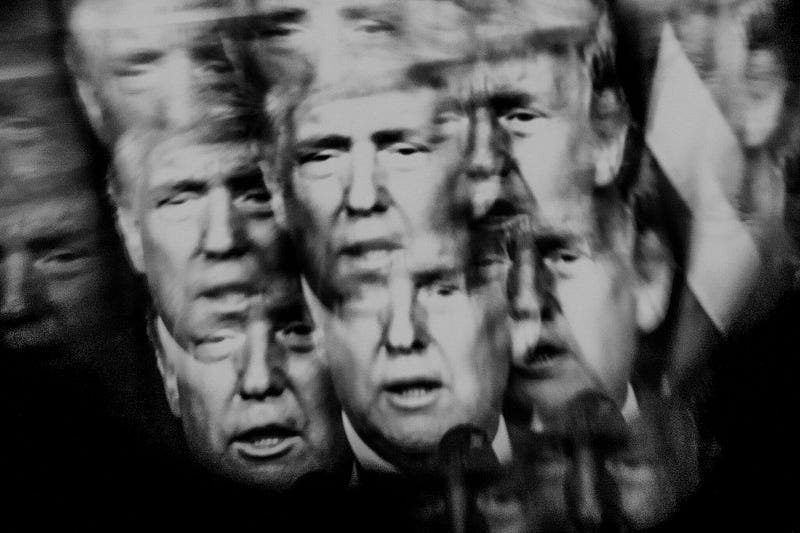
Note: To learn more about our Logic Lens™ series—a public project my MENSA husband and I worked on to highlight the importance of transparency, integrity, and honesty of influential public figures—check out the article below.
Analyzed Speech Section:
Well, thank you very much. This is incredible. Media will not show the magnitude of this crowd.
Even I, when I turned on today, I looked, and I saw thousands of people here, but you don’t see hundreds of thousands of people behind you because they don’t want to show that. We have hundreds of thousands of people here, and I just want them to be recognized by the fake news media.
Turn your cameras, please, and show what’s really happening out here because these people are not going to take it any longer.
They’re not going to take it any longer. Go ahead. Turn your cameras, please. Would you show? They came from all over the world, actually, but they came from all over our country. I just really want to see what they do. I just want to see how they covered.
I’ve never seen anything like it. But it would be really great if we could be covered fairly by the media. The media is the biggest problem we have as far as I’m concerned, single biggest problem.
The fake news and the big tech. Big tech is now coming into their own. We beat them four years ago. We surprised them. We took them by surprise, and this year they rigged an election.
They rigged it like they’ve never rigged an election before. And by the way, last night they didn’t do a bad job either, if you notice. I’m honest. And I just, again, I want to thank you.
It’s just a great honor to have this kind of crowd and to be before you and hundreds of thousands of American patriots who are committed to the honesty of our elections and the integrity of our glorious republic.
All of us here today do not want to see our election victory stolen by emboldened radical-left Democrats, which is what they’re doing, and stolen by the fake news media.
That’s what they’ve done and what they’re doing. We will never give up, we will never concede. It doesn’t happen.
You don’t concede when there’s theft involved. Our country has had enough. We will not take it anymore, and that’s what this is all about. And to use a favorite term that all of you people really came up with, we will stop the steal.
Today I will lay out just some of the evidence proving that we won this election and we won it by a landslide.
This was not a close election. You know, I say, sometimes jokingly, but there’s no joke about it: I’ve been in two elections. I won them both, and the second one, I won much bigger than the first.
Okay. Almost 75 million people voted for our campaign, the most of any incumbent president by far in the history of our country, 12 million more people than four years ago. And I was told by the real pollsters—we do have real pollsters—they know that we were going to do well and we were going to win.
What I was told, if I went from 63 million, which we had four years ago, to 66 million, there was no chance of losing. Well, we didn’t go to 66, we went to 75 million, and they say we lost.
We didn’t lose.
Logic Lens Distortion Analysis™:
Ad Hominem Attack:
This is a fallacy where an argument is rebutted by attacking the character, motive, or other attribute of the person making the argument, rather than addressing the substance of the argument itself. The speaker attacks the media as the “single biggest problem” without addressing specific points or evidence presented by them.
Anecdotal Fallacy:
This is when a general conclusion is drawn from a particular example. The speaker uses anecdotal evidence of the crowd size they see to make a general claim about media coverage.
Anchoring Bias:
This is the tendency to rely too heavily on the first piece of information encountered when making decisions. The speaker anchors their argument on the belief that they won the election and that any evidence to the contrary is invalid.
Appeal to Emotion:
This is a fallacy where emotional appeals are used to distract from the facts of the argument. The speaker uses emotional language (“They’re not going to take it any longer. Go ahead. Turn your cameras, please. Would you show?”) to evoke a specific reaction from the audience.
Appeal to Fear:
This is a fallacy in which someone makes a claim intended to create fear or anxiety without providing substantial evidence. The speaker instills fear by suggesting that the election victory was being stolen and that the country has had enough.
Appeal to Popularity (Bandwagon Effect):
This fallacy occurs when someone argues that because something is popular or commonly believed, it must be right or good. The speaker emphasizes the number of people supporting them as evidence of their correctness (“Almost 75 million people voted for our campaign...”).
Appeal to Tradition:
This fallacy involves arguing for a claim based on tradition or past practices rather than evaluating it objectively. The speaker emphasizes past electoral successes as evidence of their legitimacy without addressing current circumstances or evidence to the contrary.
Argument from Ignorance:
This fallacy occurs when a claim is considered true simply because it has not been proven false. The speaker asserts election victory and voter fraud without providing concrete evidence to support these claims.
Attribution Error:
This bias involves attributing others’ actions to internal factors (intentions, personality) while attributing one’s actions to external factors (situational influences). The speaker blames external factors like media bias for their perceived loss while attributing the crowd’s support to their own actions.
Black-or-White Thinking:
Also known as binary thinking, this is a cognitive distortion where things are seen in extremes. The speaker portrays the situation as a clear-cut case of right versus wrong, good versus evil, without acknowledging any nuances or shades of gray.
Cherry-Picking:
This bias involves selecting evidence that supports one’s argument while ignoring contradictory evidence. The speaker selectively highlights information (such as crowd size) that aligns with their narrative while ignoring other relevant factors.
Confirmation Bias:
This is the tendency to search for, interpret, favor, and recall information in a way that confirms one’s pre-existing beliefs or hypotheses. In the statement, there’s a clear bias towards believing in the validity of the speaker’s claims without acknowledging any opposing viewpoints or evidence.
Echo Chamber Effect:
This occurs when individuals are only exposed to information that reinforces their existing beliefs. The speaker’s appeal for fair media coverage suggests a desire for validation and reinforcement of their viewpoints rather than objective reporting.
False Cause Fallacy (Post Hoc Ergo Propter Hoc):
This is when one event is assumed to have caused another just because it happened earlier. The speaker suggests that the election loss was solely due to rigged systems without providing substantive evidence of this claim.
False Consensus Effect:
This bias leads individuals to overestimate how much others agree with their beliefs or behaviors. The speaker assumes that all American patriots share their views on the integrity of elections and the role of the media.
Overconfidence Bias:
This bias leads individuals to have more confidence in their abilities or judgments than is objectively justified. The speaker exudes confidence in their claims of victory and election rigging without providing concrete evidence to support these assertions.
Over-generalization:
This cognitive distortion involves making broad conclusions based on limited evidence. The speaker generalizes that the media is the “single biggest problem” without acknowledging any positive contributions or diverse perspectives within the media landscape.
Scapegoating:
This is a bias where individuals or groups are wrongly blamed for causing something. In this case, the speaker blames the media and big tech companies for their perceived loss without providing concrete evidence to support these accusations.
Selective Perception Bias:
This bias involves focusing on only certain aspects of a situation while ignoring others. The speaker chooses to focus on the perceived bias of the media rather than considering other factors that may have contributed to the election outcome.
Self-Fulfilling Prophecy:
This concept suggests that believing something will happen can make it more likely to happen. The speaker’s repeated assertions of election victory and claims of rigged systems could create a self-fulfilling narrative among their supporters.
Self-Serving Bias:
This is the tendency to attribute positive events to oneself but negative events to external factors. The speaker takes credit for the large crowd and popular support but blames external factors like media bias for any negative outcomes.
Us vs. Them Mentality:
This bias creates a dichotomy between “us” (in-group) and “them” (out-group), leading to polarized thinking and an assumption of conflict. The speaker sets up an adversarial narrative between themselves (and their supporters) and the media and political opponents.
Victim Mentality:
This cognitive distortion involves perceiving oneself as a victim of others’ actions or as having limited control over one’s circumstances. The speaker portrays themselves as a victim of a rigged system and media bias without providing substantial evidence to support these claims.
Wishful Thinking:
This cognitive bias involves interpreting reality based on what one desires to be true rather than what is actually true. The speaker expresses a desire for media coverage that aligns with their beliefs and views without acknowledging potentially conflicting information.
Logic Lens Thematic Analysis™:
Distrust in Media and Big Tech:
The speaker presents a stark portrayal of the media and technology sectors as adversaries that distort reality to the detriment of the speaker and their supporters.
The assertion that the media willfully neglects to show the full extent of a crowd not only casts the media as dishonest but also suggests an orchestrated effort to minimize the speaker’s support base.
Further, the narrative evolves to include ‘big tech’ as part of this perceived collusion against the speaker, strengthening the theme of a powerful, hostile coalition that manipulates public perception and discourse.
Allegations of Electoral Fraud:
A significant portion of the speech is dedicated to asserting that the recent election was rigged against the speaker, marking an unprecedented level of electoral manipulation.
These claims serve to question the legitimacy of the electoral process and, by extension, the legitimacy of the current political authority.
The rhetoric amplifies doubts about the honesty of elections and portrays the speaker and their followers as victims of an enormous injustice, thus tapping into feelings of disenfranchisement and betrayal among the audience.
Populism:
The speaker appeals to a large gathering of supporters, referring to them as “American patriots” who are “committed to the honesty of our elections and the integrity of our glorious republic”.
This formulation invokes a strong emotional response, positioning the speaker and their audience against the established political entities and media, alleged to be corrupt and dishonest.
The repeated assertions of having won the election “by a landslide” despite official results to the contrary, coupled with the direct appeals to the crowd’s sense of justice (“this is all about”) and action (“we will not take it anymore”), are classic elements of populist rhetoric that seeks to mobilize a perceived common people against an elite or establishment.
Resistance and Mobilization:
Throughout the speech, there’s a consistent theme of resistance against perceived forces of injustice.
The speaker’s repeated refusal to concede defeat (“we will never give up, we will never concede”) not only underscores a perceived battle for truth and integrity but also serves as a rallying cry for supporters.
This theme of mobilization is encapsulated in the slogan “stop the steal,” which not only summarizes the speaker’s allegations against the electoral process but also serves as a unifying call to action for the audience.
Assertion of Victory:
The speaker frequently claims a definitive, albeit contested, victory in the election, providing specific numbers to bolster these claims.
This assertion serves multiple thematic purposes: it reinforces the allegations of fraud by suggesting an impossibility in the loss, it strokes the collective ego of the support base by emphasizing their large number and dedication, and it positions the speaker as a rightful, though contested, victor in a battle not just for office, but for the soul of the country.
Logic Lens Sentiment Analysis™:
The sentiment analysis of the speech leans heavily towards negative sentiment. The speaker expresses frustration and dissatisfaction with the media, referring to it as “fake news.”
There is a sense of anger and accusation towards the media and tech companies, with claims of election rigging and dishonesty. The speaker also expresses determination and defiance, stating that they will not concede and emphasizing the importance of election integrity.
Logic Lens Psycholinguistic Analysis™:
Persuasion:
The speaker uses persuasive language throughout the speech to convince the audience of their viewpoint. By repeatedly emphasizing the crowd size, alleging election fraud, and criticizing the media, they aim to sway listeners’ opinions and foster a sense of solidarity among supporters.
Framing:
The speaker frames the issue as a battle between themselves and various perceived enemies, such as the media and political opponents. By framing the situation in this way, they create a narrative that positions them as a heroic figure fighting against unjust forces.
Emotional Appeal:
The speech contains emotional language designed to evoke strong feelings in the audience, such as anger, pride, and determination. By appealing to emotions, the speaker seeks to forge a strong connection with the listeners and rally support for their cause.
Language Choice:
The speech includes loaded language and rhetoric that polarizes listeners and reinforces existing beliefs. Terms like “fake news media,” “radical-left Democrats,” and “stop the steal” not only convey the speaker’s perspective but also serve to demonize opponents and mobilize supporters.
Logic Lens Mental Health Impact Analysis™:
Anxiety and Uncertainty:
The speaker’s repeated emphasis on a stolen victory, election theft, and media bias can create a sense of anxiety and uncertainty among the listeners. Constantly hearing about a perceived threat to democracy and personal integrity can elevate stress levels.
Polarization and Divisiveness:
The black-and-white fallacy presented in the speech can contribute to increased polarization among the listeners. By framing the situation as a stark choice between victory and theft, the speaker may deepen existing divisions and foster an “us vs. them” mentality.
Confirmation Bias Reinforcement:
For listeners who already hold beliefs aligned with the speaker’s narrative, the speech may reinforce their confirmation bias. Continuously hearing one-sided arguments can lead to a closed-minded approach where conflicting information is dismissed, potentially isolating individuals from diverse viewpoints.
Depersonalization and Distrust:
Group attribution error and hostile attribution bias in the speech can lead to depersonalization of certain groups (e.g., media, opposing parties) and foster distrust towards them. This can erode trust in institutions and undermine social cohesion, contributing to feelings of alienation.
Distorted Reality Perception:
The illusion of truth effect combined with selective perception can distort listeners’ perception of reality. By selectively focusing on information that aligns with the speaker’s narrative and repeatedly hearing terms like “fake news” and “stolen victory,” individuals may start perceiving these claims as factual, regardless of contrary evidence.
Emotional Manipulation:
The appeal to emotions throughout the speech, such as evoking patriotism, fear, and pride, can manipulate listeners’ emotions and lead to heightened emotional responses. This emotional manipulation can cloud rational thinking and contribute to impulsive decision-making based on feelings rather than facts.
Identity and Self-Worth Impacts:
The self-serving bias portrayed by the speaker can influence listeners’ self-perception and self-worth. By associating their personal qualities with positive events and external factors with negative events, individuals may tie their identity and self-worth to external validation and outcomes, potentially impacting their self-esteem.
Cognitive Dissonance and Psychological Discomfort:
Individuals who encounter conflicting information or hold differing beliefs may experience cognitive dissonance when confronted with the speech’s assertions. This psychological discomfort stemming from contradictory beliefs can lead to stress, confusion, and a sense of cognitive dissonance.
Overall, the mental health impact analysis suggests that exposure to the speech may contribute to heightened anxiety, polarization, distorted reality perception, emotional manipulation, and identity impacts among the listeners. It’s essential for individuals to critically evaluate information, seek diverse perspectives, and prioritize their mental well-being in the face of such influences.