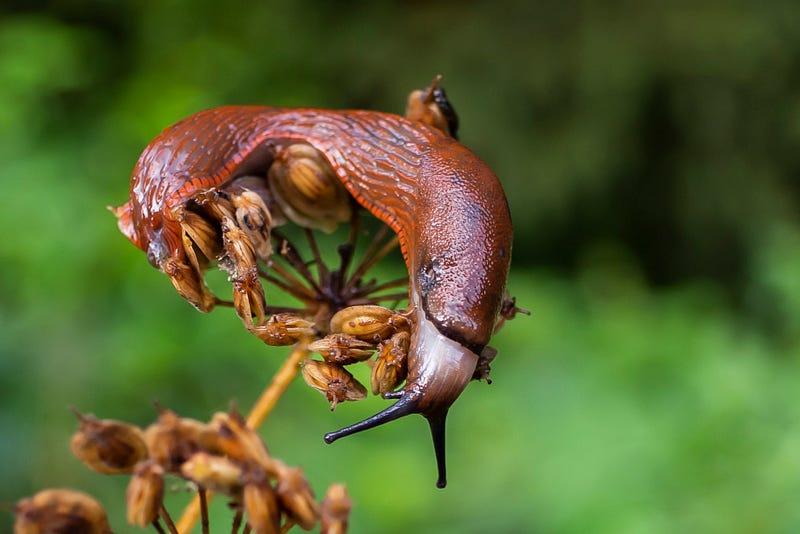
The Little Ugly One
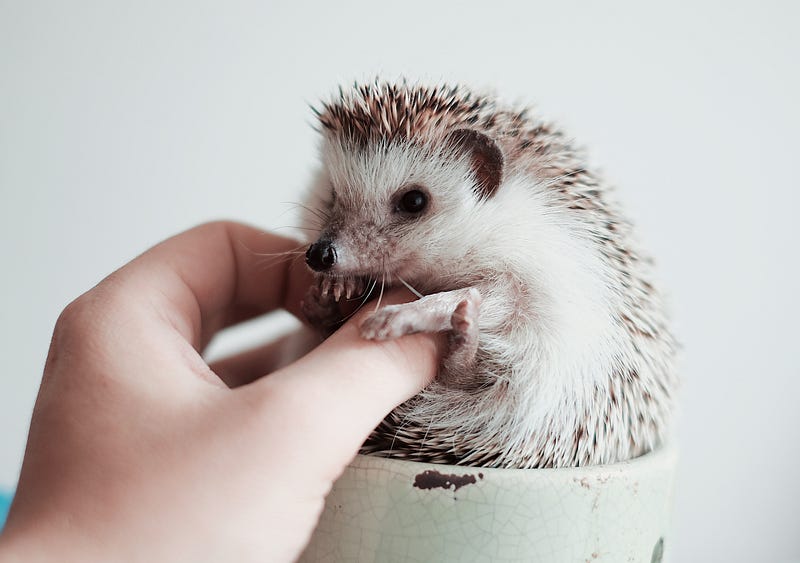
In Irish, the hedgehog is gráinneog, (‘grawn-oh-g’) which means ‘little ugly one’, but how adorable is this cutie? They were introduced to Ireland by the Normans in the twelfth century, for food, and have adapted well here, but for decades I only ever caught sight of a hedgehog as roadkill.
Living in rural Kerry as I do, if I wanted to grow anything in my garden I used to have to don a head torch and gloves and go out slug-hunting four or five times a night. When I learned that hedgehogs eat slugs and snails, I asked the Universe to send some my way. How lucky am I? The wonderful Universe complied, as it often does, and in this case, it was helped along by a fox-lamping neighbor. John, with his rifle, was employed to cull foxes by a farmer who happened to have tens of hedgehogs around his farm, which he also considered to be pests. I imagine they were getting into the animal feed, as they eat just about anything, — even dairy products, which will kill them. John remembered I was hoping for some, and he saved a whole pile of hedgehogs from being drowned, and brought back several buckets-full to our street, on the very edge of town and wild mountainside, and released them.
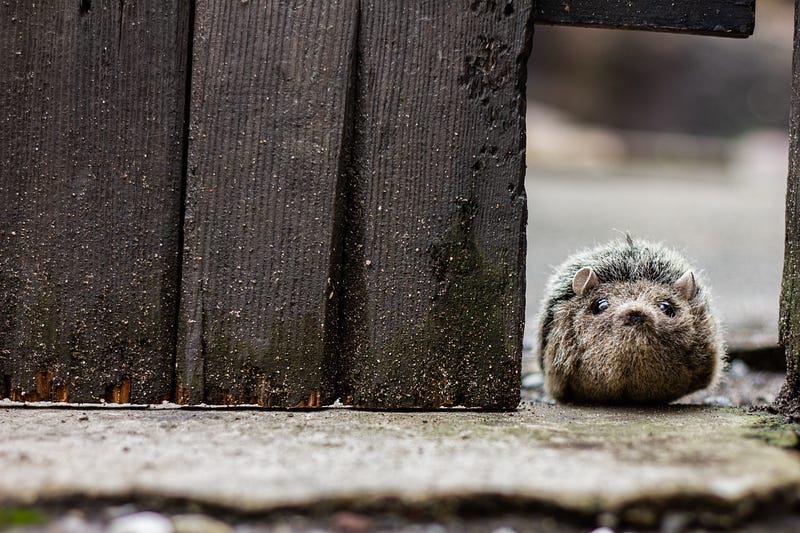
It wasn’t long before some of the hedgehogs found my gardens, front and back, and I was delighted. I put away my slug-hunting gear, slept through the nights, and actually had a harvest.
Hedgehogs make a lot of noise, moving objects and brush, and they huff and grunt, a bit like a pig — hence the ‘hog’. I have created a hedged bird-bower, with brush cuttings, and hedgehogs regularly power through it. Their holes aren’t big enough to let the cats through, thankfully, and the small birds eat safely in their bower, with little upkeep required.
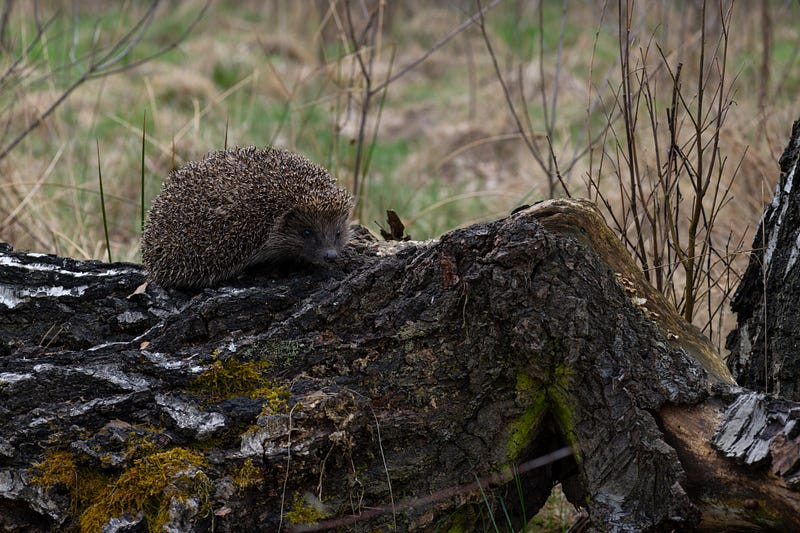
The Universe had also granted my request for an outside cat to come live in my shed and have kittens, and hunt rats. I feed my outside cats outside, with cat biscuits, and the hedgehogs soon found this source of food. One October night I saw three large mothers, each with a string of autumn hoglets behind them, visiting the cat bowls. One mother hedgehog had six or seven little white balls on her spines, like tiny egg shells. I have puzzled over what they might have been ever since. We have no snakes in Ireland, but they resembled snake eggs.
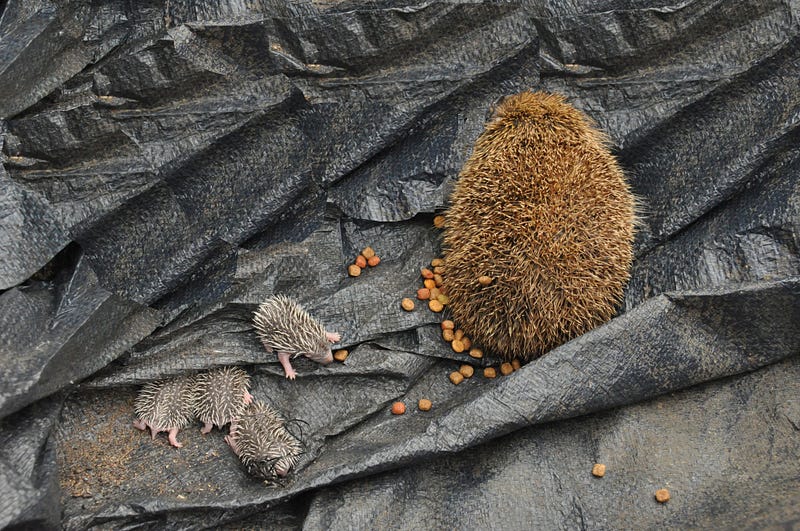
Cats have been known to suckle a litter of orphaned baby hedgehogs, but my cats keep well clear of these visitors, who completely ignore larger mammals. They will just shuffle off if you cross paths, or speak to them. They will hunt and eat small rodents, though, and frogs. Mostly they eat insects and snails.
Hedgehogs will travel many miles in a night but do have regular routes and stop-offs. I have a security camera now, (because of a malicious neighbor) and last year it picked up a hedgehog every night at around the same time, on the same route. It is said that when they wake up from hibernation in the spring, they have no memory of the places they visited the year before. I think this may be true, because one year, I saw no sign of hedgehogs at all. Their poo is distinctive, very black, and tubular.
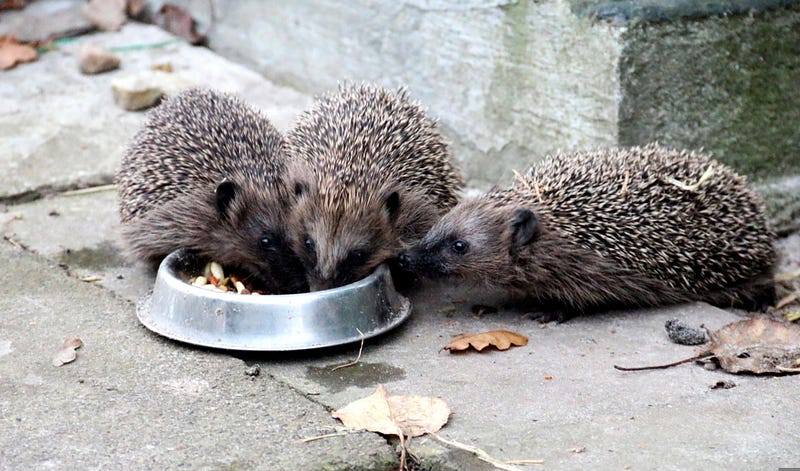
Hedgehogs should not be kept as pets. They are wild animals and will not thrive, and children should not be encouraged to imprison them. They should only be handled if in trouble, or in shock. They don’t like bright light and are nocturnal, so if you see one in the daytime, something is wrong. Wrap it in a thick towel, put it in a box in the dark in a warm, quiet place, or take it to the vet. Never give a hedgehog cow’s milk products, as that will make them very sick indeed, and may kill them. Do leave out a bowl of fresh water, they appreciate that.
Be aware and take care that hedgehogs might be hibernating, or nesting if you move a brush pile. They are a gardener’s best friend, and this year I am happy to report that I am on holiday from slug-hunting, once again.