
The Little-Known Story Of How Racism Prevents Black People From Competing In Elite Sports
And how this is changing
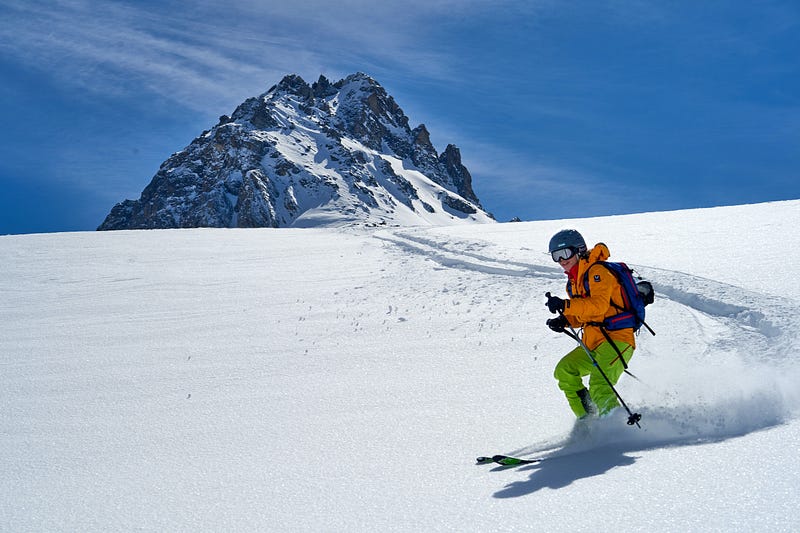
As a Black child growing up in Switzerland in the 80s, I used to wonder why I never saw Black people compete in elite sports competitions for skiing, cycling, ice skating, and swimming for example.
At home, we jokingly referred to these as «White Man sports». But the reality as to why Black and brown people weren’t represented in these sports is one steeped in exclusion and racism.
I didn’t realize it at the time.
As I grew older, I became increasingly intrigued as to why I hadn’t seen a Black person participate in competitions like the Tour de France — a world-renowned cycling competition.
Was it because like I had heard white folks say, Black people just weren’t interested or didn’t have the physical attributes or endurance to cycle long distances?
I heard some of the most racist theories during that time – i.e. that Black people didn’t swim competitively because their high muscle density made it impossible for them to float or glide through water.
In the 90s came the Williams sisters, Venus and Serena, and I finally began to understand that when Black people entered elite sports, they did well.
Often, they weren’t present in particular elite sports because they didn’t have access to them. Sometimes they didn’t have the infrastructure in which to practice like tennis courts or the economic means to get top coaches or the best equipment.
In the film King Richard, which details the Williams story, one sees how much their parents go out of their way to find a tennis court for the girls to play on in Compton and to ensure they had the right coach to develop their skills and passion for tennis.
I think that one thing that is clear is that once Black people do have access to these sports, they can outperform white rivals. Not only do the Williams sisters bear testimony to this, other examples out there include Lewis Hamilton in Formula 1 and Tiger Woods in golf.
There’s also the example of the Jamaican bobsleigh team that participated in the Calgary Winter Olympics in 1988 and inspired the film Cool Runnings. They too show that if Black people had access to a sport, had financing, and were well coached, they too could do exceptionally well.
Today, there are still sports where Black people are absent. Skiing remains a glaring one. As populations migrate and mix, I am ready to bet that it is but of matter of time before the world sees its first Black ski champion.
For cycling, a sport where we’ve been absent from competitions like the Tour de France for centuries, there’s been a change. Today, numerous Black cyclists are competing at top levels. Biniam Girmay is regarded as Africa’s top cyclist. He hails from Eritrea, a country located in East Africa.
Just recently, he was a stage winner in the Giro d’Italia, a winner of the Gent-Wevelgem in Belgium, and he also finished this year’s Tour de France. It’s only a matter of time before he and others like him win one of the major races.
My children always laugh at me because whenever I watch sports, elite sports especially, I am always rooting for the Black and brown person or team. I do this because of how much more challenging it may be for them to even get into the competition. The resilience and courage that it takes is why I support these individuals.
Also, these Black and brown people that compete in predominantly white sports suffer from a lot of racism. Lewis Hamilton speaks about the racism he encountered in Formula One and still does. Serena and Venus have also suffered racism in tennis as well. It’s all appalling.
All in all, the world is changing and soon, everyone from everywhere will be able to participate in elite sports, not just the privileged few.
I have a feeling that the usual countries that pocket all the medals at the Olympics or World Championships are going to be in for a surprise when athletes from the “Global South”, will start competing and winning elite sports.
Thank you for reading my perspective.