
The “Listen To Black Women” Letter Forgot an Important Demographic: White Women
Why white women should look inward before chastising Mayor Fischer’s lack of action for Breonna Taylor
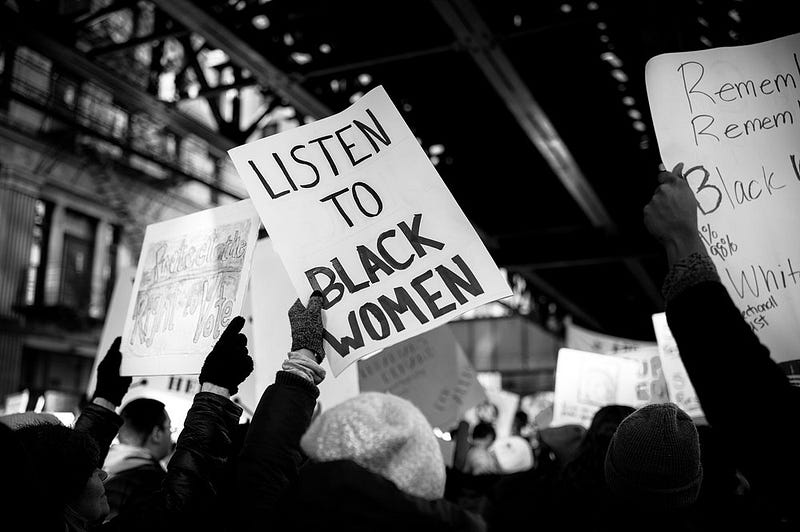
“It’s about getting more white women, in this case, to say I do care about what’s happening, and I want the mayor to do something about it, and we need him to listen to Black women who are some of the most impacted when it comes to the Breonna Taylor case.” — Carla F. Wallace, co-founder of Showing Up for Racial Justice.
The “Listen To Black Women” letter was written to Greg Fischer, Mayor of Louisville, KY, in response to his lack of action in bringing the officers who murdered Breonna Taylor to justice. Wallace, along with five other organizers of the project, garnered over 2,000 signatures for their letter from White women across the country who support their message. Unfortunately, we now know how this investigation concluded and sadly, there was not much shock or disbelief from Black women because we have seen this before.
The voices and plights of Black women in this country are routinely stifled and eventually forgotten.
The White women who signed their names to this letter pleading for the mayor to listen to Black women stated:
“As white women, we refuse to be silent. Mayor Fischer, we are calling on you to listen to Black women.”
I will always appreciate any effort that attempts to bring attention to the injustices suffered by Black women. For all that we do, history has shown that our lives are frequently cast aside with little consequence. As the back-bones of families (both as enslaved women and post-slavery), we have been there to care for the children, cook the meals, clean the homes, support the men, and provide life-sustaining income, often without help from a spouse or partner.
Also, we have partnered with White women in the fight for women’s rights and equality; rights that often did not extend beyond White women to cover and protect those of us who helped manifest the rewards. In short, we have been there — for everyone— always ready and willing to lend a helping hand to achieve an objective that time and again did nothing to better our own lives.
It is admirable for these women to compose this letter, but here is my question for all who took the time to sign their name to this plea:
Instead of directing your demands at the mayor, why not start with the woman in the mirror?
White women have always been aware of their level of protection in this country as compared to Black women. And if there are White women who claim not to know I must ask them, where have you been?
One of the first observations in this letter states:
“In the long history of racism in this country, the safety of white women (especially our so-called ‘protection’ from Black men) has been used to justify calls for law and order.”
It is common knowledge that maintaining a safe, comfortable, and pleasing environment for White women has been a top priority in America since it’s inception. White women are accustomed, both consciously and subconsciously, to having protection and autonomy in any situation. This is why many formed human chains to protect Black people during the onset of protests this summer because they knew, along with everyone else in this country, that police would never gun down the very women they were sworn to protect.
I cannot imagine after growing up in an environment that catered to me, made my image the universal standard of beauty, and came equipped with armies of men who would lie down their own lives just to protect mine, that I would be oblivious to my own privilege. There is no way I would not be able to see how my life appeared to have more value than others. Yet many White women are intent on blaming those around them for the ill-treatment of Black women without first looking at themselves.
This is not an attack on White women; it’s simply an inquiry from your Black sisters. Where have you been? Why has it taken you so long to care about us? Why were you okay for us to stand by your side and fight for women’s rights, but suddenly became blind and deaf when it was time to fight for Black women’s rights? Have you ever once thought of how White supremacy has made your life better, safer, more pleasurable, and richer than the lives of your Black sisters? Did you pay us any attention before Breonna Taylor’s murder? And now that her case has been closed, will you continue to stay invested in the fight for your sisters’ liberation?
These are all difficult, thought-provoking, and in some cases, painful questions. Soul-searching is an arduous task that takes a great deal of courage and continuity. It may bring us face to face with demons we’ve buried deep in our subconsciousness, and it may also force us to deal with authentic feelings that may not be popular with those around us.
I cannot put myself in your shoes as you process how your own life has benefited from White supremacy while it simultaneously terrorizes and sometimes ends the lives of Black women. I don’t know what it’s like to be born of privilege with the knowledge that the whiteness of your skin alone is a life-saver in most instances. I have no clue what fearlessly calling the police for help when I am in danger feels like because that call will always be accompanied by my fear of being further jeopardized by the police who show up.
I also understand that you can't put yourselves in our shoes. There is no way you could understand having a life that does not matter to all people in the country. It would be completely foreign for you to be denied access or made to feel unwelcome in establishments outside of your community. Even the thought of going into stores to purchase something as simple as a beauty product that is made for your skin and hair type only to find they either aren’t available or are regulated to a small number of choices that still don’t properly suit your needs is unheard of to you.
We are very different women walking opposite paths when it comes to racial equality. But since one of us has a clear advantage, shouldn’t it be used to help the entire sisterhood? I am not naive enough to suggest that White women can singlehandedly shift the trajectory of race relations in this country, but what I am suggesting is that in any fight for any cause, those with the advantage have a greater chance of tipping the scales in their direction.
If the shoe were on the other foot, would you not expect Black women to stand up and speak out for your liberation? Or at the very least, start a conversation with you that included a genuine apology (followed up with an ACTION PLAN) for all you suffered as they went through life sharing the same spaces you occupied in fear, basically unscathed?
Instead of a letter to a mayor from thousands of White women, I would be more encouraged if those women and others around the country simply took the time to see us as they see themselves. To see us as they wish to be seen when they fight for women’s rights. To connect with the feelings of not being heard, not given a fair shot, being discriminated against, earning less than their counterparts, and the desire of wanting to keep their children safe. We are all women and essentially we want the same things. The only difference is White women receive those things naturally and if for some reason they don’t, once they ask they are given.
But Black women have died trying to secure these same basic human rights for ourselves and our families.
We don’t need letters with signatures that lead to dead ends. Letters like these are another example of performance allyship that basically serves one purpose: to uplift White women. While this letter was supposed to bring attention to Breonna Taylor, her mentions were only about her murder, not her life as a human being.
There was no effort to speak of who she was as a woman or to highlight her gifts or the accomplishments she earned during her short life. There was no discussion of what her life meant to those who knew her. There was no sentiment expressed of the void her death left in her family. There were no musings of how she might have made a positive impact in the world as a nurse had her life not been tragically cut short. There were no words of how she had fallen in love and might have married her boyfriend and been blessed children of her own, had she been allowed to simply live.
And probably the most glaring omission is why this letter, composed by women who live in Kentucky, was dated September 8, 2020, when Breonna was killed in March.
White women…where have you been all this time? Why did this only begin to matter to you when it made national news? Didn’t the story run on your local new stations long before September? I bring this up not to be petty, but to bring attention to the very real fact that White women get the option of picking and choosing when they will care about Black women’s lives and those choices are usually made in our favor if they come with the possibility to garner attention for themselves.
We will never make a marked difference in elevating the value of Black women’s lives in this country if we aren’t able to come together and have honest, tough conversations.
For the White women who have a desire in your hearts to stand up for your Black sisters and to use your position at the table to help lessen the load of your sisters’ journey, please ask yourself these questions:
Am I really listening to Black women? And if I have been listening, do I care about what is being said? Am I able to unpack and digest what Black women are telling me, or is my instinct to spin their experience to tell a story that helps me feel better about my own position of privilege in this country? Am I minimizing them, or actually helping them? Is this coming from a genuine place or a self-serving one?
And if no one else was watching, would I still be there?