
The Limitations of our Humanity
(Thoughts without corroborating empirical references)
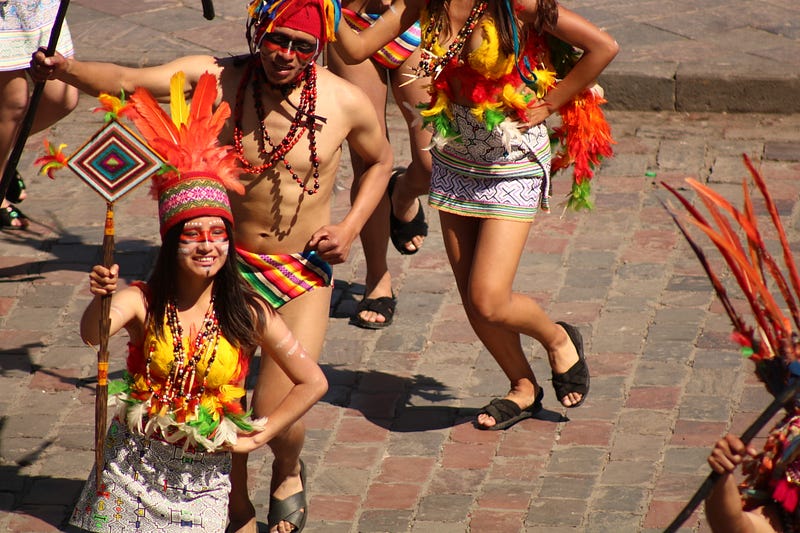
The core of what makes us human is our need for belonging. It is our greatest strength and, at the same time, our greatest weakness.
Since we first walked this earth, we have given our allegiance, to family, friends, and tribe. When we keep these objectives within our eyesight, within our control, we are at our strongest. Mostly the positive aspects of our human nature come to the fore. This disputable fact, borne out by studies looking at so-called primitive societies stands available for inspection.
When our sphere expands beyond these small grouped and localised enterprises, our behaviour becomes more problematic. The idea of nation-states seems to be too large for our evolutionary tools to deal with adequately. We find it difficult to identify with large groups that expand beyond our immediate observations. It is at this stage where our humanity becomes in danger of being hijacked.
We cannot escape it, our need to belong supersedes all. It is a thing ingrained deep in the layered codes of our DNA. It is the core of what makes us human — the heart of our humanity, and regretfully, our inhumanity. Throughout our slow evolution on this earth, it remains integral to who we are. This need determines our successes and our failures. It reveals our greatest strengths but also exposes our most profound weaknesses.
This coded need designed us to live our lives on a small, localised and parochial scale. Within an interconnected group of family, friends, a tribe even, we are at our best. Our positive attributes as the world’s most social animal come to the fore. We share what we have, what we acquire from our environment. We exhibit empathy and caring. Our social interactions become our insurance policy. Instinct warns us that if one survives then the chances for group survival increases. The stronger the bonds within the group, the stronger is the tribe on the whole. Each member has a part to play. Feminine strengths have far more value for cohesion than masculine attributes. The hierarchical rule is generally discouraged, especially when the group’s chances of encountering the uncertainties of another is at a minimum. The proximity of other communities with their unknown desires and intentions can be a destabilising factor within an enclosed tribe and its working dynamics. In these circumstances, maverick male posturing and aggressive stances tend to take precedence and may lead to structural changes which could result in conflict. When events do not encourage these forces into play, displays of male dominance and posturing are ridiculed and controlled by feminine pragmatism — hearth and home are paramount. Observations of so-called primitive tribes have shown and borne out some of these behaviours. We can find other relevant examples among the histories of the Native American plains inhabitants — the North American Indian tribes.
However, within this existence, our need to belong leaves us vulnerable. It becomes susceptible to hijacking.
In our ability to make use of every niche, our species marches over the world filling every available living space — an appetite which cannot be satiated. We tell ourselves, in our arrogance and ignorance that we have conquered the earth and harnessed nature to do our bidding. We channel our energies into building nations, seeking fabricated identities in order to generate competition against the others. We do not see it, but we are already overextended. Our biological evolution lags behind the ambitions of our social advancements. Our reach extends beyond our abilities. We are susceptible to manipulation by those who value self-interest above all, brainwashing us to be an extension of their greed. We are encouraged, sometimes coerced to align ourselves behind national interest to protect our identity and security. We forget our humanity in the pursuit of these things. We call ourselves wise man but cannot stop long enough to think along clear lines. Those who govern us and exploit us make sure that the tools which would enable us to do so are in short supply. We are too busy following what we perceive as normal to realise that our very minds and values lie infiltrated, serving the agendas of the few holding the seat of privilege. We have become house slaves who think ourselves to be free. The parable of the Good Samaritan should be our guide. Its simplicity is a truth — help another less fortunate in need even though you may lose the standing in society that you have battled so hard to gain. We have forgotten the rules we lived by when we survived in small isolated groups and tribes. The welfare of your brethren comes first for this is the act that will keep you whole. The lawgivers try to keep us united under arbitrary regulations, but we are incapable of following these rules. They are beyond our biological understanding. We cannot take them into our hearts. We are incapable of fulfilling the promises that humankind have set for themselves. Hubris and deceit rule us. We have descended into endless wars which others have convinced us and which we sadly believe protects us. We engage in questionable activities to exclude others based on phenotype under the pretence that we are preserving the purity of race. We excuse transparent exploitation and self-interest under the right to self-betterment. We blind ourselves to the abuse perpetrated on Mother Earth under the illusion that it provides us with the things necessary to improve our lives — no evil can lead to good. We do all these things which we know to be wrong, in the desire to belong. It is the imperative code that lies at the core of who we are. We cannot overcome it and would follow the road to salvation or perdition to possess it — we do not care which. Even with these severe limitations, the stars beckon us, as they have always done. We desire to travel to other worlds that do not care for us — never nourished us. We want to build on their hostile environments the same concrete buildings with which we have covered our once green earth — the old spaces that repair our psyches. We aspire to continue living our lives in narrow lanes, isolated and alone, alongside the noise of machinery and pollution in the air. We can no longer see the stars but continue to dream of them. We have created a nightmare, this poison we call civilisation. We are a lost people, cast adrift over the last two hundred years of our existence, cut off from who we are, unable to find who we are meant to be.
All because our overriding need to belong stands hijacked.