
Racism
The Lighter You Are, the Smarter You Are, Right?
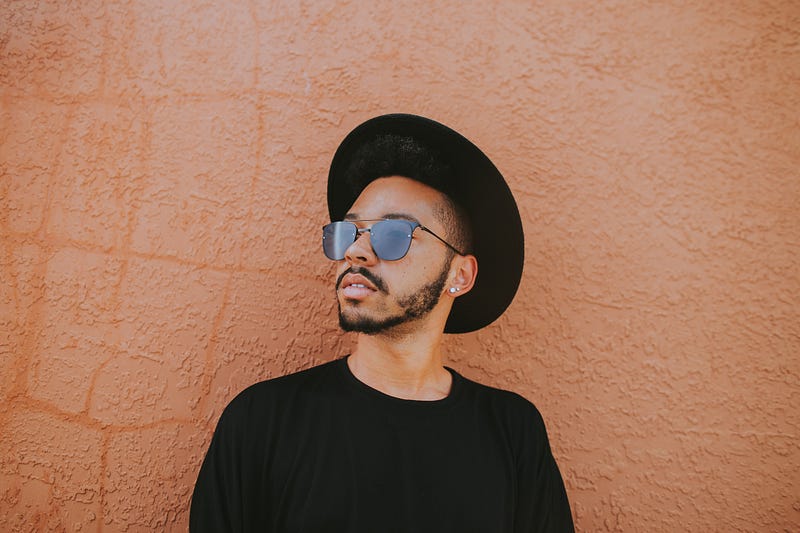
As a light-skinned black man, I have gone through a lot when it comes to colourism. I will never forget when I was ten years old, and a white child asked me a question about the work. I did not know the answer and asked him to speak to my black friend, who had solved it fully.
His response startled me. He said he was told to avoid asking people like him. And when I asked him why he responded:
“The lighter you are, the smarter you are, right?”
That was my first ever lesson in colourism, and after that, it appeared to continue to show up in my life. When I hit fourteen, children would often call me Bart Simpson and mock my light skin. And by the time I was eighteen, I learned that I was privileged to have lighter skin because it made life easier.
My experience has been up and down, and I do not believe I have received any benefits from it. However, my black counterparts are quick to disagree with me and seek to point out the opportunities I never knew I had.
Unfortunately, many people still hold terrible beliefs about lighter skin. However, I find that many of these negative beliefs come from those who should be fighting against them. It is often ethnic minorities that hold these upsetting views that can lead to detrimental situations.
Take India’s skin bleaching as an example. Skin bleaching allows you to make your skin lighter, but it comes at a cost to your health. Many men and women who practice it tend to have both psychological and physical problems. It is not just India. According to the article, 77% of Nigerian women do the same.
It is scary that the world has developed so much yet still holds on to illogical views like this one. Nevertheless, the mainstream media does not help the cause, and I believe it is time someone speaks out against it. There are two large stigmas about light skin people that need to stop if we wish to make progress.
Lighter Is More Beautiful
Whilst growing up, I was seen as the person who was going to break girls hearts. According to my white and black friends, light-skinned individuals are better looking. As a result, they get loads of girls and treat them horribly.
My black friends still say you can get any girl you want because you are light-skinned. For them, my skin raises my sexual marketplace value and helps me find a mate. Despite going against research, this view is still held in much of the black community.
However, I can not blame them. The media repeatedly puts lighter-skinned individuals in the faces of young boys and girls. It did not take me long to realise that JD Sports, a sports store in the UK, applied this strategy.
If you visit their website here, you will find a range of light-skinned models. Even for the children clothing! Now no one would go around and openly say they have these views, but the reality is many do. And it is a bias that is destroying our society as we speak.
Colourism is a type of racism that is way more damaging. If you seek to oppress someone based on the colour of their skin, you have to take deliberate actions. However, colourism can exist in finer details.
By teaching me that I am better looking because of my pigmentation, I will act on this false information. I may believe I am entitled to certain things or seek to have children with lighter individuals. And unfortunately, children are also victims of this as they go into their stores and see light-skinned children as models.
It is not a benefit to society for lighter individuals to believe they are prettier. We must stop painting this narrative over lighter black people. It makes dark-skinned people hate their skin, and light-skinned people feel privileged.
That is part of the reason why there is still a craze over having a mixed baby. Everyone appears to want to have light-skinned babies because they are “cuter” and have curly hair. We must call this mindset as it is. It is racism.
And no matter what race holds these views, we must be bold enough to point it out as racism. Me being lighter has nothing to do with my physical attraction, and the media must stop pushing this agenda as truth.
Lighter Is Weaker
As a young child, I never knew who to hang out with within school. All my family were black, so I identified myself with black Caribbean culture.
However, I looked half white, so the black children did not approach me. I remember having a discussion like this with my mother, to which she responded,
“You are black, so you can make friends with black children easier.”
As a child, you do not take those comments seriously, but they can cause damage. Plus, I did not feel black at all. I felt like the odd one out for the most part.
Nevertheless, I began hanging out with other black students and the friendship group became very mixed. I am happy I have always been able to experience a friendship group of great diversity. But I have found that my experience appears to be outside the norm, and again, one of privilege.
When I hit higher education, darker-skinned individuals treated me differently. They would tell me that I have not had to overcome the struggles they have. In other words, they would let me know that they were stronger and more resilient than I was.
Social media also played a role in this. For quite some time, both Instagram and Twitter had memes going around of a lion roaring with a cat noise coming out of it. The caption was, “Light-skinned men be like…”.
Everywhere in media darker men and women are seen as stronger. Both mentally and especially physically. We see it in the porn industry, with darker men having enormous penis sizes and darker women being thicker shaped. And we also see it in sports media as darker men are presented as bigger, faster and more of a threat.
Once again, for such a progressive world, how are we still holding to such irrational views. Light people seen as weak and pretty, whilst dark people seen as strong and ugly.
What to Do?
Colourism must be called out for what it is. It is a type of racism that can occur in two ways.
The first is within the same ethnic group. Whilst in the same ethnic group, it operates in a way that allows those who are of different skin pigmentation to feel entitled and oppress or hold negative views towards one another. In this way, it destroys communities that should be standing for one another.
The second is within societal structures. Whilst in societal structures, like a plague, it grows in social media and other marketing tools. And those in power blindly allow for these agendas of light vs dark to exist. In this way, it results in an unprogressive society and a lack of understanding of how to define a person.
A person is more than their skin colour, and colourism does not teach that. We must get its definition clear and call it for what it is. Only then will we see a progression.


