The Light He Left
Illuminating the Path with Love

Today, as I settled in front of my computer to begin writing, a shiver ran down my spine. Reliving certain moments is proving to be the most heart-wrenching experience. This recount is something I have been dreading. I’ve kept it hidden in the furthest recesses of my mind, seldom revisiting it. I know the next few hours are going to be among the most challenging ones.
As I delve into these memories, I find myself grappling with a profound mix of emotions. I hope to find a way to weave these emotions into words and breathe life into them. I’ve committed to infusing my words with my deepest emotions and giving them the expression they deserve. It’s a challenge, but it’s also an opportunity for healing.

Beginning from the End
Sitting in the hallway, I braced myself for the news. My gaze remained locked on the closed door of the ICU unit, knowing that any moment now, someone would emerge with the news I dreaded. Each passing moment stretched into what seemed like hours.
Then I spotted my husband approaching. I turned my face toward the window, unable to meet his eyes. He settled beside me, enfolding me in a tight embrace, offering solace as we both sat there in profound stillness.
Finally, the words came: “Dad is no more.”
The inevitable has happened.
Suddenly, an eerie sensation took hold of me. It was as if I were both here and not here at the same time. Everything just stopped—everything got really quiet, suspended in an eerie tableau of lifelessness. This strange feeling lasted a long time, or at least it felt that way. I just wanted to disappear to avoid what was coming next.
Finally, I stood up and walked towards the ICU.
I looked at my father, lying still on the bed, surrounded by tubes. My heart sank. This wasn’t what I wanted for him. Deep down, I knew that if he could speak, he’d probably have asked me to let him go peacefully. He had been on life support for ten long days. Every time I visited him, I wished I could ask, ‘Dad, is this what you want?”
I remember a woman in the same ICU who was deteriorating, and the doctors asked for consent to put her on life support. Her husband refused, and miraculously, she later recovered. I can’t help but wonder why I didn’t do the same for my father. Why was I so afraid of losing him that I ended up losing him anyway? There are so many unanswered questions and lingering doubts in my mind.

A few hours ago, I sat nervously in front of the doctors’ meeting room. My hands trembled as I glanced at the panel through the glass door. A team of doctors was huddled inside, discussing and deliberating to determine the next steps. I knew that once their meeting concluded, they would call me to share their findings.
But they didn’t call me. Instead, the head doctor came out and explained that they were waiting, hoping for things to get better. I understood what this meant. They had reached the limits of medical intervention, and now all that remained was the hope for a miracle.
I mustered the courage to ask, “Is it all over?” She nodded. It was just a matter of time. I couldn’t help but feel a surge of anger and resentment toward all of them. Why couldn’t they do more? How could they seem so indifferent to the situation? Did they truly care? These overwhelming emotions consumed me, even though deep down I knew that perhaps there was nothing more they could do.
As they were preparing him for his final journey, my mind was completely blank. The prospect of returning home from the hospital and delivering the news to my mother weighed heavily on me. I knew it would be heartbreaking; I knew she would be utterly devastated. The two-hour drive back home felt like an agonizing ordeal.

I stood outside the door, taking several minutes before summoning the courage to press the doorbell. The room was filled with people who had heard the news before my mother, yet none had mustered the strength to tell her. They were all waiting for me. It was up to me to deliver this heart-wrenching news.
I gazed at her, held her tightly, and whispered, “I’m so sorry, I couldn’t bring him back.” She cried, her tears flowing unchecked. I held her close, my own heart heavy with grief. Though I longed to let out my sorrow, I knew I had to remain strong for the sake of everyone else.
Perhaps traditions and rituals are intended to offer a respite from sorrow and the weight of despair and grief. During the next two days, I felt like I was operating on autopilot, going through the motions without truly understanding what I was doing.
What followed were condolences and sympathies. Words like “I’m so sorry for your loss” and “thoughts and prayers” were kind but felt hollow. Some attempts at consolation came across as insensitive. One such instance has stayed with me and warrants mentioning: Someone said, ‘We’ve all faced the loss of a cherished loved one. Take solace in the fact that he led a rich life and passed away peacefully when his time came.’
Using a platitude to console a loss is so emotionally dismissive. While it’s true that we all go through the pain of losing someone dear, the nuances of each individual’s grief are personal and may not be entirely understood by others. We can empathize and imagine the pain, but we never completely understand their journey through loss.
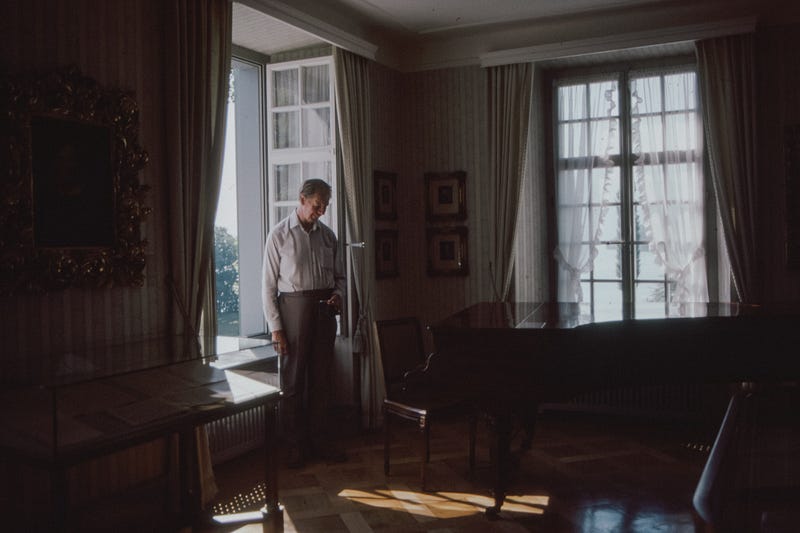
My parents came to live with me after much deliberation and persuasion. They had spent their entire lives in the countryside, so adjusting to life in a bustling metropolis was bound to be a daunting task.
My dad, a scholar and a professor of history, was a highly learned individual and a distinguished academic. After a lifetime of living independently on his own terms, moving in with his children was a difficult adjustment for him to make.
After a lot of persuasion, he finally agreed, but with one condition: he would live in a separate house. It didn’t take me long to become comfortable with the arrangement, especially since the house was right next door.
My son was overjoyed to have his granddad live next door. My father had always treated children with respect as if they were adults, and for my son, who was intellectually advanced from a young age, it was precisely what he needed. They formed a strong bond. As for my daughter, she was my dad’s favorite, and they shared a very special connection.
Life felt nice and settled. I no longer fretted unnecessarily about my parents. They were with me, and I was readily available whenever they needed me. This arrangement couldn’t have been more perfect.
Our evenings were filled with stories and anecdotes from days gone by. Dad had a remarkable memory, and the most delightful moments were when he burst into laughter. Once he started recalling funny moments, he couldn’t seem to stop. We all cherished his infectious, uncontrollable laughter.
I could spend hours with him, delving into the depths of life and its profound philosophies. He was an incredibly humble man who seemed to possess boundless knowledge. His desk, his books, his reading habits, and his daily routine are the treasures I have inherited from him.

A trip back to his hometown changed everything. It all began with a wedding invitation that he wasn’t particularly keen on accepting but felt obligated to attend. He went there with great reluctance.
He was a robust man, attentive to nurturing both his mental and physical well-being. However, when your time on this planet reaches its end, you are guided towards the path that leads to the unavoidable.
He contracted a virus that went undiagnosed for days. His health started deteriorating. I insisted that he come back, and eventually he did. I knew that once he was with me, he would find relief because, for him, I was someone who could take care of anything.
He placed such complete trust in me. I constantly ask myself why I couldn’t do more and where it all went wrong. Could I have taken a different course of action and sought a different doctor or hospital? When you’re the one making all the decisions, these irrational thoughts tend to creep in.
I recognize that I haven’t experienced the entire grieving process, if there is indeed a structured process to it at all. After all, we each navigate loss in our own unique way.
After he passed away, I made a solemn promise to my dad that I would wholeheartedly care for my mom in the best possible way. Now that she is with me, every moment I spend by her side, I sense my dad’s comforting presence.
You never quite get over it
I’ve come to accept that it’s okay to miss my dad deeply. I miss him every day. I have also come to realize that time doesn’t heal it all. You don’t simply leave all of it behind; you traverse it, and you keep doing it. Sometimes it’s effortless, sometimes with a lot of effort.
Life Goes On
I’ve made sure to create a warm and nurturing environment for my mom. We share moments filled with laughter, reminiscing about the times we spent together as a family. It’s heartening to see her find solace and support in our bond, and I know that in doing so, I’m carrying forward the love and care my dad always provided.
There are moments when I discover traces of my dad’s influence in my everyday life, from the books he cherished to the stories he loved to tell. It’s a bittersweet reminder that his spirit lives on in our shared experiences.
In caring for my mom, I’ve come to understand the depth of a parent’s love and the importance of being there for the family. Our journey together is a tribute to my dad’s legacy, and I’m grateful for the opportunity to keep his memory alive in our hearts and daily lives.
“My father died many years ago, and yet when something special happens to me, I talk to him secretly not really knowing whether he hears, but it makes me feel better to half believe it.” — Natasha Josefowitz.