
The Life Lessons of a Homeless Guy
Some conversations you never forget
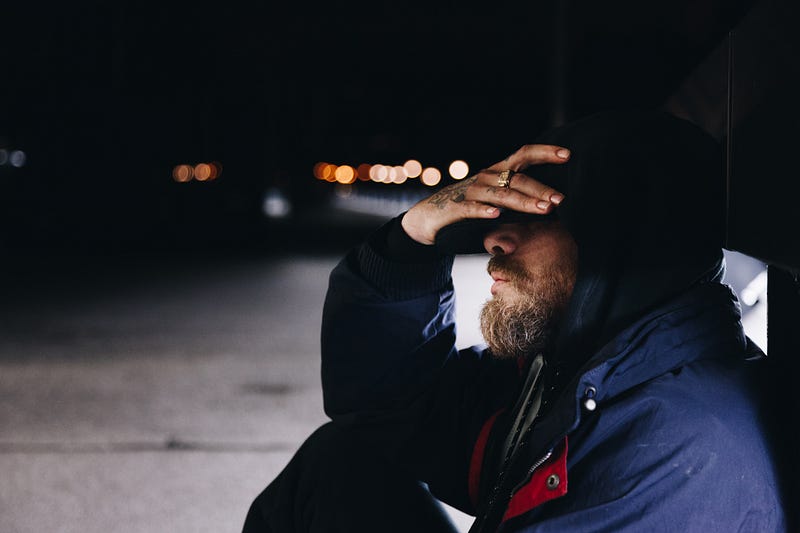
He was one of those people I never forget.
I was on a mission trip to Washington D.C., with a group of teenagers from North Carolina. It was so long ago that those kids now have kids the same ages they were at that time. Some even have kids a bit older.
As we were driving into D.C., I noticed how oblivious these kids were to the city streets around them. Many were from upper-middle-class families, others lower-middle-class. While this was not the first time to D.C. for most of the kids, it was the first time they would experience it this way.
When planning this trip, I was after a real-world, life-changing experience for the kids. This program (the Center for Student Missions) attracted me because we wouldn’t just be doing the same thing during the week, but involved in the work of many different non-profits.
All kids and chaperones stayed on the third floor of an old inner-city church. There were two small bathrooms. We slept in two large rooms, in sleeping bags on thin mattresses on the floor. I believe our group numbered 35 people or so.
One day we may serve breakfast at a prayer breakfast for the homeless. Then we’d help out at a food distribution of a clothes closet where people could get free clothes. We’d pass out sandwiches on a food truck. We’d paint a room or move furniture.
A group of us spent a couple of days at D.C. Kitchen, a non-profit that collects leftover food from places such as convention centers around town. A staff of trained chefs and culinary students revamp the leftovers for homeless shelters and other non-profits around town. Delicious food comes from that kitchen. I remember one day cutting up papayas for hours. Many of the kids didn’t even know what papaya looked like before that day. I suspect they never forgot.
To start the week, they took us to the National Mall and dropped us off for a couple of hours. Each chaperone had a group of about five kids. Our assignment? To interview four people on the subject of homelessness. Specific people:
- a guard at one of the tourist attractions
- a D.C. policeman
- a tourist
- a homeless person
True confession — while I often get into great conversations with strangers, I don’t like to be forced to do so.
My attitude was not great. But what could I do? I had to make the kids think I was on board with the assignment.
Getting thoughts from a guard at one of the tourist attractions was easy, as was talking with a D.C. cop. Those conversations were relatively short and to the point, but still interesting.
We lucked out on the tourist. She was a beautiful young woman from Sweden and was shocked by the number of homeless people she had seen in general, and the idea of panhandling.
Finding that homeless person to interview had me shaking in my boots. I had visions of the kids enthusiastically going up to someone and saying, “Hi, are you homeless?”
I was right to worry. I later found out one of the kids in another group did just that to negative results. The person he approached was offended that he would think that she was homeless because she had a shopping cart full of her possessions. She loudly made her displeasure known. It startled him but was nonetheless a good lesson.
But who would be appropriate to approach? The kids looked to me to lead. I told them, “I have no clue how to find someone to interview. Let’s just walk and pray.”
As we started walking, I see a man seated on some steps and holding up a cardboard sign in the distance.
“Let’s walk over here,” I said.
As we got closer to the sign, I could read it.
“I am homeless,” it said.
“Do you think that’s the person, Kim?”
“Yep, I believe that’s what you call a clear sign.”
The kids were afraid to approach him, so I walked up to him, introduced myself, and told him what we were doing.
“Would you share your thoughts about homelessness with us?” I asked.
And thus began about a 30-minute conversation with this man who very eloquently and honestly told us about homelessness.
He began by telling the kids that probably 90% of the homeless have substance abuse issues, often in combination with mental health issues. He said that finding food and shelter in D.C. was relatively easy, but finding substance abuse and mental health treatment was next to impossible.
To add to the issue, if you were lucky enough to get on the waiting list for treatment, often by the time it was your turn, they couldn’t find you, because you had to move to a new shelter due to the time limits on shelter stays.
He told them substance abuse was why he became homeless, but he had finally gotten into a program and was now clean. I believed him.
He told the kids about the fears and dangers the homeless faced regularly. He talked about being asked to leave the warm public library because you wore out your welcome or because the homeless frightened the other patrons. He spoke about the violence faced regularly.
One of the kids asked why he panhandled instead of finding a regular job.
“I make more money doing this,” he said, “and I’m trying to save up six months of expenses before I rent an apartment. I almost have it all saved.”
As he told his story to the kids, he began to roll up the “I am homeless” sign by which we found him. It fit. He was homeless, but as he continued to talk to us, he proved to be so much more. That kind and articulate man changed some lives that day.
I believe one other life that changed was his own. I could see he knew he described the issues well and that we listened intently to his views. He was proud of himself. He should have been. He was an expert on the subject, and we were interested. The years he had spent being homeless had value. He was a great advocate for others like him. We parted with hugs and enthusiastic thanks.
Those moments invigorated these kids. I paid attention to them throughout the week. Not one of them complained again about having to get up early to serve breakfast to the homeless. They didn’t complain about anything, come to think of it. Well, maybe about peeling papayas. I was left doing that by myself at one point, but they hung in longer than I thought they would.
When we had our debrief time each night with our whole group, the kids often brought up a point this man had made during our discussion. They made sure we prayed for this guy by name. Years later, I was talking to one of the boys, and he confessed he still prayed for that man — and remembered his name.
While the whole week was good, I believe our time with that man was a catalyst for making the trip more about others than themselves. They understood the impact of the work they did and put themselves into the shoes of those they served.
When we left the city that week, it was contrary to the way we entered. The kids were yelling out the windows of the van to some of the homeless people they had met. They rode into town, not even noticing homeless people were there but left caring about these people who now had names and were considered friends.
When we see the people around us, instead of them being a blur in the landscape, we should remember they have stories. We should recognize they have personalities. We should realize they could be us. We should know they are us.
A thirty-minute encounter with a stranger changed us. I still think of him from time to time and wonder how he fared. Did he get the apartment and the more traditional job? Did he stay away from the substances that were a demon to his life? I lament there was no easy way to keep in touch back then. But he will never be forgotten.
We so often discount people because we believe we know “their kind.” Maybe we are wrong. Perhaps “their kind” is what we see looking back in the mirror, with a twist. We’re just luckier.
Kim McKinney believes the lives of all people are fascinating and loves to hear the stories of others. If you end up sitting next to her, you may find yourself spilling the details of your life. She may write it down one day.


