
The Life Lessons Competitive Street Fighter Taught Me.
Learning from within the streets.
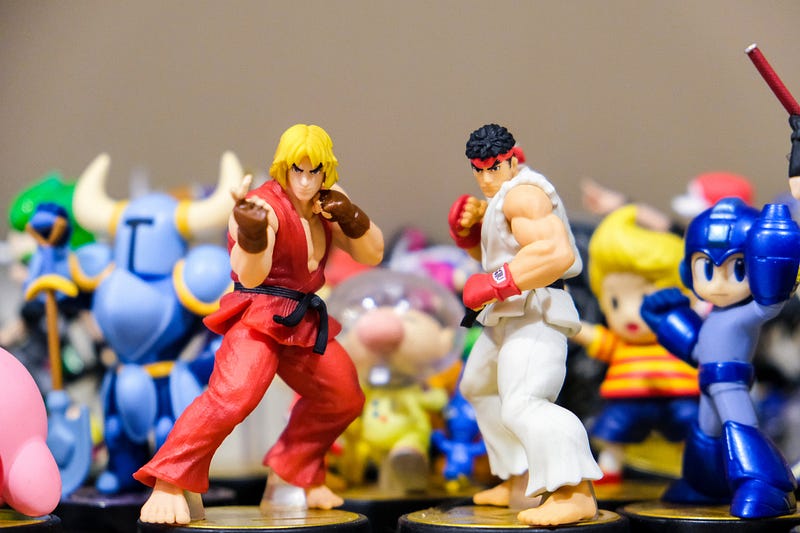
I have dedicated the first quarter of my life to training and competing in a video game that has become synonymous with me: Street Fighter. Street Fighter is a competitive video game where players stylishly fist fight against each other in a 1v1 format. Think of it as two players selecting an individual chess piece to battle against an opponent’s chess piece.
With each entry, I have grown far past the butt whoopings my brother and his friends would give me on our Super Nintendo. In fact, those losses became obsessions, and I never stopped. I kept playing until I beat him, then my friends, and people in the arcade and beyond.
I’ve traveled the United States, met players globally, performed on big stages, and faced professional Street Fighter players. I’d like to share the three life lessons I’ve learned as a world warrior.
Street Fighter is difficult, but difficult is rewarding
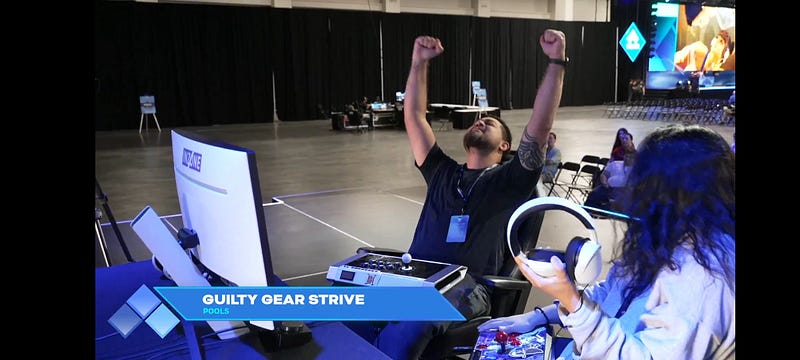
As the E-Sports industry continues to grow, games such as Fortnite, Call of Duty, and League of Legends continue to expand exponentially.
Despite being the original E-Sport from the arcade era, Street Fighter still falls short in terms of player count compared to these other games. Fighting games are more challenging than their competitors, but that’s okay because difficulty brings rewards.
Street Fighter has a steeper difficulty curve than other competitive video games. A competitor needs to be competent in:
- The use of each individual button
- Intricate combos
- Reaction speed
- Individual character match-ups
- Frame Data
- Spacing
Playing Street Fighter without an understanding of these concepts is like going to your favorite burger joint, ordering your burger, and receiving a bun with a seasonless beef patty. There is no flavor, no depth, nothing interesting.
I have seen many newcomers make an earnest attempt to learn how to play, only to be discouraged by the complexity and skill gap between a new player and a skilled player. They are A: overwhelmed by the sheer amount of things they need to learn and utilize, or B: Underwhelmed, not knowing these techniques exist and mash buttons looking for success.
The joy of playing at the highest level is using the highest level of techniques.
A player does not easily acquire these aspects and requires time to understand. It takes dedication, patience, and practice.
Finding your character takes time.
Anything valuable in life requires time. I am a firm believer in this.
As learning a trade or skill takes consistent, intentional practice, so is learning a competitive video game.
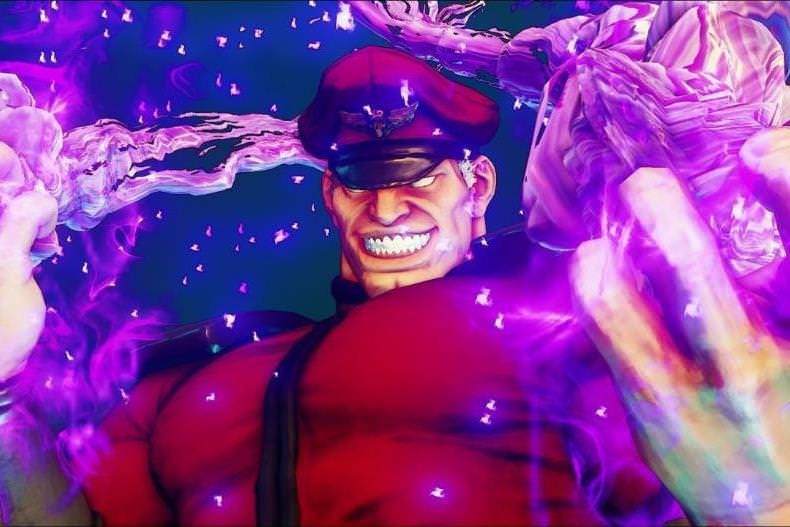
My favorite character in the image above, M. Bison, took me two years to get to a level where I could hold my own against the big boys. At the launch of the game, people considered M. Bison weak. Over time, I developed innovative and surprising strategies for tournament play. They knew me in my community as Sacramento’s best M. Bison player for a good while.
But I only achieved it through a challenging series of trial and error. I lost more games than the amount of words in this article. However, my dedication gave results, and it is something I learned to apply to other aspects of life.
At the time I was learning to be a competent player, I was a working multiple part-time jobs I hated. Burger King Cashier, Front Desk at various hotels. I grew to despise my daily routine and decided to return to school to obtain my degree.
School was historically never my thing. I was never a rude student, but I was an absent student. I ended up passing with straight d’s and c’s.
To escape a string of minimum wage jobs, I recognized the need to attend college, a feat no one in my family accomplished.
The result ended up with me struggling through every remedial class possible in college, making my bachelor’s degree a 6 year journey rather a four.
But I made it.
My college GPA started at a 2.2. My math scores were low. I lacked knowledge on proper note-taking techniques, and I did not have the executive functioning to schedule time to do homework. By the time I graduated, I was on the Dean’s List with a 3.5 GPA.
I credit my success in life to Street Fighter because it helped me gain discipline to understand the learning process and how to be successful.
Everything is a game. Everything has a meta. I was M.Bison, and I needed to learn what strategies would give me success. I needed to understand what match ups were difficult, and I needed the time to process everything.
People don’t laugh at a baby who is learning to take their first steps. Why should we feel bad when we are learning something new?
Losing is not fun, but it’s necessary.

Photo by John Crozier on Unsplash
We can’t win em all.
In fact, consistently winning tells us one thing: We are not learning anything new, only reinforcing what already works.
The learning curve to Street Fighter is one of the hardest to gain a grasp of in the world E-sports; however, the single most difficult reason that makes Street Fighter unique is the fact it is a 1v1 competition.
There is a moment all fighting game players lifetime where they outgrow their competition.
Mine came when all my school buddies no longer wanted to play against me because they were tired of losing. I understood
You must take ownership of every mistake. Unlike other competitive games, a player can’t hide behind a team or make excuses with a map or item. The only person to blame is yourself.
It is the ultimate exercise in humility.
Losing lets us know we have room to grow. It lets us know we are missing vital information, or have not practiced enough to implement our knowledge in pivotal moments.
Losing my first tournament both embarrassed me but also grounded me.
My first fight was a player named Techrat. Not only did he beat me, he bested me, using the exact character I played, leaving me to feel like a rain drop trying to find my place in a waterfall.
Now that might seem strange to think about, but think about it.
Take a loss as a moment to evaluate what could I do to improve.
It’s not about winning and losing, it’s learning how to succeed.
The master is the one who persists despite a thousand failures.
Losing is hard. It hurts, but Street Fighter taught me it doesn’t have to. Fear often hinders individuals from reaching personal goals.
Knowing there is always someone better than you means there is always something new to learn.
Experience is priceless.
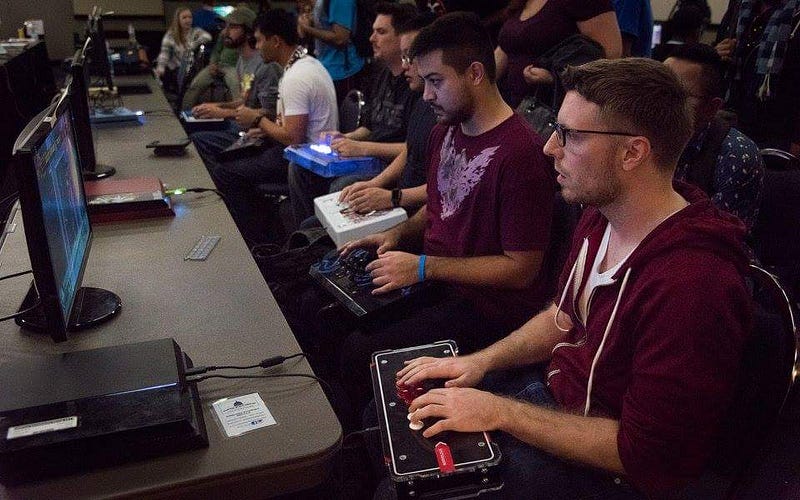
Street Fighter has grown as a cultural icon. It is Capcom’s, a major video game publisher, 5th most profitable franchise and biggest E-sport title. 2023 has a tournament pro tour with over one million in prize money and live broadcast through 15 different countries in multiple languages.
I grew up in a small town where it’s hard to go anywhere without seeing a neighbor, classmate, coworker etc. Everything was the same and there were little surprises.
Diversity was there, but it was set. In my community there was a large Caucasian group, and a mix of Filipino and Mexican population, and they seldom mixed.
The best experiences I had playing Street Fighter were moments being able to travel and experience new places, people, and culture.
The internet allows people to learn about other cultures, but true understanding comes from firsthand experience.
One of my first experiences meeting someone from Lebanon, or eating at an Ethiopian or Taiwanese restaurant, was in Evo 2014, one of the largest Street Fighter Tournaments in Las Vegas. Traveling let me experience difference, it helped me see varying viewpoints.
I never thought there would be players from the Dominican Republic to the United Arab Emirates and Korea could all be as fascinated in a game as much as I was. Even more so, we could communicate through a single language: Showing our skills in Street Fighter.
I could learn and hone my Street Fighter craft by having long gaming sessions with Human Bomb, one of China’s best Chun Li’s to copying cool set ups from the world’s best M. Bison player, Problem X from the United Kingdom.
Often, those from a little town are not aware of multitudes of possibility the world can give. It’s fascinating how people from different parts of the world can be both similar and different.
Even play styles differed locally. There is a rivalry in the United States over which coast is the bigger dog: The East vs West. Both sides have their merits, but they have contrasting play styles. The west loves to play aggressive, while the East likes to play reserved and calculated.
Asian players tend to value characters that have a multitude of options, a jack-of-all-trades, while the American players tend to enjoy characters that are dominant in a single strategy.
Every community is different, but also the same.
Traveling helps build empathy to truly understand other viewpoints of familar and sometimes not so familiar scenarios.
Conclusion:
Ultimately, Street Fighter taught me how to learn and how to grow.
I encourage everyone to learn how to play, especially those completely new to video games. It may take some time, however the feeling of watching oneself improve is one of the best experiences I can share.
If Street Fighter may not be the right flavor, consider using the pieces I learned to help learn something new.
If you have made it this far, I am sincerely thankful for your dedication to hearing my rants. If you liked what I wrote, please consider liking or leaving a comment.