
Brest or Bust: French Literacy
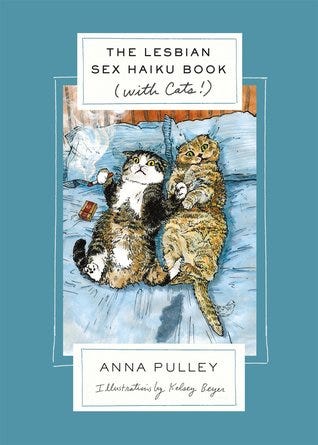
The Lesbian Sex Haiku Book
With cats!
My Medium stories have included a few haiku recently, and I thought I’d best do some proper research on the topic.
Haiku are Japanese poems, said to contain three lines of five, seven, and five syllables respectively.
This is a gross simplification of the poetic form, now many hundreds of years old, and holding an even more ancient tradition in the way it came to be.
A good haiku will contain so much more than a syllable count crammed into its sparse form. It is a sketch of an emotional moment, in much the same way as a classic Japanese brush and ink artwork has no more than a few brushstrokes, but contains a wealth of meaning in its careful composition.
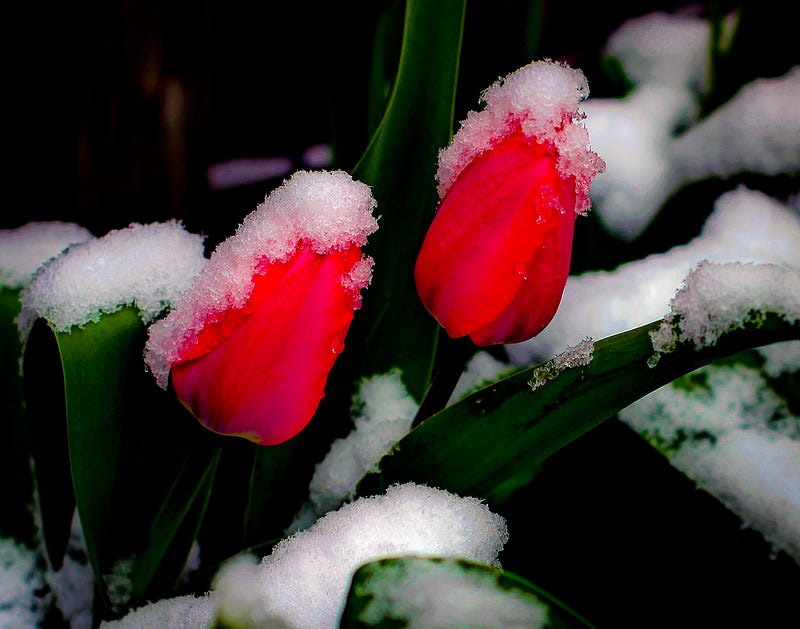
The first soft snow: leaves of the awed jonquil bow low ―Matsuo Basho, loose translation/interpretation by Michael R. Burch
English translations of Japanese words cannot be exact, and for those counting syllables, the original has the correct number.
There are some elements which should be included:
- A note of the season or weather or time of day
- A contrast
- A break in the flow of words to signal the transition
- Some subtlety of humour or emotion to indicate a context
Note how the leaves of the jonquil in the example above bow before the onset of winter. Bowing is a significant ritual in Japanese culture, and haikus are full of references to blades of grass bending, or trees bowed by the wind, and so on.
I cannot help but see the pure beauty of the first snow, and feel the chill.
I downloaded a half-dozen books, searching for the best guide to this ancient artform, but one stood out to my carnal eye:
The Lesbian Sex Haiku Book
Come on! Was there ever a chance I would not dive fair into this one?
Well, classic haiku of Japanese grace and convention it is not, but it certainly tickled my fancy:
How about we stop beating ‘round the bush and start… beating ‘round the bush
— Anna Pulley
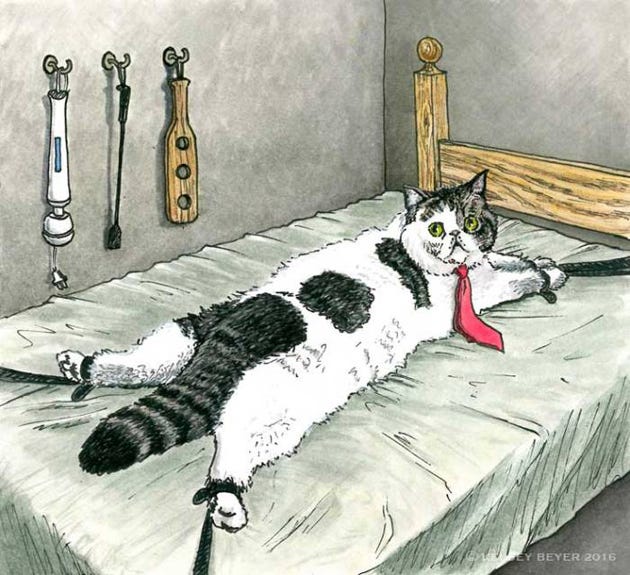
Anna Pulley supplies the words, and Kesley Beyer the images, and together they are a delight.
What you get is a sense of how to be a lesbian — in a particular West Coast fashion — but none of the details.
Except maybe for the awkwardness and hesitancy of dipping one’s toe in the water, and in contrast to the first time there is the comfort and excitement and mastery that comes later.
The cats give the book an escape from what might otherwise be a predictable parade of unclad women entwined, but it is certainly full of pussy.
I really cannot do full justice to this glorious celebration. You’ll just have to read the thing yourself. Don’t expect your local library to have a copy, but.
Britni


