avatarDavid's psych club

Free AI web copilot to create summaries, insights and extended knowledge, download it at here

1450

Abstract

t.</p><figure id="f7c7"><img src="https://cdn-images-1.readmedium.com/v2/resize:fit:800/1*8RB4NvYzAhVGptevROX0Wg.jpeg"><figcaption>The Great Arab Revolt (Wikipedia)</figcaption></figure><p id="0a59">Surprised that initial victories against Ottoman forces had little impact, Ronald Storrs, a senior official in the British colonial administration, decided to meet with Hussein. He was accompanied by Lawrence, then a young officer in British intelligence. When Storrs left, Lawrence remained as a liaison officer with Hussein’s third son, Faisal ibn Hussein.</p><h2 id="e7f1">Objective: Aqaba</h2><p id="0c88">Aqaba was held by the Turks. Located in the Gulf of Aqaba, this stronghold was the only strategic port in the Red Sea. Conquering Aqaba would allow the British to supply the Arabs with weapons and ammunition and reduce the Turks’ ability to threaten access to the Suez Canal. Lawrence wrote: “For months, our minds had only one goal: Aqaba.”</p><figure id="7c45"><img src="https://cdn-images-1.readmedium.com/v2/resize:fit:800/1*_GfuPvgEh-3o_S2Aj59JDA.jpeg"><figcaption>The port of Aqaba, 1917 (Clio Visualizing History)</figcaption></figure><p id="01c6">The British and French navies had already bombarded the port and organized an amphibious operation to try to capture it, but Turkish defenses prevented its capture by sea. The Turks did not imagine that an attack could come from the arid deserts. Supported by the forces of Bedouin lead

Options

er Auda Abu Tayi, Lawrence and Faisal decided to take an inland route, creating a total surprise.</p><p id="5a9f">Faisal, Lawrence, and a small group of men left El Ouedj heading northwest to join Auda and his warriors. Over the next eight weeks, they launched numerous attacks on Ottoman railways and supply lines, while recruiting fighters.</p><figure id="8849"><img src="https://cdn-images-1.readmedium.com/v2/resize:fit:800/1*tnJNNGCmgrgDu4QDFuUUgg.jpeg"><figcaption>The route of Lawrence, Faisal and Auda (Forces Network)</figcaption></figure><h2 id="29ef">A Tactical Provocation</h2><p id="30d6">Their group of 500 men attacked the outposts of Aba and Lissan. Despite being in numerical superiority, the Arabs, surrounding the Ottoman positions, were unable to make progress. Observing this deadlock, Lawrence provoked Auda (a man he deeply respected) by stating that “his men shot a lot but rarely hit their targets.” Auda then led his men in a furious charge that routed the Turkish forces. Now strengthened by 1,000 warriors, the Arabs advanced towards Aqaba: Turkish outposts surrendered one after another. On July 6, 1917, the port of Aqaba fell into the hands of the Arabs, who had lost only two men.</p><figure id="5ca7"><img src="https://cdn-images-1.readmedium.com/v2/resize:fit:800/1*35KgE49YdWC7bRs3RFPeRA.jpeg"><figcaption>Ottoman troops surrendering to Lawrence and Faisal (Osprey Publishing)</figcaption></figure></article></body>

The Legend of Lawrence of Arabia

And the story of how T. E. Lawrence conquered Aqaba in 1917

Date: July 6, 1917 Location: Aqaba, Jordan, then a province of the Ottoman Empire Mission: Expel the Turks from Arab lands

The brief and adventurous life of T. E. Lawrence, who was an archaeologist, officer, British intelligence agent, adventurer, and guerrilla, was extraordinary. Concerned about securing a place in history, he ensured that his role in the Great Arab Revolt became known worldwide. In 1962, the release of the film Lawrence of Arabia added a new shine to his legend.
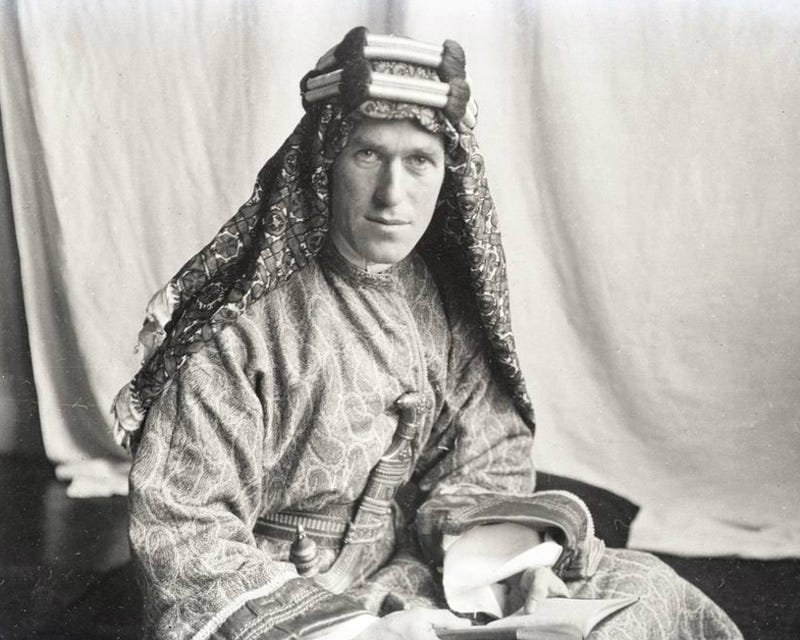
T. E. Lawrence (National Army Museum)

Securing the Support of Arab Tribes

In November 1914, the outbreak of hostilities between Great Britain and the Ottoman Empire (Turkey) drew attention to Egypt, where both exerted their control. In this context, securing the support of Arab tribes was crucial to control the region. Even before the war, Britain had sought to gain the favor of Arab leader Hussein ibn Ali, the Sharif of Mecca and Medina. With the assurance that an Allied victory would mean independence for the Arabs, Hussein agreed to fight the Turks, leading to the Great Arab Revolt.
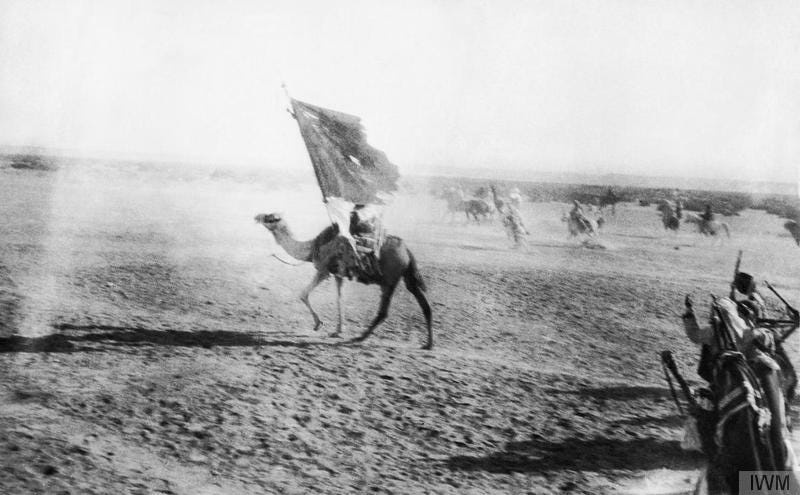
The Great Arab Revolt (Wikipedia)

Surprised that initial victories against Ottoman forces had little impact, Ronald Storrs, a senior official in the British colonial administration, decided to meet with Hussein. He was accompanied by Lawrence, then a young officer in British intelligence. When Storrs left, Lawrence remained as a liaison officer with Hussein’s third son, Faisal ibn Hussein.

Objective: Aqaba

Aqaba was held by the Turks. Located in the Gulf of Aqaba, this stronghold was the only strategic port in the Red Sea. Conquering Aqaba would allow the British to supply the Arabs with weapons and ammunition and reduce the Turks’ ability to threaten access to the Suez Canal. Lawrence wrote: “For months, our minds had only one goal: Aqaba.”
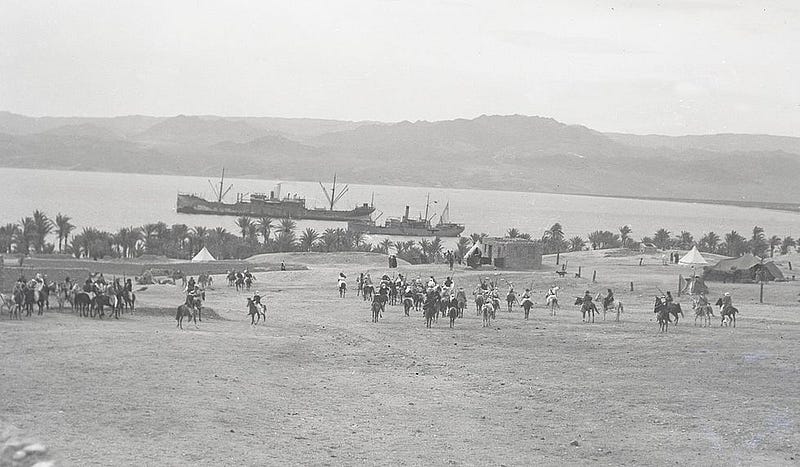
The port of Aqaba, 1917 (Clio Visualizing History)

The British and French navies had already bombarded the port and organized an amphibious operation to try to capture it, but Turkish defenses prevented its capture by sea. The Turks did not imagine that an attack could come from the arid deserts. Supported by the forces of Bedouin leader Auda Abu Tayi, Lawrence and Faisal decided to take an inland route, creating a total surprise.

Faisal, Lawrence, and a small group of men left El Ouedj heading northwest to join Auda and his warriors. Over the next eight weeks, they launched numerous attacks on Ottoman railways and supply lines, while recruiting fighters.
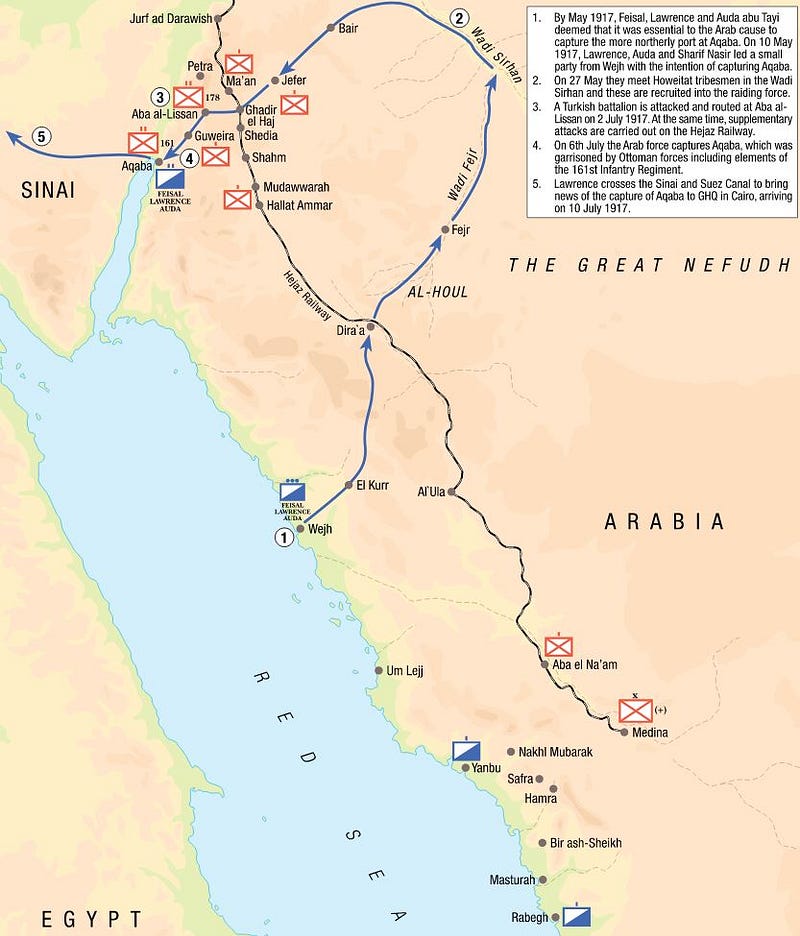
The route of Lawrence, Faisal and Auda (Forces Network)

A Tactical Provocation

Their group of 500 men attacked the outposts of Aba and Lissan. Despite being in numerical superiority, the Arabs, surrounding the Ottoman positions, were unable to make progress. Observing this deadlock, Lawrence provoked Auda (a man he deeply respected) by stating that “his men shot a lot but rarely hit their targets.” Auda then led his men in a furious charge that routed the Turkish forces. Now strengthened by 1,000 warriors, the Arabs advanced towards Aqaba: Turkish outposts surrendered one after another. On July 6, 1917, the port of Aqaba fell into the hands of the Arabs, who had lost only two men.
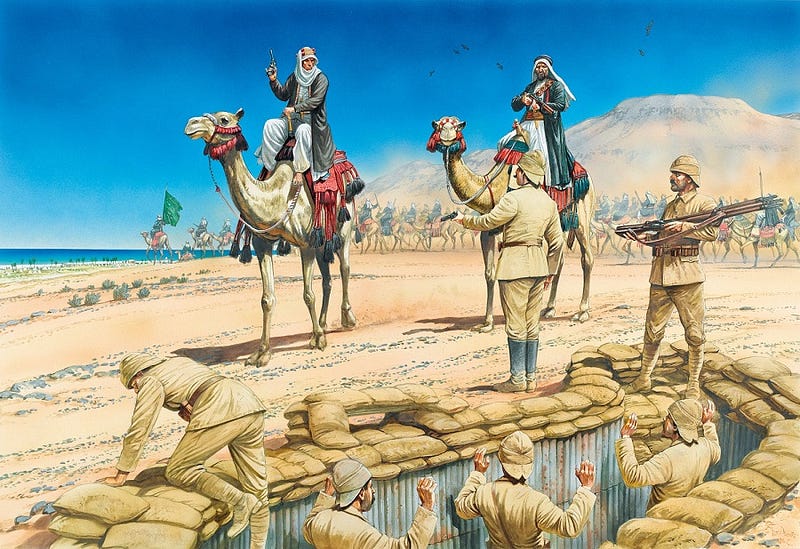
Ottoman troops surrendering to Lawrence and Faisal (Osprey Publishing)
War
History
Middle East
World War I
Recommended from ReadMedium
avatarKairavi Rajput
Why Tax is important?

Image by Google

3 min read