Mythology, Life, Essay
The Legend of Hamsa, the Swan
Separating water from milk
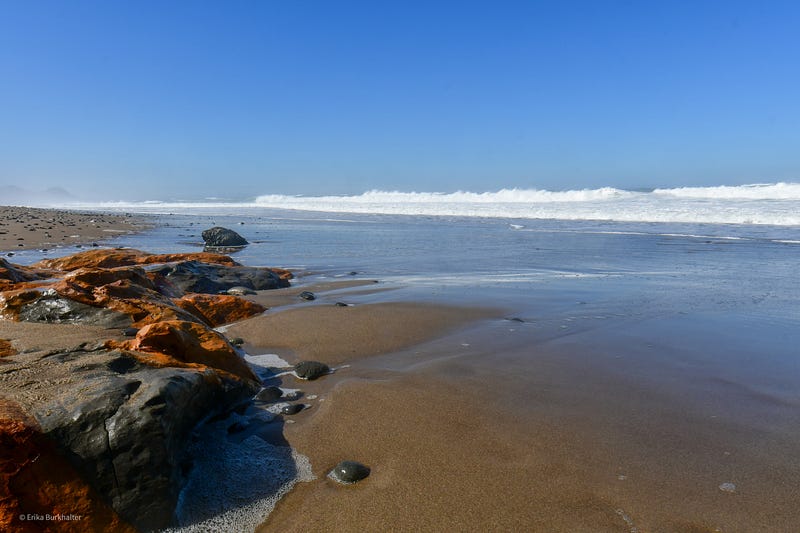
Looking out at the waves, crashing on the beach two hundred feet below me in Depoe Bay, Oregon, I, for the first time, truly had an inkling about the real meaning of the old Indian fable of Hamsa, the mythical swan separating water from milk.
It’s an analogy, this lovely image of a swan extracting pure water from foamy, opaque milk. It is about discerning the difference between our true selves and the self we view through the physical lens of our own realities. It’s about separating truth from illusion.
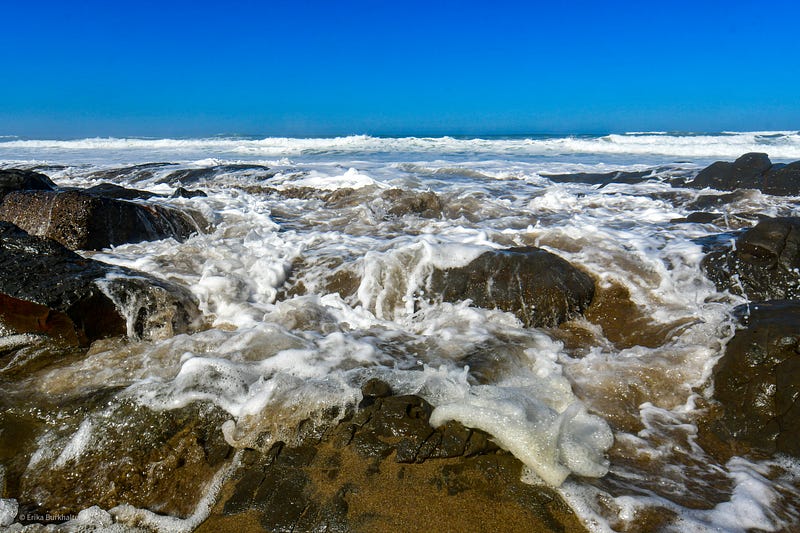
But, looking at the waves that day, I realized that the true illusion is actually that there was ever really a difference between the water and the milk. The trick is that the water and the milk are the same thing — churned a little differently by the sea, but both, nonetheless, made of the same substrate. The foamy, crocheted-like-your-grandmother’s-doily gasps of dissipated waves, look almost like milk, freshly pumped and still steamy.
But those waves, spat forth by the ocean, and to whom they will return, have morphed over time from a crystalline tube of turquoise to the white-lashed curl on the eyelid of a wave to the gopala’s* bucket of milk.
And each form of those waves returns again to the same place — to the depths of the sea, where every molecule disperses into an evenness of being, to a place where the whales sing their songs of the ages, to a place where there is no difference between water and milk.
Mostly, I think that humans, in their quest to understand the true essence of anything in the physical plane, are seeing the wave in one of its ephemeral forms and mistaking it for something of permanence. It’s our nature to seek the truth. But, aren’t all lies a form of truth, and our truth a lie to someone else? It’s all a matter of perception.
Leaning against the railing of the balcony, I watched those foamy fingers of the ocean continually claw at the shore beneath me, churned by the wind and the tides into milky rivulets. After a few moments on land, they repeatedly slid back into the glassy sea. And I found both their momentary individuality and their return to the great waters to be incredibly comforting.
I hope you enjoyed my musings. If so, you might enjoy reading the ancient text, the Upaniṣads, from which I have drawn most of my theories of life.
*A gopola is a maiden who tends to the cows.
Erika Burkhalter is a yogi, neurophilosopher, cat-mom, photographer, and lover of travel and nature, spreading her love and amazement for Mother Earth’s glories, one photo, poem or story at a time. (MS Neuropsychology, MA Yoga Studies). Erika is also an editor for Mindfully Speaking.
Story and photos © Erika Burkhalter 2020. All rights reserved.