
The Legacy of Mr. Vernon Jordan, Civil Rights Leader, D.C Power Broker & Trailblazer
A snap shot into the life and times of Sir and Mr. Vernon Jordan
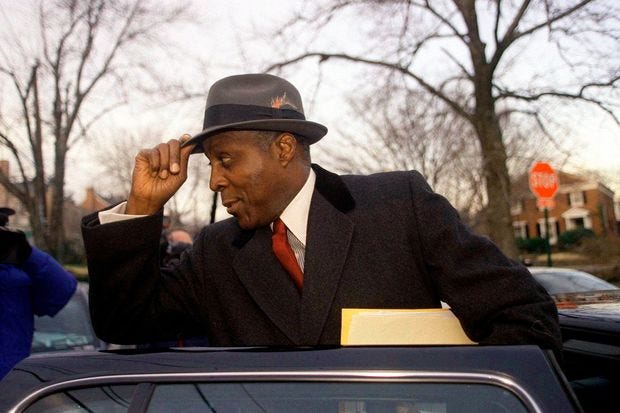
Vernon Eulion Jordan Jr. was born in Atlanta, August 15, 1935, the second son of Vernon and Mary Belle Jordan’s three sons. Being raised in public housing, he gained access to Atlanta’s elite through his mother who worked as a caterer for Atlanta’s affluent citizens. He attended DePauw University in Indiana, the only black student in his class and one of five who attend the college became distinguished via his academics, oratory and athletics. After graduation, attended Howard University School of Law in Washington where he earned his law degree and later became a clerk for civil rights attorney Donald Hollowell, a successful attorney who represented two Black students, Hamilton Homes and Charlayne Hunter who attempted to integrate the University of Georgia, in Atlanta.
In 1961, Jordan became Georgia field secretary for the National Association for the Advancement of Colored People. During his two year tenure, he built new chapters, coordinated demonstrations, and boycotted businesses that refused to hire African American.
1964, he moved to Arkansas and started his private practice and was the director of the Voter Education Project of the Southern Regional Council that assisted in registering millions of new Black voters and hundreds were elected in the South.
Mr. Jordan roots or humbled beginning started in the segregated South thereby springing him into action in becoming one of the renown civil rights activists as he became known, an insider in Washington D.C. and a corporate influencer.
His impressive resume consisted of being a field secretary for the Georgia NAACP, executive directors of the United Negro College Fund, fifth president of the National Urban League, the face of Black America’s employment and justice fight, a friendship with Bill Clinton that took him to the White House as an unofficial Clinton aide, Clinton’s key campaign advisor during Clinton’s first presidential campaign and co-chaired Clinton’s transition team, was the first African American to filled this post. Also, he was the first lawyer to head the Urban League, whose leaders were traditionally social workers. Under his tutelage, the Urban League added 17 more chapters and its budget swelled to more than $100 million and broaden their view to be inclusive of more political and social issues, e.g. voter registration and conflict resolution. Prominence gained as he headed the United Negro College Fund where he helped to raise ten million for BCUs with his fundraising skills; a senior partner with Lazard Freres & Co, and awarded the Spingarn Medal by the NAACP, the highest honor given to a Black American for outstanding achievement.
Notably, as president of the National Urban League, he empowered Black people to enter the economic an social mainstream. His success angered a white racist, Joseph Paul Franklin, who was never prosecuted, shot him outside of his hotel after concluding a speaking engagement. After five surgeries, he vowed not to quite the fight of inequality and injustice. In 2013, Joseph Paul Franklin was put to death for another slaying in Missouri.
Growing up and living most of his life in the segregated Jim Crow South became the catalyst for him having a sharp eye of race issues and relations. He strove not to be angry about race but to get even with the system.
Many referred to him as larger than life, highly influential, a wise counselor, a patriot and a generous citizen. He approached Colin Powell to be the secretary of State, encouraged the passage of the NAFTA agreement in 1993. He always endeavored for change and empowerment for all. His credentials spoke for his reputation back in the day and today speaks even louder as he leaves a legacy for many to champion and follow. RIP Champ, Vernon Jordan, 1935–2021!
For additional reads:


