The Enduring Legacy of “Modern Family”
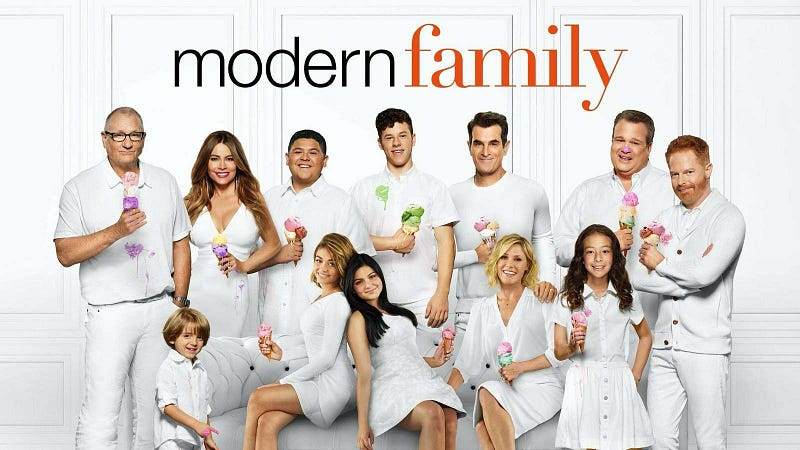
After 11 seasons and 250 episodes, the beloved, groundbreaking, and 22-time Emmy winning series came to an end with a chaotic and bittersweet finale on Wednesday. The show’s critical and commercial peak may have passed a few years back, but the astonishing legacy of the show remains intact.
[Author’s Note: The following article contains spoilers regarding the final season and series finale of Modern Family. If you have yet to watch it and intend to, I recommend that you bookmark this article and return to it once you are done watching.]
The Heyday of Modern Family
Modern Family was an out-of-the-box critical and commercial hit when it premiered on September 23, 2009. It performed strongly in the ratings, commanded the attention of critics, and generated big buzz among industry insiders and the viewing public. I still remember watching the show’s first few episodes as they premiered and being astounded by how a show could balance the heartwarming, character-driven humor of traditional multi-camera family sitcoms like The Cosby Show and Family Ties with the madcap energy and densely packed scripts full of rapid-fire one-liners that characterized modern cult hits like Arrested Development and 30 Rock. It was a remarkably tricky balance that arguably no show had ever struck as successfully.
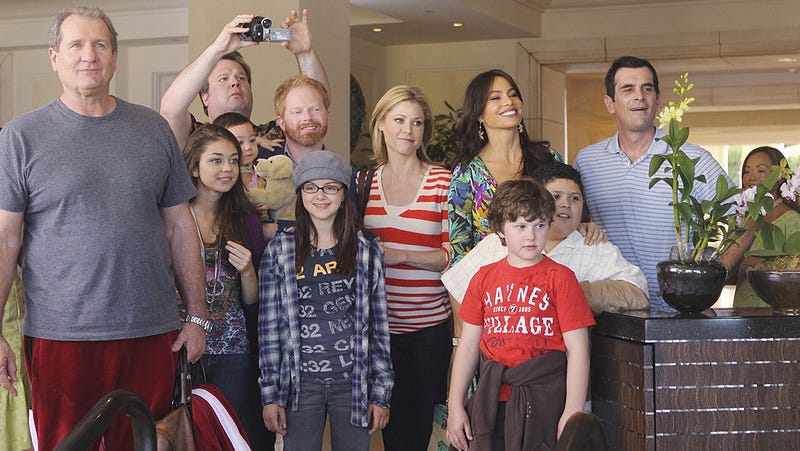
The show’s setup was fairly straightforward. It was a documentary-style comedy following a large Los Angeles-based family that mixed traditional and non-traditional elements. At the center was Jay Pritchett (Ed O’Neill, who was by far the most famous of the cast at the time of the pilot thanks to an iconic 11 year run as Al Bundy on Married…with Children), the divorced owner of a successful closet company, and his adult children Claire (Julie Bowen) and Mitch (Jesse Tyler Ferguson). Jay had recently remarried to a much, much younger woman, a sexy Colombian spitfire named Gloria (Sofia Vergara). She came along with a precocious son Manny (Rico Rodriguez) who was wise beyond his years. Claire was an uptight and fiercely competent stay-at-home mom married to Phil (Ty Burrell), a fun-loving real estate agent and part time magician. They had three kids, rebellious cool girl Haley (Sarah Hyland), nerdy introvert Alex (Ariel Winter), and adorable trouble maker Luke (Nolan Gould). Mitch was an uptight attorney married to husky country boy Cameron (Eric Stonestreet). The couple had just adopted a baby girl named Lily. The episodes followed the wacky adventures and complex interpersonal relationships of this large family.
By the end of its first season, the show had already produced a handful of classic episodes like its pilot (the award-winning setup of the series), “The Incident” (which introduced Cheers veteran Shelley Long as Mitchell and Claire’s mother, DeeDee), “Fizbo” (where we got our first glimpse of Cam’s alter ego), and “Hawaii” (its first of several episodes shot entirely on location). The first season was awarded a total of 6 Emmys from 14 nominations, including big wins for Outstanding Comedy Series, Outstanding Supporting Actor for Stonestreet, and Outstanding Writing for its incomparable pilot episode. The show went into its second season on top and scored a significant ratings boost.
The series was a smash success for several years. It won the top Emmy for Outstanding Comedy Series five consecutive times for its first five seasons (a total only matched by Frasier). It ranked as one of the top 20 most watched shows on television from its third through sixth seasons (and ranked even higher if you looked at the advertiser-desired 18–49 year old demographics or factored in delayed viewing via DVR). It had people talking. Famously, its broad appeal was underscored by both Barack Obama and Mitt Romney named it the favorite show of their respective families during the 2012 presidential campaign. And seasons two through five produced an astonishing number of additional classic episodes, including “Caught in the Act,” “Halloween,” “Mother’s Day,” “Under Pressure,” “Arrested,” “Aunt Mommy, “Door to Door,” “The Wedding,” “The Day We Almost Died,” and “Vegas.”
Modern Family’s Later Years
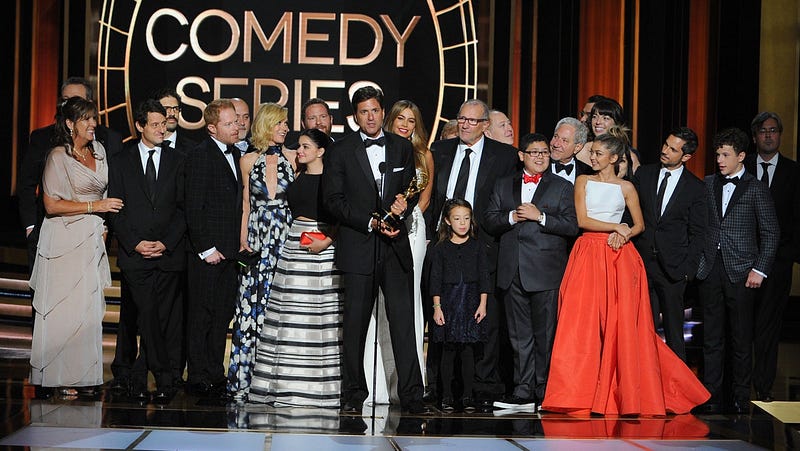
Many audibly grumbled when Modern Family took home its 5th consecutive Emmy for Outstanding Comedy Series in 2014. Social media and entertainment news outlets were filled with snarky commentary about how Emmy voters had gotten lazy. This was when the industry sentiment began to turn against Modern Family. People began to label it as “tired,” “stale,” and “irrelevant.” Regardless, it maintained much of its loyal viewer base and was actually still consistently brilliant for a few more seasons, churning out some truly terrific episodes like “The Cold,” “Connection Lost,” “White Christmas,” “The Party, “A Stereotypical Day,” “The Alliance,” and “Do You Believe in Magic?”.
Even when the show did decline a bit more in it final three seasons, however, it still produced some gems. It just became more uneven. There was an increase in the number of episodes that felt like filler with uninspired or retreaded storylines and little emotional resonance. There was also an increase in episodes that felt like attention-grabbing stunts with gimmicks like broad slapstick, on-location shoots, and the shoehorning in of A-list guest stars. And, most problematically, the characters too often were reduced to their one-dimensional stereotype. Jay is old and cranky! Gloria is hotheaded! Claire and Mitchell are uptight! Cam is flamboyant! Phil is goofy! There were too many episodes where they seemed to be on autopilot, even though the screenplays typically remained quite energetic and ambitious.
Despite the decline, I stuck with Modern Family until the end for two reasons. First, I am deeply invested in these characters. Watching them grow and evolve weekly for more than a decade was not something I was ready to abandon lightly. Second, and more importantly, the show still had flashes of brilliance up until the very end. Despite their overall unevenness, the final three seasons included masterful episodes like “He Said, She Shed,” “Written in the Stars,” “Mother,” “Kiss and Tell,” “Good Grief,” “Kids These Days,” “Can’t Elope,” “Perfect Pairs,” and “Last Christmas.” It also delved into several new narrative and thematic territories, with Claire and Gloria transitioning back into the working world, Haley’s unexpected pregnancy, Alex’s struggle at college, the death of Mitch and Cam’s mom and Phil’s dad, and Mitch and Cam running an AirBnB.
The show may have been less consistently brilliant in its final seasons, but even its weakest season was far above the average network television sitcom.
A Review of the Modern Family Series Finale
The timing of the Modern Family series finale was somewhat cruel for two reasons. First, it came amidst the coronavirus pandemic. This is a time when we need comfort not more loss and sadness. Second, it aired exactly 24 hours after the series finale of Schitt’s Creek, another long-running show I was deeply invested in. Nevertheless, I tuned in live to the two-part finale and the one-hour retrospective documentary that preceded it.
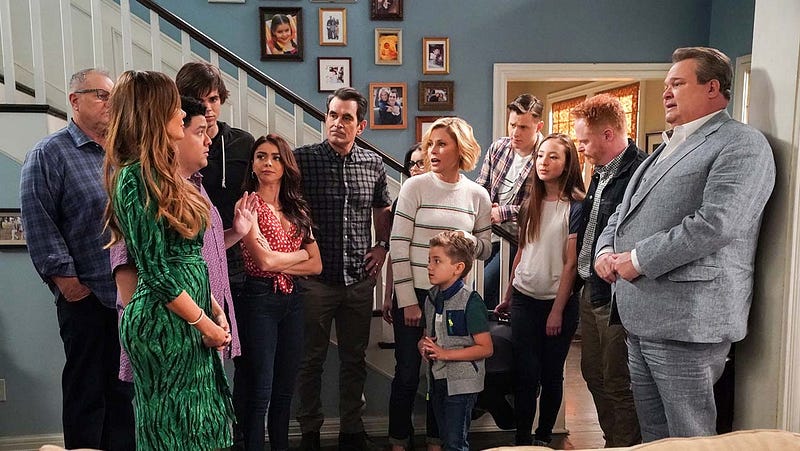
The documentary, A Modern Farewell, did a great job of reminding me what an astonishing legacy the show had. It chronicled the grueling process of auditioning literally thousands of people for the ten central roles, the reaction of the cast and crew to the initial breakout success, what it was like to literally grow up on set for the show’s younger actors, the watershed portrayal of same-sex relationships (more on that later), and the cast and crew’s difficulty letting go of the show and each other.
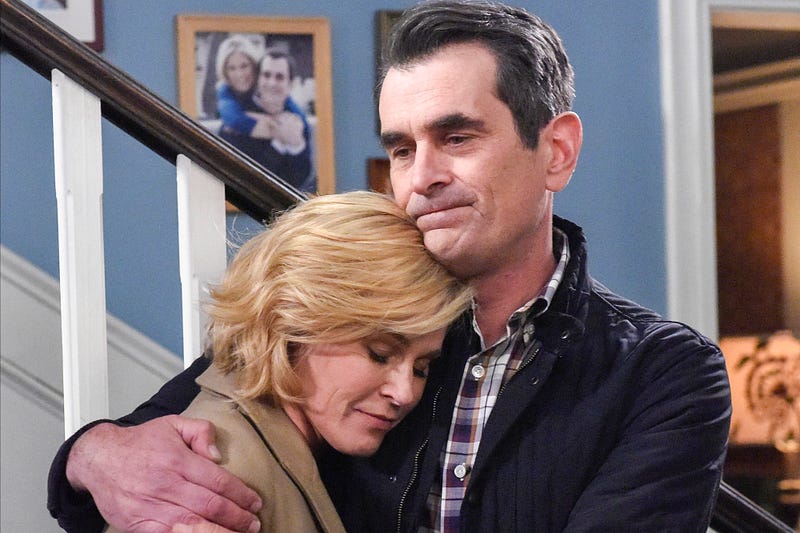
The two-part series finale will not join the ranks of the truly great series finales like The Mary Tyler Moore Show, The Golden Girls, Friends, and The Good Place. But it will decidedly not join the massive disappointments of the Seinfeld, Roseanne, and (original) Will & Grace series finales. It was a rock solid affair that hit all the notes it needed to — no more, no less. It essentially centered on two main plot lines. In the first, Cam and Mitch have moved into their new home and brought home the new baby they have adopted only to find out that Cam got his dream job in Missouri. Mitch selflessly (but anxiously) agrees to give up their life in LA and go on an adventure. In the second plot line, Phil and Claire lay down the law and tell their three free-loading kids that it’s time to move out. But when the kids take them seriously and move on with their lives, they are devastated.
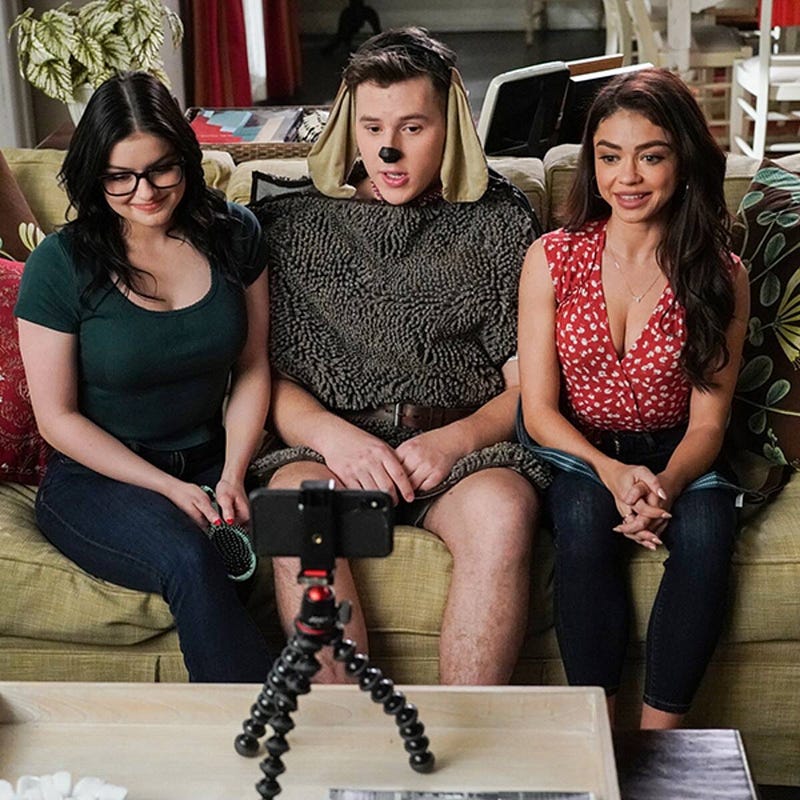
The finale feels chaotic and exhausting at times in large part because it attempts to provide closure to every relationship on the show. It not only gives us beautiful moments between Jay/Gloria, Mitch/Cam, and Claire/Phil, but also between Mitch/Claire, Gloria/Manny, and the Dunphy children. (It also features a bizarrely cold interaction between Gloria/Cam that marked the low point of the finale for me.) On paper, it ended just as it should. Jay and Mitch have decided to sacrifice for their partners. Claire and Phil adjust to being empty nesters by going on an adventure. All four of the kids are ready to finally grow up (and, in a beautiful touch, Haley and her family move into Mitch and Cam’s recently vacated home). In execution, however, it was a bit unevenly paced, peaking a bit too early in the hour and not quite knocking all of the key emotional moments out of the park.
But, these minor quibbles aside, it really did hit all the right notes. It invoked laughs, tears, and nostalgia and managed to give each member of the gigantic ensemble at least one special moment. And the final image of the lights going off at each of their homes, with Phil and Claire turning the porch light on in case any of the children needed to come back home was both hopeful and heartbreaking.
The Enduring Legacy of Modern Family
Regardless of your take on Modern Family — either the quality of its later years or even its merit as a television comedy from the get-go — it’s nearly impossible to deny the show’s impact. Some have speculated that in this era of niche programming and proliferating options, it may be the last comedy that truly unites people of starkly different backgrounds and becomes a widespread cultural phenomenon. They may be right.
Some, like me, have also taken some time to truly process what it meant to have a mainstream, widely adored series that depicted a domestic gay couple. Mitch and Cam were not chiseled and stereotypically gorgeous. They weren’t promiscuous or drug users. They were focused on their careers and families. They got married and raised a child (two by the end of the series). They loved their pop culture references, karaoke moments, gossipy friends, and snarky retorts, but in many ways they were just two members of a modern family that just happened to both be two men as opposed to a man and a woman. That shouldn’t have been revolutionary in 2009, but it was. And to many people, it still is.
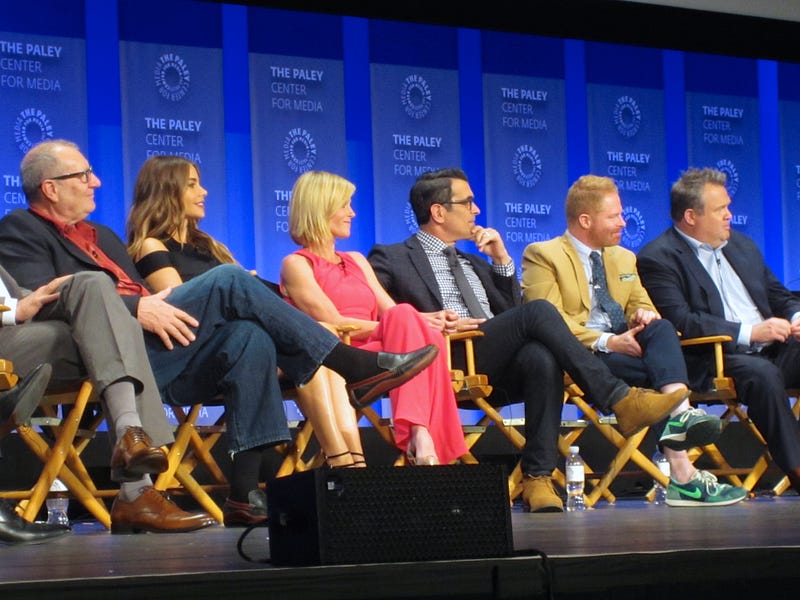
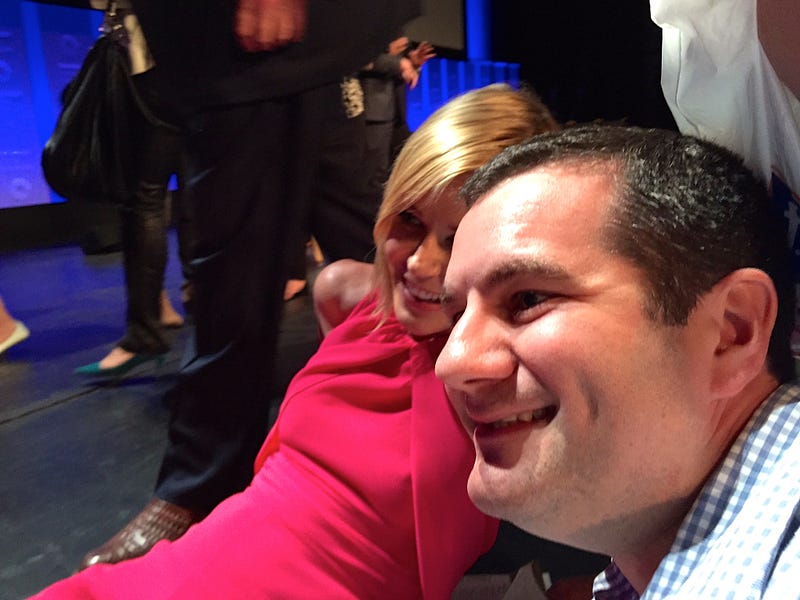
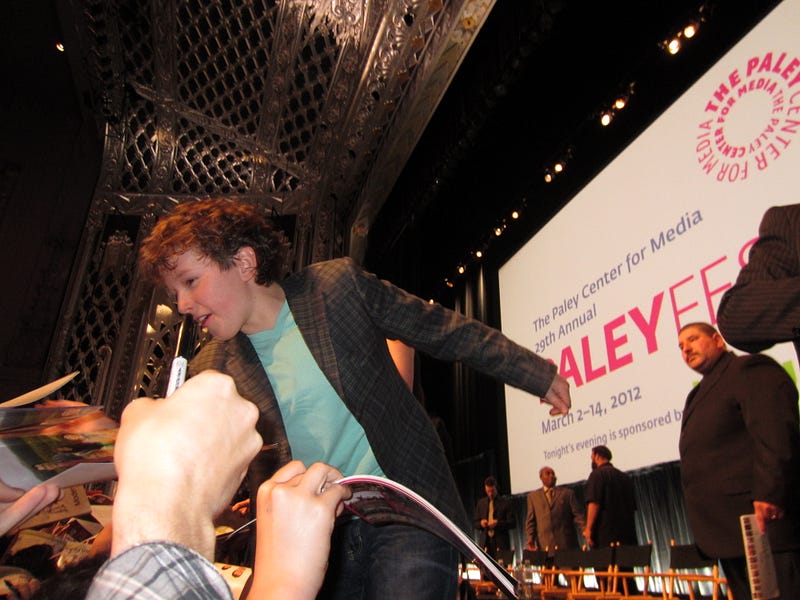
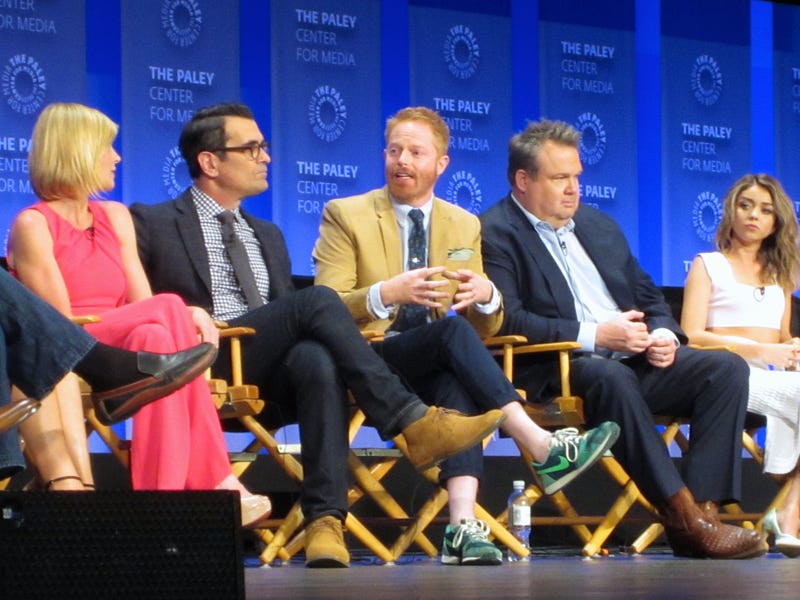
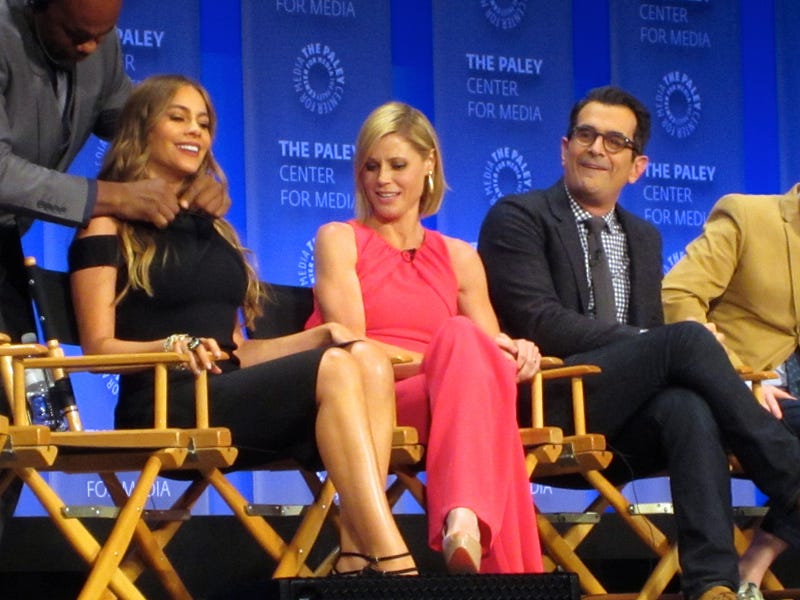
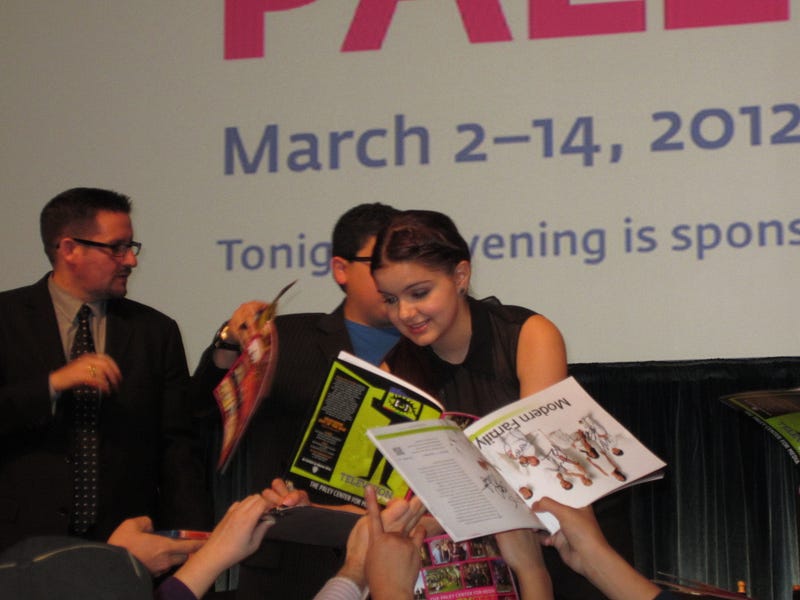
On a personal note, in both 2012 and 2015 I had the opportunity to see the cast of Modern Family in person at PaleyFest, the annual celebration of television that occurs every year in March. Put on by the Paley Center for Media, the two-week festival allows fans to get “up close and personal” with the casts of their favorite television series. They screen an episode, do a Q&A, and then interact with the audience. Both times were spectacular. I was blown away by the chemistry among the cast and had lovely meet and greet opportunities with Julie Bowen, Jesse Tyler Ferguson, and Ariel Winter. They could not have been more charming, gracious, or kind.
I was supposed to go see them at PaleyFest one last time this year to celebrate the series finale, but that was postponed indefinitely due to the coronavirus. Although it’s highly likely they will just cancel given that by the time this quarantine is lifted the show will have long since ended its run. But I hope they follow through and do it. After all, even if the quarantine lasted another decade, fans like me would still fondly remember Modern Family.
Follow the author on Medium and Twitter
Check out other articles by this author about classic TV comedies: