
The legacy of Ben Ferencz
TL;DR: May his memory be a blessing
We lost a pint-sized, yet towering figure in human rights on April 8, 2023.
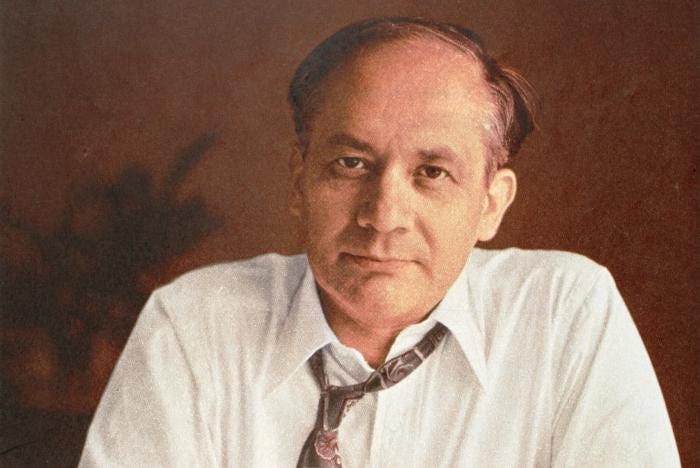
Benjamin Ferencz was the last living prosecutor to bring Nazi leaders to justice at Nuremberg after World War II. He also single-handedly led the biggest murder trial in human history when he was only twenty-seven. The prosecution of twenty-four Einsatzgruppen officers exposed their ghastly work in Eastern Europe: the cold-blooded murder of more than a million people during the war.
What happened after he won was just as important. Ferencz’s enduring legacy is his advocacy for peace and justice, including through his support for the International Criminal Court.
Ferencz is one of the 20 human rights heroes I profile in my book, Righting Wrongs.
“It’s the war itself which corrupts the people whatever, whatever the nationality is. The process of war-making turns people into murderers and they think they’re heroes the more they murder.”
When he was a child, Ferencz’s Jewish family immigrated to New York City from Hungary to escape persecution. His father was a shoemaker and his mother sold street food. As a boy, Ferencz delivered newspapers and worked for a Chinese-owned laundry to help his family.
Ferencz was a good student and attended the City College of New York, then Harvard University, earning a law degree. By then, the United States had joined Britain and France to fight World War II. Ferencz wanted to enlist as a pilot, but he was too short. “I couldn’t reach the pedals,” he later joked. Instead, the U. S. Army assigned him to an anti-aircraft artillery unit.
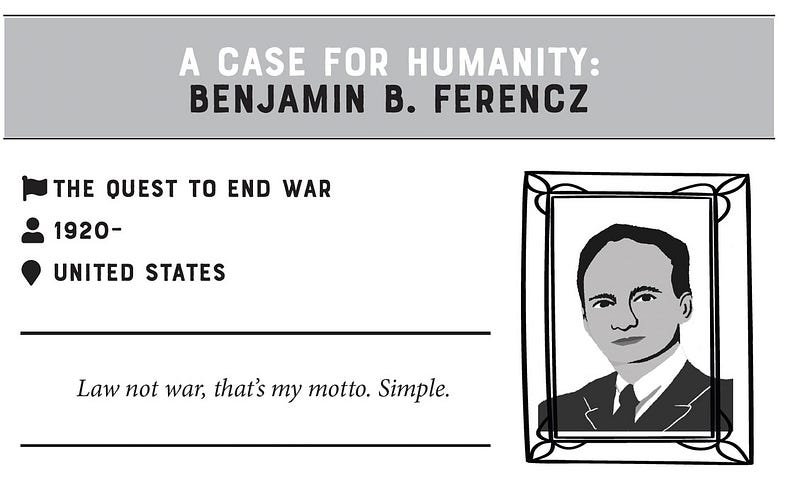
He’d studied war crime law so eagerly accepted a transfer to a unit that investigated German killings of captured Allied soldiers. Every time Ferencz’s unit heard about new cases, he would race out to conduct interviews with witnesses, collect documents, and sometimes even dig up grave sites to identify bodies.
But it wasn’t until the Allies neared the German capital, Berlin, that Ferencz began thinking about how the Nazis treated Jews. Ferencz came across dozens of forced labor camps. From 1933 to 1939, Nazis sent political opponents to camps for supposed “re-education.” Some were released, but many were worked to death or killed. Starting in 1939, the Nazis permanently imprisoned supposed “enemies”: Polish intellectuals, Soviets, Roma, gays, the disabled, and especially Jews. They executed hundreds of thousands. Hundreds of thousands more died of exposure, disease, and starvation. The Nazis dedicated six of these camps to mass murdering Jews exclusively.
“That people could subject other people to that kind of treatment is something I will never recover from,” Ferencz told one interviewer. By the time the Germans surrendered in 1945, they’d killed over ten million people, including at least six million Jews.
Ferencz started securing records of mass murder. At one camp, a former prisoner eagerly greeted Ferencz and told him he’d risked his life to preserve documents with the names of dozens of Nazi officers who’d been assigned to the camp, essential for future prosecution.
When the war ended, Ferencz rushed home to marry his long-time love, Gertrude. But he was quickly invited back by the International Military Tribunal set up by the Allies — Great Britain, France, the Soviet Union, and the United States — at the German city of Nuremberg. Their aim was to prosecute German political, military, legal, and medical leaders for war crimes and crimes against humanity (see the definitions at the end).
A war crimes tribunal of this size was unprecedented. Ferencz hoped the trials would demonstrate to the world that German Chancellor Adolf Hitler and his top aides didn’t act alone and were supported by most Germans. In Ferencz’s view, these trials were “the biggest advance in international criminal law that had ever been taken to that time.”
Ferencz was the youngest prosecutor and one of the only Jews. In all, the Allies conducted thirteen trials of Nazi officials, medical professionals, industrialists, and judges, resulting in 161 convictions. Later, German courts convicted hundreds more.
Ferencz and his team scoured German archives for evidence. Beneath one simple cottage, they discovered an underground cavern with ten million Nazi party files with the names of anyone who’d ever joined. In these innocent-seeming reports, Ferencz and his team uncovered a shocking story. The Nazis had deployed Einsatzgruppen, or “special units,” to massacre civilians in Eastern Europe. Special units also searched out Jews and encouraged others to attack them, drawing on the history of antisemitism in each country.
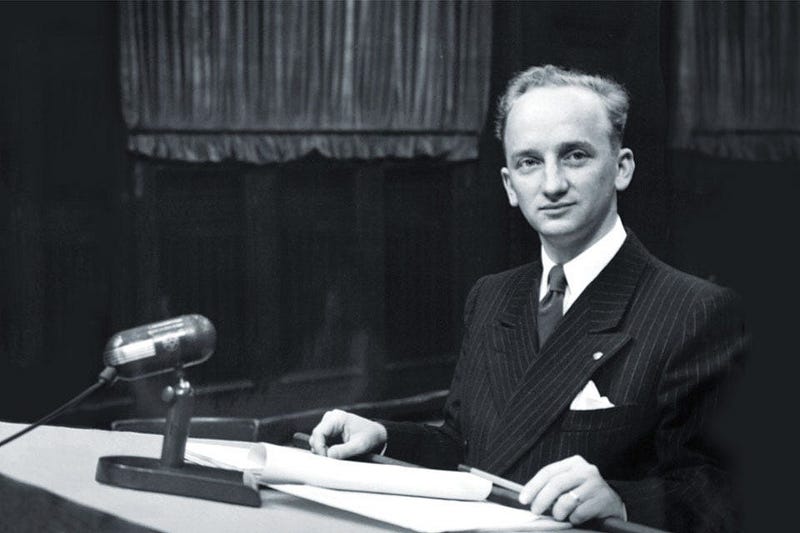
With an adding machine, Ferencz began to total up the official death count. “When I reached a million, I said that’s enough for me.”
Ferencz called the evidence “a chronological listing of mass murder.”
Ferencz used every argument he could to convince his commanders to let him prosecute the special unit commanders even though he’d never prosecuted a case before. So long as he argued the case alone while continuing his other work, they told him, he had their permission.
There were as many as 3,000 special unit soldiers, a logistical nightmare for any trial. Many were still at large. The courtroom only had room for twenty-four defendants. Ferencz chose to prosecute only twenty-four of the most senior and best-educated officers — men who were also alive and captured.
Of those men, one committed suicide before the trial and another was too ill to stand trial. That left twenty-two defendants.
The trial began on September 15, 1947. Ferencz didn’t call a single witness. He wanted the accused to implicate themselves through their own written accounts and official records. His evidence was sickening and overwhelming. One defendant directed a unit that killed 33,771 Jews in Babi Yar, near the Russian city of Kyiv, in 1941. Soldiers shot men, women, and children.
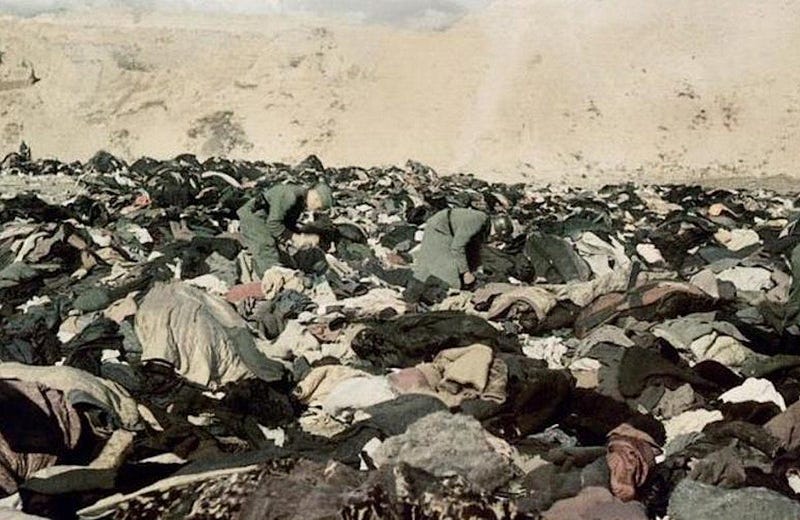
The Court convicted all twenty-two defendants.
Among them was General Otto Ohlendorf. Ferencz proved that Ohlendorf had ordered an estimated 90,000 murders as the commander of Special Unit D. After the judge sentenced Ohlendorf to death, Ferencz visited him in his cell, hoping to hear an expression of remorse. Like Ferencz, Ohlendorf was a lawyer and a father.
But Ohlendorf believed he’d acted under legal orders and “tried to justify what he did,” Ferencz remembered. Ohlendorf was executed along with seven other defendants. The rest served prison terms.
After the Special Units trial, Ferencz dedicated himself to recovering the belongings of Jewish communities stolen by the Nazis, including works of art, religious objects, and hundreds of sacred Torah scrolls. He also helped negotiate restitution from the German government to the new state of Israel, founded in 1948, where many Jewish survivors settled after the war.
When he talked about his experiences, Ferencz often broke into tears from the trauma. But that trauma also gave him purpose. All wars have atrocities, Ferencz had learned. Therefore, he decided, it wasn’t enough just to have trials after the wars end. He dedicated the rest of his life to ending and preventing all wars.
“That was my main pitch of my Nuremberg Trial,” Ferencz later said, “that humankind has a right to be protected from this kind of slaughter and abuse simply because of your race or religion.”
He supported the creation of the International Criminal Court (ICC). He argued fiercely to make aggression, or starting war, a crime. To honor his work, the ICC asked Ferencz to deliver the prosecutor’s closing statement for its first trial, of Thomas Lubanga, a rebel leader from the Democratic Republic of Congo. Lubanga founded and led the Union of Congolese Patriots, which committed massacres, murder, torture, rape, mutilation, and the forced recruitment of children between 1999 to 2007. The Court found Lubanga guilty of war crimes and sentenced him to fourteen years imprisonment, completed in 2020.
As Ferencz later wrote, during World War II, “I witnessed incredible inhumanity. I peered into the eyes of remorseless murderers — many of them men of education and intelligence. How does one cope with the complete absence of shame or regret on the part of mass killers who remain convinced that they were part of a master race and that what they did was necessary and right?”
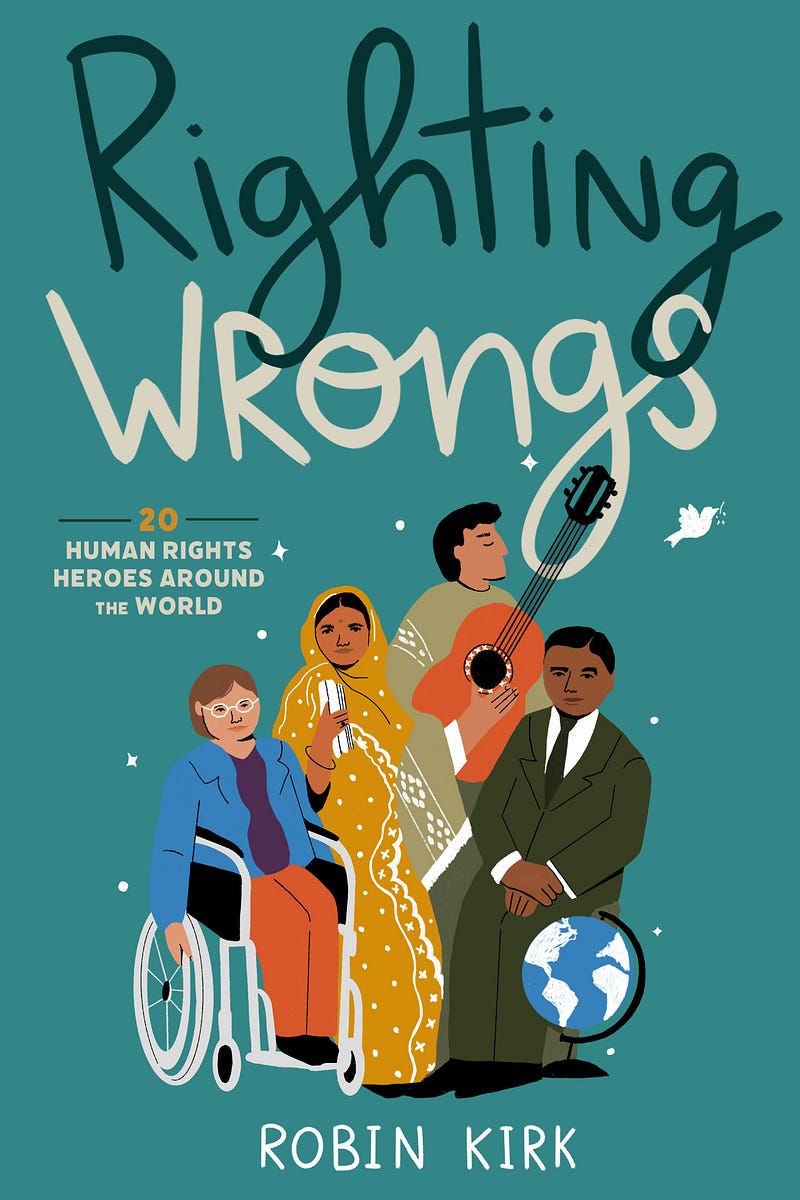
Ferencz is one of the 20 human rights heroes I profile in Righting Wrongs
The answer, he believed, was a determined and collective campaign to right wrongs no matter where they occurred. We ended slavery, Ferencz once pointed out. We established women’s rights and tried war crimes at Nuremberg. Why not dream big to end war? “The world is filled with human suffering,” he wrote, “but it is also blessed by very many people who are determined to make it a better place for all and whose individual efforts made a difference.”
WHAT ARE WAR CRIMES?
“War crimes,” “Crimes against humanity,” and “Crimes of aggression” are legal terms developed by the Allies and applied at Nuremberg. These crimes now include a new category: genocide.
These definitions have a long history. American journalist George Washington Williams coined the term “Crimes against Humanity” to describe atrocities he documented in the Belgian Congo, which included mass killings and mutilations of native peoples forced to extract rubber for European companies.
“War crimes” are specific to times of war and mean attacks by armies on civilians or civilian locations, like hospitals and museums. The Allies also prosecuted war crimes committed by Japanese army officers during World War II.
Polish academic and lawyer Rafael Lemkin coined the term “genocide,” the destruction of a people based on their ethnicity, national origin, race, or religious group. The word combines the Greek word genos, race or people, with the Latin suffix -caedo, the act of killing.
Lemkin drafted what became the 1948 Convention on the Prevention and Punishment of the Crime of Genocide, the first human rights treaty of the modern era (and older by one day than the Universal Declaration of Human Rights).