The Leftover Man.
I’m an unapologetic turkey carcass saver from way back.
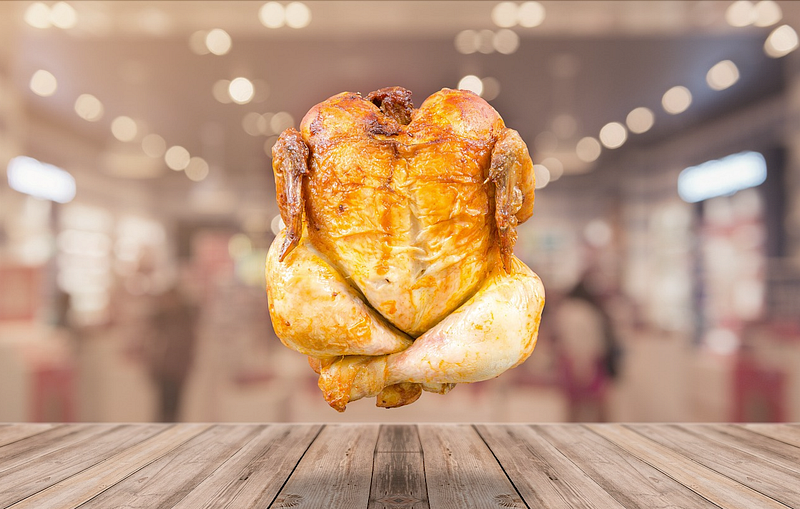
“Tell me what you eat, and I’ll tell you who you are.” Jean Anthelme Brillat-Savarin
I normally hate polls, possibly more than I hate pollsters, but the other week they said something I liked. This concerned a report on food prices here in Canada. Most respondents were clearly unhappy, something the Conservative party is jumping on like bats around fermented plums.
If you’ve ever seen drunken bats, it’s like watching Conservative leader, Pierre Poilievre, in the House of Commons.
Just before the long weekend, he claimed a Thanksgiving bird today can run upwards of $120, whereas, during the last year of Harper’s administration (2015), turkeys went for $1.29 a pound. “And those were plump birds,” he noted in a tweet later. “Not those skimpy and scrawny things we see in grocery stores today.”
Even Conservative loyalists admitted uncooked birds ran around sixty dollars.
Well, I’m sure he wants us to believe Trudeau keeps turkeys thin with diet pills. At the same time, Poilievre does like to run fast and loose with facts. The $120 example he gave was a Longo’s cooked bird with trimmings. Even Conservative loyalists admitted uncooked birds ran around sixty dollars.
Anyway, that’s not the part of the polls I’m talking about here. Aside from the general discord about food prices, one interesting statistic caught my eye. It reported that 79 percent of respondents said they’re reducing food waste.
Since we’re talking about Thanksgiving here, I figured I should admit something I’ve kept up my sleeve for many years now: I’m a leftover man.
For all the times I’ve attended Thanksgiving dinners, I’ve always left with the turkey carcass. After years of this, hosts don’t even ask if I want the carcass anymore. They just hand me the remains, along with what’s left of the stuffing, rolls, vegetables, roasted potatoes, and cranberry sauce.
It’s also a bit of a drunken exercise since the hosts usually send me home with half bottles of wine.
I don’t look upon this as a free meal. What I see — as a true leftover man — are countless options, including a variety of soups and casseroles. It’s also a bit of a drunken exercise since the hosts usually send me home with half bottles of wine.
Making leftover dishes isn’t the sort of thing you do completely sober, and once you’ve had a drink or two, there’s no end of what you can do with mixed ingredients. One time, I tossed some leftover baked squash and turkey into soup pot with a broth, making what I think was an etouffee. Maybe it was gumbo — who knows — I was drunk at the time.
My point is, I hate the notion of food going to waste. In fact, food has to be severely rotten before I give up on it entirely. This also touches on something regularly overlooked when we talk about high food prices.
Did you know we’re one of the most wasteful countries on the planet? According to a recent Canadian Food Waste report, we create over 50 million tons of food waste a year, 60 percent of which could be avoided through better planning and awareness. In fact, it could feed entire sub-Saharan countries.
What I am saying is, if we all realized how much money we’re throwing away, we might put a little more thought into what we throw away in the first place.
I’m not saying all this food waste could be turned into soup or etouffee. What I am saying is, if we all realized how much money we’re throwing away, we might put a little more thought into what we throw away in the first place.
It’s like the whole issue with the carbon tax right now. Poilievre keeps telling us it’s killing our industries. Farmers can’t cope, truckers are going broke, consumers can’t afford to fill their tanks and their grocery carts, too.
Yet, go outside the city — like the town where I live — and everyone’s driving big pickup trucks and SUVs. Sometimes these vehicles are necessary for work. Other times, it’s just what people want to own. They’ll complain about food prices and carbon taxes, then fill their gas tanks every two days (at around $150).
Carbon taxes, according to the Bank of Canada, account for about .15 percent of inflation, meaning Poilievre is, again, talking through his proverbial and somewhat wrinkled hat.
Every country in the world is suffering similar problems, just like every country has supply issues and weather issues, including droughts, floods and hurricanes.
Sure, we have price gouging and rampant inflation. Every country in the world is suffering similar problems, just like every country has supply issues and weather issues, including droughts, floods and hurricanes.
That won’t change with promises like the ones Poilievre is making right now. We can’t change weather, and inflation only comes down when spending does.
What we can do in the meantime is stop being so wasteful. As I mentioned earlier, it’s good to see so many people — especially millennials — reducing what they throw out. If the numbers are correct, saving just a quarter of food lost or wasted globally could feed 870 million people.
Okay, those are big numbers. I’m sure you’re asking how this benefits you personally. It might not at first, but it will eventually. Here’s how: In the week following one Thanksgiving, I turned leftovers into three dishes and saved seventy dollars on my usual grocery bill.
If politicians like Poilievre can show similar savings by eliminating the carbon tax, vote him in at the next election.
Now, sure, I realize the food was given to me, but I’ve done the same thing with my own leftovers with similar savings. If politicians like Poilievre can show true savings by eliminating the carbon tax, vote him in at the next election.
It won’t change anything. Simple panaceas don’t work in the long run.
I’ll stick with leftovers and my soup pot.
Let’s see who comes out ahead.