
The Least Racist Place I’ve Ever Been Was a Poker Game in New Jersey
How reconsidering what makes us American could help bring us together.
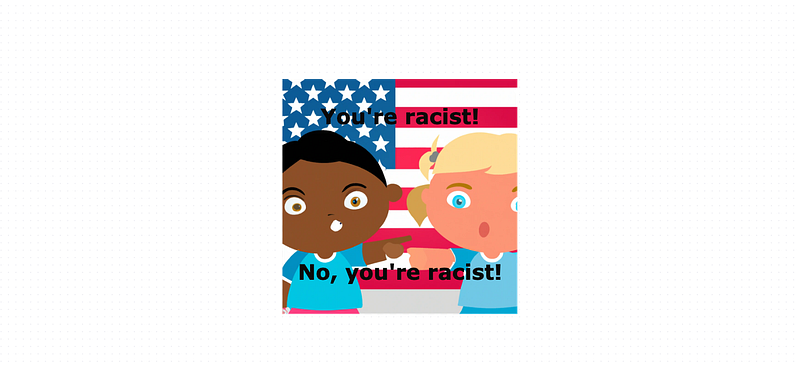
Long before the days of “Diversity, Equity, and Inclusion” trainings, I used to player poker at a friend’s house in central New Jersey. The game was composed of a Greek-American, a Vietnamese-American, a Chinese-American, a Cuban-American, an Ecuadorian-American, multiple Black-Americans, a Jewish-American, an Indian-American, and me — a White-American.
Interestingly, the game was often animated by a barrage of racially themed jokes that left us roaring with laughter as we shuffled the cards and dealt our fates. Today, those jokes would lead to our condemnation, cancellation, and maybe even cost us our jobs. Most members of Generation Z would have a temper tantrum if they heard some of the things that flew across that table. But the fact is, despite the jokes, we all cared about each other deeply and were some of the most tolerant people on planet earth. And the context for the banter was an environment of mutual love and respect.
At the time, there was only one unspoken rule : The jokes had to be funny, and what was funny was decided naturally by who laughed and who didn’t — the way funniness is decided in a comedy club — not by Facebook employees, academics, Ivy Leaguers, politicians, or any pre-established set of rules.
Looking back, I believe that poker game in New Jersey was one of the least racist and most tolerant places I’ve ever been, even though many people today would disagree vehemently. In 2005, at a card game in Jersey, we didn’t use our differences like weapons to beat up on or divide each other; we used them to make each other laugh.
Here are a few of the other reasons I think that card game was so interesting:
- We all had different socio-economic backgrounds that you couldn’t guess from our skin colors, and none of us thought we were better or worse than anyone else. Although we all believed we were the best card players at the table.
- We all knew and judged each other based on our personalities and accomplishments. For example, we knew Josh (Cuban-American) was the best at gaming, you didn’t want to mess with Anthony (Greek-American) on the football field, John (Vietnamese-American), despite his accent and lisp was low-key the smartest of us all, Andres (Ecuadorian-American) knew everything there was to know about cars — and me, despite my pale-as-the-moon-skin and skinny frame, happened to be the best basketball player in the group.
- When we played poker, there was no bitching and whining, no rule changing, no coded language and almost never any actual fighting. No one felt they had the upper hand at the table unless they were holding pocket aces.
- Despite where we were spending our freshman year of college (or not), what we had accomplished in high school (or didn’t), who our parents were (or weren’t), or how much money we had in our bank accounts — we all risked our fair share of money for a fair share of chips, agreed upon the rules of the game, and we all believed we could win.
- After being hit with a zinger, no one ever said “that triggers me.” If someone crossed the line it was because their joke wasn’t funny and there was a unanimous consensus that it wasn’t funny. The person who crossed the line wasn’t thrown out of the game, ostracized, or bullied. They just had to shut up for a moment and think of a better joke.
The game was also special not because of our differences, but because of the things we shared in common — which are seldom acknowledged today by those claiming to be fighting racism. Despite our ancestors having come from all over the world, we came from the same place — Hightstown, New Jersey. Exit 8 on the NJ Turnpike — and that made us very similar, whether we liked it or not.
Here are just a few of the things we shared in common:
- We spoke English, a very Jersey style of English that we bounced off each other like raps — waddup? word, chill, nahhh, take it easy bruh, etc.
- We went to the same high school and had access to the same teachers.
- We had access to the U.S. dollar, U.S. passports, and U.S. universities.
- Despite what we consumed at home with our parents, in school and in the streets, we ate pizza, cheese steaks, hoagies, chicken fingers, buffalo wings, and other American food.
- We were being marketed to by Big Pharma, whether we knew it or not.
- We all knew someone who had overdosed or destroyed their life on prescription drugs sold by Big Pharma.
- We all knew plenty of kids who were prescribed Adderall to make it through school.
- We all knew someone who was obese from over-eating shitty American food shoved down our throats by Big Food, although at the time we didn’t know what Big Food was.
- Whether our parents were hippies or Hindus, we were for the most part secular individuals, at least publicly, and we had tolerance for other people’s religious beliefs.
- We had cars or used our parents’ cars since public transport in the U.S. is terrible.
- We came from the country that invented the telephone, the airplane, the internet, and the atom bomb.
- We listened to American music, whether it was Rock ‘n’ Roll, R&B, Funk, Soul, Emo, Alternative Rock, or Hip-Hop. And given we grew up in 90’s and were an hour away from the the birthplace of Hip-Hop, we all incorporated some element of Hip-Hop culture into our lives.
- We played sports like football, basketball, and baseball; sports that were invented in the U.S. We also watched and followed American sports, had favorite professional basketball and football teams, and often a favorite college team.
- Many of us knew, or would go on to know, someone who lost their lives from gun violence.
- We all watched 9/11 happen and some of us lost family in it.
- We all paid taxes to Uncle Sam; taxes that funded the Iraq war (despite what our feelings about it were) and the Afghanistan war. Later on, our taxes funded the intervention in Syria, the Yemen Civil War, and the U.S. intervention in Libya. Today, we are paying taxes to fund the war in Ukraine. Furthermore, we will all pay taxes to the American Empire for the rest of our lives, unless we relinquish our citizenship.
- We all had relationships with people of different races and ethnicities — girlfriends, friends, teachers, coaches, and neighbors. And because of the diversity of our environment, we all knew much more about other religions, races, and cultures than most people do around the world.
- Since we came from middle- and lower-class parents, we all had to borrow money for college from loan sharks like Sallie Mae (Navient) and corrupt entities like the U.S. government, or go to community college and pay our own way.
- We all had to figure out how to get healthcare or live precariously in a country where one accident or illness can leave you bankrupt.
- We would all go on to earn $50–100K (USD) a year, some of us more, putting us in the world’s top 1% of earners simply by being American.
- We were all playing a game called “Texas Hold-em.”
Ultimately, although we were Black, White, Indian, Latino, Greek, Jewish, Chinese, Vietnamese, Cuban, and Ecuadorian — we were all what my wife and most Mexicans would call “Gringos.” In other words, we were distinct products of the United States of America.
And to be honest, at the time, though we joked about it for shits and giggles, we didn’t really care that much about our race. Beyond the jokes, we never used our race against each other.
Today, the U.S. has become hyper-obsessed with identity forged on the basis of skin color and sexual identity. The current politics promotes dividing each other up according to our race and gender and shouting each other down. Despite being friends and neighbors our entire lives, we are now encouraged to focus on our differences — a focus that implicitly makes us more disconnected.
Even if our Black brother lives in a mansion with two happy, healthy parents and our White brother lives in an apartment building with two unhappy, drug-addicted parents — we are expected to shame or “call out” our White brother for his “privilege” and extend extra support or compassion for our Black brother in a manner that is at best condescending, and at worst, racist. We are taught to rank each other on the immutable scales of “Oppressor VS Victim” or the “Privileged VS Underprivileged,” without first considering each persons’ individuality and life story.
The tension that’s been created by today’s politics and theories on race appear to be making our country angrier and more divided. We can no longer joke about our identities and races for fear of being called racists. Words and realities are being censored and redefined by elitist and academics, then pushed into the world by the media — making all us Gringos think we are so very different and that our differences are the most important components of our lives.
But the reality was (and still is) that despite the obvious problems that existed in America in 2005 and may still exist today, all of my friends at that card game in Jersey were and continue to be American as f*ck. We were Gringos, the subjects and citizens of the most powerful and richest empire the world has ever seen.
Final Thoughts
As we watch the American Empire crumble into itself, I suggest we consider what it is that makes us all American and why (or if) our commonalities are important. Personally, I think they are. After living in Mexico for the past eight years, I’ve been able to understand more clearly what makes me American and what I love about my country and culture.
For example, I love pizza, Hip-Hop, and hoagies. I think basketball is the most beautiful sport in the world, and I feel personally offended when Team U.S.A. loses a game.
I love watching American football on Sunday. I love American slang and the words “fuck,” “shit,” and “motherfucker.” I love American movies, American comedy (Note: Chris Rock, Dave Chappell, Bill Burr and other comics who do racially themed comedy could not exist in homogenous countries because they wouldn’t have enough knowledge about other cultures to write funny and insightful jokes), and I love American music.
Hell, I’ll admit it — I even love ketchup — or at least I like it way more than I should, considering it’s one of the world’s most mediocre sauces.
No matter how many years I live abroad, I know I will never stop being American, and I love that shit too. (You see? I can’t help the way I talk).
And I also love my American/Gringo brothers and sisters deeply. I love their tolerance, their sense of humor, their flexibility, idealism, and courage to dream big.
I love our country’s diversity as well, and am grateful for the fact I had the chance to grow up around so many different types of people. It is probably the reason I am in Mexico now, and that my wife is from a different culture.
But I fear that today our differences — which once made us interesting, dynamic, and even funny — are being used to tare us apart and make us suspicious and even hateful of each other — and that’s a damn shame.
I also suspect this divisive mentality did not arise organically among the people, but has instead been sinisterly sown by the powers-that-be, who while we argue and fight amongst ourselves, continue to fill their coffers with the fruits of our labor.
What can we do about it?
I don’t know — maybe it’s too late.
But perhaps we could start by remembering everything we have in common as Americans, and what — if anything — we love about our country.


