
The Leadership Lessons That We Can Learn From Nature
Are you as effective as a queen bee?
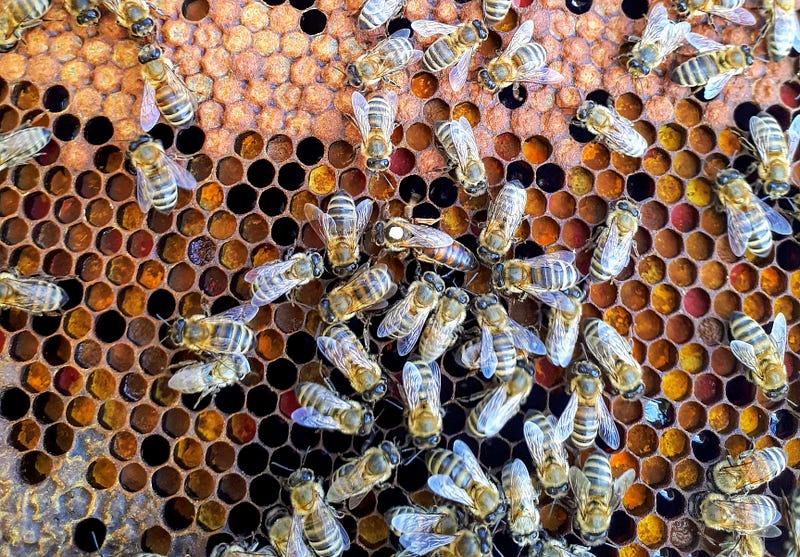
As humans, we lead complex lives. Many of us struggle to make a daily living, we have conflicts and disputes with members of our community and we strive to make a meaningful impact on the world.
We should not fall into the trap of thinking that these issues are reserved for the human population. Many parallels can be found in the natural world. Sometimes, nature provides clues to the solutions for our ‘human problems’.
The daily life of honey bees is one such example. Honey bees live in a complex and harmonious organization. There are many lessons we can learn from such a community but this article focuses on the leadership lessons that we can learn from the queen bee.
The parallels in the article can be applied to any sort of leadership — from running an organization, leading within your community, or managing your family matters.
So how do you measure up to the leadership capabilities of a queen bee?
Thinking, communication and growth strategies
In the past, it was commonly thought that only certain vertebrates (mainly primates) were capable of thinking in conscious ways such as those required to plan ahead. More recently, scientists have found that insects such as bees have the capacity to think and engage in decision-making.
To make use of their thinking skills bees are known to utilize a symbolic language. This illustrated when they do their ‘honey dance’. They can accurately describe to other bees where to find nectar using clever flight movements to describe direction.
Interestingly, it is thought that sometimes they make a conscious decision to give other bees incomplete information as this adds to the productivity of the hive. The other bees act on the incomplete information and find better solutions such as finding new ‘nectar rich’ locations.
In the human population, forward planning and communication are also crucial for running a successful organization. Leaders must make conscious decisions about how much information to share with others and implement strategies for finding new, more effective ways of working.
Establishing behavioral norms
The queen bee uses both her thinking skills and her communication abilities to run a productive community.
Like an effective business leader, she actively establishes and enforces behavioral norms. She communicates her expectations of desirable behavior throughout the hive.
Where members of the hive are seen to be acting out of self-interest, rather than for the benefit of the community, their behavior is directly challenged.
The most dramatic example of this is called the ‘Massacre of the Drones’ where the lazy, non-contributing males are killed and thrown out of the hive.
Just for the sake of clarity here, I am not for one moment suggesting that all leaders should be female and that the men should be sacrificed! Nature doesn’t always offer perfect parallels…
However, most human organizations have identified ways of sanctioning those who are underperforming or who are not behaving in an expected manner. This could be through ostracizing individuals who are not behaving in line with organizational rules, or by removing their jobs from them and effectively deleting them from the community.
Rewarding hard work
The beehive is a meritocracy. There is no advantage offered to individual bees due to their ‘blood line’ or because the queen bee has favorites.
Individual bees progress to more senior roles by contributing to the hive. The position is based on experience and performance and is regularly monitored with those who are no longer performing being swiftly dealt with.
Effective performance management is as important in the beehive as it is in a top-performing company.
Our organizations and communities should also be run like this, with promotions and rewards being allocated according to merit. We can all give examples where this has not been the case. We all know what happens to morale in a company where staff perceives that someone has been treated unfairly favorably. Typically, productively slows, disputes break out and people start questioning the motives and effectiveness of leadership.
Co-dependence
Without the queen bee, social order in the hive breaks down. Just as a business needs an effective leader, the hive needs someone in overall charge.
However, there is still a co-dependence between the queen and her ‘staff’. She needs them to get the heavy work done. Without her staff, the queen is nothing. She needs them to make enough honey, to ensure that the hive survives. She cannot do it alone.
The same can be seen in human communities of all types. Strong leadership is important, but the leader is dependent on other members of the community to carry out the majority of the work.
Succession Planning
So how does a hive ensure its survival into the future? Everything cannot rest on one individual because queen bees, like the rest of us, have an expiry date.
Succession planning is evident in hives. Some small larvae are treated differently from other young. The worker bees feed them royal jelly to trigger them to develop into queens.
The resources in any organization are limited and so these resources have to be invested in those with the most leadership potential. The leader is forced to make decisions about who shows the most promise — and these individuals are the ones who will receive the ‘royal jelly’.
In human communities and organizations, this ‘royal jelly’ might be represented by additional training opportunities, mentoring, or some other form of nurturing that others do not have access to.
So how do you measure up?
So, if you are a leader, just ask yourself this question — how do you measure up to the queen bee in the following?
Thinking and forward planning
Communication with your team
Establishing behavioral norms in your business
Challenging those who act out of self-interest, rather than in the interest of the organization
Ensuring that your business is a genuine meritocracy
Understanding that you can’t do it all alone
Euthanizing those who are not pulling their weight or are acting in damaging ways (please don’t do this literally!)
And dare I say it…
Planning for the day that you are no longer around.