
The Laws of War are Feats of Orwellian Gaslighting
The clash between the international acceptance of war, and the domestic outlawing of murder
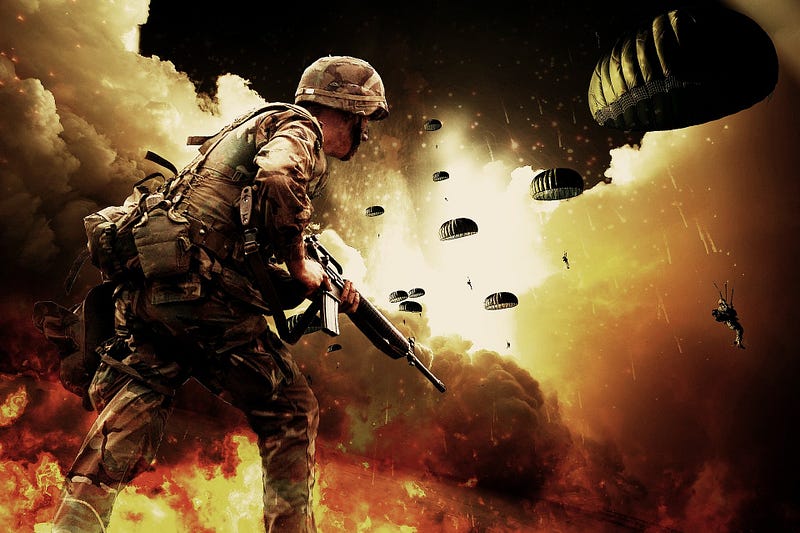
Recall the relish that progressives took in condemning George W. Bush’s government for its “war crimes” in Iraq.
“Dick Cheney’s a war criminal,” they cried. And progressives would rush to say that Israel, too, in its bombing of Gaza is evidently guilty of war crimes, of not doing enough to distinguish between Palestinian civilians and Hamas terrorists.
There’s just one problem with those allegations — and perhaps you felt it as a nagging worry that you’ve been gaslighted by this entire corpus of international law. The worry is this:
- How can there be laws of war when the deliberate killing of persons is supposed to be wrong and illegal, according to standard national law?
When an individual kills someone, the killer is tried in a court of law and punished, depending on the circumstances. But if the government kills on a massive scale, that mass murder becomes legal because lawyers have crafted some sophistical language to regulate this unstoppable conduct.
Killing for sadistic pleasure is different from killing in self-defense, but if the government can promote its war effort as defensive, even if it’s not, as when Vladimir Putin says he had to invade Ukraine to counter NATO’s encirclement of Russia, the laws of war are neutralized by that diplomatic rhetoric. One bit of gaslighting counters another, as the politician’s fire fights the lawyer’s fire.
Or if you’re a civilian one moment but then you don a uniform, suddenly you’ve become a belligerent and a legitimate military target. Paradoxically, the lesser your martial skills, the greater your punishment for killing, as when a civilian with no military training is punished for committing murder, whereas a Navy SEAL’s expert killing of dozens of enemy soldiers is protected under the laws of war.
The laws of war are flights of Kafkaesque madness. Therefore, those legalistic allegations against Bush, Cheney, Putin, and Israel are weak, setting aside their military actions’ moral status.
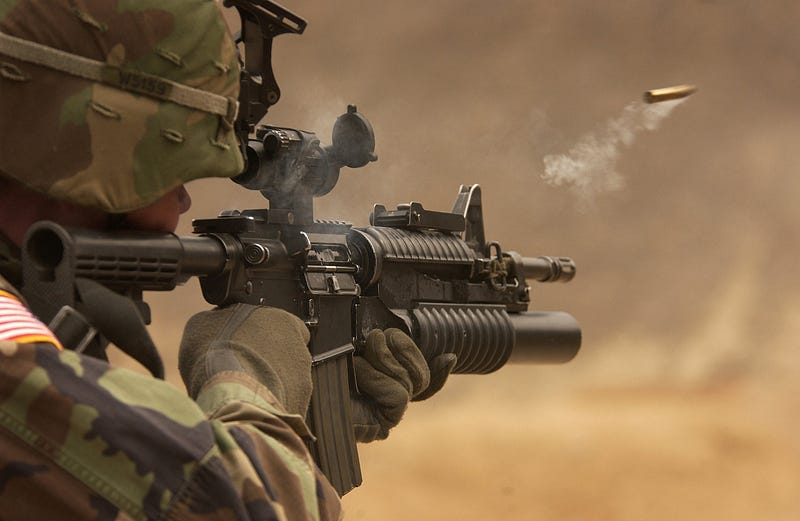
Legalistic gaslighting
Of course, these international laws are intended to mitigate the damage of wars. There’s a difference between militaries that try not to kill civilians, and those that kill indiscriminately, such as with biological weapons or even by targeting noncombatants, including doctors in hospitals. Wars can differ greatly in their ferocity and in their offense to morality.
But all wars are acts of mass murder and of vast destructions of property, so they’re violations of every country’s national laws. Yet they’re legal under international law.
Apparently, the idea is that murder is forbidden…but if you’re set upon killing, you should hone your skills, wear a uniform, and combine your prowess with that of fellow trained killers in a military. Then that collective mastery of killing is legally protected. Again, the transition between the national and the international contexts requires legalistic gaslighting.
Compare this with Jesus’s moral absolutes. Not only are certain actions wrong, according to him, but even the thought of committing them is wrong, so we should love our neighbours.
Then, the Roman Empire adopted Christianity in the fourth century, and Christian theologians had to reconcile their founding principles with the exigencies of running an empire. Building on the Apostle Paul’s rhetorical stretches, for instance, Augustine spoke of “just wars” in Christendom, since as Paul said in Rom. 13:4, “For the one in authority is God’s servant for your good. But if you do wrong, be afraid, for rulers do not bear the sword for no reason. They are God’s servants, agents of wrath to bring punishment on the wrongdoer.”
Granted, Paul’s excuse was that he never met Jesus, and the gospel narratives weren’t yet written. Yet Augustine had both Paul’s epistles and the gospels before him, and he applied his casuistry to reconciling Jesus’s turn-the-other-cheek pacifism with the worldly realism that accepts the most flagrant sins.
If low-level killing is illegal under national law, why aren’t wars illegal under the same law? Why aren’t soldiers prosecuted by their governments once the war is ended and they return home? Or why aren’t they handed over to the foreign country where the mass killing occurred to await trial? It’s because another layer of laws has been concocted, one that trumps national laws.
And just try to imagine how the punishments would work for the crime of engaging in the wrong kind of war. Suppose a country like Russia starts a war of conquest against a country like Ukraine, to steal that country’s land. Thus, Russia’s military conduct is illegal under international law, whereas Ukraine’s is legal because Ukraine only defends itself, in this scenario.
There are roughly two possible outcomes, depending on whether Russia wins or loses in military terms. If Russia loses, the international law is superfluous because Ukraine would already have punished Russia by slaughtering thousands of its young adults, destroying millions of dollars worth of Russian military equipment, and ruining Russia’s international reputation.
If Russia wins, the laws of war are again irrelevant because Russia’s military would have proven itself too powerful to be dislodged. The UN could sanction Russia, but the sanctions would prove ineffective because Russia could do business with powerful countries that ignore the niceties of international law, such as China and Iran.
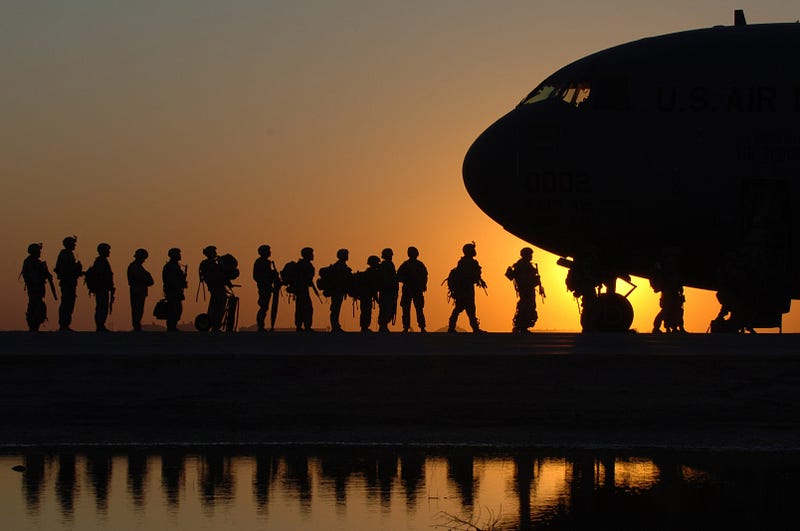
Whiplash for prisoners of war
Perhaps nowhere is the gaslighting of the laws of war more apparent than in the whiplash turnaround a soldier is supposed to undertake in dealing peacefully with a prisoner of war, as dictated by the Geneva Conventions.
You’ve likely seen the scenario play out in movies. Soldiers are shooting at each other one moment, but then one side formally surrenders, throwing up their hands, which binds the other side to respecting their rights as POWs.
Part 2, Article 13 of the Geneva Conventions regarding POWs, for example, says, “Prisoners of war must at all times be humanely treated. Any unlawful act or omission by the Detaining Power causing death or seriously endangering the health of a prisoner of war in its custody is prohibited, and will be regarded as a serious breach of the present Convention.”
Just imagine, then, the shift in mental state needed to abide by this “law.” Perhaps the enemy soldier has killed your comrades, and you’re trying with all your military training to kill him in turn. But the soldier surrenders, and now instead of killing him, breaking your country’s law against murder, you’re supposed to protect the enemy’s human rights, breaking international law’s implicit approval of political mass murder (warfare).
There’s that famous scene in the movie Saving Private Ryan, in which the cowardly, untrained Corporal Upham sees a Nazi soldier kill his American comrades and escape. Later, that soldier surrenders to Upham, and instead of following the 1929 Geneva protection of prisoners of war, Upham kills the Nazi to avenge his comrades. The point of that scene is that the reality of war makes nonsense of international law.
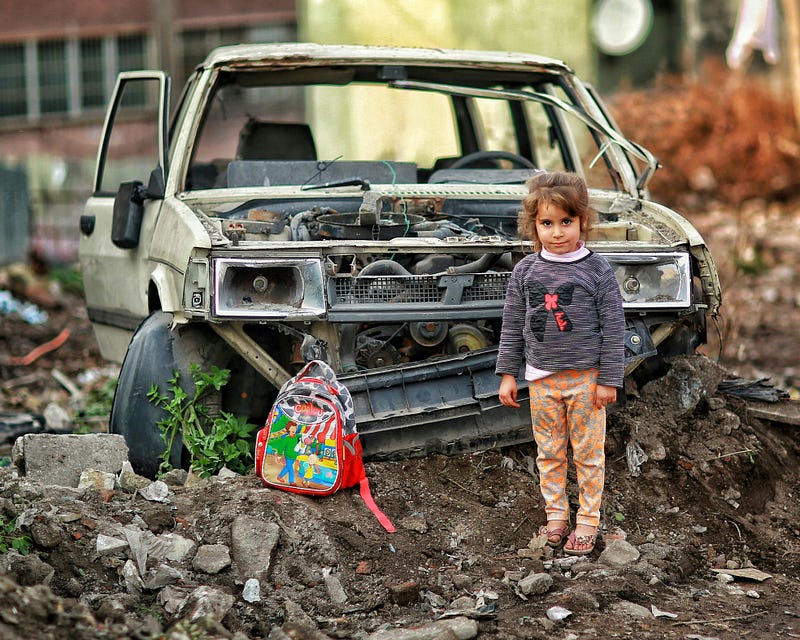
The existential side of PTSD
We should reflect also on the bearing of this to the soldier’s posttraumatic stress disorder. The trauma of witnessing carnage in a theater of war is naturally the main cause of this disorder, but perhaps the condition is exacerbated by the clash between national and international expectations.
When the soldier returns home from war, he or she must reckon with the strange fact that what was permitted is now arbitrarily prohibited. What, then, is the meaning of a nation’s laws, and of law as such, if the basic law against murder has a footnote that takes you to a treaty that licenses politically executed mass murder?
Part of this common disorder for veterans is likely an existential sense of society’s absurdity. The disturbed veteran understands that all legislation amounts to gaslighting, so that civilization sits on a knife’s edge.
The upshot is that when we proudly denounce a nation’s actions in wartime for being “criminal,” we’re just signalling our virtue. Every single military action is an atrocity, from the perspective of a civilized nation’s local laws, so that cherry picking those atrocities, holding up some as especially egregious is a vacuous nicety. In moral terms, war as such is an outrage.
If you’re attacked, you’re expected to defend yourself, and that applies to individuals and to collectives. But if your life’s in danger, you’re also expected to abandon all civilized refinements, and to revert to animal instincts. That, too, applies to governments charged with protecting their country’s interests.
The notion that soldiers who are literally killing each other with high-powered weapons, with bombs dropping and tanks and drones firing rockets that demolish whole buildings — the notion that amid all that carnage, soldiers are also supposed to think in humane terms when dealing, say, with prisoners of war is preposterous. The mental severance or Orwellian doublethink that the laws of war call for must itself be a mental disorder (associated with PTSD).
Beyond good and evil
The state of war is beyond good and evil. Only mystical conceptions of Stoic honour capture the essence of the soldier’s profound freedom from the mass hallucinations that run civilized society. From the comfort of our armchair, we can charge governments with “war crimes,” without suffering from existential paralysis only because we’ve been gaslighted into domesticity. Without those noble lies, those progressive fictions, we’d be stuck in the state of nature, which would invite a war of all against all, as Thomas Hobbes said.
The international social order is largely in that very natural state because of the lack of an international monopoly on power to guarantee the enforcement of international laws. Wars happen, then, for the same reason killing occurs freely in the wild. But we retain our pride of being persons rather than animals, by dazzling ourselves with legal fictions.
Rather than eliminating natural brutality, then, we’ve turned our ferocity into a profession, and with the aid of international legal concoctions, we’re more brutal in wartime than any other species of alpha predator. We kill professionally and legally not to feed ourselves; indeed, that act of self-interest would be a crime covered by domestic law, with no military or political justification. A poor nation’s engaging in violence to feed its citizens would likely be regarded as terrorism. No, wars happen because of Machiavellian shenanigans that are hardly known in the wild (although ants and chimpanzees are warlike).
The laws of war are supposed to encourage governments to avoid the worst of aggressions. But by legalizing war, we normalize mass murder, threatening all social laws and the civilized state itself with the absurdity of deep-seated cultural incoherence.
I collect my Medium writings in paperback and eBook forms, and I put them up on Amazon. Check them out if you’d like to have them handy and to support my writing in that way. The newest one is Questing for Epiphanies in a Haunted House, and its 600 pages include 99 recent, wide-ranging articles of mine.