
The Last Thanksgiving With My Dad
Losing loved ones makes the holidays hard, but there are ways to honor them while expressing gratitude
“It’s the first time you’ve been doing Thanksgiving and your December holiday without your loved one in your life, and that’s just huge.” — Sherry Cormier, PhD
“Let’s go around the table and say what we are thankful for,” my brother said.
We had never done this before, usually settling for toasts centered around any reason for another drink of vodka, but Thanksgiving of 2016 was different. My dad had just gotten diagnosed with gastric cancer. A CT scan done prior to diagnosis showed lymph nodes enlarged throughout his abdomen. This meant metastasis and death likely within the year. Prayer seemed more appropriate than a toast, but being that we were not religious, we settled for gratitude.
But I was not grateful or thankful for anything at that moment. My brother was a surgeon and I was a medical resident. Surely we should have been able to stop this, right? My dad had faith that we would. After all, he bragged about me and my brother being physicians to everyone he met. But we knew we could not stop what was coming. All I felt was an immense darkness I could not shake.
I do not remember what I said when it was my turn but I clearly recall that right after I went to our downstairs bathroom and cried. I still remember like it was a dream from last night. This was my last Thanksgiving with my dad. The house that I grew up in would become a memory soon. I still clearly remember feeling an instant transition to adulthood like I grew an inch in that bathroom while simultaneously feeling helpless and small. No more excitement about coming home from school to be in charge of cooking the turkey. The house would not feel the same without him in it and without that energy, what makes a holiday special?
But as I look back now, six years later, there was so much to be thankful for before he got ill, and after. Losing someone you love inevitably changes the feeling of the holidays, but with new traditions and ways to honor those who are not sitting at the table, we can make it seem like they are alongside us again while being fully present in the moment ourselves.
Bring them into the room
As time went on, we remembered my dad for the humor and happiness he brought to our table, not the pain we felt on that particular Thanksgiving or throughout his illness. As time passes, it becomes easier to talk about a loss because memories transition from sad to happy ones. But those first holidays are incredibly difficult.
“It’s the first time you’ve been doing Thanksgiving and your December holiday without your loved one in your life, and that’s just huge,” said Sherry Cormier, PhD Professor Emerita in the Department of Counseling at West Virginia University. “It amplifies that everything is different than it used to be, and there’s a cognitive dissonance between you feeling heartbroken and being around people, plus the expectation to be happy, and celebratory and grateful.”
It is like your heart is pulled in two different directions. There is almost an underlying responsibility to feel somber, but at the same time, you know that because they loved you, they want you to smile and enjoy time with those around you. Including them in the conversation can allow you to be sad and let others bring up happy moments they recall.
Mari Itzkowitz, a clinical therapist, says that talking about loved ones is key.
“Light a candle, say the names, bring the people into the room, Itzkowitz writes. It’s about everybody having a conversation together and saying, ‘Okay, this sucks. We can’t do it this way. What is the new tradition we would like to create for our family moving forward?’” Itzkowitz says. This can include a centerpiece on the table with photos, a new ornament representing the person or something they enjoyed, or simply visiting the grave as a family and sharing a toast.
Do what works for you
There is no formula for the holidays, and there is also no such thing as “perfect” no matter how much we try. The first step, Cormier said, is acknowledging that the holidays will be different and to be proactive about what helps and what doesn’t. For example, consider the following:
- Are there some traditions you’d rather not do? Some may just be too painful. It may make sense to try something new.
- Do you want to celebrate in the same place? For instance, it might be better to travel this season instead of staying home.
- Who are the people you want to be around? Enjoy their company when they invite you for a visit.
- Can you handle an all-day celebration? Be flexible with yourself and let the host know you may only stay for a short while.
Especially when times get tough, remember that it is a day that will end, just like all others. “You will turn the page on the calendar,” said Robin F. Goodman, PhD, assistant director of public education and bereavement at Child HELP Partnership. “If nothing else, you’ll have some relief in getting through the holiday, and knowing what worked and what didn’t work.” These experiences will no doubt help each subsequent holiday plan become easier.
Give yourself time and love
The amount of mourning someone needs cannot be estimated with any loss, but unexpected losses are a much bigger shock to the system and need to be taken slower.
Therese Rando, PhD says, “Especially with sudden and traumatic deaths, such as those due to drug overdoses or homicide, we can’t absorb the reality of the loss. We only learn that by bumping up against it in our world.”
We are reminded of little things, like a phone number. My dad’s still pops into my head all the time. I want to call him and tell him about my life. This happens less frequently now, and while writing, I had to look at his number in my phone to make sure I still remember it.
I do.
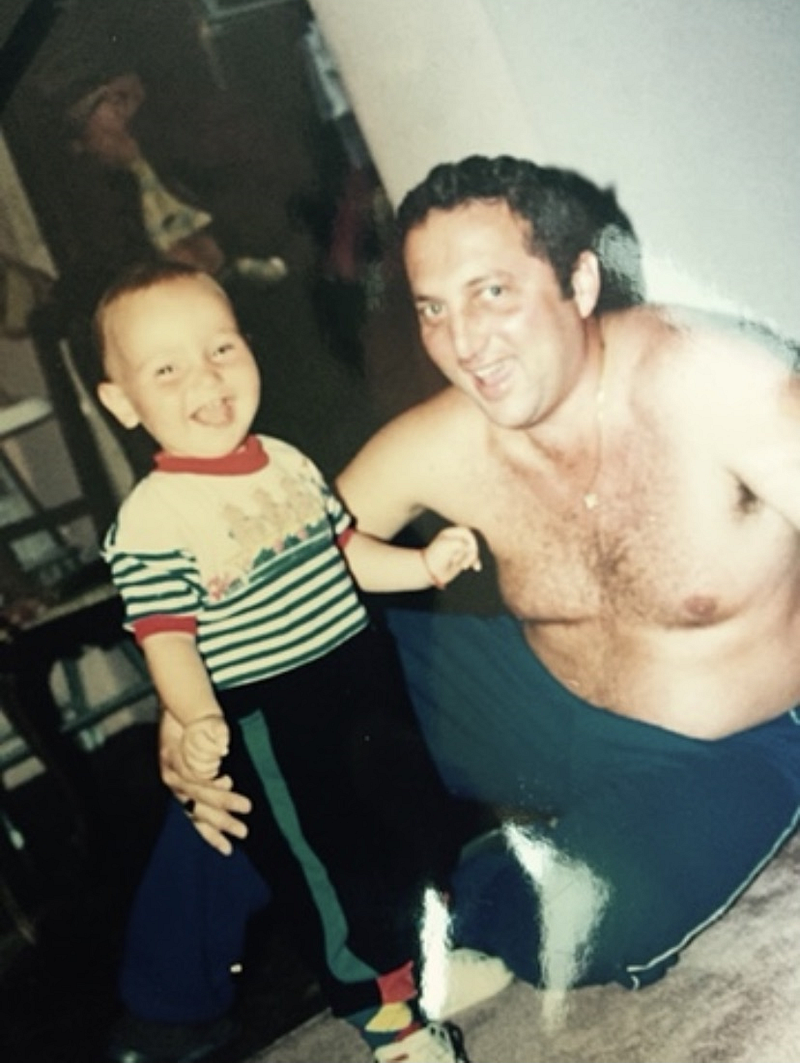
One thing that helped me was framed photos of me and my dad when I was a toddler on my nightstand. One of them is the photo above. My wife gifted them to me in a frame, as I could not get myself to do it. I kiss those pictures every morning like I am saying “hello” and “I am off to another day without you but I love you.”
Every approach is different
Grief grips our chests and reminds us that the world is different from how it was before. But making the grief your own and part of the new normal is how you are able to put up with it. The pain will fade over time, so new traditions to honor the deceased will be reminders of the positives of that person’s life, not just as a reminder of the loss.
I no longer wait for holidays or specific times to spend with loved ones. I reach out as often as I can. If I think of someone I care about and say “have not heard from them in a while,” I am the one to reach out. Although I was like this even before my dad got sick, now I have gratitude for every moment. That was his gift to me and it is more valuable than anything I can get on any holiday.
Life is too unpredictable to live any way other than being grateful for every moment of good health spent with loved ones. Remind yourself why you are thankful for the time you get to spend together, no matter where or when. It took my father’s illness and passing to realize that the wheres and whens are meaningless. Remembering those we have lost can take many forms and traditions, but we must appreciate the moments we are given together as a gift to be thankful for every day.