avatarAnne Bonfert

Free AI web copilot to create summaries, insights and extended knowledge, download it at here

4078

Abstract

tion>Credit: <a href="https://medium.com/@anne.bonfert">Anne Bonfert</a></figcaption></figure><p id="0338">In case you’re wondering how many horns these animals have, looking at my photograph, I can tell you they only have two. All the other horns you see are birds.</p><p id="af7b"><i>Red-billed oxpeckers</i> are chatty and sociable birds that are feasting on parasitic ticks. This is why you often see them hanging out on the backs of rhinos.</p><p id="d446">But in the image below, you can see more birds than just the oxpeckers and more land mammals than just the rhinos. You can see zebras, buffalos, elephants, wildebeests, and countless bird species flying around.</p><p id="d620">This is what wildlife in Tanzania is like.</p><p id="4949" type="7">Abundant.</p><figure id="1343"><img src="https://cdn-images-1.readmedium.com/v2/resize:fit:800/1*r6f0x-OD6XIknl9B_FG0gA.jpeg"><figcaption>Credit: <a href="https://medium.com/@anne.bonfert">Anne Bonfert</a></figcaption></figure><h1 id="322c">Black rhinos in South Africa</h1><p id="23d1">If there wouldn’t be so many selfless poachers looking for rhino horns out there, I would share the location of the next pictures taken with you. But since that is not the case, I’m only naming the countries I’ve spotted the animals without giving away too much information for the bad guys.</p><figure id="b3f4"><img src="https://cdn-images-1.readmedium.com/v2/resize:fit:800/1*RJ8wit9afYHF4FbWsqUibw.jpeg"><figcaption></figcaption></figure><figure id="e03f"><img src="https://cdn-images-1.readmedium.com/v2/resize:fit:800/1*Yr565GW6yKfW9nE7aAabcA.jpeg"><figcaption>Credit: <a href="https://medium.com/@anne.bonfert">Anne Bonfert</a></figcaption></figure><p id="1e01">The harm that is done to this species is just beyond words. Their horns get sawn off on the living animal. In order to protect the species, some parks have taken the horns off the animals in order to make them uninteresting for poachers.</p><p id="c85d">I don’t want to go into the details of the poaching business but we all know where most of these trophies get shipped too.</p><p id="aad1">Unfortunately.</p><figure id="69f3"><img src="https://cdn-images-1.readmedium.com/v2/resize:fit:800/1*3kJYDxwQFmQZQy_uhJNSdg.jpeg"><figcaption>Credit: <a href="https://medium.com/@anne.bonfert">Anne Bonfert</a></figcaption></figure><h1 id="744a">Black rhinos in Namibia</h1><p id="375c">This rhino thought it was well hidden from poachers but didn't count this species with a long neck into consideration.</p><p id="34eb">It is one of my favorite shots of black rhinos I’ve taken. The animal must have just come out of some mud patch where it tried to cool itself, judging by the wet soil hanging off his skin.</p><p id="866c">And I was actually watching giraffes in the bushes, not expecting this.</p><figure id="30b0"><img src="https://cdn-images-1.readmedium.com/v2/resize:fit:800/1*O4gi2Sw1tu2Cpnto2lge-Q.jpeg"><figcaption>Credit: <a href="https://medium.com/@anne.bonfert">Anne Bonfert</a></figcaption></figure><p id="fec7">The first rhinos I’ve seen in Namibia happened to be during sunset or just after. When they meet up with the elephants at the water hole. Those two species don’t mind each other. Just when the young ones think they need to challenge each other, then it gets interesting.</p><p id="1e14">But both families were more interested in a de-escalation than anything else. So they all went their way.</p><figure id="a467"><img src="https://cdn-images-1.readmedium.com/v2/resize:fit:800/1*4OMIN5qiqPB1DsHLeSAM4A.jpeg"><figcaption>Credit: <a href="https://medium.com/@anne.bonfert">Anne Bonfert</a></figcaption></figure><p id="d0f9">Elephants definitely move faster and more often than rhinos. They often made my night shots appear blurry. Rhinos I could capture pretty well. Even in complete darkness.</p><figure id="4715"><img src="https://cdn-images-1.readmedium.com/v2/resize:fit:800/1*QAwkNPYZ3Xzlf4rzsRFaEw.jpeg"><figcaption></figcaption></figure><figure id="fd11"><img src="https://cdn-images-1.readmedium.com/v2/resize:fit:800/1*2fklm_Y0d3Dd5cqx

Options

NwqNtQ.jpeg"><figcaption></figcaption></figure><figure id="a084"><img src="https://cdn-images-1.readmedium.com/v2/resize:fit:800/1*KARoJ02IiEzm7yqfROk-Ww.jpeg"><figcaption>Credit: <a href="https://medium.com/@anne.bonfert">Anne Bonfert</a></figcaption></figure><p id="dd80">And these are my favorite rhino shots of all time.</p><figure id="247c"><img src="https://cdn-images-1.readmedium.com/v2/resize:fit:800/1*O-7i0xbQ5w0PydYBHeB--g.jpeg"><figcaption>Credit: <a href="https://medium.com/@anne.bonfert">Anne Bonfert</a></figcaption></figure><p id="06da">Taken in the dark of the stillness of an African night. With a lone standing tree and the flat water as a perfect mirror reflecting their bodies in a beautiful way.</p><figure id="3cce"><img src="https://cdn-images-1.readmedium.com/v2/resize:fit:800/1*d_40paCn6wrDQjDkk5O1Lg.jpeg"><figcaption></figcaption></figure><figure id="d6d9"><img src="https://cdn-images-1.readmedium.com/v2/resize:fit:800/1*V9gWTZxCVib3csSUplHgrA.jpeg"><figcaption></figcaption></figure><figure id="f852"><img src="https://cdn-images-1.readmedium.com/v2/resize:fit:800/1*GRy4p8CO95TN_-fLxSAgFA.jpeg"><figcaption>Credit: <a href="https://medium.com/@anne.bonfert">Anne Bonfert</a></figcaption></figure><p id="0bd0">This is what Africa is about. The raw beauty of wildlife and their habitat.</p><p id="f257">Let’s preserve it and protect these giants and many others from extinction. These last survivors won’t last for much longer if we don’t aggressively do something against the gruesome business of poaching.</p><figure id="1c7a"><img src="https://cdn-images-1.readmedium.com/v2/resize:fit:800/1*qeXSMw-xst8icSc8IE7Bag.jpeg"><figcaption>Credit: <a href="https://medium.com/@anne.bonfert">Anne Bonfert</a></figcaption></figure><p id="887c" type="7">“No one in the world needs a rhino horn but a rhino.” — Wild at Heart</p><h2 id="f11b">More about my wildlife encounters:</h2><div id="74d3" class="link-block"> <a href="https://readmedium.com/the-most-beautiful-wildlife-pictures-i-ever-took-2c33433cdc10"> <div> <div> <h2>The Most Beautiful Wildlife Pictures I Ever Took</h2> <div><h3>A collection of photographs</h3></div> <div><p>medium.com</p></div> </div> <div> <div style="background-image: url(https://miro.readmedium.com/v2/resize:fit:320/1*-9PzFRvi-pwe7LpKK5TWnw.jpeg)"></div> </div> </div> </a> </div><div id="0fa4" class="link-block"> <a href="https://readmedium.com/together-we-are-stronger-7c510bac89ab"> <div> <div> <h2>Together we are Stronger</h2> <div><h3>Monthly Challenge — Animal Pairs and Groups</h3></div> <div><p>medium.com</p></div> </div> <div> <div style="background-image: url(https://miro.readmedium.com/v2/resize:fit:320/1*7dtOsj4g993kTTmzYD2hcQ.jpeg)"></div> </div> </div> </a> </div><div id="7abd" class="link-block"> <a href="https://readmedium.com/elephants-splashing-in-the-wild-b1930ae1d8c3"> <div> <div> <h2>Elephants Splashing in the Wild</h2> <div><h3>Playing in the water is fun for everyone</h3></div> <div><p>medium.com</p></div> </div> <div> <div style="background-image: url(https://miro.readmedium.com/v2/resize:fit:320/1*rn8BDR32TqeHpRAcugpkIA.jpeg)"></div> </div> </div> </a> </div><blockquote id="4f66"><p>Join my email list <a href="https://mailchi.mp/9dd74c10ac6b/signup-mydreamofafrica">here</a> if you would like to read more photo essays or sign up for the Medium <a href="https://medium.com/@anne.bonfert/membership">membership</a> to receive unlimited access to my and other writer’s stories out here (I will receive a commission fee in return).</p></blockquote></article></body>

WILDLIFE PHOTOGRAPHY

The Last Survivors

Rhinos roaming Africa’s wild places are on the verge of extinction
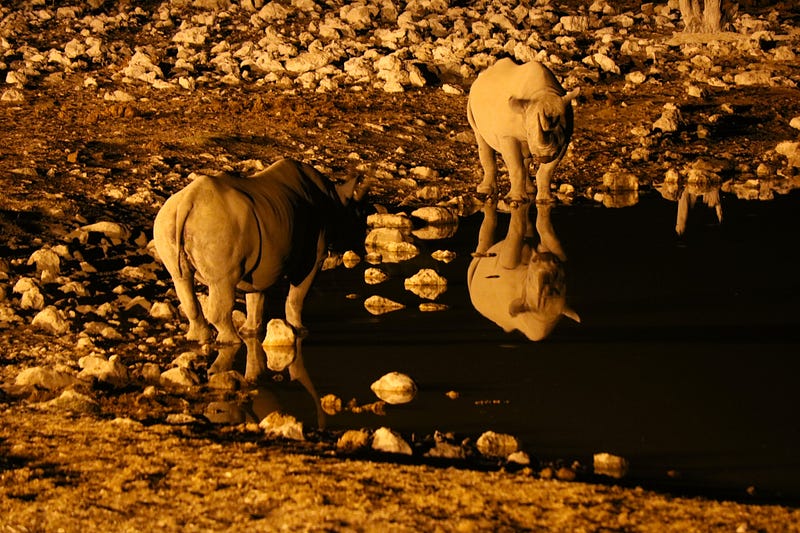
Credit: Anne Bonfert

Rhinoceros. Such a powerful word. And it is a powerful animal. An animal that has experienced just too much pain from humankind. Humans who do not think any meter further than their own wellbeing. This is why some of their species are already extinct.

Yet, I got lucky to still see and experience rhinos roaming the wild places in Africa. They moved slowly. Yawned loudly. And ate lots. Rhinos are easy to photograph at night with a long shutter release. Due to their stillness in movement.

I’ve learned.
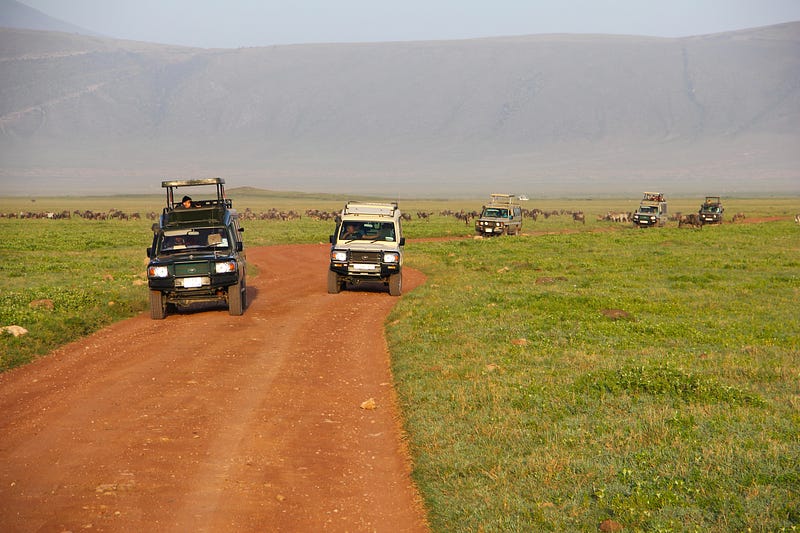
The line of vehicles waiting for the rhinos to come closer. | Safari life in the Serengeti. | Credit: Anne Bonfert

Black rhinos in Tanzania

The Ngorongoro Crater in Tanzania is one of the last wild places the south-western black rhinos can still be found. Yes, usually I do not share the location of rhinos I’ve captured, but poachers will easily find this information on the internet.

The Ngorongoro Crater is famous for its intensity and abundance of wildlife. You can see the big five of the animal world in a matter of hours. They’re all there. In this unique ecosystem.

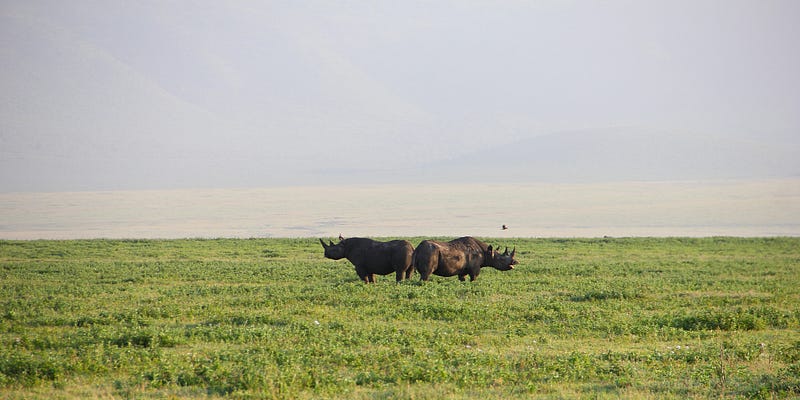
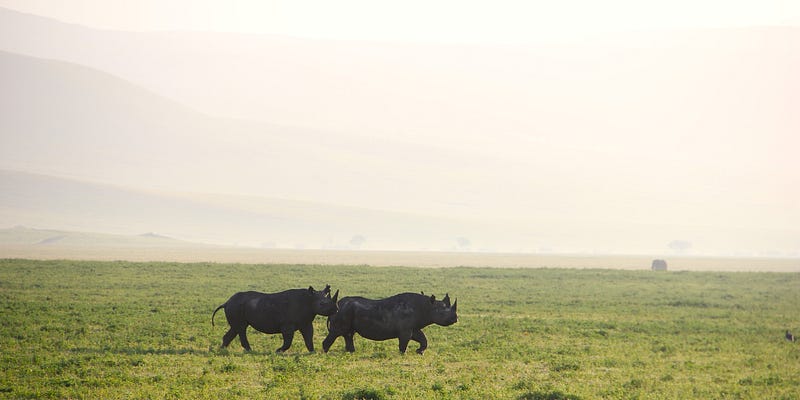
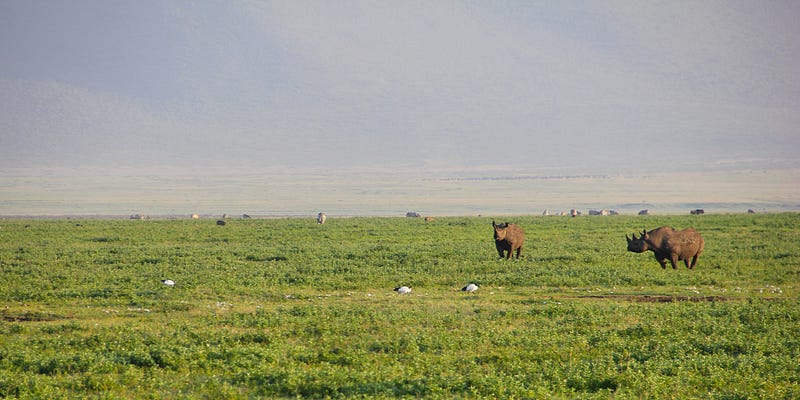
And it is where I’ve seen my first black rhinos in the wild. In fact, there were two of them.
Credit: Anne Bonfert

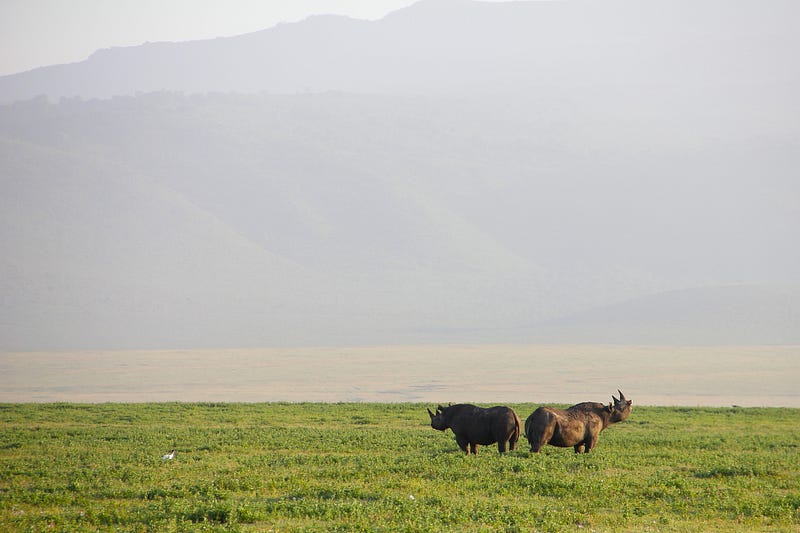
The sun had just risen and I was freezing my butt off not thinking it could be that cold in Africa. Herds of zebras were grazing on the plains and countless birds were flying above our heads when our guide suddenly spotted the two rhinos.

And there we were all awake. Not expecting to see them but getting positively surprised by their presence, we stopped and watched them. We watched them graze peacefully. Not disturbed by anyone they just slowly went their way.

I think one of the rhinos was also still tired because he was yawning several times. Or was he calling for someone? Not sure.
Credit: Anne Bonfert

I didn’t get many animals in this picture below but three different species all in one shot.
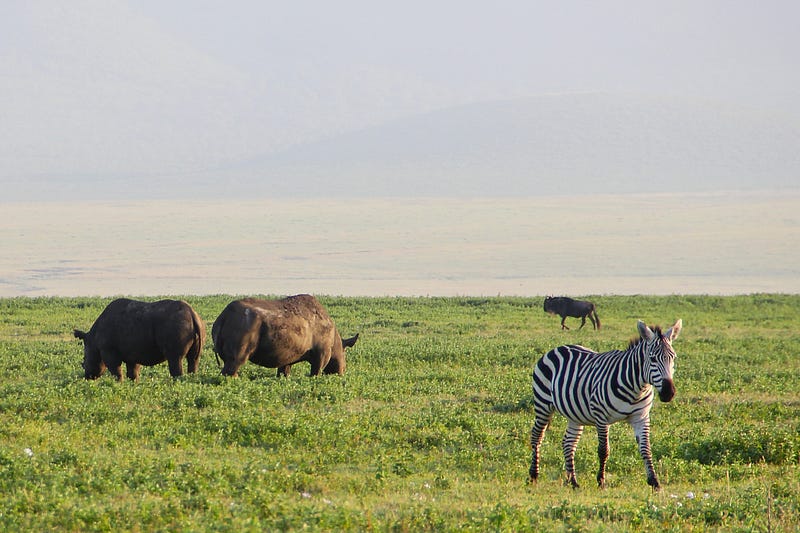
Credit: Anne Bonfert

As we were resting at the side of the road watching the load of vehicles increase and inpatient tourists wanting to get closer and closer to these wanted animals, the two of them gracefully crossed the road right in front of us.
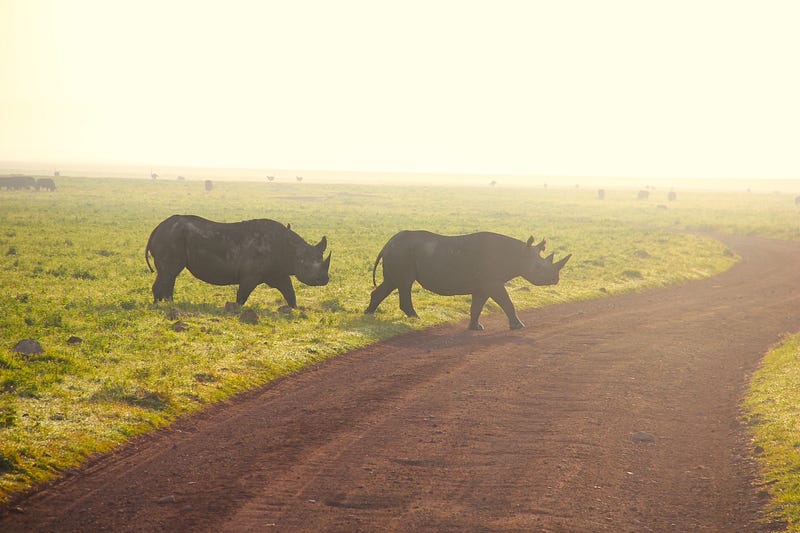
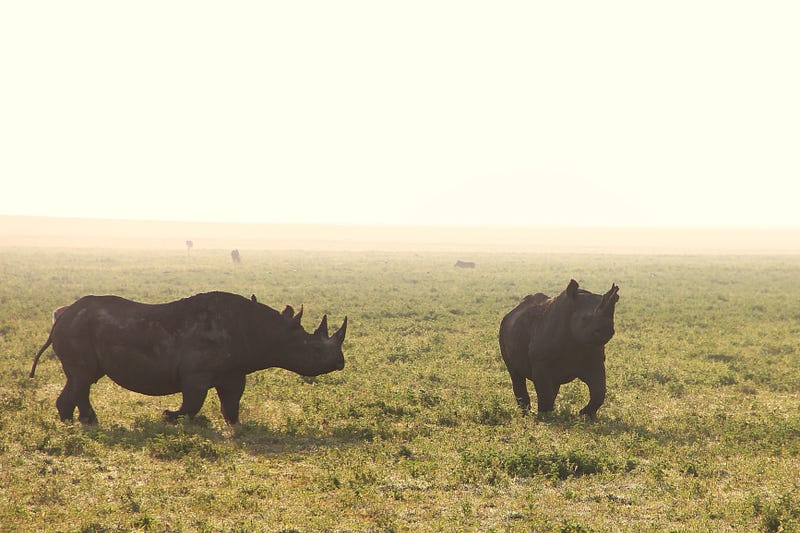
Credit: Anne Bonfert

In case you’re wondering how many horns these animals have, looking at my photograph, I can tell you they only have two. All the other horns you see are birds.

Red-billed oxpeckers are chatty and sociable birds that are feasting on parasitic ticks. This is why you often see them hanging out on the backs of rhinos.

But in the image below, you can see more birds than just the oxpeckers and more land mammals than just the rhinos. You can see zebras, buffalos, elephants, wildebeests, and countless bird species flying around.

This is what wildlife in Tanzania is like.

Abundant.
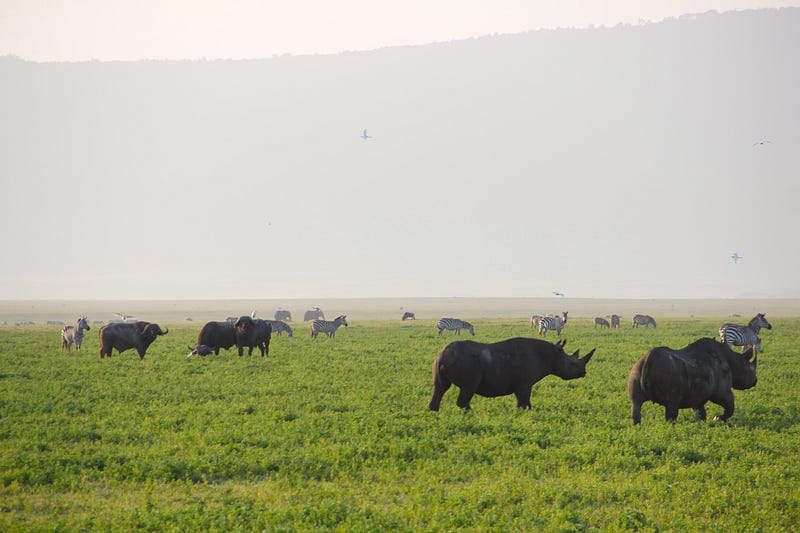
Credit: Anne Bonfert

Black rhinos in South Africa

If there wouldn’t be so many selfless poachers looking for rhino horns out there, I would share the location of the next pictures taken with you. But since that is not the case, I’m only naming the countries I’ve spotted the animals without giving away too much information for the bad guys.
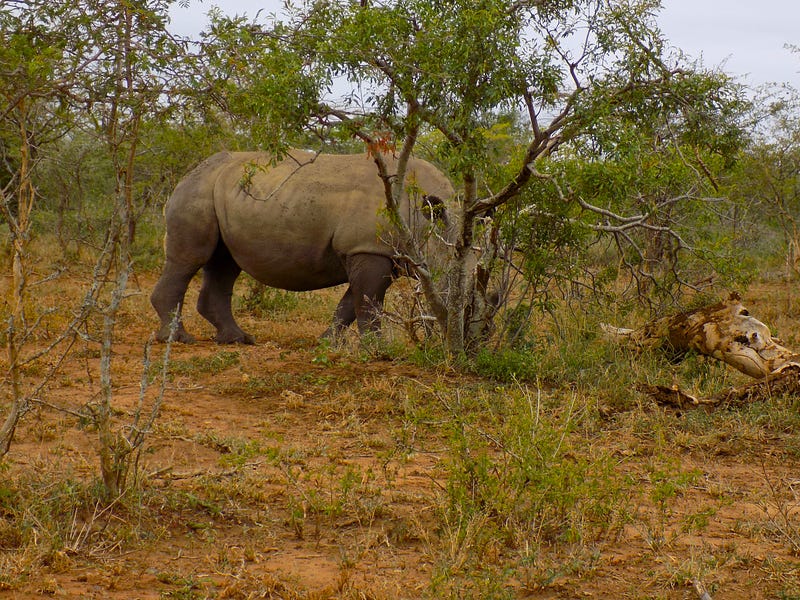
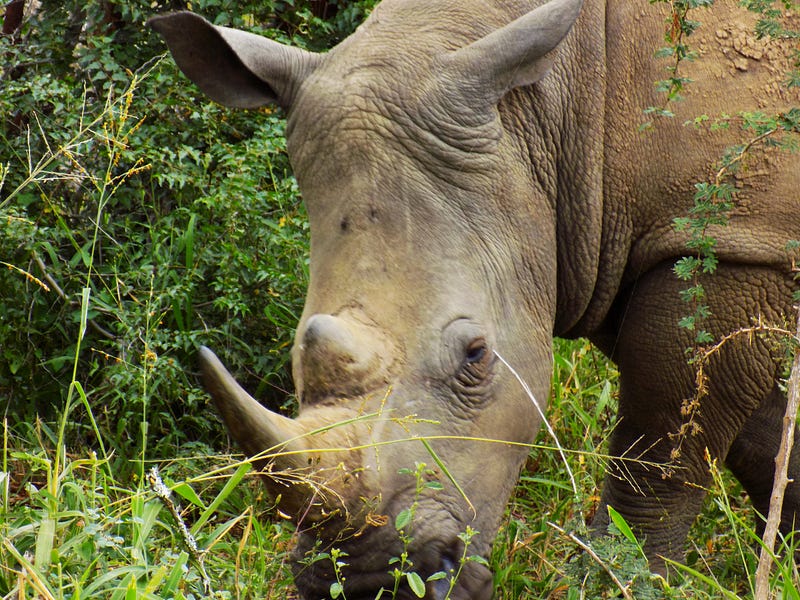
Credit: Anne Bonfert

The harm that is done to this species is just beyond words. Their horns get sawn off on the living animal. In order to protect the species, some parks have taken the horns off the animals in order to make them uninteresting for poachers.

I don’t want to go into the details of the poaching business but we all know where most of these trophies get shipped too.

Unfortunately.
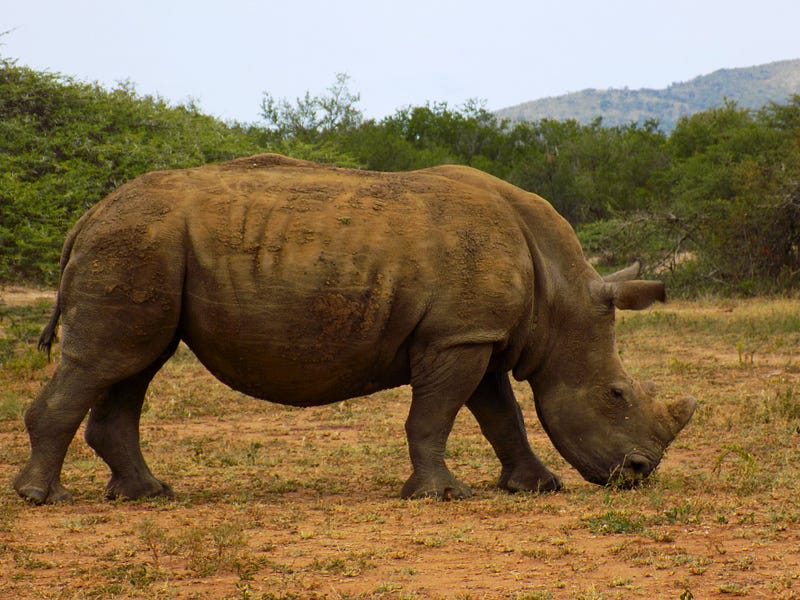
Credit: Anne Bonfert

Black rhinos in Namibia

This rhino thought it was well hidden from poachers but didn't count this species with a long neck into consideration.

It is one of my favorite shots of black rhinos I’ve taken. The animal must have just come out of some mud patch where it tried to cool itself, judging by the wet soil hanging off his skin.

And I was actually watching giraffes in the bushes, not expecting this.
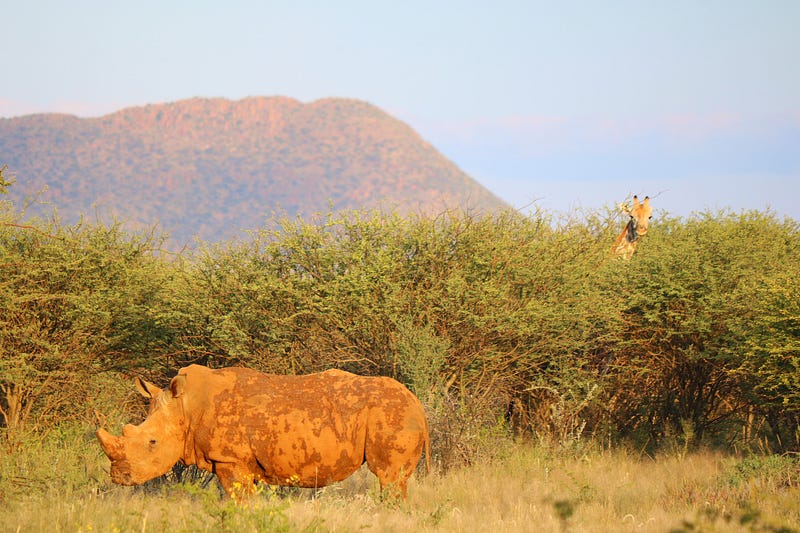
Credit: Anne Bonfert

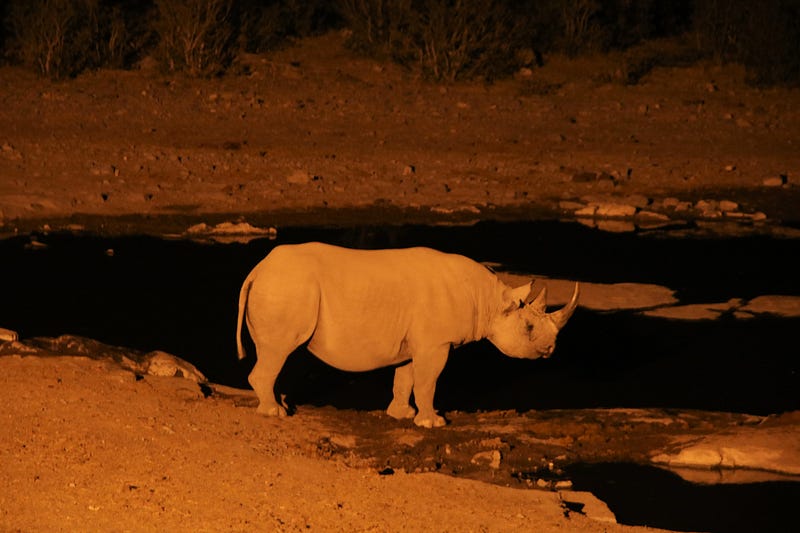
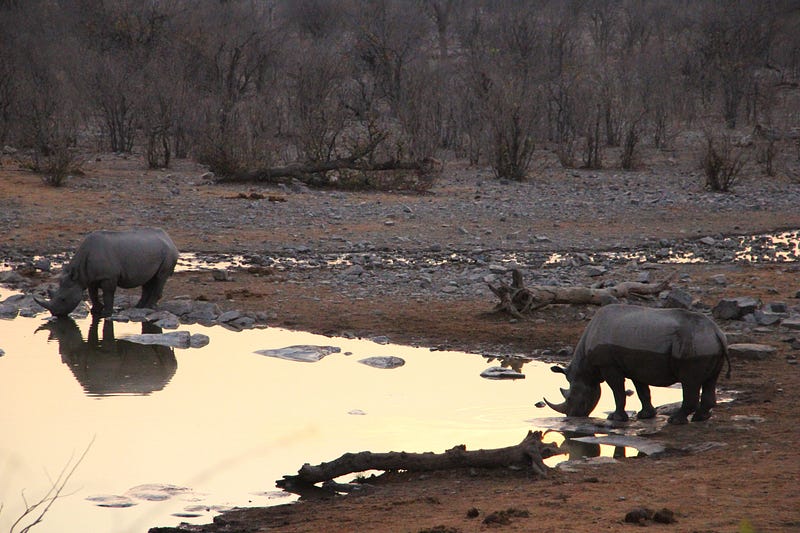
The first rhinos I’ve seen in Namibia happened to be during sunset or just after. When they meet up with the elephants at the water hole. Those two species don’t mind each other. Just when the young ones think they need to challenge each other, then it gets interesting.

But both families were more interested in a de-escalation than anything else. So they all went their way.
Credit: Anne Bonfert

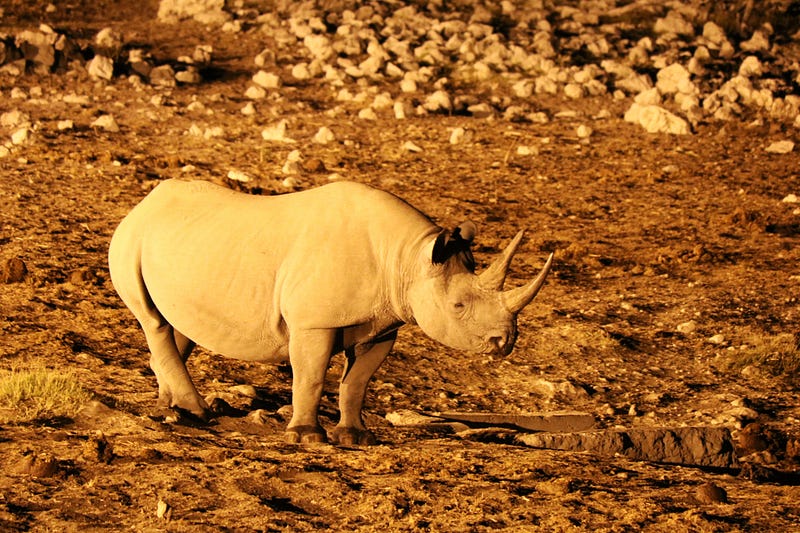
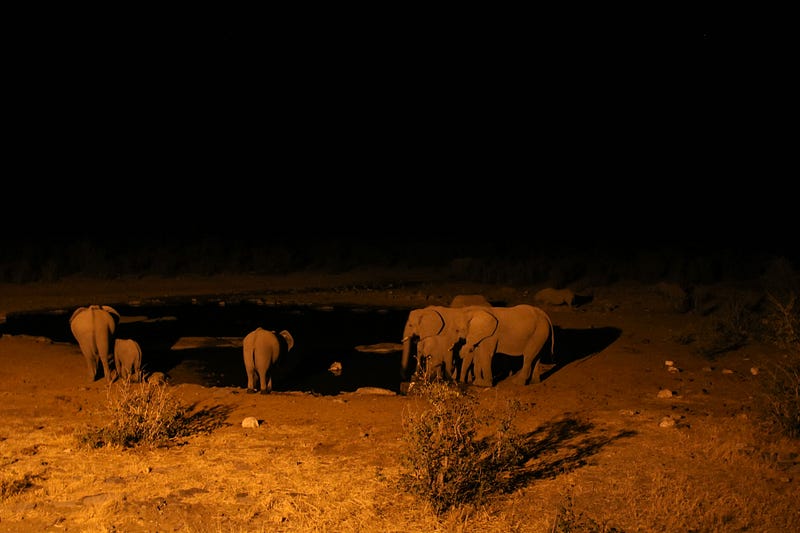
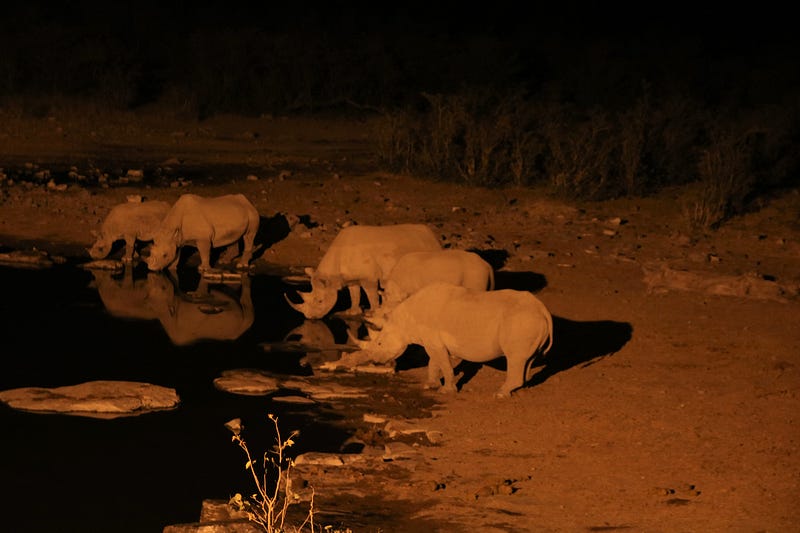
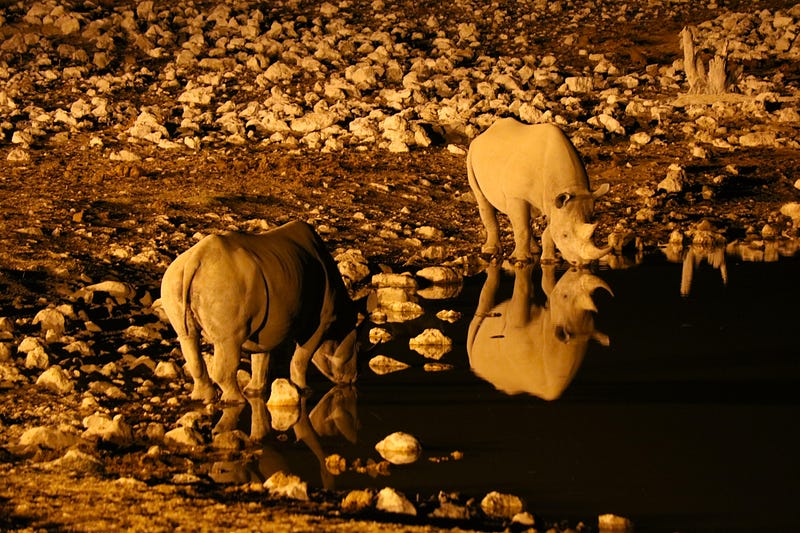
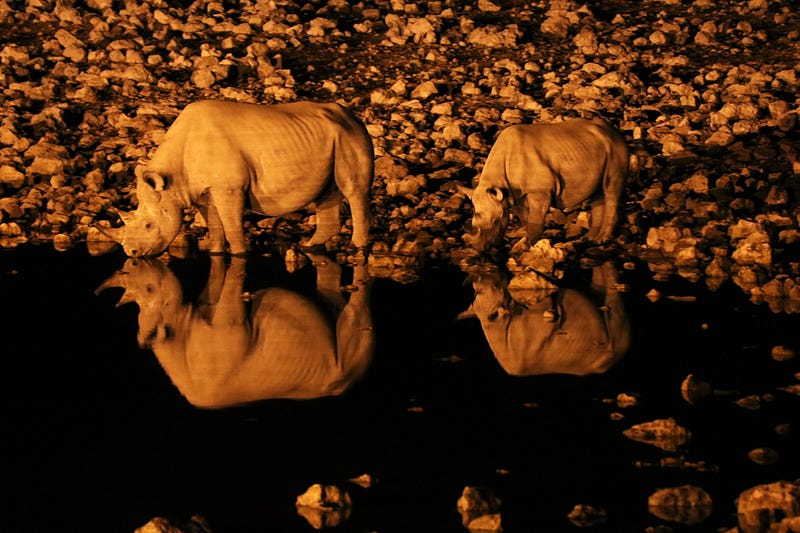
Elephants definitely move faster and more often than rhinos. They often made my night shots appear blurry. Rhinos I could capture pretty well. Even in complete darkness.
Credit: Anne Bonfert

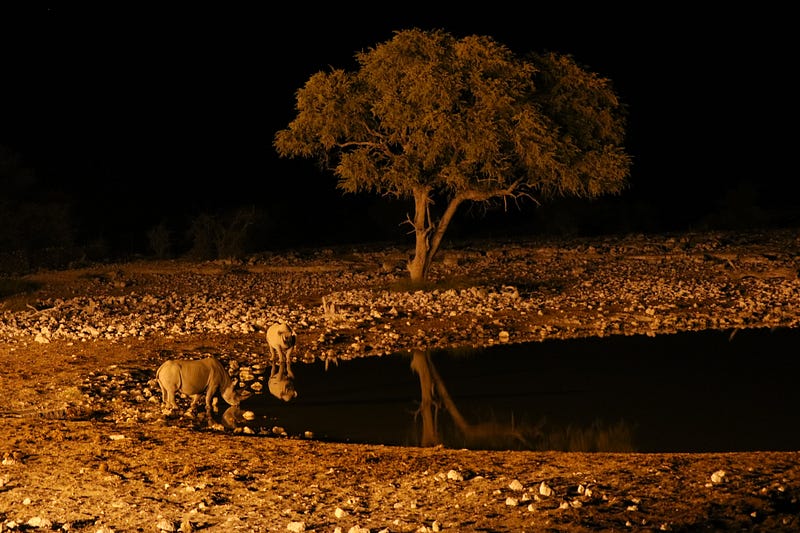
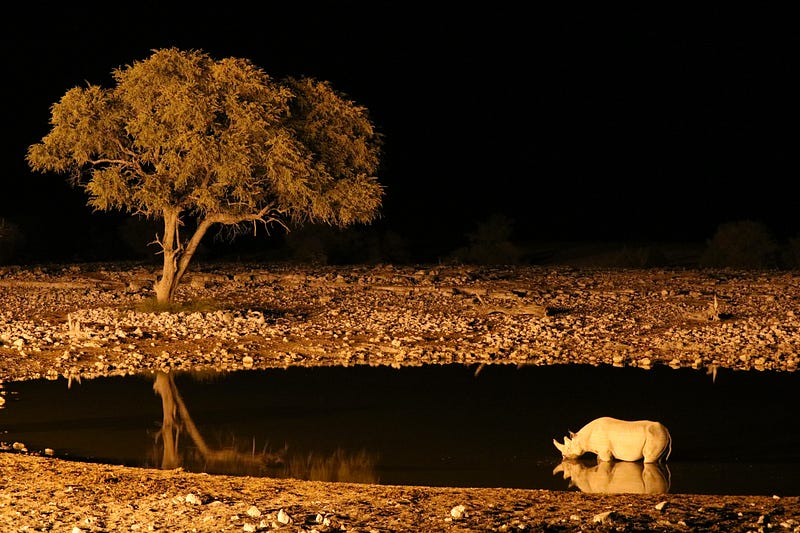
And these are my favorite rhino shots of all time.
Credit: Anne Bonfert

Taken in the dark of the stillness of an African night. With a lone standing tree and the flat water as a perfect mirror reflecting their bodies in a beautiful way.
Credit: Anne Bonfert

This is what Africa is about. The raw beauty of wildlife and their habitat.

Let’s preserve it and protect these giants and many others from extinction. These last survivors won’t last for much longer if we don’t aggressively do something against the gruesome business of poaching.
Credit: Anne Bonfert

“No one in the world needs a rhino horn but a rhino.” — Wild at Heart

More about my wildlife encounters:

Join my email list here if you would like to read more photo essays or sign up for the Medium membership to receive unlimited access to my and other writer’s stories out here (I will receive a commission fee in return).

Wildlife
Travel
Photography
Africa
Survival
Recommended from ReadMedium