The Last Jedi and Late Capitalism
A Metamodern Critique (and Compliment) of Star Wars
*Spoiler Warning*
This is less a film review and more a commentary on the deeper meaning of Star Wars as a cultural-political phenomenon. As everyone now knows, The Last Jedi (TLJ) has cleanly divided fans like a dry piece of firewood expertly split by [Parks and Recreation’s] Jedi Nick Offerman. Take after take eviscerates the many apparent flaws in the new Star Wars instalment, while some critics laud the radical and daring turns it presents. Taking sides is not necessary, as I have a love-hate relationship with it, and some others do as well, because I think we’re supposed to. It is good and bad.
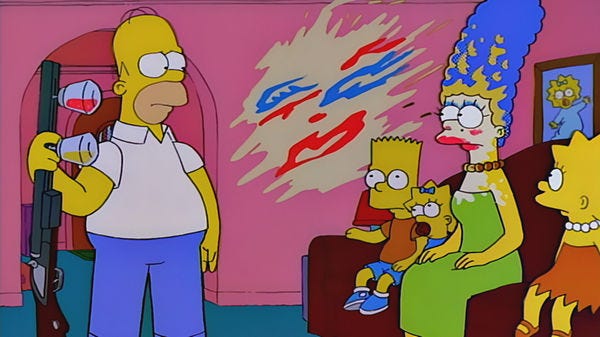
Some of my favorite reviewers felt the same; TLJ is awful, but worthwhile. Chris Stuckman’s negative review was critical and insightful. Roz Westen from ET Canada has a truly epic well-reasoned rant against it. Red Letter Media hilariously open their TLJ review by describing it as “the cinematic equivalent of Homer’s make-up shotgun,” but ultimately give some excellent commentary on its paradoxical pros and cons. The BBC asks if it’s “the most divisive film ever?” Wired magazine had their own roundtable discussion about it too. Vox provides a great overview of the reception as well. As usual, Wisecrack has great quick take on TLJ. Finally, Kevin Smith’s tearjerking review also redeems much of TLJ. The most inexplicitly metamodern analysis I found is probably this one; The MESSAGE of The Last Jedi.
Suffice it to say there may be some glaring conceits and bad writing in TLJ, but also some very smart writing and stealth wisdom, which the next episode may enhance further. Many other reviews are following a similar tack. To simply worship TLJ would be dishonest, as it seems even the writer-director Rian Johnson prompts you to question it. To simply hate on it, would be equally disingenuous and fallacious. So let’s love-hate it, in a metamodern ethos.
People are shocked because The Force Awakens (TFA) already felt like a massive Abramsian ‘mystery box’ containing a Hallmark “F*ck You” card to original trilogy loyalists. To then upend that trajectory just felt like adding insult to injury. However, this was a conscious misdirection necessary in order to outsmart already very clever audiences. It is mostly critics that like TLJ, and fans that dislike it (93% vs. 54% on RottenTomatos) for these reasons. A lot of the good reception stems from the fact that many critics wisely panned TFA while mindless masses lapped it up, so TLJ now has a corrective or redemptive quality to it.
“This is weird, but: I kind of think that, by shutting down the possibility that The Force Awakens’s plotlines would lead to a trilogy-long rehashing of the entire original trilogy, and spinning off in surprising and new directions with the characters and their adventures, The Last Jedi retroactively made The Force Awakens more interesting.” — Albert Burneko, Deadspin
The prequel trilogy is pretty universally hated, rightfully so. Probably the best longform take-down is executed methodically by Red Letter Media’s Mr. Plinkett (it starts here and goes through the entire prequel series, and also TFA), so I will defer to them on that. The new trilogy, in contrast, puts both the original and prequel trilogies in a new light. The prequel trilogy almost had to suck, because it had to show a generation of people failing, leading into the original trilogy. The new trilogy had to distinguish itself from both the prequels and originals, and it does as best it can given the difficult choices made early on.
We need to grow up, and put the past behind us. This is one of the explicit messages of TLJ, so clear and definitive that Burneko could compile a list of 21 instances TLJ told other Star Wars movies to “eat shit.” Critics appreciate TLJ because it is both smart enough to divorce itself from the loose ends of TFA, but dumb enough to still be a fun popcorn flick full of fallacies, sprinkled with hard truths dispensed from Master Luke himself.
A great catharsis for myself and many fans was seeing a compilation of Mark Hamill carefully critiquing the new direction both films have taken the franchise. See, “Mark Hamill shits on the new Star Wars movies.” Nothing is sacred, and thank god for that. But make no mistake, The Last Jedi is a great film for no other reason other than that Mark Hamill owns the entire time he is on screen. In the end, the commitment to the new narrative pays off. In a way, Luke is the savior of The Force, Hamill himself of the Star Wars saga.
The key takeaway is the criticality; loving criticism of the Star Wars machine, the criticism of TLJ towards TFA (and the rest of the franchise), and the critical mass hopefully ‘awakened’ through these films. Through this lens, every Star Wars film (and review) is in fact a ‘teaching moment,’ to pause and consider what the fuck we are doing as a civilization; how we glamorize war, how we think about religion, how we fetishize technology, how we are seduced by consumerism, and how to transcend it all. We are in a hall of mirrors, like the one Rey enters, and when we are ready, we will figure out what it means.
New Lessons from the Old School
The original Star Wars trilogy taught us many powerful lessons about morality and systemic war. To name just a few: Great things can come in small packages; that there can be a simple difference between right and wrong, even if it seems murky; and that the Empire, while absurdly monolithic, actually realistically reflected the totalitarianism of Nazism (and other regimes), so we should take it very seriously. But as Noah Berlatsky puts it well; “‘Star Wars’ Is Influenced By The Nazis — And It Fails To Hold Them Accountable.” It is a missed opportunity, depending on how we view it.
As much as it is a fantasy and space opera, Star Wars does convey some very deep truths about human nature, politics, and spirituality. The most powerful message is perhaps Luke’s refusal to fight at the end of Return of the Jedi. His (and the Rebels’) salvation lies in the ultimate counterpoint to war; non-violent resistence. It is this act of compassion that compels the Hitler-level villain Darth Vader to end the Empire, and is what makes Star Wars a profound and enduring anti-war saga. Luke, through a Jesus-like act of faith, is willing to die, but not kill, for his enlightened values. This is the embodiment of the light side of The Force.
The dark side, however, is less convincing about its motives and methods. It simply takes evil for granted, as a consequence of the natural pursuit of power and order. It is the reverse value — a willingness to kill, but not die, for the greater “good”— that drives the Empire. Ironically, it is the fear and denial of death that leads them/us down pathological roads to try to harness power over it (to ultimately construct a ‘Death Star’). A Death Star, like an atomic bomb, is an enormous waste of energy, and you’d hope that by the time any civilization becomes space-faring, they would learn that.
TFA tells us that nothing was learned from the original trilogy, without telling us why or how. The newly emancipated galaxy fell back into facism for no good reason other than “evil.” After TFA, I could not stop thinking about the direction they didn’t take with the new trilogy.
Return of the Jedi already saw the explosion of a second bigger-badder death star, and the end of the space Nazis’ Galactic Empire. There was so much potential to tell a different story. Peace could have been the status-quo, with the insurgent First Order still as the rising existential threat. Like with the end of World War 2, it should have been ‘happily ever after,’ but both in the new trilogy and reality, it wasn’t. Except there is a key difference…
World War 2 was followed by the Cold War, countless proxy conflicts, more global inequality, terrorism, and continued wars against ourselves domestically and ecologically. This is roughly what a new Star Wars trilogy should have paralleled, in my view, but instead they rebooted it and hid a super-weapon inside a planet. TFA eschewed the nuances of the post-war world to have another (bigger) holocaust, in which 5 whole planets are destroyed. TFA was a World War 3, when that’s the last thing the world needed.
The Iconoclast Jedi
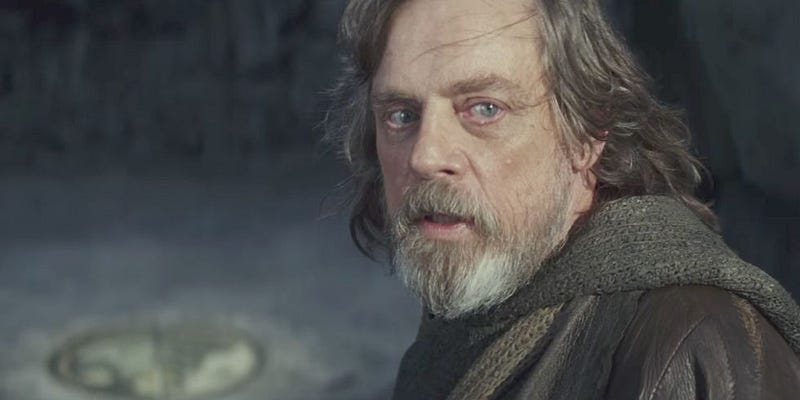
An iconoclast is a “a person who attacks or criticizes cherished beliefs or institutions,” so this would be a punny epithet for Luke Skywalker, the self-proclaimed Last Jedi. It is certainly time for the Jedi to end for their “vanity” and “hubris,” as Skywalker puts it, but also time for the evil Empire/ First Order to end, because it is increasingly apparent (if it wasn’t already clear) that it’s stupid and pointless to be so fanatical and violent.
This is why Luke epically schools Kylo Ren in one final lesson, to teach him the utter futility of fighting. Fans complained that no lightsabers crossed in this film (except in the flashback to Luke’s murderous moment), but there was a very good reason: because it’s way cooler to defeat your enemy without fighting at all. And it’s all the fighting around these moments that makes the tension so real and the stakes so high.
“Some fans have sharply criticized the new movie for, among its other faults, turning Luke into a decrepit pacifist, but to my mind he’s, instead, a kind of badass Buddhist and, at long last, the first character with the good sense to point out that, for all their special powers and good intentions, the Jedi have proved to be a pretty disastrous element in the universe — what with their defections to the Dark Side and all the mayhem that’s followed.” — In “Star Wars: The Last Jedi,” Luke Skywalker Finally Becomes Cool, Ian Crouch, The New Yorker
The Disney producers and writers of the new trilogy knew they could not top the originals, so they played it “safe” with a ‘soft reboot’ initially. The decision to make TFA the chimera that it was had the effect of a double-entendre, being both a ‘mash-up of recycled elements’ and ‘a thing which is hoped for but is illusory or impossible to achieve.’ For better or worse, Star Wars returned in a time of great need, but failed to fulfill its destiny.
At any rate, we asked for it and this was the Star Wars we got. Two years later, TLJ undoes some of the implausible insanity of TFA by contrasting it in virtually every significant way; Rey has ordinary lineage, Luke is disillusioned and radically pacifist, Snoke has no backstory and is easily murdered, almost every other character fails in their little missions, etc… TFA was a thesis, albeit a poor one, followed by an anti-thesis, a substantially innovative one. It was all a massive bait and switch, which is why audiences are so understandably rattled. But as Ian Couch puts it, and I agree, this is what makes TLJ great (although it also sucks):
“Best (and most surprising) of all, time and its bitter disappointments have led Luke to finally develop a sense of humor and a sort of roguish charm — traits that Hamill, back in our galaxy, has always demonstrated offscreen. (This week, he’s been trading barbed insults on Twitter with Ted Cruz and mocking Ajit Pai, the chairman of the F.C.C., over net neutrality.) In the absence of Harrison Ford’s Han Solo, Luke takes over as the resident gruff, no-nonsense skeptic — and the screenwriters are wise to give Hamill the scene-stealing lines and chances at relatable human interaction that he’s always deserved. When he reunites with his old friend C-3PO and the always admiring droid says, with grave wonder, “Master Luke!,” Hamill looks at him and simply winks. It is, for all his well-chronicled and widely celebrated feats of daring and courage — his one-in-a-million shot on the Death Star and all that followed — the coolest thing that Luke Skywalker has ever done.” — In “Star Wars: The Last Jedi,” Luke Skywalker Finally Becomes Cool, Ian Crouch, The New Yorker
Late Capitalism, Belated Socialism
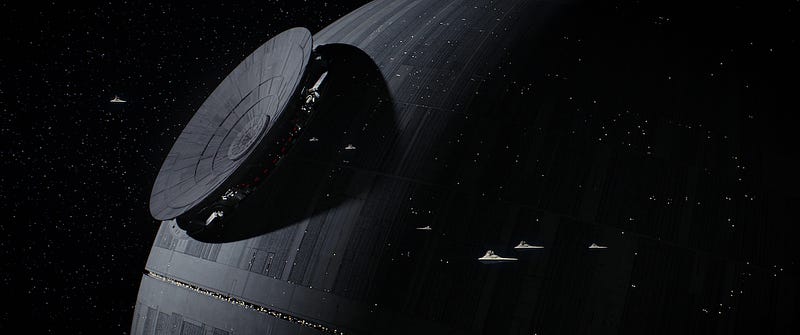
Since the 90s, postmodernism has been equated with the period of decline described as “late capitalism” (see Jameson). Cynical films like Fight Club and The Matrix aptly characterized the dark turn of the century. But its taken until this year for the term ‘late capitalism’ to become mainstream and be “suddenly everywhere,” according to The Atlantic. Indeed, ‘late capitalism’ memes are very popular on Facebook and Reddit too. The term is widely used as;
“a catchall phrase for the indignities and absurdities of our contemporary economy, with its yawning inequality and super-powered corporations and shrinking middle class” — Why the Phrase ‘Late Capitalism’ Is Suddenly Everywhere, Annie Lowrey, The Atlantic
But the idea goes further back, which begs the question of why its continued so unabated, and why we are so developmentally ‘late’ to late capitalism.
“For [Ernest] Mandel, “late capitalism” denoted the economic period that started with the end of World War II and ended in the early 1970s, a time that saw the rise of multinational corporations, mass communication, and international finance.” — Why the Phrase ‘Late Capitalism’ Is Suddenly Everywhere, Annie Lowrey, The Atlantic
At some point, ‘late capitalism’ has to become anachronistic or a dead metaphor, and perhaps that time is now. MNCs, mass media, and banking cartels that expanded their power throughout this phase have all reached terminal insanity, peak power and influence, to the point of transparent shameless corruption. Hopefully we’re finally entering ‘early post-capitalism,’ for lack of a better term. (I also discuss this in The Metamodern Condition.)
Perhaps the (bad) timing of TFA and TLJ then is not mere coincidence, but synchronicity. The Democratic party was deeply drunk on its own koolaid and similarly ill-fated by the end of 2015. Postmodernism was in its death throes and metamodernism was materializing in new progressive social movements and new climate change tipping points.
But unfortunately, TFA was a postmodern nightmare that left people befuddled, the UK Brexited (2016) for no reason other than fear, and a Jar-Jar Binks and Palpatine inspired Trumpster fire was elected President (2017; sorry if you voted for him (or Hillary), I know you felt the dark side calling). It was at once a time of great hope, rampant systemic corruption, and widespread failure.
The idea behind TFA, which I only suspected but could not confirm until TLJ, is that “The Force” was awakening more random ordinary people, such as Rey and Finn, and by proxy, the audience (the public). Perhaps now, as TLJ is this ‘wake-up’ call made explicit (in part by Luke), coupled with an unexpected critique of capitalism (rich snobs of Canto Bite are the worst people; and arms dealers sell to both sides)… perhaps now we can have hope again that we are on the right path, and that The Force is actually awakening.
Although TLJ has been criticized by right-wingers for its strong social justice messages, the general rejection of the story and characters could be a point of unity across political lines. According to Ben Shapiro’s review, and Stefan Molyneux’s review, they also thought it was breathtakingly stupid at times, so perhaps we have something truly transcendent in common. That depends on their capacity to love it as well, and to join an emerging metamodern consensus to abolish war itself (see systemic-conspiracy). At some point, those who use the slur ‘social justice warrior’ are as ironic, insincere, and ill-informed as those speaking the words ‘rebel scum.’
The MetaPhorce Awakens
In the film The Abs•Tract: Core Philosophy (2014), I coined “The MetaPhorce” as a playful homage to The Force, somewhat like Spaceballs used The Schwartz. The MetaPhorce is a “metaphorical energy that connects everything.” But its more than that. It is abstraction, and mapping reality. It’s more real than The Force will ever be (ie. telekinesis is not real). The MetaPhorce is the mastery of language and rhetorical revelation, rather than lifting rocks. And as metaphor it stands in for all other whimsical energy belief systems. It is the “Meta-”Force, “The Force” being the lifeforce, nature, and our power is correlated with our understanding of it.
Like The Force, the MetaPhorce also has light and dark applications. It can be used to speak truth to power, wax philosophically, write poetry, sing your heart out, etc. Conversely, it can be used to manipulate and brainwash people (or oneself) through advertising and/or propaganda. Via the MetaPhorce, we can realize our own real power, to make up for the lack of The Force-powers.
The MetaPhorce and The Force are both metaphysical and yet make an impact in their real worlds, respectively. It’s not just for entertainment and escapism, if you actually learn something in the process. The Force that connects everything is real, it just can’t be used in a paranormal way, like in the movies.
For better or worse, the curators of the new trilogy are using their own MetaPhorce skills to manipulate you. Here is where I suggest that TLJ helps us take a metamodern turn (see my introduction to metamodernism for background), while still not completely, as many aspects of it indeed seem like aberrations. One of the main tenets of metamodernism is reconstruction after deconstruction, and we’re not quite there yet in TLJ, but its metamodern in a few ways that count;
Whereas The Force Awakens was more standard adventure fare, The Last Jedi is excessively meta-. This does not mean it is a de facto metamodern film — maybe it is — but it certainly can be viewed through a metamodern lens. TLJ is meta- in many ways; the endless self-referentiality and self-awareness, the reflexivity of incorporating and challenging the audience perspective (ie. fan theories), the fact that we’re in the second film of the third trilogy in a meta-trilogy (1–9), in how “The Force” is metaphysical, the archetypal metanarrative of the hero’s journey, etc…
TLJ is sincere-ironic. As irony is defined as “happening in a way contrary to what is expected, and typically causing wry amusement because of this,” TLJ could not be more ironic. The sincerity is a given in the emotionality of the characters (and actors), the callbacks to the original trilogy, and the deeper truth that it speaks to us. Like it or not, Luke tossing his lightsaber over his shoulder was Jedi-level sincere-irony.
As a metamodernish film, The Last Jedi exudes a lot of “Both-And” qualities; it is both a good movie and a bad movie. It seduces us into its immersive world, but also reminds us that its “just a movie.” The jokes and gags are at their wildest for Star Wars (Luke drinks alien walrus milk straight from the teet), but some of the sci-fi conceits are also at their worst (the too-many-to-count deus ex machinas). As Ben Domenech argues, “‘The Last Jedi’ Is A Good Movie Wrapped Around A Bad Movie.” It’s like its in superposition, and ultimately the viewer decides if its good or bad (or both).
While I personally find the original trilogy a very shrewd warning and lesson about war, in practice Star Wars is a beautiful distraction from real wars, and the nature of war. By now I have read or watched a few dozen reviews and the bulk of them naturally focus strictly on the film itself. But movies don’t exist in the vacuum of space; they are mirrors of our culture and our fantasies, both light and dark. And mainstream events like this impact politics and vice-versa.
The emerging critical consensus seems to be that while TLJ is good enough and has many stellar moments, there is so much bad in it that we simply can’t guess and don’t care what could possibly come next. But rather than be ambivalent, we should love the precarious balancing of The Force that TLJ has delivered us after TFA. I propose that this is our cue to come back to Earth, and solve our problems here. And maybe, just maybe, if we do it right, Episode IX will vindicate our faith and actions.
From Star Wars to Sand Wars
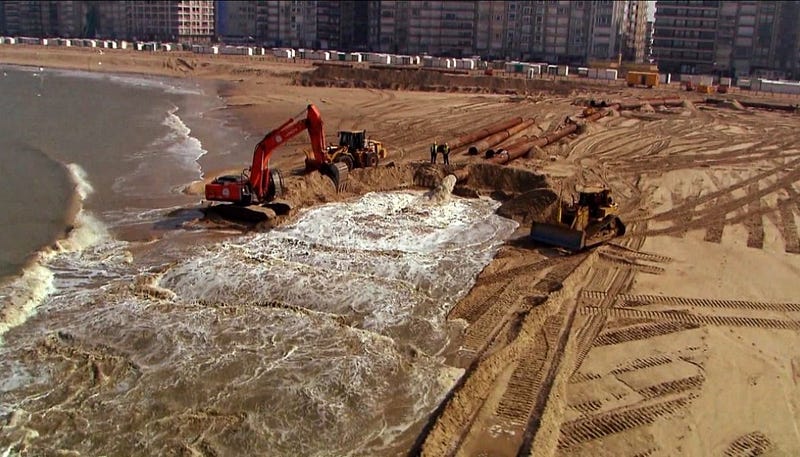
Luke comes from the desolate desert planet Tatooine (and Rey from Jakku), where sand is abundant and worthless, but ironically, here on Earth, there are wars being fought over sand. Recently (Dec. 14th, 2017), Al Jazeera released a documentary titled Sand Wars, the same name as the independent documentary Sand Wars (2012). Given that it was released a day before The Last Jedi’s official open, the asymmetrical attention given to fictional space wars over real Earth-bound warrants extra attention. Watch the documentary.
Sand Wars details the unexpected environmental devastation and criminal enterprise that arises within the global sand economy. Sand is the primary ingredient in (concrete) construction, and thus every building going up in the world puts demand on the sand market. If you are baffled at the prospect of a sand shortage, apparently the sand of the Sahara is “the wrong kind” of sand. So beaches and islands are being dug up and depleted, often illegally, for profit, at the expense and the environment and economy.
The problem is so bad that many developing countries are using inferior quality sand in construction, such that new buildings become “ticking time bombs” and human rights hazards. This is the dominant feature of late capitalism: it doesn’t give a shit about human beings, as if it can’t. We all become servants of the machine, just like the (neo-)Nazis of The First Order, or of a given corporation, or of the ludicrous idea of an ethno-state.
There are wars over virtually every resource you could think of: oil, water, diamonds, minerals, land, money, people, etc… but who knew about sand wars!? There are even “sand mafias” as they describe in the documentary. There is a scary momentum to development and capitalist expansion that makes all this war seem inevitable. What’s worse is that populations are domesticated so as not to be aware of the problem enough to do anything about it. All the hype and hyperbole around Star Wars is proof of this complacency itself.
While we can easily accuse Disney of just making these films for a massive cash grab, I believe that they have made a sincere effort to package a smart message of hope in a clownish blockbuster for the global masses to absorb. The function of art is not just to make you happy, its to communicate something deeper, so don’t ever forget what STAR WARS is ultimately about and critical of. There’s a big clue in the name: WAR. And when we’re done with our fun and games, we have to get back to building peace.
Congratulations if you made it to the end of this article. You’ve earned “20 The Last Jedi Memes We Need Right Now.” Update: Star Wars: The Last Jedi — What Went Wrong? — Wisecrack Edition is a great critique from late April, 2018.
MetaPhorce be with you, always.
The Abs-Tract Organization (TATO) is a boutique think tank and sometimes mystery school, using “The MetaPhorce” and insights in “abstraction” to distill reality.
If you appreciate the work we do, please support us on Patreon for $1.
Please like and share this article. Join and support our growing metamodern project at http://www.abs-tract.org and on twitter @TATO_tweets.